
Oracle vs. Tarot: Intuitive Guidance Explained | StarPluto
The realm of intuitive tools offers a myriad of pathways for self-exploration and insight, with card decks standing out as particularly popular conduits. Among these, Tarot cards and Oracle cards frequently emerge as primary instruments for those seeking to illuminate inner wisdom and gain perspective on life's intricate tapestry. While both serve the overarching purpose of providing guidance, they operate on distinct principles, possess unique characteristics, and cater to different intuitive styles.
Understanding these fundamental differences is paramount for anyone embarking on a journey of spiritual inquiry or simply looking for an effective method to connect with their deeper self. This comprehensive guide aims to meticulously demystify both Tarot and Oracle decks, offering an in-depth comparative analysis that will empower you to discern which tool, or perhaps a synergistic combination of both, best aligns with your personal needs and intuitive preferences. We will delve into their rich historical origins, explore their intricate structural frameworks, examine their diverse interpretive methodologies, and highlight the unique benefits each offers to seekers of profound insight.
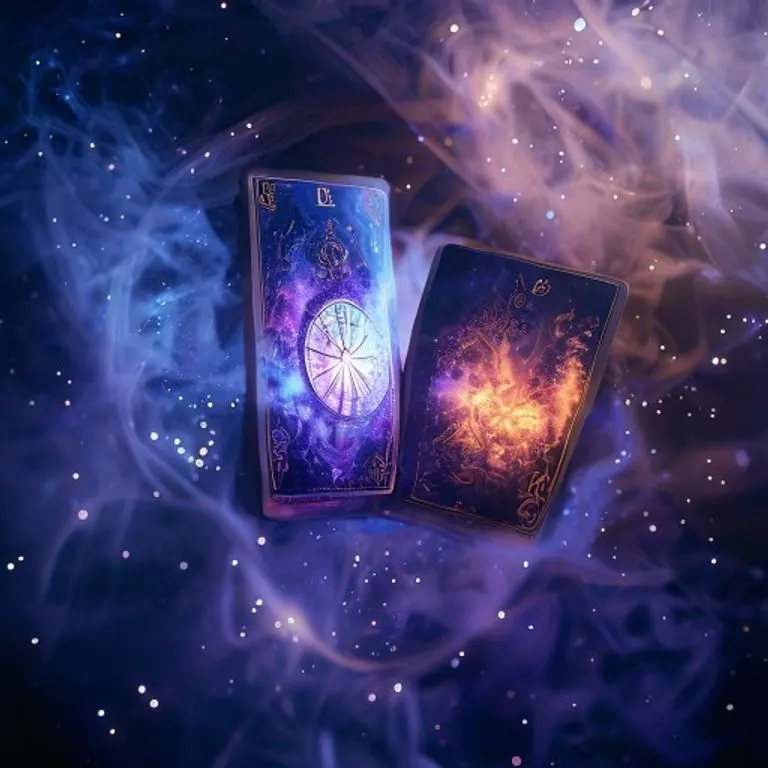
Unveiling Intuitive Guidance: The cosmic dance between structured Tarot and free-flowing Oracle cards for self-discovery.
Understanding Tarot Cards: Structure and Symbolism
Tarot cards represent arguably the most renowned and historically significant form of cartomancy, boasting a lineage that traces back to 15th-century Italy. Initially conceived as playing cards for games, their profound divinatory potential was gradually recognized and developed, evolving into the sophisticated and complex symbolic system we engage with today. A standard Tarot deck is meticulously structured, comprising 78 individual cards, which are systematically divided into two principal sections: the Major Arcana and the Minor Arcana.
The Major Arcana consists of 22 distinct cards, each imbued with profound archetypal significance and representing pivotal life lessons, overarching spiritual journeys, and fundamental human experiences. Cards such as The Fool, The Magician, The High Priestess, The Emperor, The Lovers, Death, and The World, among others, typically signify major life transitions, profound insights, and overarching thematic currents within a reading. They articulate the grand narrative of an individual's existence, reflecting universal human experiences and the cyclical nature of spiritual evolution. These cards often point to significant internal or external shifts, presenting the core energies and lessons at play.
The Minor Arcana, conversely, comprises 56 cards, further subdivided into four elemental suits, each corresponding to a different facet of human experience and a specific element:
Wands: Representing passion, creativity, ambition, willpower, and action. They are intrinsically linked to the element of Fire, embodying inspiration and initial sparks.
Cups: Associated with emotions, relationships, intuition, spirituality, and the subconscious mind. These cards resonate with the element of Water, reflecting feelings and emotional flow.
Swords: Symbolizing intellect, challenges, truth, communication, conflict, and the realm of thoughts. They are connected to the element of Air, representing mental processes and decisions.
Pentacles (or Coins): Related to material possessions, career, finances, security, and the physical world. These cards align with the element of Earth, signifying tangible realities and manifestation.
Within each of these four suits, there are ten numbered cards (ranging from Ace to Ten) and four court cards (Page, Knight, Queen, and King). The numbered cards typically reflect day-to-day events, practical matters, and the unfolding nuances of personal interactions and situations. The court cards, on the other hand, often represent specific individuals, personality traits, or approaches to life. The highly structured nature of Tarot, with its established meanings, intricate interconnections, and traditional symbolism, facilitates deep, multi-layered readings capable of addressing specific questions with remarkable precision and detail.
The process of learning Tarot involves not only familiarizing oneself with the individual meanings of all 78 cards but also understanding how they interact dynamically within various spreads and contexts. This systematic and archetypal approach provides a comprehensive framework for self-reflection, divinatory practice, and psychological insight, offering profound perspectives into past influences, present circumstances, and potential future trajectories. For individuals who appreciate structure, historical depth, and a rich symbolic language, Tarot can serve as an exceptionally powerful tool for self-understanding, spiritual growth, and navigating life's complexities.
Exploring Oracle Cards: Freedom and Themes
In stark contrast to the rigorously defined structure of Tarot, Oracle cards present a more fluid, intuitive, and highly personalized methodology for intuitive guidance. There is no universally standardized number of cards in an Oracle deck, nor is there a prescribed, fixed set of themes, symbols, or archetypes that creators must adhere to. Consequently, each Oracle deck stands as a unique artistic and conceptual creation, meticulously designed by an artist or author to convey specific messages, energies, or insights that align with their particular vision or spiritual philosophy.
This inherent freedom in design and thematic expression allows for an astonishing diversity of Oracle decks, exploring themes that range from angelic guidance, animal spirits, and ancient mythologies to powerful affirmations, nature wisdom, lunar cycles, and abstract spiritual concepts. Oracle cards are frequently distinguished by their captivating artwork, often imbued with vibrant colors and evocative imagery, and their generally uplifting, empowering messages. They tend to be more direct and positively framed in their communication, making them an excellent choice for daily inspiration, setting a positive mood, or when seeking gentle encouragement and affirmation.

The Legacy of Tarot: Delving into historical symbolism and structured guidance.
Unlike Tarot, which often presents a balanced perspective encompassing both the luminous and shadowed aspects of a situation, Oracle cards typically focus on empowering the user, fostering a positive mindset, and providing actionable, supportive guidance. Personal reflection, often facilitated through journaling, frequently complements intuitive Oracle card readings, enabling a deeper processing and integration of the insights received.
The interpretation of Oracle cards is generally more intuitive and less reliant on the memorization of complex, traditional meanings. While each deck typically includes a comprehensive guidebook that elucidates the creator's intended message for each card, users are actively encouraged to engage with the imagery, connect with their own inner wisdom, and allow their intuition to guide them in deriving personal and resonant meaning. This inherent accessibility makes Oracle cards particularly appealing to beginners and those who prefer a less structured, more free-flowing approach to divination and self-guidance.
Many individuals discover Oracle cards to be a wonderful and accessible tool for daily inspiration, meditation, or as a quick, comforting check-in with their spiritual guides or higher self. They can provide immediate clarity on specific situations, offer timely affirmations, or simply serve as a beautiful and tangible reminder of one's inherent inner strength and profound connection to the universal energies. The vast thematic flexibility of Oracle decks ensures that there is a deck available for virtually every interest, spiritual path, or personal developmental need, establishing them as an incredibly versatile and adaptable addition to any intuitive practice.
Key Differences: A Comparative Overview
To further elucidate the fundamental distinctions between these two powerful intuitive tools, it is beneficial to examine their core differences through a comparative lens. The following table highlights the structural, symbolic, interpretive, and thematic variations that uniquely define each type of card deck, providing a clear reference for their respective applications and benefits.
| Feature | Tarot Cards | Oracle Cards |
|---|---|---|
| Structure | Fixed set of 78 cards (Major Arcana: 22 cards; Minor Arcana: 56 cards, divided into 4 suits of 14 cards each). | Variable number of cards (typically 30-60, but can vary widely), no fixed or universal structural components. |
| Symbolism | Traditional, archetypal, and universally recognized symbols (e.g., The Fool, The Lovers, Death, specific suit imagery). Meanings are often historically layered. | Unique to each deck, often thematic (e.g., angels, animals, nature, goddesses, affirmations, abstract concepts). Symbols are specific to the creator's vision. |
| Interpretation | Structured meanings, often with esoteric, psychological, and historical layers. Cards can be read reversed, adding complexity. Requires study and memorization. | More intuitive, relies heavily on personal connection to imagery and the guidebook's specific messages. Rarely read reversed, focusing on direct guidance. |
| Focus | Comprehensive analysis of life situations, challenges, psychological patterns, and spiritual journeys. Can reveal both positive and negative aspects, offering a narrative. | Inspirational, affirming, specific guidance, daily insights, mood setting, and spiritual connection. Generally framed positively, focusing on empowerment. |
| Learning Curve | Steeper, requiring dedicated study, memorization of 78 cards and their various interpretations, understanding of spreads, and symbolic associations. | Gentler and more accessible for beginners, relying less on rote learning and more on immediate intuitive connection and direct messages from the guidebook. |
| Question Suitability | Excellent for detailed questions about relationships, career paths, personal development, underlying causes, and potential future trends, providing a narrative context. | Ideal for daily affirmations, quick guidance, emotional support, spiritual messages, setting intentions, and gaining clarity on specific feelings or situations. |
This detailed comparison unequivocally illustrates that while both types of decks serve as invaluable intuitive tools, their underlying methodologies, structural compositions, and practical applications diverge significantly. Tarot provides a rich, detailed, and archetypal map of the human experience, offering a comprehensive narrative for self-discovery. Oracle cards, conversely, offer thematic, often more direct, and immediately accessible guidance tailored to specific spiritual or personal development needs. Understanding these nuanced distinctions empowers you to make an informed choice, selecting the deck that most profoundly resonates with your current intentions, learning style, and intuitive approach.
Historical Context and Evolution
The historical trajectories of Tarot and Oracle cards, while both rooted in ancient practices of divination and symbolic interpretation, have followed distinct paths. Tarot's origins are relatively well-documented, emerging in Northern Italy during the early 15th century as luxury playing cards known as "carte da trionfi" (cards of triumphs). These early decks were used for games, particularly one similar to modern bridge. It wasn't until the late 18th century that esoteric scholars and mystics, particularly Antoine Court de Gébelin and Etteilla (Jean-Baptiste Alliette), began to associate Tarot with ancient Egyptian wisdom and occult symbolism, transforming them into tools for divination and spiritual insight. The Rider-Waite-Smith deck, published in 1909, became the most influential and widely recognized Tarot deck, standardizing the imagery and meanings that many modern decks still follow. This historical evolution underscores Tarot's deep roots in both recreational and esoteric traditions, solidifying its complex symbolic language over centuries.
Oracle cards, on the other hand, do not possess a single, unified historical origin. Their lineage is more diverse, drawing inspiration from various traditions, including Lenormand cards (popularized in the 19th century by Mlle. Lenormand), spiritual affirmation cards, and even ancient runic or I Ching systems. Modern Oracle decks, as we know them today, largely gained prominence in the late 20th and early 21st centuries. Their rise coincided with a broader spiritual awakening and a desire for more personalized, accessible, and less rigid forms of guidance. Unlike Tarot, which evolved from a specific game into a divinatory system, Oracle cards were often created explicitly for spiritual or self-help purposes from their inception. This allows for an unparalleled freedom in design, theme, and interpretive approach, reflecting a contemporary emphasis on individual intuition and diverse spiritual paths.
Interpretive Methodologies: Depth vs. Directness
The way insights are derived from Tarot and Oracle cards represents another critical point of divergence. Tarot interpretation is a multi-faceted process that demands a significant degree of study, memorization, and intuitive synthesis. A reader must not only understand the individual meanings of all 78 cards, both upright and reversed, but also grasp how these meanings shift and interact based on their position in a spread, their relationship to adjacent cards, and the specific question being asked. The archetypal nature of the Major Arcana provides a framework for understanding major life themes, while the Minor Arcana offers granular detail on everyday events and emotional states. This layered approach allows Tarot to construct a detailed narrative, exploring the psychological underpinnings, potential challenges, and overarching energies of a situation. It's a system designed for deep dives, offering complex answers that often require careful contemplation and integration.
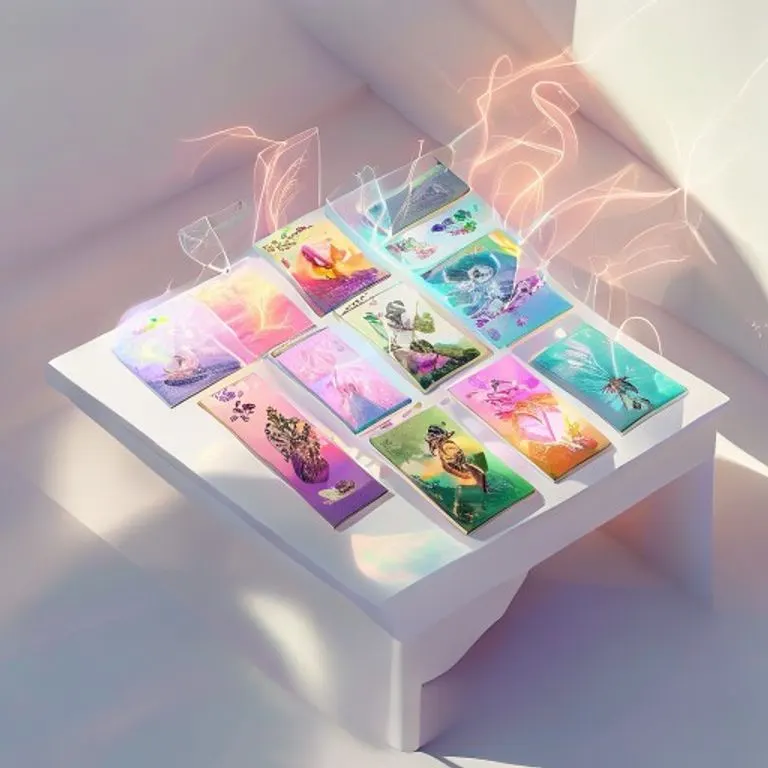
Oracle's Liberating Themes: Embracing intuitive freedom and diverse spiritual messages.
Oracle card interpretation, by contrast, is generally more direct and less structured. While many Oracle decks come with guidebooks, these are often seen as starting points rather than rigid interpretative manuals. The emphasis is placed on the reader's immediate intuitive response to the artwork, the keywords on the card, and the overall theme of the deck. Oracle cards are designed to offer clear, concise messages, often serving as affirmations, prompts for reflection, or direct answers to simple questions. They are less about constructing a complex narrative and more about providing an immediate burst of insight or a gentle nudge in a particular direction. This directness makes Oracle cards highly effective for daily guidance, mood setting, or when seeking a straightforward answer without the need for extensive symbolic decoding. The interpretive methodology of Oracle cards aligns well with a desire for accessible, empowering, and often more emotionally supportive guidance.
Choosing Your Intuitive Tool: Personal Alignment
The decision of whether to begin your intuitive journey with Tarot, Oracle cards, or even both, is ultimately a deeply personal one. There is no universally "correct" choice, as the most effective tool is the one that resonates most authentically with your individual learning style, your specific intentions, and your unique intuitive sensibilities. Consider the following factors carefully as you make your selection:
-
Your Learning Style: If you are someone who thrives on structured learning, enjoys memorization, and finds satisfaction in delving into complex, interconnected systems, then Tarot might be profoundly appealing to you. Its established framework, rich history, and intricate symbolism offer a vast and rewarding well of knowledge to explore over time. Conversely, if you prefer a more free-form, spontaneous, and less rigid approach to learning and intuition, Oracle cards will likely feel like a more natural and comfortable fit. Their emphasis on immediate connection and personal interpretation aligns with a less academic, more experiential style.
-
Your Intention for Guidance: What specific kind of insight or support are you primarily seeking? For detailed analysis, understanding underlying patterns, exploring the various facets of a complex situation, or mapping out a narrative arc for your questions, Tarot excels. It can provide a comprehensive overview that delves into causes, effects, and potential outcomes. For daily inspiration, positive affirmations, emotional support, or receiving clear messages from specific spiritual guides (such as angels, ancestors, or nature spirits), Oracle cards are often more direct, comforting, and immediately applicable.
-
Your Connection to Imagery: Both types of decks feature artwork as a central component, but the style, complexity, and symbolic nature of this imagery differ significantly. Tarot often employs traditional, sometimes medieval, or highly symbolic imagery that requires a degree of interpretation and familiarity with its established iconography. Oracle decks, however, can range dramatically in artistic style, from highly abstract to beautifully realistic, often with clear, uplifting messages or keywords embedded directly within the art. Choose the visual aesthetic that most deeply resonates with you and effortlessly sparks your intuition and imagination.
-
Patience and Commitment: Embarking on the journey of learning Tarot can be a significant long-term commitment. Mastering its nuances, understanding its intricate system, and developing a confident interpretive style takes considerable time, dedication, and consistent practice. Oracle cards, in general, tend to offer quicker access to insights and intuitive messages, making them an ideal choice for those who desire immediate, accessible guidance without the need for extensive, prolonged study. They are often perfect for a quick daily check-in or a moment of reflection.
Connecting with the cosmic flow and accessing deeper wisdom can be achieved through a multitude of intuitive practices, including the thoughtful use of card decks. Many experienced practitioners find immense value in owning and utilizing both types of decks, employing them interchangeably or even combining them within a single reading for a more comprehensive and multi-dimensional perspective. The ultimate key to a successful intuitive practice lies in experimentation, allowing yourself the freedom to explore and discover which tools truly empower your unique intuitive journey and bring you the most clarity and insight.
Integrating Both Decks for Holistic Insight
For those committed to deepening and enriching their intuitive practice, the strategic combination of Tarot and Oracle cards can unlock a profoundly rich, multi-layered, and holistic experience. This synergistic approach allows you to leverage the distinct strengths of both systems, providing both detailed analytical depth and uplifting, thematic guidance within a single session. Here are several effective methodologies for integrating both types of decks into your practice:
-
Tarot for the Main Reading, Oracle for Clarification: Begin by performing a traditional Tarot spread (such as a Celtic Cross for a comprehensive overview or a simple three-card spread for a focused question) to gain a detailed and nuanced understanding of your situation. Once the Tarot reading is complete, draw one or two Oracle cards to provide a specific, overarching message, an empowering affirmation, or a spiritual takeaway that either summarizes, clarifies, or adds a layer of supportive guidance to the Tarot's narrative. This method allows the Oracle to act as a gentle, positive resolution or a clear directive.
-
Oracle for Daily Guidance, Tarot for Deeper Dives: Start your day by pulling a single Oracle card. This can set a general theme, provide a positive affirmation, or offer a simple piece of advice for the day ahead. When a specific challenge arises, a complex decision needs to be made, or you require a more in-depth understanding of a particular situation, then turn to your Tarot deck for a more structured, detailed, and analytical reading. This approach uses Oracle for light, frequent check-ins and Tarot for significant explorations.
-
Thematic Pairing and Enhancement: Thoughtfully select an Oracle deck whose theme naturally complements or enhances the focus of your Tarot reading. For instance, if your Tarot reading indicates a need for emotional healing and self-care, an Oracle deck specifically focused on nature, goddesses, or inner child work could provide additional supportive messages, practical suggestions, and deeper emotional resonance. This creates a cohesive and powerfully themed reading experience.
-
Journaling and Holistic Reflection: Regardless of whether you use one deck or integrate both, it is crucial to dedicate time after each reading to journal your thoughts, feelings, and the insights gained. Document the cards drawn, your initial reactions, and any deeper meanings that emerge. This practice helps to solidify the messages, integrate them into your conscious awareness, and track your intuitive development over time. Understanding your Tarot Esoteric Geometry: Unlocking Universal Truths Sacred Shapes can further enhance these reflections by providing a broader astrological context.
By consciously combining these powerful intuitive tools, you effectively create a dynamic and enriching dialogue between the structured, archetypal wisdom of Tarot and the free-flowing, inspirational guidance of Oracle cards. This holistic approach can lead to exceptionally profound insights, empowering you to navigate life's inherent complexities with significantly greater clarity, confidence, and spiritual awareness. The synergy achieved by integrating both decks often offers a more complete and nuanced picture, effectively addressing both the practical, psychological, and spiritual dimensions of your queries.
Ethical Practice: Respecting Your Intuition and Tools
Irrespective of whether you ultimately choose to work with Tarot, Oracle cards, or a harmonious combination of both, approaching your intuitive practice with profound respect, integrity, and ethical considerations is absolutely paramount. These powerful tools are fundamentally designed to facilitate deep self-discovery, foster personal empowerment, and offer gentle guidance; they are not intended to dictate your life's path, replace your personal responsibility, or serve as a substitute for professional advice. Adhering to a set of best practices ensures that your engagement with these cards remains a positive, constructive, and truly empowering journey.
-
Set Clear Intentions: Before you begin shuffling your deck, it is crucial to clearly articulate your question or define the specific area of your life for which you seek insight. A focused and well-defined intention acts as a beacon, guiding the cards to deliver clearer, more pertinent messages. Vague questions often yield vague answers.
-
Empowerment, Not Prediction: Always perceive card readings as potent tools for personal empowerment and profound self-reflection, rather than as definitive, unchangeable predictions of the future. The future is inherently fluid, dynamic, and continuously shaped by your conscious choices, actions, and evolving awareness. The cards offer insights into current energies, potential probabilities, and underlying influences, thereby enabling you to make more informed, conscious decisions rather than passively awaiting a predetermined fate.
-
Personal Responsibility: It is vital to consistently remember that you, and you alone, are ultimately responsible for your own decisions, actions, and the trajectory of your life. The cards function as wise guides and illuminating mirrors, but they are not decision-makers. Use their wisdom to inform your choices, but always retain your personal agency.
-
Respect Boundaries: If you are conducting readings for other individuals, it is an absolute ethical imperative to always obtain their explicit, informed consent before proceeding. Never perform a reading for someone without their direct permission, and always respect their privacy and confidentiality regarding any information or insights that may be revealed during the session.
-
Avoid Dependency: Cultivate a healthy relationship with your cards. Do not allow yourself to become overly reliant on card readings for every minor decision or to avoid engaging with your own inner wisdom. The goal is to strengthen your intuition, not to outsource it. Use the cards as a supportive tool for growth, rather than a crutch that hinders your self-reliance.
-
Cleanse Your Deck: Regularly cleanse your cards to dissipate any stagnant or unwanted energies they may have absorbed. This can be achieved through various simple methods, such as gently knocking on the deck, passing them through the smoke of cleansing incense (like sage or palo santo), placing them under the light of the full moon, or simply visualizing white light purifying them. This practice ensures that your deck remains a clear and vibrant channel for receiving accurate intuitive messages.
By diligently adhering to these ethical guidelines, you ensure that your intuitive practice remains a positive, empowering, and deeply respectful journey. Both Tarot and Oracle cards offer incredible, transformative pathways to enhanced self-awareness, profound spiritual connection, and personal growth, enriching your life with invaluable insights and guidance when approached mindfully and with integrity. For those with an interest in deeper astrological insights and understanding the intricate threads of destiny, exploring Tarot Esoteric Geometry: Unlocking Universal Truths Sacred Shapes and nodal influences can provide additional, profound layers of self-discovery and understanding.
Conclusion
In conclusion, the journey through the realms of Tarot and Oracle cards reveals two distinct yet equally powerful systems for intuitive guidance. While Tarot offers a structured, archetypal, and narrative-rich approach to understanding life's complexities, Oracle cards provide a more fluid, thematic, and direct pathway to inspiration and affirmation. Neither system is inherently superior; rather, their value lies in their ability to meet diverse needs and preferences. Whether you are drawn to the intricate wisdom of the Major and Minor Arcana or the immediate, uplifting messages of an Oracle deck, the choice ultimately empowers your personal quest for self-discovery and spiritual insight.
By understanding their unique characteristics and practicing with intention and respect, both Tarot and Oracle cards can serve as invaluable companions on your path, illuminating your inner world and guiding you towards greater clarity and fulfillment. Embracing either or both of these tools is an invitation to deepen your connection with your intuition and navigate your life with enhanced wisdom.
Source: Hybrid content assisted by AIs and human editorial supervision.


Comments
Post a Comment