
Chinese Astrology: Zodiac Animals and Their Influence | StarPluto
Chinese astrology, a complex and ancient forecasting system deeply embedded in Asian culture, has captivated minds for centuries and continues to gain significant traction in Western societies. Unlike Western astrology, which primarily focuses on constellations and planetary positions at the moment of birth, Chinese astrology is intrinsically linked to the lunar calendar and a cyclical system of twelve animal signs, combined with five fundamental elements.
This intricate system offers profound insights into an individual's personality, destiny, and compatibility, drawing from a rich tapestry of traditional Chinese philosophy and religion. It provides a unique lens through which to understand human nature and the unfolding of life events, emphasizing harmony with natural cycles.
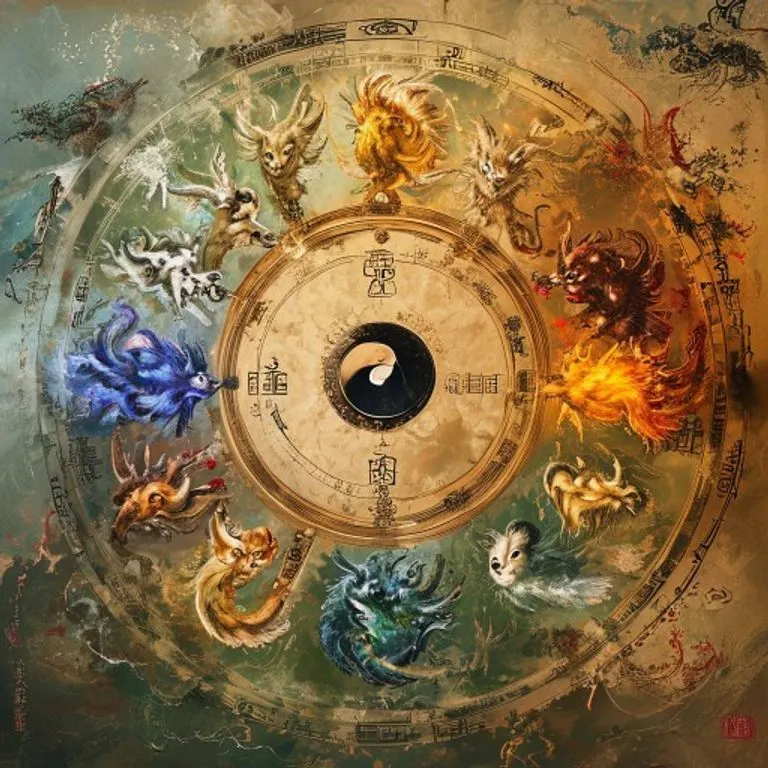
The intricate symbolism of Chinese astrology, featuring the twelve zodiac animals and the fundamental Yin-Yang principle, forms the core of its ancient wisdom.
The core of Chinese astrology lies in its sexagenary cycle, a 60-year calendar system formed by the combination of the twelve earthly branches (represented by the zodiac animals) and the ten heavenly stems (associated with the five elements in their Yin and Yang forms). This cyclical nature means that each year is not only defined by an animal but also by an elemental influence, creating a nuanced and dynamic astrological profile.
While both Eastern and Western astrological traditions seek to decipher the influence of cosmic forces on human life, their methodologies and interpretations often diverge significantly. Chinese astrology's emphasis on yearly cycles and elemental interactions provides a distinct framework for understanding personal characteristics and life trajectories.
The Twelve Zodiac Animals and Their Symbolism
The twelve zodiac animals are perhaps the most recognizable aspect of Chinese astrology, each representing a specific year in a 12-year cycle. Legend has it that these animals were chosen by the Jade Emperor in a great race, and their order in the zodiac reflects their finish. Each animal is believed to bestow distinct personality traits and characteristics upon individuals born in its year.
Understanding the symbolism of each animal is crucial to grasping the nuances of Chinese astrological readings. These archetypes provide a framework for self-understanding and interpersonal dynamics, influencing everything from career paths to romantic compatibility.
- Rat (鼠 - Shǔ): Intelligent, quick-witted, charming, and resourceful. Often seen as ambitious and adaptable, but can also be cunning and opportunistic.
- Ox (牛 - Niú): Diligent, dependable, strong, and determined. Known for their patience and steadfastness, yet can be stubborn and conservative.
- Tiger (虎 - Hǔ): Brave, confident, competitive, and charismatic. Tigers are natural leaders, but can also be impulsive and rebellious.
- Rabbit (兔 - Tù): Gentle, elegant, compassionate, and responsible. Rabbits are peace-lovers, though they can sometimes be timid and overly cautious.
- Dragon (龍 - Lóng): Enthusiastic, confident, intelligent, and ambitious. Dragons are powerful and lucky, but can be arrogant and demanding.
- Snake (蛇 - Shé): Intelligent, wise, enigmatic, and intuitive. Snakes are deep thinkers, often perceived as mysterious and can be possessive.
- Horse (馬 - Mǎ): Energetic, active, independent, and enthusiastic. Horses love freedom and adventure, but can be impatient and fickle.
- Goat/Sheep (羊 - Yáng): Gentle, mild-mannered, artistic, and compassionate. Goats are peace-loving and creative, though sometimes indecisive and overly sensitive.
- Monkey (猴 - Hóu): Witty, intelligent, curious, and playful. Monkeys are clever problem-solvers, but can be mischievous and restless.
- Rooster (鷄 - Jī): Observant, hardworking, courageous, and confident. Roosters are honest and outspoken, yet can be boastful and critical.
- Dog (狗 - Gǒu): Loyal, honest, cautious, and responsible. Dogs are faithful friends, but can be stubborn and overly protective.
- Pig (猪 - Zhū): Compassionate, generous, diligent, and honest. Pigs are good-natured and enjoy life, though they can be naive and easily fooled.
The Five Elements and Their Influence
In addition to the twelve animal signs, Chinese astrology incorporates the theory of the Five Elements (Wu Xing): Wood, Fire, Earth, Metal, and Water. These elements are not merely substances but represent fundamental types of energy in a constant state of flux and interaction, influencing everything in the cosmos, including human personality and destiny.
Each element is associated with specific qualities, directions, seasons, colors, and even internal organs. When combined with an animal sign, an element further refines and deepens the characteristics of an individual born in that year, creating a more complex and personalized astrological profile.
- Wood (木 - Mù): Associated with growth, creativity, flexibility, and generosity. Wood types are often ambitious, compassionate, and ethical. They can sometimes be overly competitive or indecisive.
- Fire (火 - Huǒ): Represents passion, energy, dynamism, and leadership. Fire types are enthusiastic, adventurous, and insightful. They can also be impulsive, restless, and aggressive.
- Earth (土 - Tǔ): Symbolizes stability, practicality, reliability, and nurturing. Earth types are grounded, patient, and responsible. They might also be stubborn, overly cautious, or resistant to change.
- Metal (金 - Jīn): Linked to determination, righteousness, discipline, and strong will. Metal types are organized, self-reliant, and principled. They can sometimes be rigid, opinionated, or aloof.
- Water (水 - Shuǐ): Represents intuition, adaptability, sensitivity, and wisdom. Water types are perceptive, empathetic, and flexible. They might also be indecisive, secretive, or prone to anxiety.
Traditional Chinese astrological instruments and texts symbolize the deep historical roots and intricate nature of this ancient practice.
The Sexagenary Cycle: Animals and Elements Combined
The true depth of Chinese astrology emerges from the combination of the twelve animal signs with the five elements. Since each element cycles through both Yin and Yang forms over two consecutive years (e.g., Yang Wood, then Yin Wood), it takes 60 years for a specific animal-element combination to repeat. This 60-year cycle, known as the Sexagenary Cycle or Ganzhi, creates 60 distinct astrological profiles, each with its unique blend of characteristics.
For example, a person born in the Year of the Wood Dragon will have different traits and a different destiny than someone born in the Year of the Fire Dragon, even though both share the Dragon's core characteristics. The element adds a layer of complexity, influencing how the animal's inherent qualities manifest.
Below is a comprehensive table illustrating the Chinese Zodiac animal and its corresponding element for various years, demonstrating the cyclical nature of these influences:
| Year Range (Approx.) | Animal Sign | Element |
|---|---|---|
| 1900 - 1901 | Rat | Metal |
| 1901 - 1902 | Ox | Metal |
| 1902 - 1903 | Tiger | Water |
| 1903 - 1904 | Rabbit | Water |
| 1904 - 1905 | Dragon | Wood |
| 1905 - 1906 | Snake | Wood |
| 1906 - 1907 | Horse | Fire |
| 1907 - 1908 | Goat | Fire |
| 1908 - 1909 | Monkey | Earth |
| 1909 - 1910 | Rooster | Earth |
| 1910 - 1911 | Dog | Metal |
| 1911 - 1912 | Pig | Metal |
| 1912 - 1913 | Rat | Water |
| 1913 - 1914 | Ox | Water |
| 1914 - 1915 | Tiger | Wood |
| 1915 - 1916 | Rabbit | Wood |
| 1916 - 1917 | Dragon | Fire |
| 1917 - 1918 | Snake | Fire |
| 1918 - 1919 | Horse | Earth |
| 1919 - 1920 | Goat | Earth |
| 1920 - 1921 | Monkey | Metal |
| 1921 - 1922 | Rooster | Metal |
| 1922 - 1923 | Dog | Water |
| 1923 - 1924 | Pig | Water |
| 1924 - 1925 | Rat | Wood |
| 1925 - 1926 | Ox | Wood |
| 1926 - 1927 | Tiger | Fire |
| 1927 - 1928 | Rabbit | Fire |
| 1928 - 1929 | Dragon | Earth |
| 1929 - 1930 | Snake | Earth |
| 1930 - 1931 | Horse | Metal |
| 1931 - 1932 | Goat | Metal |
| 1932 - 1933 | Monkey | Water |
| 1933 - 1934 | Rooster | Water |
| 1934 - 1935 | Dog | Wood |
| 1935 - 1936 | Pig | Wood |
| 1936 - 1937 | Rat | Fire |
| 1937 - 1938 | Ox | Fire |
| 1938 - 1939 | Tiger | Earth |
| 1939 - 1940 | Rabbit | Earth |
| 1940 - 1941 | Dragon | Metal |
| 1941 - 1942 | Snake | Metal |
| 1942 - 1943 | Horse | Water |
| 1943 - 1944 | Goat | Water |
| 1944 - 1945 | Monkey | Wood |
| 1945 - 1946 | Rooster | Wood |
| 1946 - 1947 | Dog | Fire |
| 1947 - 1948 | Pig | Fire |
| 1948 - 1949 | Rat | Earth |
| 1949 - 1950 | Ox | Earth |
| 1950 - 1951 | Tiger | Metal |
| 1951 - 1952 | Rabbit | Metal |
| 1952 - 1953 | Dragon | Water |
| 1953 - 1954 | Snake | Water |
| 1954 - 1955 | Horse | Wood |
| 1955 - 1956 | Goat | Wood |
| 1956 - 1957 | Monkey | Fire |
| 1957 - 1958 | Rooster | Fire |
| 1958 - 1959 | Dog | Earth |
| 1959 - 1960 | Pig | Earth |
| 1960 - 1961 | Rat | Metal |
| 1961 - 1962 | Ox | Metal |
| 1962 - 1963 | Tiger | Water |
| 1963 - 1964 | Rabbit | Water |
| 1964 - 1965 | Dragon | Wood |
| 1965 - 1966 | Snake | Wood |
| 1966 - 1967 | Horse | Fire |
| 1967 - 1968 | Goat | Fire |
| 1968 - 1969 | Monkey | Earth |
| 1969 - 1970 | Rooster | Earth |
| 1970 - 1971 | Dog | Metal |
| 1971 - 1972 | Pig | Metal |
| 1972 - 1973 | Rat | Water |
| 1973 - 1974 | Ox | Water |
| 1974 - 1975 | Tiger | Wood |
| 1975 - 1976 | Rabbit | Wood |
| 1976 - 1977 | Dragon | Fire |
| 1977 - 1978 | Snake | Fire |
| 1978 - 1979 | Horse | Earth |
| 1979 - 1980 | Goat | Earth |
| 1980 - 1981 | Monkey | Metal |
| 1981 - 1982 | Rooster | Metal |
| 1982 - 1983 | Dog | Water |
| 1983 - 1984 | Pig | Water |
| 1984 - 1985 | Rat | Wood |
| 1985 - 1986 | Ox | Wood |
| 1986 - 1987 | Tiger | Fire |
| 1987 - 1988 | Rabbit | Fire |
| 1988 - 1989 | Dragon | Earth |
| 1989 - 1990 | Snake | Earth |
| 1990 - 1991 | Horse | Metal |
| 1991 - 1992 | Goat | Metal |
| 1992 - 1993 | Monkey | Water |
| 1993 - 1994 | Rooster | Water |
| 1994 - 1995 | Dog | Wood |
| 1995 - 1996 | Pig | Wood |
| 1996 - 1997 | Rat | Fire |
| 1997 - 1998 | Ox | Fire |
| 1998 - 1999 | Tiger | Earth |
| 1999 - 2000 | Rabbit | Earth |
| 2000 - 2001 | Dragon | Metal |
| 2001 - 2002 | Snake | Metal |
| 2002 - 2003 | Horse | Water |
| 2003 - 2004 | Goat | Water |
| 2004 - 2005 | Monkey | Wood |
| 2005 - 2006 | Rooster | Wood |
| 2006 - 2007 | Dog | Fire |
| 2007 - 2008 | Pig | Fire |
| 2008 - 2009 | Rat | Earth |
| 2009 - 2010 | Ox | Earth |
| 2010 - 2011 | Tiger | Metal |
| 2011 - 2012 | Rabbit | Metal |
| 2012 - 2013 | Dragon | Water |
| 2013 - 2014 | Snake | Water |
| 2014 - 2015 | Horse | Wood |
| 2015 - 2016 | Goat | Wood |
| 2016 - 2017 | Monkey | Fire |
| 2017 - 2018 | Rooster | Fire |
| 2018 - 2019 | Dog | Earth |
| 2019 - 2020 | Pig | Earth |
| 2020 - 2021 | Rat | Metal |
| 2021 - 2022 | Ox | Metal |
| 2022 - 2023 | Tiger | Water |
| 2023 - 2024 | Rabbit | Water |
| 2024 - 2025 | Dragon | Wood |
| 2025 - 2026 | Snake | Wood |
| 2026 - 2027 | Horse | Fire |
| 2027 - 2028 | Goat | Fire |
| 2028 - 2029 | Monkey | Earth |
| 2029 - 2030 | Rooster | Earth |
| 2030 - 2031 | Dog | Metal |
| 2031 - 2032 | Pig | Metal |
| 2032 - 2033 | Rat | Water |
| 2033 - 2034 | Ox | Water |
| 2034 - 2035 | Tiger | Wood |
| 2035 - 2036 | Rabbit | Wood |
| 2036 - 2037 | Dragon | Fire |
| 2037 - 2038 | Snake | Fire |
| 2038 - 2039 | Horse | Earth |
| 2039 - 2040 | Goat | Earth |
Planetary Associations in Chinese Astrology
While the core of Chinese astrology revolves around the zodiac animals and elements, it also incorporates planetary influences, albeit with different interpretations than Western astrology. In Chinese thought, the five major planets are deeply connected to the five elements, further enriching the astrological landscape.
These associations are fundamental to understanding the cosmic energies at play:
- Metal: Associated with the planet Venus (金星 - Jīnxīng). Venus represents beauty, harmony, and wealth, aligning with Metal's qualities of refinement and value.
- Wood: Linked to the planet Jupiter (木星 - Mùxīng). Jupiter signifies growth, expansion, and benevolence, resonating with Wood's characteristics of vitality and development.
- Water: Connected to the planet Mercury (水星 - Shuǐxīng). Mercury governs communication, intellect, and adaptability, mirroring Water's fluidity and wisdom.
- Fire: Corresponds to the planet Mars (火星 - Huǒxīng). Mars embodies passion, energy, and assertiveness, reflecting Fire's dynamic and powerful nature.
- Earth: Associated with the planet Saturn (土星 - Tǔxīng). Saturn represents discipline, responsibility, and stability, aligning with Earth's grounded and practical attributes.
From the perspective of Chinese astrology, these planets, in conjunction with the Sun and Moon, the individual's birth date, zodiac sign, and other celestial bodies like comets, are believed to collectively mark an individual's fate. They contribute to a comprehensive map of one's life path, potential challenges, and inherent strengths.
Other Interpretations and Divination Methods
Beyond the animal zodiac and elemental cycles, Chinese astrology encompasses other sophisticated divination systems. One notable example is Zǐwēidǒushù (紫微斗數), often translated as "Purple Star Astrology." This intricate system uses complex formulas based on the exact date and time of birth to construct a detailed astrological chart.
Zǐwēidǒushù has been utilized since ancient times to predict a person's fortune, analyze their personality, and identify periods of luck or challenge. It considers various "stars" (not necessarily Western constellations) and their positions in different "palaces" of a birth chart, each representing a different aspect of life, such as career, relationships, wealth, and health.

The abstract interplay of cosmic energies and elemental forces, as depicted in Chinese astrology, shapes the unseen pathways of individual destiny.
While both Chinese and Western astrology aim to visualize a person's future, their methodologies differ significantly. Chinese astrology places less emphasis on fixed constellations and more on cyclical time, elemental interactions, and the interplay of Yin and Yang. However, the ultimate goal remains the same: to provide guidance, highlight possibilities, and shed light on an individual's inherent qualities and potential shortcomings.
Cultural Variations of the Chinese Zodiac
The Chinese Zodiac's influence extends far beyond China's borders, with several Asian cultures adopting and adapting the system to their unique traditions. While the core concept of twelve animal signs remains, some variations exist in the specific animals represented.
- Vietnamese Zodiac: Largely identical to the Chinese Zodiac, with one notable difference. The fourth animal in the Chinese Zodiac, the Rabbit, is replaced by the Cat (Mão) in the Vietnamese Zodiac. This substitution is thought to stem from linguistic differences and ancient legends.
- Japanese Zodiac: In Japan, the zodiac is also based on a 12-year cycle, but the Pig (猪 - Zhū) is often replaced by the Boar (亥 - Inoshishi). While both are swine, the wild boar carries a distinct cultural symbolism in Japan compared to the domesticated pig.
Despite these minor variations, the fundamental principles of cyclical time, animal symbolism, and elemental influences remain consistent across these East Asian astrological traditions. In Europe and America, the Chinese Horoscope or Chinese Zodiac is generally used with all the traditional animals, including the Dragon, Rabbit, and Pig, maintaining its original form.
Chinese vs. Western Astrology: A Comparative View
While both Chinese and Western astrology offer frameworks for understanding personality and destiny, their foundational principles and methodologies are quite distinct. Western astrology is based on the tropical zodiac, which aligns with the seasons and the apparent path of the sun through twelve constellations.
Key differences include:
- Time Basis: Chinese astrology is lunar-based, with yearly cycles, whereas Western astrology is solar-based, with monthly cycles.
- Zodiac Signs: Chinese astrology uses twelve animal signs, each governing a full year. Western astrology uses twelve zodiac signs (e.g., Aries, Taurus), each governing approximately one month.
- Elements: Chinese astrology uses five elements (Wood, Fire, Earth, Metal, Water) that combine with animal signs. Western astrology traditionally uses four elements (Fire, Earth, Air, Water) associated with zodiac signs.
- Focus: Chinese astrology often emphasizes collective fate, family lineage, and the interplay of elements. Western astrology tends to focus more on individual personality, psychological development, and planetary aspects.
Despite these differences, both systems share the common goal of providing self-awareness and guidance. They offer different perspectives on the intricate relationship between humanity and the cosmos, inviting individuals to explore their inner selves and their place in the larger universe.
Here's a general matching of Chinese Zodiac animals to their closest Western astrological counterparts, based on shared characteristics and not precise dates:
| Chinese Zodiac Animal | Western Zodiac Sign |
|---|---|
| Rat | Sagittarius |
| Ox | Capricorn |
| Tiger | Aquarius |
| Rabbit | Pisces |
| Dragon | Aries |
| Snake | Taurus |
| Horse | Gemini |
| Goat | Cancer |
| Monkey | Leo |
| Rooster | Virgo |
| Dog | Libra |
| Pig | Scorpio |
Conclusion: The Enduring Wisdom of Chinese Astrology
Chinese astrology, with its rich history, intricate cycles, and profound symbolism, offers a compelling framework for understanding the human condition. From the distinct personalities attributed to each of the twelve zodiac animals to the refining influence of the five elements, this ancient system provides a holistic view of an individual's potential and challenges.
Its enduring popularity, both in Asia and increasingly in the West, speaks to its timeless wisdom and its ability to resonate with people seeking deeper insights into themselves and their interactions with the world. By exploring the depths of Chinese astrology, one can gain a greater appreciation for the cyclical nature of life and the interconnectedness of all things.
Whether used for personal reflection, guidance in relationships, or understanding broader life patterns, the Chinese Zodiac remains a powerful tool for self-discovery and a testament to humanity's continuous quest for meaning in the cosmos.
Fuente: Contenido híbrido asistido por IAs y supervisión editorial humana.


Comments
Post a Comment