
Natal Chart: Blueprint of Destiny | StarPluto
The natal chart, often referred to as an astral chart or birth chart, stands as a cornerstone in the practice of astrology. It is not merely a generalized horoscope but a unique cosmic blueprint, a snapshot of the heavens precisely at the moment and location of an individual's birth. This intricate map captures the exact positions of celestial bodies, including the Sun, Moon, and planets, relative to the Earth, offering profound insights into an individual's personality, potential, challenges, and life path.
Understanding one's natal chart is akin to possessing a detailed instruction manual for one's own existence, revealing inherent strengths, areas for growth, and the underlying energetic currents that shape experiences. It provides a framework for self-discovery and a deeper appreciation of one's place within the larger cosmic tapestry.
Table of Contents
- Historical Roots of Astrological Mapping
- Key Components of a Natal Chart
- The Process of Chart Calculation
- Interpreting Your Natal Chart: A Deeper Dive
- Beyond the Basics: Advanced Natal Chart Analysis
- The Enduring Significance of Natal Charts
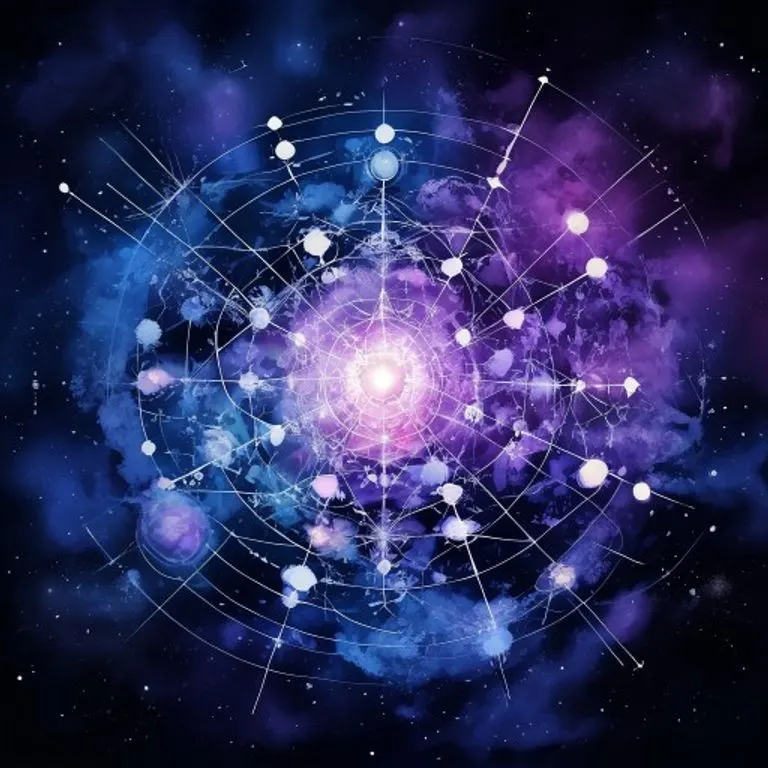
The Tarot Esoteric Geometry: Unlocking Universal Truths Sacred Shapes is a unique celestial snapshot, revealing an individual's cosmic blueprint at the moment of birth.
Historical Roots of Astrological Mapping
The practice of casting and interpreting natal charts dates back millennia, with roots in ancient Mesopotamian civilizations, particularly Babylonia. Early astrologers observed the movements of celestial bodies, correlating them with earthly events and human destinies. This foundational knowledge was later refined and expanded by the Egyptians, Greeks, and Romans, who integrated their own philosophical and mythological frameworks into the burgeoning science of astrology.
During the Hellenistic period, around the 1st century BCE, the concept of the twelve zodiac signs and the system of astrological houses became more standardized. This era saw the development of sophisticated mathematical methods for calculating planetary positions, allowing for increasingly accurate and personalized charts. The transmission of this knowledge through Islamic scholars during the Middle Ages preserved and further developed astrological techniques, eventually reintroducing them to Europe during the Renaissance.
Historically, creating a natal chart was a laborious process, requiring extensive astronomical tables (ephemerides), complex mathematical calculations, and a deep understanding of celestial mechanics. Astrologers would meticulously plot each planet's position, the ascendant, and the house cusps for a specific birth time and location. This manual effort underscored the profound respect and dedication given to this ancient art and science.
Key Components of a Natal Chart
A natal chart is a complex diagram, typically a circle divided into twelve sections, each representing a specific area of life. Within this circle, various symbols denote the planets, zodiac signs, and other astrological points. Understanding these core components is essential for deciphering the chart's message.
Planets: Celestial Influencers
In astrology, planets are not merely astronomical bodies but archetypal forces representing different facets of the human psyche and life experience. Each planet governs specific drives, functions, and energies that manifest in an individual's personality and actions. The ten main celestial bodies considered in a natal chart are the Sun, Moon, Mercury, Venus, Mars, Jupiter, Saturn, Uranus, Neptune, and Pluto.
- Sun: Represents the ego, core identity, vitality, and conscious self.
- Moon: Symbolizes emotions, instincts, subconscious patterns, and inner nature.
- Mercury: Governs communication, intellect, learning, and thought processes.
- Venus: Rules love, relationships, aesthetics, values, and pleasure.
- Mars: Represents drive, ambition, action, courage, and aggression.
- Jupiter: Associated with growth, expansion, wisdom, luck, and philosophy.
- Saturn: Signifies discipline, responsibility, limitations, structure, and karma.
- Uranus: Represents innovation, rebellion, sudden changes, and individuality.
- Neptune: Governs spirituality, dreams, illusion, intuition, and compassion.
- Pluto: Symbolizes transformation, power, death, rebirth, and profound change.
Zodiac Signs: The Cosmic Backdrop
The twelve zodiac signs (Aries, Taurus, Gemini, Cancer, Leo, Virgo, Libra, Scorpio, Sagittarius, Capricorn, Aquarius, Pisces) represent twelve distinct energetic qualities or archetypes. Each sign spans 30 degrees of the zodiacal circle, and the sign a planet occupies in a natal chart describes *how* that planetary energy expresses itself. For instance, Mars in Aries will express its drive differently than Mars in Libra.
The zodiac signs are grouped by elements (Fire, Earth, Air, Water) and modalities (Cardinal, Fixed, Mutable), providing further layers of interpretation. These classifications offer a nuanced understanding of how an individual's core energies operate and interact within their personality structure. To learn more about specific signs, explore our Tarot Esoteric Geometry: Unlocking Universal Truths Sacred Shapes section.
Houses: Spheres of Life Experience
The natal chart is divided into twelve astrological houses, each corresponding to a specific area of life experience. Unlike the zodiac signs, which are fixed in their position along the ecliptic, the houses are determined by the exact time and place of birth, as they relate to the Earth's rotation. The cusp of the 1st House, known as the Ascendant, is particularly significant as it represents the sign rising on the eastern horizon at birth, symbolizing one's outward personality and approach to the world.

The intricate design of an Cosmic Sociology Celestial Mechanics Global Consciousness Digital, a testament to ancient astronomical precision.
The house system provides the context for planetary energies and zodiacal influences. For example, if Venus (love, values) is in the 7th House (relationships), it suggests that relationships are a prominent area where Venusian energies play out. Here's a brief overview of the houses:
| House | Area of Life | Keywords |
|---|---|---|
| 1st House | Self, Appearance, Persona | Identity, first impressions, physical body |
| 2nd House | Possessions, Values, Resources | Money, self-worth, material security |
| 3rd House | Communication, Siblings, Short Journeys | Learning, local environment, daily interactions |
| 4th House | Home, Family, Roots | Ancestry, emotional foundations, private life |
| 5th House | Creativity, Romance, Children, Pleasure | Self-expression, hobbies, speculation |
| 6th House | Work, Health, Service | Daily routines, diet, employees, pets |
| 7th House | Partnerships, Marriage, Open Enemies | One-on-one relationships, contracts |
| 8th House | Transformation, Shared Resources, Sex, Death | Inheritance, psychology, occult, regeneration |
| 9th House | Higher Education, Philosophy, Travel, Law | Spirituality, foreign cultures, publishing |
| 10th House | Career, Public Image, Reputation | Status, ambition, life direction, authority |
| 11th House | Friends, Groups, Hopes, Wishes | Social networks, humanitarian causes, future goals |
| 12th House | Subconscious, Spirituality, Hidden Enemies, Self-Undoing | Isolation, karma, dreams, intuition, institutions |
Aspects: Planetary Relationships
Aspects are the angular relationships between planets in a natal chart, measured in degrees. These angles indicate how the energies of different planets interact, revealing areas of harmony, tension, challenge, or opportunity within an individual's psyche and life. Major aspects include conjunctions (0°), oppositions (180°), trines (120°), squares (90°), and sextiles (60°).
- Conjunctions: Blend energies, intensifying their combined influence.
- Oppositions: Create tension and awareness, often leading to balance or conflict.
- Trines: Indicate ease, flow, and natural talent; energies work harmoniously.
- Squares: Represent challenges, obstacles, and friction, prompting growth and effort.
- Sextiles: Offer opportunities and supportive energies, requiring conscious effort to utilize.
The interplay of these aspects paints a dynamic picture of an individual's inner world and external experiences. For a deeper understanding of these planetary interactions, consider exploring our article on Astrological Aspects: Conjunctions, Oppositions, Trines Explained.
The Process of Chart Calculation
Accurately calculating a natal chart is paramount to its correct interpretation. The precision of the chart hinges on a few critical pieces of information.
Essential Data: Time, Date, and Place of Birth
To cast a natal chart, three pieces of information are absolutely indispensable: the exact date of birth, the precise time of birth (down to the minute), and the accurate geographical location of birth (city, state, country). These data points allow for the calculation of the sidereal time, which is crucial for determining the Ascendant and the house cusps.
Even a slight variation in birth time can significantly alter the Ascendant and house placements, leading to a different chart interpretation. Therefore, it is always recommended to obtain birth time from official documents, such as a birth certificate, rather than relying on memory or anecdotal evidence. Without an accurate birth time, only a "solar chart" can be cast, which provides general planetary placements but lacks the personalized house system.
Manual vs. Digital Computation
Historically, natal charts were calculated manually using ephemerides (tables of planetary positions), tables of houses, and complex mathematical formulas to account for time zones, daylight saving, and geographical coordinates. This was a time-consuming and expertise-demanding task, prone to human error, requiring deep astrological and astronomical knowledge.

The intricate web of Tarot Esoteric Geometry: Unlocking Universal Truths Sacred Shapes, illustrating the complex interplay of astrological influences.
Today, the advent of computer technology has revolutionized chart calculation. Sophisticated astrological software and online tools can generate highly accurate natal charts in seconds, eliminating manual errors and providing precise planetary positions, house cusps, and aspects. Many of these programs utilize data from reputable astronomical sources, such as NASA's Jet Propulsion Laboratory, ensuring scientific accuracy in celestial positioning. This technological advancement has made astrology more accessible to a wider audience, allowing individuals to easily obtain their personal charts.
Interpreting Your Natal Chart: A Deeper Dive
While calculating a natal chart is a technical process, interpreting it is an art and a science that requires intuition, knowledge, and experience. The chart is not a rigid prediction of fate but a map of potential, offering guidance and self-understanding.
The Role of the Astrologer
A skilled astrologer acts as a guide, translating the complex symbology of the natal chart into meaningful insights. They synthesize the interplay of planets, signs, houses, and aspects to paint a holistic picture of an individual's psychological makeup, life themes, and evolutionary journey. A professional interpretation goes beyond simply listing placements; it weaves them into a coherent narrative that resonates with the individual's lived experience.
Astrologers help individuals understand their inherent talents, identify potential challenges, and navigate life transitions with greater awareness. Their expertise lies in discerning the subtle nuances and hierarchical significance of various chart elements, offering personalized advice and fostering self-empowerment. For insights into astrological compatibility, you might find our article on Zodiac Compatibility Advanced: Elemental Ascendant Influences particularly useful.
Modern Software and AI in Astrology
While human interpretation remains invaluable, modern astrological software has advanced significantly, offering not only calculation capabilities but also interpretive modules. These programs can provide detailed reports based on established astrological principles, explaining the meaning of each planetary placement, sign, house, and aspect. Some even incorporate artificial intelligence to generate more nuanced and integrated readings.
However, it is crucial to remember that software-generated interpretations, while informative, often lack the intuitive depth, personalized dialogue, and empathetic understanding that a human astrologer can provide. They serve as excellent tools for learning and initial exploration but should ideally be complemented by experienced guidance for deeper insights. The combination of technology and human wisdom offers the most comprehensive approach to natal chart analysis.
Beyond the Basics: Advanced Natal Chart Analysis
Once the fundamental components of a natal chart are understood, advanced astrological techniques can be employed to gain even deeper insights. These include examining planetary dignities and debilities, chart patterns, midpoints, fixed stars, and various predictive techniques such as transits, progressions, and solar arc directions.
Predictive astrology uses the natal chart as a baseline to understand how current or future planetary movements (transits) interact with an individual's birth placements. This can indicate periods of significant change, challenge, or opportunity, helping individuals prepare for and navigate life's cycles. For those interested in the deeper layers of astrological influence, exploring topics like Karmic Astrology: Past Life Connections Natal Chart can offer fascinating perspectives.
Furthermore, specialized branches of astrology, such as electional astrology (choosing auspicious times for events) and horary astrology (answering specific questions based on a chart cast at the moment the question is asked), also build upon the foundational principles of natal chart interpretation. These advanced applications demonstrate the versatility and depth of astrological practice.
The Enduring Significance of Natal Charts
The natal chart remains a powerful tool for self-understanding and personal growth. It offers a unique lens through which to view one's life, providing context for experiences and illuminating inherent potentials. By understanding the energies at play in their chart, individuals can make more conscious choices, align with their true purpose, and cultivate greater self-acceptance.
In a world that often encourages conformity, the natal chart celebrates individuality, highlighting the unique combination of cosmic influences that make each person distinct. It serves as a reminder that we are all microcosms of the universe, intricately connected to the celestial dance above. Whether approached from a spiritual, psychological, or purely intellectual perspective, the natal chart offers a profound journey into the self, fostering wisdom and personal evolution.
Fuente: Contenido híbrido asistido por IAs y supervisión editorial humana.


Comments
Post a Comment