
Birth Chart Components: Understanding Your Cosmic Blueprint | StarPluto
Understanding the components of a birth chart, also known as a natal chart or horoscope, is fundamental to astrological interpretation. This intricate diagram serves as a snapshot of the heavens at the precise moment and location of an individual's birth. It reveals the positions of the Sun, Moon, planets, and other celestial points within the zodiac signs and astrological houses.
The accuracy of a birth chart is paramount, as even slight variations in birth data can significantly alter its configuration. Astrologers rely on this precise celestial map to gain insights into a person's personality, potential, challenges, and life path. It acts as a cosmic blueprint, offering a unique perspective on one's inherent nature and destiny.
Table of Contents
- The Core Data: Date, Time, and Place of Birth
- The Zodiac Signs: Twelve Archetypes
- The Planets: Cosmic Actors and Their Roles
- The Astrological Houses: Spheres of Life
- Aspects: Planetary Relationships and Dynamics
- The Ascendant, Descendant, Midheaven, and Imum Coeli: Angular Points
- The Importance of Accuracy in Birth Chart Calculation
- Modern Tools for Natal Chart Generation
- Beyond the Basics: Advanced Chart Components
- Interpreting Your Birth Chart: A Journey of Self-Discovery
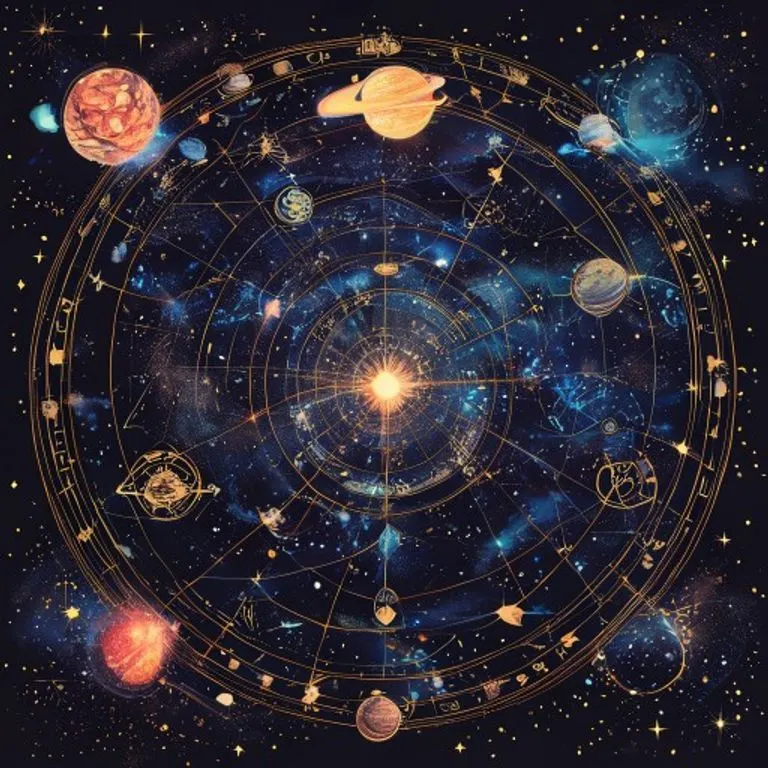
The birth chart is a complex celestial map, reflecting the unique cosmic energies at the moment of birth.
The Core Data: Date, Time, and Place of Birth
The foundation of any accurate birth chart lies in three crucial pieces of information: the exact date, time, and geographical location of birth. These data points are non-negotiable for a precise astrological reading. Without them, the chart's integrity and interpretive value are significantly compromised.
The date of birth determines the Sun sign, which represents the core identity and ego. However, the time of birth, down to the minute, is essential for calculating the Ascendant (rising sign) and the precise cusps of the astrological houses. The Ascendant defines how an individual presents themselves to the world and their initial approach to life.
Similarly, the place of birth, including country, state, and city, is vital for adjusting for time zones and geographical coordinates. These adjustments ensure that the celestial positions are accurately mapped to the specific horizon at the moment of birth. A difference of even a few miles or minutes can shift planetary positions and house alignments, leading to entirely different interpretations.
MINIMUM COMPONENTS - HOROSCOPE
TIME - (hh: mm: ss)
BIRTHPLACE - (Country / Department, State or State / City)
DATE OF BIRTH - (dd / mm / yyyy)
* The correct basic minimum information set out above, it is necessary to properly raise a chart, horoscope or birth chart; and thus obtain as accurate, useful and practical prediction or interpretation astral possible.
* The reason why the information should be as accurate, because in one hour is given for example at 5 am The sun may be in Virgo and 6 am may already be in Libra, and so with the other planets also so does the astrological houses, ascending, descending, midheaven, under heaven, favorable or unfavorable aspects. To this must be added the fact geographical location as for example: Two people are born exactly on time mism on the same day, but one axle. born in Madrid and the other born in NewYork, the charts will be totally different, as there are several time zones apart to amend the astrological houses in which the planets would be located and location have the same astral planets at the time, but in different astrological houses, as they are from each birthplace in different positions and astral houses, astrologically speaking; therefore concerned horoscopes or astrology chart will be different....
The Zodiac Signs: Twelve Archetypes
The zodiac is a celestial belt divided into twelve 30-degree segments, each corresponding to a specific sign. These twelve signs—Aries, Taurus, Gemini, Cancer, Leo, Virgo, Libra, Scorpio, Sagittarius, Capricorn, Aquarius, and Pisces—represent fundamental archetypes and energy patterns. Each sign is associated with particular personality traits, motivations, and ways of expressing energy.
The signs are further categorized by elements (Fire, Earth, Air, Water) and modalities (Cardinal, Fixed, Mutable). These classifications add layers of meaning to their interpretation. For instance, Fire signs (Aries, Leo, Sagittarius) are known for their passion and drive, while Earth signs (Taurus, Virgo, Capricorn) are practical and grounded.
Understanding which signs various planets fall into in a birth chart is crucial. A planet's energy is filtered and expressed through the lens of the sign it occupies. For example, Mars in Aries will express its assertive energy differently than Mars in Libra, which might be more focused on balanced action.
The Planets: Cosmic Actors and Their Roles
In astrology, the Sun, Moon, and planets are considered the "actors" or "forces" within the birth chart. Each celestial body represents a specific psychological function, drive, or area of life. Their positions in the zodiac signs and houses reveal how these functions operate within an individual.
The Sun symbolizes the ego, vitality, and conscious will, while the Moon represents emotions, instincts, and subconscious patterns. Mercury governs communication and intellect, Venus relates to love and values, and Mars signifies drive and assertion. The outer planets—Jupiter, Saturn, Uranus, Neptune, and Pluto—represent broader societal influences, generational themes, and deeper psychological processes.
Beyond the traditional planets, modern astrology also considers points like Chiron, the North and South Nodes of the Moon, and various asteroids. These add further nuance and depth to the chart, highlighting areas of healing, destiny, and specific talents or challenges. Each planet's unique role contributes to the overall narrative of the birth chart.

The precision of ancient instruments underscores the importance of accurate data in astrological calculations.
The Astrological Houses: Spheres of Life
The astrological houses divide the birth chart into twelve segments, each representing a different area of life experience. Unlike the zodiac signs, which are fixed, the houses are determined by the time and place of birth, rotating with the Earth's daily movement. This makes the birth time absolutely crucial for accurate house placement.
The First House, for example, relates to personality and self-image, while the Seventh House governs partnerships and relationships. The Tenth House signifies career and public image, and the Fourth House represents home and family roots. Planets located within a specific house will exert their influence most strongly in that area of life.
The sign on the cusp (beginning) of each house also colors the experiences associated with that life area. For instance, having Aries on the cusp of the Second House (finances) might indicate an impulsive approach to money, whereas Taurus on the same cusp would suggest a more stable and cautious attitude. Different house systems (Placidus, Koch, Whole Sign, etc.) exist, each offering a slightly different perspective on these life divisions.
Aspects: Planetary Relationships and Dynamics
Aspects are the angular relationships between planets in a birth chart, measured in degrees. These angles reveal how the energies of different planets interact with each other, indicating areas of harmony, tension, challenge, or opportunity. Aspects are a critical layer of interpretation, showing the dynamic interplay within an individual's psyche and life.
Major aspects include conjunctions (0 degrees, merging energies), oppositions (180 degrees, polarity and balance), trines (120 degrees, ease and flow), squares (90 degrees, tension and challenge), and sextiles (60 degrees, opportunity and cooperation). Each aspect describes a particular type of relationship between the planetary energies involved.
For example, a trine between Venus and Jupiter might suggest natural charm and good fortune in relationships, while a square between Mars and Saturn could indicate struggles with authority or inhibited assertiveness. Astrologers analyze these aspects to understand the complex tapestry of an individual's strengths, weaknesses, and potential for growth. You can explore more about astrological aspects and planetary relationships on our site.

The birth chart is a powerful tool for self-discovery, connecting personal identity with universal patterns.
The Ascendant, Descendant, Midheaven, and Imum Coeli: Angular Points
Beyond the planets, signs, and houses, specific angular points in the birth chart hold profound significance. These are the Ascendant (AC), Descendant (DC), Midheaven (MC), and Imum Coeli (IC). They form the four cardinal points of the chart, representing key areas of life direction and experience.
The Ascendant, or Rising Sign, is the zodiac sign rising on the eastern horizon at the moment of birth. It symbolizes the outer personality, physical appearance, and how one initiates action. The Descendant, directly opposite the Ascendant, represents partnerships, relationships, and how one engages with others.
The Midheaven (MC) is the highest point in the chart, signifying career, public image, and life direction. It reflects one's ambitions and achievements in the world. Conversely, the Imum Coeli (IC), opposite the MC, represents roots, home, family, and the private inner life. These four angles provide a structural framework for understanding an individual's life journey.
The Importance of Accuracy in Birth Chart Calculation
As highlighted earlier, the precision of birth data is not merely a technicality; it is the bedrock of accurate astrological analysis. A difference of just a few minutes in birth time can alter the Ascendant sign, shift house cusps, and change planetary aspects. This can lead to a completely different interpretation of an individual's chart.
For instance, if someone is born at 5:58 AM with Virgo rising, but their birth time is recorded as 6:02 AM, their chart might incorrectly show Libra rising. These two signs have vastly different characteristics, and the subsequent house placements and planetary interpretations would be erroneous. Astrologers often perform a process called "rectification" to determine a more accurate birth time if the exact time is unknown.
Similarly, geographical location accounts for time zones and longitudinal differences, ensuring the correct celestial positions relative to the observer's horizon. Without this accuracy, the birth chart becomes a generalized sketch rather than a precise portrait of an individual's cosmic influences.
Modern Tools for Natal Chart Generation
In contemporary astrology, the calculation of birth charts has been revolutionized by technology. While manual calculations were once a painstaking process, sophisticated astrological software and online calculators now perform these complex computations with speed and precision. These tools require the same exact birth data but eliminate human error in calculation.
Users simply input the date, time, and location of birth, and the software generates a visual representation of the natal chart, complete with planetary positions, house cusps, and aspectarian tables. Many programs also provide interpretive texts, though these should always be seen as a starting point for deeper astrological study with a qualified astrologer.
The accessibility of these tools has democratized astrology, allowing more people to explore their own charts. However, it also underscores the importance of understanding the underlying components and the need for accurate input data to ensure the validity of the generated chart. Learn more about the basic definition of a horoscope or birth chart.
Beyond the Basics: Advanced Chart Components
For those who delve deeper into astrology, the birth chart offers layers of complexity beyond the fundamental components. Advanced techniques consider various mathematical points, hypothetical planets, and specific chart patterns. These elements provide even more granular insights into an individual's psychological makeup and life experiences.
Some advanced components include the Lunar Nodes (Rahu and Ketu in Vedic astrology), which represent karmic paths and soul evolution. Chiron, the Wounded Healer, points to areas of deep pain and potential for healing. Lilith, or the Black Moon Lilith, symbolizes suppressed desires and raw feminine power. These points add significant psychological depth to a reading.
Additionally, various asteroid goddesses (Ceres, Pallas, Juno, Vesta) and fixed stars are sometimes incorporated into interpretations. While not universally used by all astrologers, these advanced components offer specialized insights for those seeking a more nuanced understanding of their cosmic blueprint. Discover more about planets in astrology and their role in a natal chart.
Interpreting Your Birth Chart: A Journey of Self-Discovery
Interpreting a birth chart is a complex art that combines knowledge of astrological principles with intuitive insight. It's not about predicting a fixed future, but rather understanding inherent potentials and challenges. The chart provides a framework for self-awareness, helping individuals to navigate their lives with greater understanding and purpose.
By examining the interplay of planets in signs and houses, and the dynamics of aspects, an astrologer can paint a comprehensive picture of a person's strengths, vulnerabilities, and unique life lessons. It can illuminate career paths, relationship dynamics, emotional patterns, and areas ripe for personal growth. This journey of self-discovery through astrology is continuous and evolving.
Ultimately, the birth chart is a tool for empowerment. It encourages individuals to embrace their authentic selves, understand their motivations, and make conscious choices aligned with their deepest nature. It is a profound guide to unlocking one's full potential and living a more fulfilling life. For further exploration, consider delving into the influence of zodiac signs on people's lives.
Fuente: Contenido híbrido asistido por IAs y supervisión editorial humana.


Comments
Post a Comment