
Horoscope, Birth Chart: Definition & Astrological Impact | StarPluto
The terms horoscope, birth chart, and astral letter are often used interchangeably, yet they refer to a singular, profound concept in astrology: a detailed map of the heavens at the precise moment and location of an individual's birth. This celestial snapshot serves as a blueprint of one's potential, challenges, and inherent characteristics, offering deep insights into personality, life path, and destiny.
Far from being a mere daily prediction, a birth chart is an intricate diagram that plots the positions of the Sun, Moon, planets, and other celestial points within the twelve zodiac signs and twelve astrological houses. Its interpretation requires a nuanced understanding of astronomical calculations, astrological symbolism, and psychological insights, making it a powerful tool for self-discovery and personal growth.
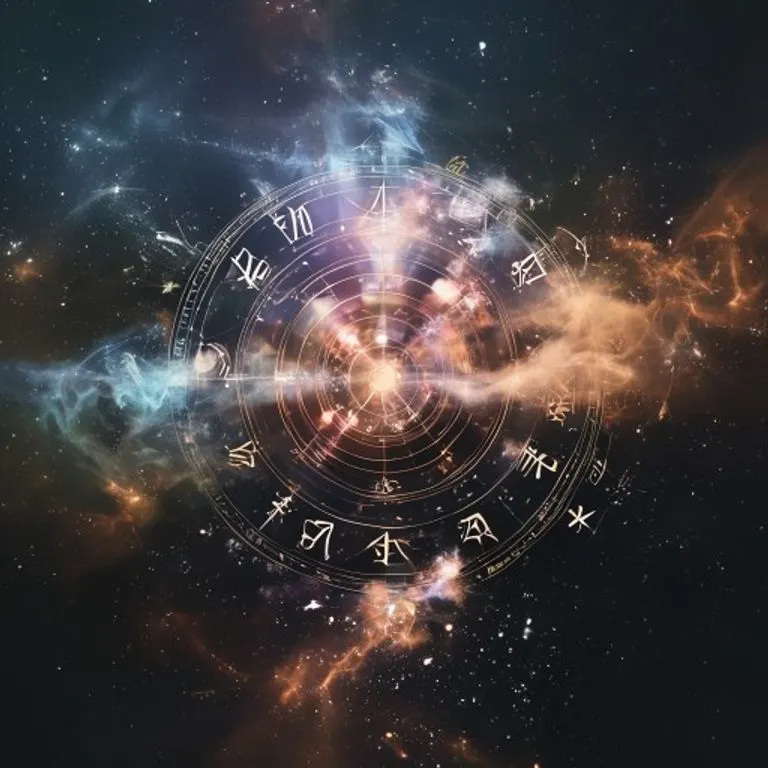
The birth chart is a celestial map, capturing the exact positions of planets and zodiac signs at the moment of birth.
Table of Contents
- Astrology Inclines, Not Determines: The Core Principle
- Key Components of a Birth Chart
- The Imperative of Precision: Date, Time, and Place
- The Astrologer's Role: Interpretation and Guidance
- Practical Applications of Your Natal Chart
- Historical Roots and Modern Evolution of Astrology
- Beyond Daily Horoscopes: The Depth of a Birth Chart
- Conclusion: Navigating Life with Your Cosmic Map
Astrology Inclines, Not Determines: The Core Principle
A foundational principle in serious astrological study is the adage: "Astrology inclines, but does not determine." This statement underscores the belief that while our birth chart reveals inherent tendencies, talents, and challenges, it does not dictate an unchangeable fate. Instead, it highlights the influence of celestial energies on our personality and life circumstances, providing a framework within which our free will operates.
This perspective empowers individuals to utilize their birth chart as a guide for self-awareness and conscious decision-making. By understanding their astrological predispositions, a person can consciously work with their strengths, mitigate potential weaknesses, and navigate life's currents with greater insight. It’s about recognizing the cosmic weather at your birth and learning how to sail your unique ship effectively.
Key Components of a Birth Chart
A birth chart is a complex tapestry woven from several core astrological elements. Each component contributes a unique layer of meaning, and their interplay creates the intricate portrait of an individual's psyche and life journey. Understanding these elements is crucial for any meaningful interpretation.
Planets in Astrology
In astrology, the term "planets" extends beyond the astronomical definition to include the Sun and Moon, which are considered luminaries. Each planet symbolizes a specific drive, function, or area of experience within the human psyche. Their positions in the zodiac signs and houses reveal how these energies manifest in an individual's life.
- Sun: Represents the core self, ego, vitality, and conscious purpose.
- Moon: Symbolizes emotions, instincts, habits, and the subconscious.
- Mercury: Governs communication, intellect, learning, and reasoning.
- Venus: Rules love, relationships, aesthetics, values, and pleasure.
- Mars: Represents drive, action, aggression, courage, and desire.
- Jupiter: Signifies expansion, luck, wisdom, philosophy, and growth.
- Saturn: Associated with discipline, responsibility, limitations, structure, and karma.
- UUranus: Rules innovation, rebellion, sudden change, and individuality.
- Neptune: Governs spirituality, dreams, illusion, compassion, and dissolution.
- Pluto: Symbolizes transformation, power, death, rebirth, and profound change.
Zodiac Signs: The Cosmic Backdrop
The twelve zodiac signs (Aries, Taurus, Gemini, Cancer, Leo, Virgo, Libra, Scorpio, Sagittarius, Capricorn, Aquarius, Pisces) represent twelve fundamental archetypes or energy patterns. They describe the "how" a planet's energy expresses itself. For example, Mars in Aries acts differently than Mars in Libra, reflecting the sign's inherent qualities.
Each sign belongs to one of four elements (Fire, Earth, Air, Water) and one of three modalities (Cardinal, Fixed, Mutable), which further refine their characteristics. The combination of a planet's fundamental drive with the sign's expressive quality forms a crucial part of astrological interpretation, painting a vivid picture of an individual's behavioral patterns.
Astrological Houses: Areas of Life
The birth chart is divided into twelve astrological houses, each representing a specific area of life experience. Unlike the zodiac signs, which are fixed in their order, the houses are determined by the exact time and place of birth, as they relate to the Earth's rotation. This makes the houses highly personal to each individual's chart.
The cusp of the First House, known as the Ascendant or Rising Sign, is particularly significant. It marks the zodiac sign that was rising on the eastern horizon at the moment of birth and represents our outer personality, our initial approach to the world, and our physical appearance. The houses describe the "where" a planet's energy will be most active in life.
| House | Key Themes | Associated Sign |
|---|---|---|
| 1st House | Self, appearance, personality, new beginnings | Aries |
| 2nd House | Values, possessions, money, self-worth | Taurus |
| 3rd House | Communication, siblings, short journeys, early education | Gemini |
| 4th House | Home, family, roots, emotional foundations | Cancer |
| 5th House | Creativity, romance, children, pleasure, speculation | Leo |
| 6th House | Work, daily routines, health, service | Virgo |
| 7th House | Partnerships, marriage, open enemies, contracts | Libra |
| 8th House | Transformation, shared resources, sex, death, rebirth | Scorpio |
| 9th House | Higher education, philosophy, travel, spirituality | Sagittarius |
| 10th House | Career, public image, reputation, authority | Capricorn |
| 11th House | Friendships, groups, hopes, humanitarian causes | Aquarius |
| 12th House | Subconscious, hidden matters, spirituality, self-undoing | Pisces |
Planetary Aspects: The Interconnections
Aspects are the angular relationships between planets in a birth chart, measured in degrees. They describe how the energies of different planets interact with each other, indicating areas of harmony, tension, or challenge within the personality. Major aspects include conjunctions (0°), oppositions (180°), trines (120°), squares (90°), and sextiles (60°).
A conjunction blends energies, an opposition creates polarity, a trine signifies easy flow and talent, a square indicates friction and growth opportunities, and a sextile represents supportive opportunities. The closer an aspect is to exact (its orb), the stronger its influence. These aspects are vital for understanding the dynamic forces at play within an individual.
The Imperative of Precision: Date, Time, and Place
To cast an accurate birth chart, precise information regarding the birth date, exact time, and geographical location is absolutely essential. Even a few minutes' difference in birth time can significantly alter the Ascendant and the house cusps, thereby changing the entire interpretation of the chart. This is why obtaining a birth certificate or consulting family records for the exact time is highly recommended.
The birth time determines the rising sign (Ascendant), which sets the entire house system for the chart. Without an accurate birth time, astrologers can only cast a "solar chart" or "noon chart," which offers general insights but lacks the personalized detail provided by the house placements. The geographical location is also critical for calculating the precise celestial coordinates at that specific moment.
The Astrologer's Role: Interpretation and Guidance
While numerous online tools can generate a birth chart diagram, the true value lies in its interpretation by a skilled astrologer. An astrologer synthesizes the complex interplay of planets, signs, houses, and aspects, translating the symbolic language of the cosmos into meaningful insights about an individual's life. They act as guides, helping to illuminate potentials and challenges.
A competent astrologer does not predict fixed events but rather highlights periods of opportunity or challenge, offering strategies for navigating them effectively. They help individuals understand their core motivations, relationship patterns, career aptitudes, and areas for personal growth. This guidance is invaluable for those seeking deeper self-understanding and a more aligned life path.
Practical Applications of Your Natal Chart
The insights gleaned from a natal chart extend to virtually every area of life. It serves as a powerful diagnostic tool, revealing the energetic predispositions that shape our experiences. From understanding our innate talents to navigating complex relationships, the birth chart offers a unique lens through which to view our journey.

Ancient tools like the astrolabe were crucial for charting the heavens, reflecting the enduring pursuit of astrological knowledge.
For instance, it can shed light on vocational aptitudes, suggesting career paths that align with one's natural strengths and passions. It can also illuminate relationship dynamics, helping individuals understand their compatibility with others and the lessons inherent in their connections. Furthermore, a birth chart can provide insights into potential health predispositions, allowing for proactive wellness strategies based on the elemental and planetary balances in the chart.
Beyond these specific applications, the birth chart is fundamentally a tool for self-discovery. It helps us recognize patterns, understand our emotional responses, and embrace our authentic selves. By working with the energies indicated in our chart, we can make more informed choices, leading to greater fulfillment and a sense of purpose. This cosmic map is not about being told what to do, but about understanding who you are and how you can best express that in the world.
Historical Roots and Modern Evolution of Astrology
The practice of astrology dates back thousands of years, with roots in ancient Babylonian, Egyptian, and Greek civilizations. Early astrologers meticulously observed celestial movements, correlating them with earthly events and human affairs. The concept of the zodiac and planetary influences evolved over centuries, integrating philosophical and mathematical advancements from various cultures.
During the Hellenistic period, Greek astrologers developed the geocentric model and the system of twelve houses, which largely forms the basis of Western astrology today. Throughout the Middle Ages and the Renaissance, astrology was widely accepted as a legitimate science, often practiced alongside astronomy and medicine. Notable figures like Ptolemy, Kepler, and even Newton engaged with astrological principles.
With the rise of the scientific revolution, astrology gradually separated from astronomy and faced increasing skepticism. However, it experienced a resurgence in the 20th century, particularly with the growth of psychological astrology. Modern astrology often focuses less on fatalistic prediction and more on self-understanding, personal development, and the exploration of archetypal energies. It has adapted to incorporate new discoveries, such as outer planets, and various house systems, offering a rich and diverse field of study.
Beyond Daily Horoscopes: The Depth of a Birth Chart
It is crucial to distinguish the profound complexity of a birth chart from the generalized daily or weekly horoscopes found in popular media. While these popular horoscopes can offer lighthearted entertainment or broad insights based on one's Sun sign, they barely scratch the surface of what a full astrological chart reveals. A Sun sign horoscope addresses only one small component of a person's astrological makeup.

Abstract representations highlight the intricate flow of planetary energies influencing individual destiny.
A true birth chart analysis considers the unique combination of all ten planets, their signs, houses, and the intricate aspects they form. This creates a highly individualized portrait, acknowledging that no two individuals, even those born on the same day, will have identical charts unless they share the exact same birth time and location. This level of detail accounts for the vast diversity of human experience and personality.
Therefore, while a daily horoscope might offer a general theme for a collective Sun sign, a personal birth chart provides a deeply personalized narrative. It's a tool for profound self-reflection and strategic life planning, far surpassing the generic advice of popular astrology. Engaging with one's birth chart is an invitation to embark on a journey of self-discovery, guided by the wisdom of the stars.
Conclusion: Navigating Life with Your Cosmic Map
The horoscope, birth chart, or astral letter is an invaluable astrological tool, offering a comprehensive understanding of an individual's innate potential and life trajectory. It is a precise astronomical calculation that, when interpreted by a skilled astrologer, becomes a profound guide for self-awareness, personal development, and navigating life's complexities. By embracing the principle that "astrology inclines but does not determine," individuals can utilize their cosmic map to make conscious choices, leverage their strengths, and evolve through their challenges.
This intricate diagram of planets, signs, houses, and aspects provides a unique blueprint for each person, far transcending the generalized predictions of popular horoscopes. It empowers us to understand our place in the cosmos and to align our actions with our deepest nature, fostering a life of greater purpose and fulfillment. The journey of self-discovery through one's birth chart is a continuous process, offering new insights and guidance at every stage of life.
Fuente: Contenido híbrido asistido por IAs y supervisión editorial humana.


Comments
Post a Comment