
Natal Chart Explained: Your Personal Cosmic Blueprint | StarPluto
The natal chart, often referred to as a birth chart or astral card, is a personalized astrological map that captures the precise positions of the planets, Sun, and Moon at the exact moment and location of an individual's birth. This intricate diagram serves as a cosmic blueprint, offering profound insights into one's personality, inherent talents, potential challenges, and life path. It is far more complex and revealing than merely knowing one's sun sign, providing a comprehensive framework for self-understanding and personal growth.
Understanding your natal chart can illuminate various facets of your existence, from your emotional responses and communication style to your career aspirations and relationship dynamics. It acts as a symbolic snapshot of the heavens, frozen in time, reflecting the unique energetic imprint you carried into this world. For centuries, astrologers have utilized these charts to guide individuals in navigating their lives with greater awareness and purpose.
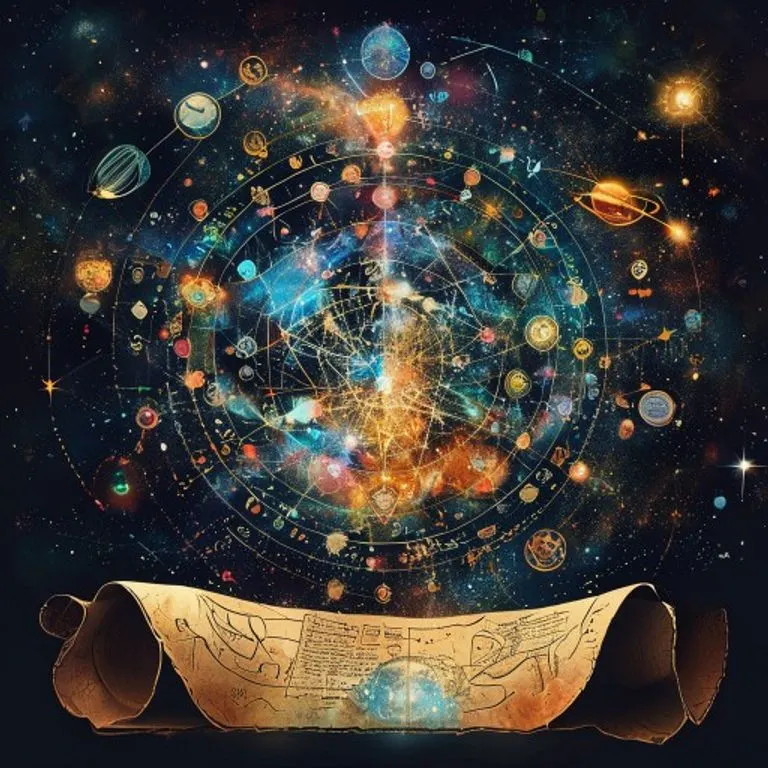
The Tarot Esoteric Geometry: Unlocking Universal Truths Sacred Shapes is a personalized cosmic blueprint, reflecting planetary positions at birth.
While the concept might seem esoteric, the underlying principles are rooted in ancient observational astronomy and symbolic interpretation. Modern tools, including sophisticated software, have made the calculation and visualization of these charts more accessible than ever before. However, the true power lies in the nuanced interpretation, which often requires the expertise of a qualified astrologer to fully unlock its wisdom.
Table of Contents
- What is a Natal Chart?
- The Historical Roots of Astrology
- Key Components of a Birth Chart
- The Significance of Zodiac Signs
- Understanding Astrological Houses
- The Role of Planets in Your Chart
- Decoding Astrological Aspects
- The Crucial Role of Birth Time
- Interpreting Your Natal Chart: Beyond the Sun Sign
- Modern Tools and Professional Guidance
What is a Natal Chart?
A natal chart is essentially a diagram representing the celestial bodies' positions from an Earth-centric perspective at the precise moment of an individual's birth. It's a two-dimensional map of the sky, divided into twelve segments known as houses, with the twelve zodiac signs overlaying them. Within this framework, the Sun, Moon, and planets are placed according to their exact astronomical longitudes at that specific time and location.
The term "natal" derives from the Latin word "natalis," meaning "pertaining to birth." Therefore, a natal chart is inherently personal, unique to each individual, much like a fingerprint. Even twins born minutes apart can have significantly different charts due to the rapid movement of the Ascendant and house cusps.
This chart serves as a symbolic representation of the psychological and spiritual energies at play at the beginning of one's life. It doesn't dictate destiny in a fatalistic sense, but rather highlights inherent potentials, predispositions, and the energetic landscape within which an individual operates. It's a tool for self-awareness, providing a framework for understanding one's inner workings and outer expressions.
The Historical Roots of Astrology
The practice of astrology and the creation of birth charts trace their origins back thousands of years to ancient civilizations. Early forms of astrology emerged in Mesopotamia, particularly among the Babylonians, who observed celestial phenomena and correlated them with earthly events and the fates of kings and nations. Their sophisticated astronomical records laid the groundwork for later astrological systems.
From Mesopotamia, astrological knowledge spread to Egypt, Greece, and Rome. Hellenistic astrology, which developed around the 1st century BCE, introduced many of the concepts still used in Western astrology today, including the twelve zodiac signs, planetary rulerships, and the system of astrological houses. Influential figures like Claudius Ptolemy, a Greek astrologer and astronomer of the 2nd century CE, codified these principles in his seminal work, "Tetrabiblos," which remained a cornerstone of astrological thought for centuries.
During the Middle Ages, astrology flourished in the Islamic world, where scholars preserved, translated, and expanded upon Greek and Roman texts. Later, it experienced a resurgence in Europe during the Renaissance, often intertwined with astronomy, alchemy, and medicine. While modern science eventually separated astronomy from astrology, the practice of natal chart interpretation continued to evolve, focusing more on psychological and spiritual insights rather than predictive determinism.
Key Components of a Birth Chart
A natal chart is a complex tapestry woven from several interconnected elements, each contributing to its unique meaning. Understanding these components is fundamental to deciphering the chart's message. The primary elements include the Zodiac Signs, Astrological Houses, Planets, and Aspects.
- Zodiac Signs: These are the twelve divisions of the ecliptic, each spanning 30 degrees. They represent archetypal energies, characteristics, and modes of expression.
- Astrological Houses: The chart is divided into twelve houses, each corresponding to a specific area of life, such as self-identity, finances, communication, family, relationships, career, and spirituality.
- Planets: The Sun, Moon, and the eight planets (Mercury, Venus, Mars, Jupiter, Saturn, Uranus, Neptune, Pluto) represent different psychological functions, drives, and energies within an individual.
- Aspects: These are the angular relationships (distances in degrees) between the planets in the chart. Aspects indicate how different planetary energies interact, creating harmony, tension, or opportunities for growth.
An Cosmic Sociology Celestial Mechanics Global Consciousness Digital, a historical instrument, symbolizes the intricate calculations of celestial positions.
The Significance of Zodiac Signs
The twelve zodiac signs—Aries, Taurus, Gemini, Cancer, Leo, Virgo, Libra, Scorpio, Sagittarius, Capricorn, Aquarius, and Pisces—are perhaps the most widely known component of astrology. Each sign is associated with a specific season, element (Fire, Earth, Air, Water), and modality (Cardinal, Fixed, Mutable), which together describe its core energetic signature.
When a planet is placed in a particular zodiac sign in your natal chart, it indicates how that planetary energy will express itself. For example, if your Mercury (planet of communication) is in Gemini (an Air sign known for intellect and versatility), you might possess a quick wit and a love for learning. Conversely, Mercury in Taurus (an Earth sign known for stability and practicality) might suggest a more deliberate and grounded communication style.
The Sun sign, which is determined by the zodiac sign the Sun was in at your birth, often represents your core identity and ego. However, it is just one piece of the puzzle. The Moon sign reveals your emotional nature and subconscious needs, while the Ascendant (rising sign) dictates your outward personality and how you are perceived by others.
Understanding Astrological Houses
The twelve astrological houses divide the natal chart into specific areas of life experience. Unlike the zodiac signs, which are based on the Earth's orbit around the Sun, the houses are determined by the Earth's rotation on its axis, making them highly dependent on the exact time and place of birth. Each house governs particular themes, and the planets and signs located within them indicate how those life areas are activated and expressed.
Here is a brief overview of the houses and their associated themes:
| House | Themes |
|---|---|
| 1st House (Ascendant) | Self-identity, appearance, first impressions, how you project yourself. |
| 2nd House | Values, possessions, money, self-worth, resources. |
| 3rd House | Communication, siblings, short journeys, early education, local community. |
| 4th House (IC) | Home, family roots, emotional foundations, privacy, end of life. |
| 5th House | Creativity, romance, children, pleasure, self-expression, speculation. |
| 6th House | Work, daily routines, health, service, pets, self-improvement. |
| 7th House (Descendant) | Partnerships, marriage, open enemies, contracts, one-on-one relationships. |
| 8th House | Transformation, shared resources, intimacy, death, rebirth, occult, legacies. |
| 9th House | Higher education, philosophy, long journeys, spirituality, foreign cultures. |
| 10th House (Midheaven) | Career, public image, reputation, ambition, social standing. |
| 11th House | Friendships, groups, hopes, wishes, humanitarian causes, social networks. |
| 12th House | Subconscious, hidden strengths/weaknesses, solitude, spirituality, self-undoing, karma. |
The sign on the cusp (beginning) of each house, along with any planets residing within it, profoundly influences how these areas of life will manifest for an individual. The Ascendant, the cusp of the 1st House, is particularly pivotal as it sets the entire house system for the chart.
The Role of Planets in Your Chart
In astrology, the term "planets" refers not only to the astronomical planets but also includes the Sun and Moon, which are considered luminaries. Each planet symbolizes a fundamental psychological drive, function, or principle. Their placement in signs and houses, and the aspects they form, describe how these principles are expressed in an individual's life.
- Sun: Represents the ego, core identity, vitality, and conscious purpose.
- Moon: Symbolizes emotions, instincts, subconscious, and inner needs.
- Mercury: Governs communication, intellect, learning, and mental processes.
- Venus: Rules love, relationships, aesthetics, values, and attraction.
- Mars: Represents drive, action, aggression, courage, and desire.
- Jupiter: Associated with expansion, luck, wisdom, philosophy, and growth.
- Saturn: Symbolizes discipline, responsibility, limitations, structure, and karma.
- Uranus: Represents innovation, rebellion, sudden change, and individuality.
- Neptune: Governs spirituality, dreams, illusion, compassion, and intuition.
- Pluto: Associated with transformation, power, death, rebirth, and deep psychological processes.
The interaction between these planetary energies, mediated by the signs and houses, creates the unique complexity of an individual's personality and life experiences. For instance, a strong Mars (action) in the 10th House (career) might indicate a highly driven and ambitious individual in their professional life.
Decoding Astrological Aspects
Aspects are the angular relationships between planets in a natal chart, measured in degrees. They describe how the energies of two or more planets interact with each other, indicating areas of harmony, tension, challenge, or ease. Major aspects include conjunctions, oppositions, trines, squares, and sextiles, each carrying a distinct influence.

The Tarot Esoteric Geometry: Unlocking Universal Truths Sacred Shapes of the cosmos influence personal destiny.
- Conjunction (0°): Planets are close together, merging their energies. This can amplify their influence, creating a powerful focus in the chart.
- Sextile (60°): A harmonious aspect indicating ease, opportunity, and cooperation between planetary energies. It suggests natural talents and favorable circumstances.
- Square (90°): A challenging aspect that creates tension and friction between planetary energies. It often points to areas of conflict, but also to dynamic growth and the need for effort.
- Trine (120°): A highly harmonious and flowing aspect, signifying natural talent, ease, and good fortune. It represents areas where energy flows effortlessly.
- Opposition (180°): Planets are directly opposite each other, creating a dynamic of polarity and balance. It often involves external relationships and the need to integrate opposing forces.
Beyond these major aspects, there are numerous minor aspects that add further layers of subtlety to the chart's interpretation. Analyzing these aspects helps astrologers understand the dynamic interplay of an individual's inner world and how they interact with the outer world.
The Crucial Role of Birth Time
The accuracy of a natal chart hinges significantly on knowing the exact time of birth. While the positions of the slower-moving outer planets (Jupiter, Saturn, Uranus, Neptune, Pluto) do not change much over a single day, the faster-moving inner planets (Moon, Mercury, Venus, Mars) can shift positions, and crucially, the Ascendant and the house cusps change rapidly.
The Ascendant, or rising sign, changes approximately every two hours. It is the zodiac sign that was rising on the eastern horizon at the moment of birth and is considered the "mask" or personality one presents to the world. A difference of even a few minutes can shift the Ascendant into a different sign or degree, thereby altering the entire house system of the chart. This, in turn, changes which areas of life are emphasized and how planetary energies are expressed.
Without an accurate birth time, astrologers cannot precisely calculate the Ascendant or the Midheaven (the cusp of the 10th House, representing career and public image), nor can they determine the exact placement of planets within the houses. This can lead to a less precise and potentially misleading interpretation. Therefore, obtaining a birth certificate or consulting family records for the precise time of birth is paramount for an accurate natal chart reading.
Interpreting Your Natal Chart: Beyond the Sun Sign
Many people are familiar with their Sun sign, but a natal chart reveals a far richer and more nuanced picture of an individual. Interpreting a natal chart involves synthesizing all its components: the planets, their signs, their house placements, and the aspects they form with one another. It's a holistic process that goes beyond isolated interpretations of single elements.
For example, while a person might have a Sun in Virgo, suggesting an analytical and practical nature, if their Moon is in passionate Scorpio and their Ascendant is in fiery Aries, their overall personality will be a complex blend of these energies. The Virgo Sun might be their conscious drive for order, but the Scorpio Moon could indicate deep emotional intensity, and the Aries Ascendant a direct and assertive outward demeanor.
A skilled astrologer looks for patterns, themes, and dominant energies within the chart. They consider the balance of elements and modalities, the strength of particular houses, and the overall flow of aspects. The goal is not to predict specific events, but to understand the individual's psychological makeup, their strengths to leverage, and their challenges to overcome. This deep self-awareness can empower individuals to make more conscious choices and align with their authentic self.
Modern Tools and Professional Guidance
In the digital age, calculating a natal chart has become remarkably easy. Numerous online platforms and software applications allow individuals to generate their charts instantly by inputting their birth date, time, and location. These tools are invaluable for their precision and speed, eliminating the laborious manual calculations of the past.
However, while these tools can provide the raw data, the interpretation remains a complex art and science. Automated interpretations often offer generalized insights that lack the depth and personalization a human astrologer can provide. A professional astrologer brings years of study, experience, and intuitive understanding to the process, synthesizing the myriad data points into a coherent and meaningful narrative.
Consulting with a qualified astrologer can offer a profound experience of self-discovery, helping individuals to understand their unique cosmic blueprint and harness its energies for personal growth. It's a journey of exploring one's potential, navigating challenges, and embracing the intricate design of their life's purpose.
Fuente: Contenido híbrido asistido por IAs y supervisión editorial humana.


Comments
Post a Comment