
Planets in Astrology: Understanding Your Natal Chart | StarPluto
In the intricate universe of astrology, the planets are far more than mere celestial bodies orbiting the Sun. They are considered dynamic forces, archetypal energies, and fundamental components that breathe life into a birth chart, transforming it from a static map into a living blueprint of an individual's potential, personality, and destiny. While a natal chart encompasses the twelve astrological houses, the twelve signs of the zodiac, and the complex aspects between planets, it is these planetary bodies that are often considered the most crucial elements, acting as the 'actors' in the cosmic play of life.
The concept of planets in astrology extends beyond their astronomical definition. For instance, the Sun and Moon, though astronomically a star and a satellite respectively, are astrologically revered as 'luminaries' and treated with the same profound significance as planets due to their immense influence on earthly life and human consciousness. Each planet symbolizes a distinct facet of the human psyche, a specific drive, or an area of experience, and their positions at the moment of birth reveal a unique cosmic signature.
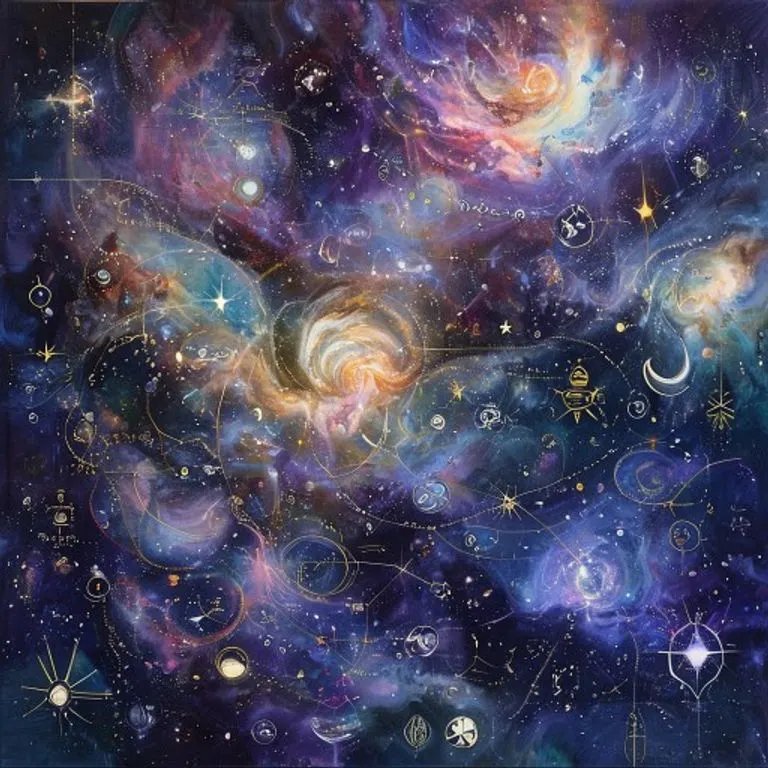
The planets in astrology are dynamic forces, each representing a unique facet of human experience and consciousness within the cosmic tapestry.
Understanding the role of each planet is akin to deciphering the core motivations and expressions that make up an individual. From the conscious ego represented by the Sun to the subconscious emotional landscape governed by the Moon, and extending to the generational shifts influenced by the outer planets, each celestial body contributes to a holistic understanding of one's astrological profile. This comprehensive guide delves deep into the significance of each planet, exploring their symbolism, influence, and how they manifest in a natal chart.
Table of Contents
- Introduction to Astrological Planets
- The Luminaries: Sun and Moon
- The Inner Planets: Mercury, Venus, and Mars
- The Social Planets: Jupiter and Saturn
- The Outer or Transpersonal Planets: Uranus, Neptune, and Pluto
- Other Significant Celestial Bodies: Chiron and Asteroids
- Planetary Aspects: The Relationships Between Planets
- Planetary Dignities and Debilities
- The Phenomenon of Retrograde Planets
- Planets in Houses: Refining Their Influence
- Modern vs. Traditional Planetary Rulerships
- Integrating Planetary Energies in Your Chart
- Conclusion: The Symphony of the Spheres
Introduction to Astrological Planets
Astrology, an ancient practice that predates modern astronomy, views the celestial bodies not just as physical entities but as symbolic representations of psychological functions, life forces, and karmic patterns. In a birth chart, the planets are the core drivers, indicating 'what' is happening. They represent specific urges, needs, and expressions that are colored by the zodiac sign they occupy ('how' it happens) and manifested in the area of life governed by the house they reside in ('where' it happens).
The traditional astrological model recognized seven classical planets: the Sun, Moon, Mercury, Venus, Mars, Jupiter, and Saturn, all visible to the naked eye. With the advent of telescopes, Uranus, Neptune, and Pluto were discovered and subsequently integrated into modern astrological interpretations, adding layers of complexity and psychological depth, particularly concerning generational influences and profound transformations. Even dwarf planets like Ceres and Chiron, along with significant asteroids, have found their place in contemporary astrological analysis, offering nuanced insights into healing, nurturing, and archetypal feminine energies.
Each planet is associated with specific themes, characteristics, and even parts of the body. Their positions in the zodiac signs at the precise moment of an individual's birth reveal the unique way these energies are expressed. For example, Mercury in a fiery sign like Aries will manifest communication differently than Mercury in an earthy sign like Taurus. This interplay creates the rich tapestry of individual personality and life experience that a natal chart seeks to describe.
The Luminaries: Sun and Moon
The Sun and Moon, often referred to as the Luminaries, are the two most significant bodies in a birth chart, representing the core essence of an individual's conscious and subconscious self. Their prominence stems from their direct and observable influence on Earth, from the cycles of day and night to the tides.
- The Sun (☉): The Core Self and Ego
The Sun represents the instinctive desire, the essential self, ego, conscious will, and life force. It symbolizes your identity, purpose, and the way you shine in the world. The Sun's sign indicates your core personality traits, your fundamental drives, and what motivates you. It's the "you" that you are striving to become, your potential for self-realization and vitality. A strong Sun placement often indicates confidence, leadership, and a clear sense of direction.
- The Moon (☽): Emotions, Instincts, and Nurturing
The Moon represents sensitivity, emotions, instincts, habits, and the subconscious mind. It governs your inner world, how you feel secure, and how you react instinctively to situations. The Moon's sign reveals your emotional nature, your needs for comfort and security, and how you nurture yourself and others. It is often linked to the mother figure and early childhood experiences, shaping your emotional responses and deepest needs. The Moon is your comfort zone, your habitual patterns, and your emotional barometer.
Together, the Sun and Moon form the fundamental axis of personality in a birth chart. The Sun defines your conscious identity and outward expression, while the Moon describes your inner emotional landscape and subconscious reactions. Understanding their interplay is crucial for grasping the core dynamics of an individual's psychological makeup.
The Inner Planets: Mercury, Venus, and Mars
These three planets are closest to the Sun and move relatively quickly through the zodiac, reflecting their influence on our personal, day-to-day experiences, communication, relationships, and drive. They represent the more immediate and tangible aspects of our personality.
- Mercury (☿): Communication, Intellect, and Learning
Mercury symbolizes intelligence, communication, thought processes, and learning. It governs how you perceive information, express your ideas, and interact with your immediate environment. The sign Mercury occupies in your chart indicates your communication style, your intellectual curiosity, and your approach to problem-solving. It influences your writing, speaking, and overall mental agility. Mercury's position can reveal whether you are a quick thinker, a meticulous planner, or a creative communicator.
- Venus (♀): Love, Beauty, and Values
Venus represents sentiment and the ability to love, beauty, aesthetics, pleasure, and personal values. It governs how you relate to others, what you find attractive, and what brings you joy. The sign of Venus in your chart describes your romantic style, your appreciation for art and luxury, and what you value in relationships. It also indicates your social graces and your capacity for harmony and diplomacy. Venus is about attraction, both romantic and material, and your approach to partnership.
- Mars (♁): Action, Drive, and Desire
Mars symbolizes action, drive, desire, aggression, and courage. It governs your ambition, how you assert yourself, and your physical energy. The sign of Mars in your chart indicates your fighting spirit, your sexual drive, and how you pursue your goals. It reveals your impulses, your competitive nature, and how you channel your energy. Mars is the planet of initiation, passion, and the will to overcome obstacles. It can also point to areas where you might experience conflict or assertiveness.
These inner planets describe our personal operating system – how we think, feel, and act on a daily basis. Their interactions with the Luminaries and other planets provide a detailed picture of our individual personality traits and behavioral patterns.

An antique astrolabe, a historical astronomical instrument, symbolizes the ancient wisdom and intricate calculations involved in understanding celestial mechanics and planetary positions.
The Social Planets: Jupiter and Saturn
Jupiter and Saturn are often referred to as the social planets because their slower orbits mean they influence broader social trends and personal development over longer periods. They represent the balance between expansion and contraction, opportunity and limitation, and our place within society.
- Jupiter (♃): Expansion, Growth, and Fortune
Jupiter symbolizes joie de vivre, growth, abundance, wisdom, philosophy, and good fortune. It is the planet of expansion, optimism, and opportunity. The sign of Jupiter in your chart indicates where you seek meaning, how you grow, and where you find luck and blessings. It influences your worldview, your generosity, and your capacity for faith and higher learning. Jupiter encourages us to reach beyond our current limitations and embrace new experiences. It represents areas of life where we can find ease and success.
- Saturn (♄): Structure, Discipline, and Responsibility
Saturn symbolizes reason, structure, discipline, responsibility, limitations, and karma. It is the planet of lessons, boundaries, and maturity. The sign of Saturn in your chart indicates where you face challenges, where you need to develop self-discipline, and where you build lasting structures. It influences your sense of duty, your career aspirations, and your ability to persevere through difficulties. Saturn teaches us patience, resilience, and the importance of hard work. It highlights areas where we must confront reality and take accountability.
Jupiter and Saturn represent a fundamental polarity in life: Jupiter's expansive optimism versus Saturn's restrictive realism. Their positions in a chart reveal how an individual navigates opportunities and challenges, and how they integrate personal growth with societal expectations and responsibilities. They are crucial for understanding one's long-term development and contribution to the world.
The Outer or Transpersonal Planets: Uranus, Neptune, and Pluto
These planets are called 'transpersonal' because their extremely slow orbits mean they influence entire generations, rather than just individuals. They represent collective shifts, profound psychological changes, and our connection to universal energies. Their impact is often felt on a subconscious level, driving societal evolution and personal transformation.
- Uranus (♅): Innovation, Rebellion, and Awakening
Uranus symbolizes decisional capacity, sudden change, innovation, rebellion, freedom, and individuality. It is the planet of awakening, disruption, and technological advancement. The sign of Uranus in your chart indicates where you seek independence, where you break from tradition, and where you experience unexpected shifts. It influences your originality, your humanitarian ideals, and your capacity for genius or eccentricity. Uranus challenges the status quo and pushes for progress, often through revolutionary means. Its placement can reveal where an individual or generation seeks to innovate and liberate themselves.
- Neptune (♆): Spirituality, Illusion, and Compassion
Neptune symbolizes processing capacity, spirituality, dreams, illusion, intuition, and compassion. It is the planet of dissolution, idealism, and transcendence. The sign of Neptune in your chart indicates where you seek spiritual connection, where you might experience confusion or deception, and where your compassion lies. It influences your artistic inspiration, your capacity for empathy, and your connection to the collective unconscious. Neptune can blur boundaries, leading to both profound spiritual experiences and potential escapism. Its placement reveals where an individual or generation seeks to merge with something larger than themselves.
- Pluto (♇): Transformation, Power, and Rebirth
Pluto symbolizes creative instinct, transformation, power, death, rebirth, and regeneration. It is the planet of profound change, intensity, and uncovering hidden truths. The sign of Pluto in your chart indicates where you experience deep psychological shifts, where you confront power dynamics, and where you undergo complete metamorphosis. It influences your capacity for healing, your ability to face shadows, and your drive for ultimate control or surrender. Pluto strips away the inessential, forcing us to confront our deepest fears and emerge stronger. Its placement shows where an individual or generation experiences intense transformation and the exercise of power.
The transpersonal planets challenge us to evolve beyond personal desires, connecting us to larger cosmic and societal forces. Their influence is often felt as a deep, underlying current that shapes the collective consciousness and drives significant historical shifts, as well as profound personal crises and breakthroughs.
Other Significant Celestial Bodies: Chiron and Asteroids
Beyond the traditional planets and luminaries, modern astrology increasingly incorporates other celestial bodies that offer nuanced and profound insights into the human psyche. These include Chiron, a centaur, and the four major asteroids: Ceres, Pallas, Juno, and Vesta.
- Chiron: The Wounded Healer
Chiron, discovered in 1977, orbits between Saturn and Uranus. Astrologically, it represents our deepest wounds, particularly those from childhood or past lives, and our capacity to heal ourselves and others through those very wounds. Its placement in a chart reveals areas of vulnerability, pain, and where we can develop unique healing abilities and wisdom. Chiron teaches us that our greatest strengths often emerge from our deepest hurts, transforming us into "wounded healers" for the collective.
- The Major Asteroids: Ceres, Pallas, Juno, Vesta
These four asteroids, located primarily in the asteroid belt between Mars and Jupiter, bring a deeper understanding of feminine archetypes and specific psychological functions:
- Ceres: Nurturing and Loss
Ceres, the largest asteroid, symbolizes nurturing, mothering, food, agriculture, and cycles of loss and grief. It shows how we give and receive unconditional love, our relationship with our mother, and how we cope with separation and abandonment. Ceres highlights our need to feel nourished and to nourish others.
- Pallas (Pallas Athena): Wisdom, Strategy, and Creative Intelligence
Pallas represents wisdom, strategic thinking, creative intelligence, justice, and the warrior goddess archetype. It indicates how we use our intellect to solve problems, our artistic talents, and our approach to social justice. Pallas empowers us to fight for our beliefs with intelligence and strategy.
- Juno: Partnership and Commitment
Juno symbolizes partnership, marriage, commitment, fidelity, and the desire for equality in relationships. It reveals what we seek in a committed partner, our experiences with marriage, and our capacity for loyalty. Juno often highlights issues of fairness and power dynamics within significant bonds.
- Vesta: Devotion, Focus, and Sacred Space
Vesta represents devotion, focus, spiritual truth, sacred space, and the inner priestess/priest. It shows where we dedicate our energy, our capacity for self-sufficiency, and our need for purity and integrity. Vesta illuminates our ability to maintain a sacred inner flame and to commit wholeheartedly to a cause or purpose.
- Ceres: Nurturing and Loss
While not as universally integrated as the major planets, Chiron and the asteroids provide valuable depth to a birth chart reading, offering insights into subtle yet powerful influences on our healing journey, relationships, and inner world. Their inclusion reflects the ongoing evolution of astrological understanding.
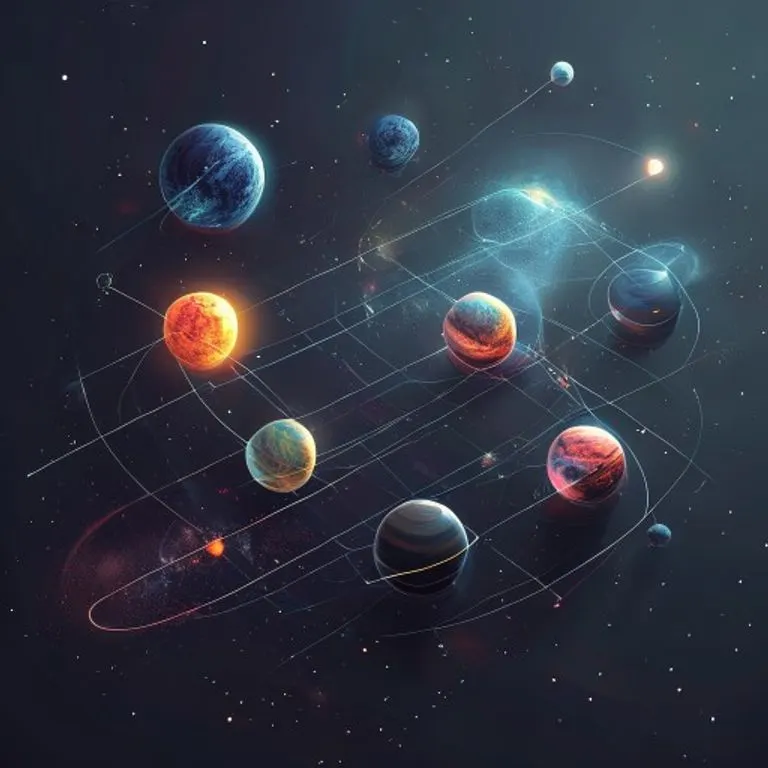
An isometric rendering of the solar system illustrates the interconnectedness of astrological planets, where energetic lines symbolize the dynamic aspects that shape individual destinies.
Planetary Aspects: The Relationships Between Planets
Planetary aspects are the angular relationships between planets in a birth chart, measured in degrees. They describe how the energies of different planets interact with each other, creating harmony, tension, or dynamic interplay. Aspects are crucial for understanding the complexity of a personality, as they modify and blend the individual planetary influences.
The major aspects include conjunctions (0 degrees), oppositions (180 degrees), trines (120 degrees), squares (90 degrees), and sextiles (60 degrees), each carrying a distinct energetic signature:
- Conjunction (0°): Fusion and Emphasis
When two or more planets are in conjunction, their energies merge and are expressed as a single, powerful force. This can amplify their combined influence, making it a dominant theme in the personality. Depending on the planets involved, a conjunction can be harmonious or challenging, but it always signifies a strong focus of energy.
- Opposition (180°): Polarity and Balance
An opposition occurs when planets are directly across from each other in the zodiac. This aspect creates a dynamic tension and polarity, often representing externalized conflict or a need for balance. It can manifest as a push-pull dynamic, requiring conscious effort to integrate opposing forces within oneself or in relationships.
- Trine (120°): Harmony and Flow
Trines are harmonious and flowing aspects, indicating areas of natural talent, ease, and good fortune. The energies of the planets involved work together effortlessly, providing inherent gifts and opportunities for growth without much struggle. They represent areas where things tend to come easily.
- Square (90°): Tension and Challenge
Squares are challenging aspects that create friction, obstacles, and inner tension. They demand action and effort to overcome difficulties, leading to significant growth and development. While uncomfortable, squares are powerful motivators for change and mastery, pushing individuals to confront and resolve internal conflicts.
- Sextile (60°): Opportunity and Cooperation
Sextiles are harmonious aspects that offer opportunities for cooperation and easy communication between planetary energies. They represent talents and resources that can be easily accessed and utilized, often requiring some conscious effort to activate. Sextiles provide avenues for positive expression and growth.
Beyond these major aspects, there are also minor aspects (e.g., quincunx, semi-sextile, semi-square) that add further layers of subtlety to a chart interpretation. Understanding the network of planetary aspects is essential for grasping the dynamic interplay of energies that shape an individual's life experiences and psychological patterns.
Planetary Dignities and Debilities
In traditional astrology, the concept of planetary dignities and debilities describes how well a planet functions in a particular zodiac sign. This framework helps astrologers understand the strength and ease with which a planet's energy is expressed. A planet is considered to be "dignified" when it is in a sign where its natural qualities can flourish, and "debilitated" when it is in a sign that hinders its natural expression.
- Dignities:
- Domicile (Rulership): A planet is in its domicile when it is in the sign it rules. Here, the planet is at its strongest and most comfortable, expressing its energy authentically and powerfully. For example, Mars in Aries or Scorpio is in its domicile.
- Exaltation: A planet is exalted in a sign where it is particularly honored and gains strength, even if it doesn't rule that sign. It functions optimally and with great effectiveness. For example, the Sun is exalted in Aries.
- Debilities:
- Detriment: A planet is in its detriment when it is in the sign opposite its domicile. Here, the planet struggles to express its energy naturally and may feel uncomfortable or challenged. For example, Mars in Libra or Taurus is in its detriment.
- Fall: A planet is in its fall when it is in the sign opposite its exaltation. This is considered the weakest placement for a planet, where its energies are most hindered or expressed with difficulty. For example, the Sun is in its fall in Libra.
Understanding these dignities and debilities provides a deeper layer of interpretation, explaining why certain planetary energies might manifest with ease and strength, while others require more conscious effort and development. A debilitated planet doesn't mean a "bad" planet; rather, it suggests an area where an individual may face more lessons or need to develop alternative strategies for expression.
The Phenomenon of Retrograde Planets
A retrograde planet is one that appears to be moving backward in its orbit from our perspective on Earth. Astronomically, this is an optical illusion, but astrologically, it holds significant meaning. When a planet is retrograde in a birth chart, its energies are often internalized, re-evaluated, or expressed in a non-traditional way.
Instead of outward expression, a retrograde planet encourages introspection, review, and a deeper, more personal understanding of the planetary themes. It's not necessarily a negative influence, but rather an invitation to approach life areas governed by that planet with a unique, often more reflective or unconventional perspective.
| Planet | Common Retrograde Themes | Astrological Interpretation |
|---|---|---|
| Mercury Retrograde | Communication, thinking, learning, travel | Internalized thought processes, unique communication style, re-evaluation of ideas, potential for miscommunication or delays. Often leads to deep reflection. |
| Venus Retrograde | Love, relationships, values, aesthetics | Re-evaluation of personal values, unconventional approach to love, hidden desires, a need to define self-worth internally rather than through others. |
| Mars Retrograde | Action, drive, assertion, anger | Internalized drive, passive-aggressive tendencies, difficulty asserting oneself directly, a need to carefully consider actions before execution. |
| Jupiter Retrograde | Growth, philosophy, luck, expansion | Internal search for meaning, philosophical introspection, a need to develop personal beliefs rather than adopting external ones, growth from within. |
| Saturn Retrograde | Structure, discipline, responsibility, karma | Internalized sense of duty, self-imposed limitations, a need to master personal structures and responsibilities, often dealing with past karmic lessons. |
| Uranus Retrograde | Innovation, rebellion, freedom | Internalized need for freedom, unique and unconventional approach to life, a quiet rebel, personal breakthroughs often occur internally before manifesting externally. |
| Neptune Retrograde | Spirituality, illusion, compassion | Deep spiritual introspection, a unique connection to the collective unconscious, potential for self-deception, a need to clarify personal spiritual path. |
| Pluto Retrograde | Transformation, power, rebirth | Internalized transformative processes, grappling with personal power dynamics, deep psychological regeneration, often dealing with hidden fears and subconscious patterns. |
The presence of retrograde planets in a natal chart suggests a life path that involves revisiting, re-evaluating, and re-integrating the themes associated with those planets. It often points to a soul's journey of deeper understanding and a unique way of expressing these energies, sometimes leading to profound wisdom and self-mastery.
Planets in Houses: Refining Their Influence
While the zodiac signs describe 'how' a planet expresses its energy, the astrological houses describe 'where' in life that energy is most actively manifested. There are twelve houses in a birth chart, each corresponding to different areas of life, such as self-identity, finances, communication, home, relationships, career, and spirituality.
When a planet is placed in a particular house, its influence is channeled into that specific life domain. For example, if Mars (the planet of action and drive) is in the 10th House (the house of career and public image), the individual will likely express their drive and ambition strongly in their professional life, seeking leadership roles or pursuing ambitious goals. Conversely, if Mars is in the 4th House (the house of home and family), their energy might be directed more towards creating a dynamic home environment or protecting their family.
The interaction between planets, signs, and houses creates a highly individualized and nuanced interpretation of a birth chart. A planet's core meaning is filtered through the lens of the sign it inhabits, and then applied to the specific life arena represented by the house. This three-tiered system allows for a comprehensive understanding of an individual's psychological landscape and life experiences.
Modern vs. Traditional Planetary Rulerships
Planetary rulerships are a fundamental concept in astrology, assigning a specific planet as the "ruler" of one or two zodiac signs. This means the planet's energy is particularly at home and expressed most naturally in its ruling sign. Historically, before the discovery of Uranus, Neptune, and Pluto, the seven visible planets ruled all twelve signs.
With the discovery of the outer planets, modern astrology expanded these rulerships, assigning new rulers to some signs, while traditional astrology often maintains the classical system. This has led to two main schools of thought:
- Traditional Rulerships:
In traditional astrology, the Sun and Moon each rule one sign, while the other five classical planets (Mercury, Venus, Mars, Jupiter, Saturn) each rule two signs. This system is based on the Chaldean order of the planets and their perceived qualities aligning with the signs.
- Aries: Mars
- Taurus: Venus
- Gemini: Mercury
- Cancer: Moon
- Leo: Sun
- Virgo: Mercury
- Libra: Venus
- Scorpio: Mars
- Sagittarius: Jupiter
- Capricorn: Saturn
- Aquarius: Saturn
- Pisces: Jupiter
- Modern Rulerships:
Modern astrology retains the traditional rulers for some signs but assigns the outer planets to the signs they were discovered in conjunction with, or whose themes align with the sign's characteristics.
- Aries: Mars
- Taurus: Venus
- Gemini: Mercury
- Cancer: Moon
- Leo: Sun
- Virgo: Mercury
- Libra: Venus
- Scorpio: Pluto (Traditional: Mars)
- Sagittarius: Jupiter
- Capricorn: Saturn
- Aquarius: Uranus (Traditional: Saturn)
- Pisces: Neptune (Traditional: Jupiter)
Both systems offer valid insights. Traditional astrology often emphasizes the practical and tangible manifestations, while modern astrology delves deeper into psychological motivations and collective evolutionary processes. Many contemporary astrologers use a blend of both, considering the traditional ruler as the "co-ruler" or "ancient ruler" alongside the modern ruler to gain a more complete picture.
Integrating Planetary Energies in Your Chart
Understanding the individual roles of planets is just the first step in unlocking the wisdom of your birth chart. The true art of astrological interpretation lies in synthesizing these diverse energies. It's not enough to know what each planet represents; one must also grasp how they interact through aspects, how their expression is colored by the signs they occupy, and where these energies play out in the houses of life.
To effectively integrate planetary energies, consider the following:
- Holistic View: Avoid isolating planets. Instead, see them as interconnected parts of a whole system. A strong Mars might be tempered by a compassionate Neptune aspect, or a reserved Saturn might find expression through an expansive Jupiter.
- Dominant Themes: Identify which planets are most prominent in your chart. Are there stelliums (clusters of planets) in certain signs or houses? Are there planets conjunct the Ascendant or Midheaven? These highlight areas of significant focus and energy.
- Challenging Aspects: Pay attention to squares and oppositions. These are not "bad" but indicate areas where growth, conscious effort, and integration are required. They often point to where you develop resilience and strength.
- Harmonious Aspects: Trines and sextiles reveal natural talents and areas of ease. While they may not push for growth as intensely as challenging aspects, they provide resources and support.
- Personal Journey: Remember that a birth chart is a map of potential, not a fixed destiny. You have free will to work with these energies. Understanding your planetary placements empowers you to consciously direct your drives, manage your emotions, and navigate life's challenges.
For instance, if you have Mercury (communication) in a challenging aspect to Saturn (limitation), you might initially struggle with expressing your ideas clearly or feel inhibited in communication. However, with conscious effort, this combination could lead to developing a highly precise, disciplined, and authoritative communication style, perhaps in fields requiring deep thought or structured expression.
Conclusion: The Symphony of the Spheres
The planets in astrology are the very heartbeat of a birth chart, each contributing a unique rhythm and melody to the grand symphony of an individual's life. From the radiant Sun, illuminating our conscious purpose, to the mysterious Pluto, guiding us through profound transformations, these celestial bodies represent the fundamental archetypes that shape our psychology, relationships, and life path. They are the 'what' of our existence, providing the raw material of our personality and potential.
By studying the planets, their signs, houses, and aspects, we gain an unparalleled understanding of ourselves and others. This knowledge is not about predicting a fixed future, but rather about recognizing our inherent strengths, acknowledging our challenges, and consciously working with the cosmic energies imprinted at our birth. The journey of understanding the planets in your natal chart is a journey of self-discovery, empowerment, and a deeper connection to the universal forces that constantly influence our lives.
Embracing the wisdom of the planets allows us to navigate our personal evolution with greater awareness, purpose, and compassion, transforming potential into manifest reality and living in harmony with the intricate dance of the cosmos.
Fuente: Contenido híbrido asistido por IAs y supervisión editorial humana.


Comments
Post a Comment