
Playing Cards: History, Games, and Mystical Connections | StarPluto
Playing cards, seemingly simple objects of entertainment, possess a history as rich and intricate as the designs etched upon their surfaces. Far from being mere tools for games, these rectangular pieces of paper, cardboard, or even ivory have served as cultural touchstones, instruments of divination, and symbols of societal norms across millennia. Their journey from ancient board games to sophisticated tools for magic and fortune-telling is a testament to human ingenuity and our enduring fascination with chance, strategy, and the unknown.
This comprehensive exploration delves into the multifaceted world of playing cards, tracing their enigmatic origins, charting their evolution through various civilizations, and uncovering their profound connections to games, magic, and the human psyche. We will examine the diverse forms they have taken, the games they have inspired, and the mystical interpretations that have cemented their place in both recreational and esoteric practices.
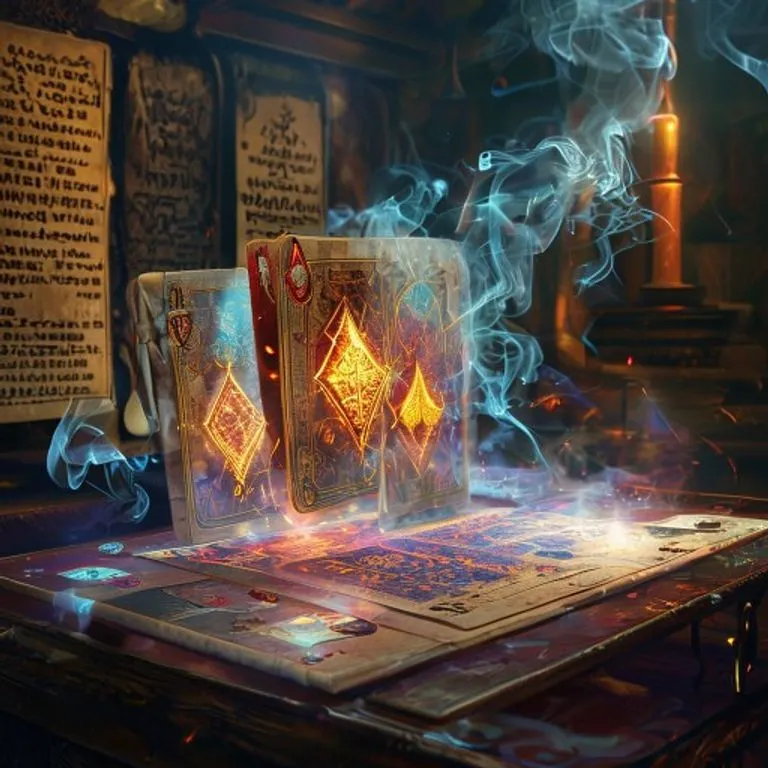
The intricate interplay of Tarot Esoteric Geometry: Unlocking Universal Truths Sacred Shapes, their role in games, and their mystical connections is a fascinating journey through human culture and belief.
The Enigmatic Origins of Playing Cards
The precise origins of playing cards remain a subject of scholarly debate, with various theories pointing to different ancient civilizations. While some historians suggest an Indian genesis, citing early forms of board games and the use of symbolic imagery, others argue for an Egyptian or Chinese provenance. The most widely accepted theory traces their invention to 9th-century Tang Dynasty China, where paper money and woodblock printing were already established.
Early Chinese "leaf games" or "money cards" were not merely for amusement but often served as currency or betting instruments, reflecting the societal value placed on wealth and trade. These cards were made from materials like paper or even silk, and their designs frequently mirrored the denominations of currency. The transition from these rudimentary forms to more structured decks involved centuries of cultural exchange and adaptation across Asia.
From China, playing cards are believed to have spread to India, Persia, and the Islamic world. The Mamluk Sultanate of Egypt, in particular, played a crucial role in their development and dissemination. Mamluk decks, dating back to the 12th and 13th centuries, featured suits and court cards that bear striking resemblances to modern European decks, albeit without figurative representations due to Islamic aniconism.
The introduction of playing cards to Europe is generally attributed to returning Crusaders or traders from the Islamic world, arriving in the late 14th century. Italy and Spain were among the first European nations to adopt them, quickly integrating them into their social fabric. The earliest European cards were often hand-painted, making them luxury items accessible only to the wealthy elite.
From Recreation to Revelation: The Dual Nature of Cards
Initially, playing cards were primarily conceived as tools for games, offering entertainment and a means for social interaction. However, their inherent symbolism and the element of chance quickly lent themselves to other, more profound applications. The transition from purely recreational objects to instruments of divination and magic is a fascinating aspect of their history, evolving in parallel with their gaming functions.
The structured nature of a deck, with its distinct suits, ranks, and court figures, provided a ready-made system for symbolic interpretation. Each card could be assigned a meaning, representing aspects of life, personality traits, or future events. This semantic flexibility allowed for the development of cartomancy, the practice of fortune-telling using playing cards, which gained popularity in Europe from the 18th century onwards.
Beyond divination, cards also found their way into the realm of magic and illusion. Magicians quickly recognized the potential of cards for sleight of hand, misdirection, and captivating performances. Card tricks, ranging from simple manipulations to elaborate illusions, became a staple of entertainment, showcasing the dexterity and psychological acumen of the performer. This dual utility – for both predicting the future and creating illusions – highlights the versatile nature of playing cards.
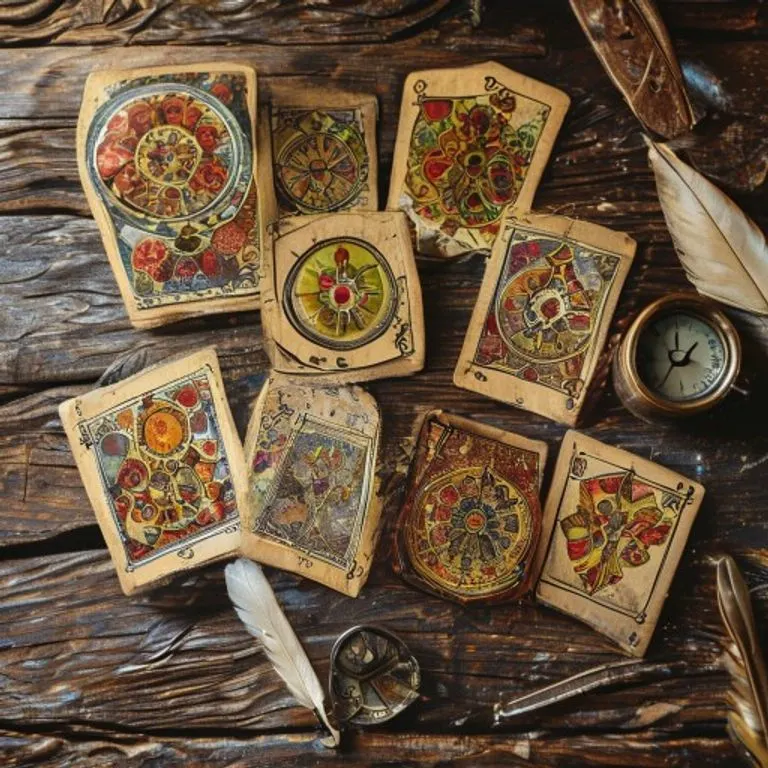
Different Tarot Esoteric Geometry: Unlocking Universal Truths Sacred Shapes from diverse cultures showcase the rich historical evolution of these fascinating objects.
A Global Tapestry: Diverse Decks and Their Histories
The journey of playing cards across continents resulted in a rich tapestry of regional variations, each reflecting the unique cultural aesthetics and social structures of its place of origin. While the basic concept of suits and ranks often remained, the imagery, number of cards, and even the materials used varied significantly.
In China, early card games sometimes involved paper or domino-like pieces. The Persian and Mongol empires developed the exquisite Ganjifa decks, often circular and made from materials like ivory, tortoiseshell, or lacquered pasteboard. These decks were characterized by their intricate hand-painted designs, frequently depicting courtly scenes, animals, or abstract patterns, and were used for complex trick-taking games.
Japan, influenced by Portuguese traders in the 16th century, developed its own distinct card traditions, notably the Karuta decks. These include Hanafuda (flower cards) and Uta-garuta (poetry cards), which are less about traditional suits and more about matching images or verses, deeply embedded in Japanese cultural practices and aesthetics. The imagery often features seasonal flowers, birds, and classical poetry.
In Europe, the two most prominent traditions emerged: the Spanish deck and the French deck. The Spanish deck, or Baraja Española, typically consists of 40 or 48 cards divided into four suits: Oros (gold coins), Copas (cups), Espadas (swords), and Bastos (clubs). Its court cards include Sota (knave), Caballo (knight), and Rey (king). This deck is widely used in Spain, Latin America, and parts of the Philippines for games like Mus, Briscola, and Tute.
The French deck, which is the progenitor of the internationally recognized 52-card deck, features the familiar suits of Spades, Hearts, Diamonds, and Clubs. These suits evolved from earlier German and Italian designs, simplifying the imagery for mass production. The court cards – King, Queen, and Jack – became standardized, often depicting historical or legendary figures. This deck's widespread adoption is largely due to its adaptability and the rise of popular games like Poker and Bridge.
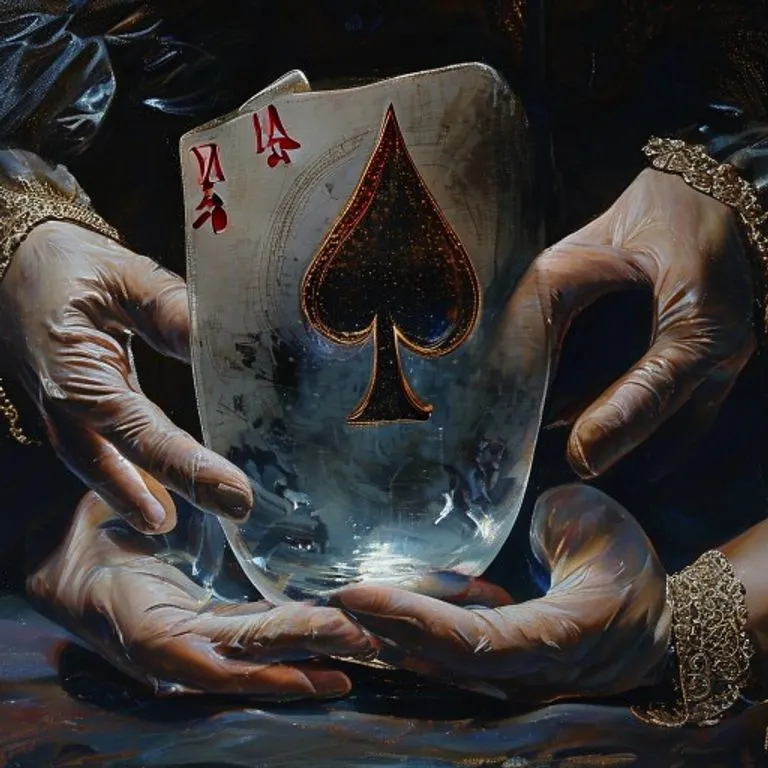
The mystical interpretations of Tarot Esoteric Geometry: Unlocking Universal Truths Sacred Shapes highlight the profound connection between playing cards and the esoteric arts.
The Evolution of Card Games: From Courts to Kitchen Tables
The evolution of card games mirrors the social and technological advancements of human civilization. What began as simple wagering tools in ancient China transformed into complex strategic games played in royal courts, eventually becoming accessible entertainment for the masses. The diversity of card games is staggering, reflecting regional preferences, historical periods, and varying levels of skill and chance.
In medieval Europe, games like Primero (a precursor to Poker) and Ombre were popular among the aristocracy, often involving high stakes and intricate rules. These games were not just for recreation but also served as social rituals, allowing players to display their wit, memory, and cunning. The imagery on the cards themselves often reflected the feudal hierarchy, with kings, queens, and knights.
The invention of printing presses in the 15th century revolutionized card production, making decks more affordable and widely available. This led to a boom in card game development, with new games emerging that catered to different social classes. Games like Whist (a forerunner of Bridge) became immensely popular in England, while various forms of Solitaire offered individual entertainment.
The 19th and 20th centuries saw the rise of globally recognized games such as Poker, Bridge, Rummy, and Blackjack. These games, often with formalized rules and international competitions, transcended cultural boundaries. Poker, in particular, became synonymous with strategy, psychology, and risk-taking, embodying the competitive spirit of modern society. The adaptability of a standard deck of cards to countless rule sets is a key factor in its enduring appeal.
Here's a brief overview of some historically significant and popular card games:
- Tarot (game): Not to be confused with divination, early Tarot decks were used for trick-taking games, particularly in Italy and France, featuring an additional suit of trump cards.
- Bridge: A complex trick-taking game played by four players in two competing partnerships, requiring significant strategy and communication.
- Poker: A family of card games that combine gambling, strategy, and skill. Variants like Texas Hold'em are globally popular.
- Blackjack (Twenty-One): A comparing card game between one or more players and a dealer, where each player in turn competes against the dealer.
- Rummy: A group of games characterized by matching cards of the same rank or sequence and same suit.
- Solitaire (Patience): A single-player card game, designed to test skill and luck, with numerous variations.
- Mus: A traditional Spanish card game, popular in Spain and parts of Latin America, known for its bluffing and strategic elements.
The Mystical Veil: Playing Cards in Divination and Magic
Beyond the realm of games, playing cards have long been associated with the esoteric arts, serving as powerful tools for divination and magic. This connection is particularly strong in cultures where mysticism and folklore intertwine with daily life, such as in Romani (Gypsy) traditions.
Cartomancy, the practice of fortune-telling using a standard deck of playing cards, emerged as a popular method for gaining insight into the past, present, and future. Each card, from the Ace of Spades to the Two of Clubs, is assigned symbolic meanings that can be interpreted in various spreads. For example, the King of Hearts might represent a kind man, while the Ten of Diamonds could signify financial gain.
The most famous offshoot of playing cards used for divination is the Tarot deck. While early Tarot cards were primarily used for games (Tarocchi), their rich allegorical imagery and additional Major Arcana cards made them uniquely suited for spiritual and psychological interpretation. The Major Arcana, with cards like The Fool, The Magician, and The World, represent archetypal life lessons and spiritual journeys, while the Minor Arcana (similar to a standard deck) reflect everyday events.
The use of cards in magic, distinct from divination, focuses on illusion and performance. Magicians employ various techniques, including:
- Sleight of Hand: Dexterous manipulation of cards to create illusions of disappearance, appearance, or transformation.
- Misdirection: Guiding the audience's attention away from the secret actions of the magician.
- Card Flourishes: Artistic displays of card manipulation that enhance the visual appeal of a performance.
- Mentalism: Using cards to create the illusion of mind-reading or precognition, often blurring the lines between magic and divination.
The allure of card magic lies in its ability to challenge perception and inspire wonder, making the ordinary seem extraordinary. The connection between cards and the mystical world continues to captivate, offering both entertainment and a deeper connection to symbolic thought.
Cultural Prohibitions and Enduring Appeal
Despite their widespread popularity, playing cards have frequently faced bans and moral condemnation throughout history. These prohibitions often stemmed from their association with gambling, idleness, or perceived connections to witchcraft and the occult. Religious authorities and secular rulers alike have, at various times, sought to suppress card playing, viewing it as a corrupting influence on society.
For instance, in 13th and 14th century Europe, card games were frequently outlawed. Florence banned them in 1277, and King John I of Castile followed suit in 1387. Similar prohibitions were enacted in Germany, France, the Netherlands, and Switzerland shortly thereafter. These bans were often driven by concerns over public order, economic stability (due to gambling debts), and moral decay. The Chinese emperor Mu-Tsung of the Liao Dynasty in 969 AD publicly condemned card games, linking them to misfortune within the royal family, reflecting similar anxieties in the East.
However, these prohibitions often had the unintended effect of driving card playing underground, fostering secret societies and clandestine gatherings. The inherent human desire for entertainment, social interaction, and a touch of risk proved stronger than legislative decrees. In some cultures, paradoxically, cards were also "ennobled," becoming subjects of scientific study or symbols of social status, particularly when used in sophisticated games or as artistic objects.
The enduring appeal of playing cards lies in their versatility. They offer a portable, inexpensive form of entertainment that can be adapted to countless games, suitable for all ages and social settings. In eras before widespread electronic media, cards provided a vital source of amusement and intellectual stimulation, fostering camaraderie and strategic thinking. Even today, in our hyper-connected world, the tactile experience of shuffling a deck and the face-to-face interaction of a card game retain a unique charm.
Modern Manifestations: Cards in the Digital Age
In the 21st century, playing cards have seamlessly transitioned into the digital realm, finding new life in online games, mobile applications, and virtual reality. While the physical deck remains cherished, digital versions offer unparalleled convenience, global connectivity, and innovative gameplay experiences.
Online platforms host millions of players engaging in virtual Poker, Bridge, Solitaire, and countless other card games, often with real-time opponents from across the globe. These digital adaptations have introduced new dynamics, such as advanced analytics, automated shuffling, and integrated tutorials, making complex games more accessible to newcomers. The rise of esports has even seen professional card players compete for substantial prizes in virtual tournaments.
Beyond direct adaptations, the concept of playing cards has influenced numerous digital games, particularly in the collectible card game (CCG) and deck-building genres. Games like "Hearthstone," "Magic: The Gathering Arena," and "Slay the Spire" leverage the strategic depth and collection aspect of physical cards, translating them into rich digital experiences. These games often incorporate elements of fantasy, science fiction, and role-playing, expanding the traditional boundaries of card-based entertainment.
Furthermore, the symbolic power of cards continues to resonate in contemporary culture. Card motifs appear in art, fashion, and media, often evoking themes of chance, destiny, and hidden knowledge. The enduring fascination with Tarot and other forms of cartomancy also persists, with numerous apps and online resources dedicated to digital readings and interpretations, blending ancient practices with modern technology.
Conclusion
From their mysterious origins in ancient Asia to their ubiquitous presence in modern digital entertainment, playing cards have woven themselves into the fabric of human history and culture. They are more than just pieces of paper; they are repositories of symbolism, catalysts for social interaction, and windows into the human desire for both structured play and mystical insight.
Whether used for a casual game of Solitaire, a high-stakes poker match, or a profound Tarot reading, playing cards continue to captivate and challenge us. Their journey reflects a remarkable adaptability, allowing them to evolve across civilizations, survive prohibitions, and seamlessly integrate into the digital age. The enduring legacy of playing cards is a testament to their timeless appeal and their unique ability to connect us to history, strategy, and the subtle magic of the unknown.
Fuente: Contenido híbrido asistido por IAs y supervisión editorial humana.


Comments
Post a Comment