
Sacred Geometry Universal Patterns Creation: Unveiling Cosmic Design | Starpluto
Sacred Geometry is an ancient science and spiritual practice that delves into the fundamental patterns and proportions underpinning all existence. It is widely considered the blueprint of creation, unveiling the mathematical language and harmonic principles by which the universe is meticulously organized. From the smallest subatomic particle to the grandest galaxy, these geometric forms are believed to be the foundational structures of reality, reflecting divine order and profound interconnectedness.
This profound field suggests that certain geometric shapes and ratios are not merely abstract concepts but rather living expressions of cosmic energy and consciousness. Understanding sacred geometry offers invaluable insights into the very nature of the universe, the intricate design of the human body, and the spiritual path of self-discovery. It effectively bridges the perceived gap between science and spirituality, providing a comprehensive framework for comprehending the intricate design of the cosmos.
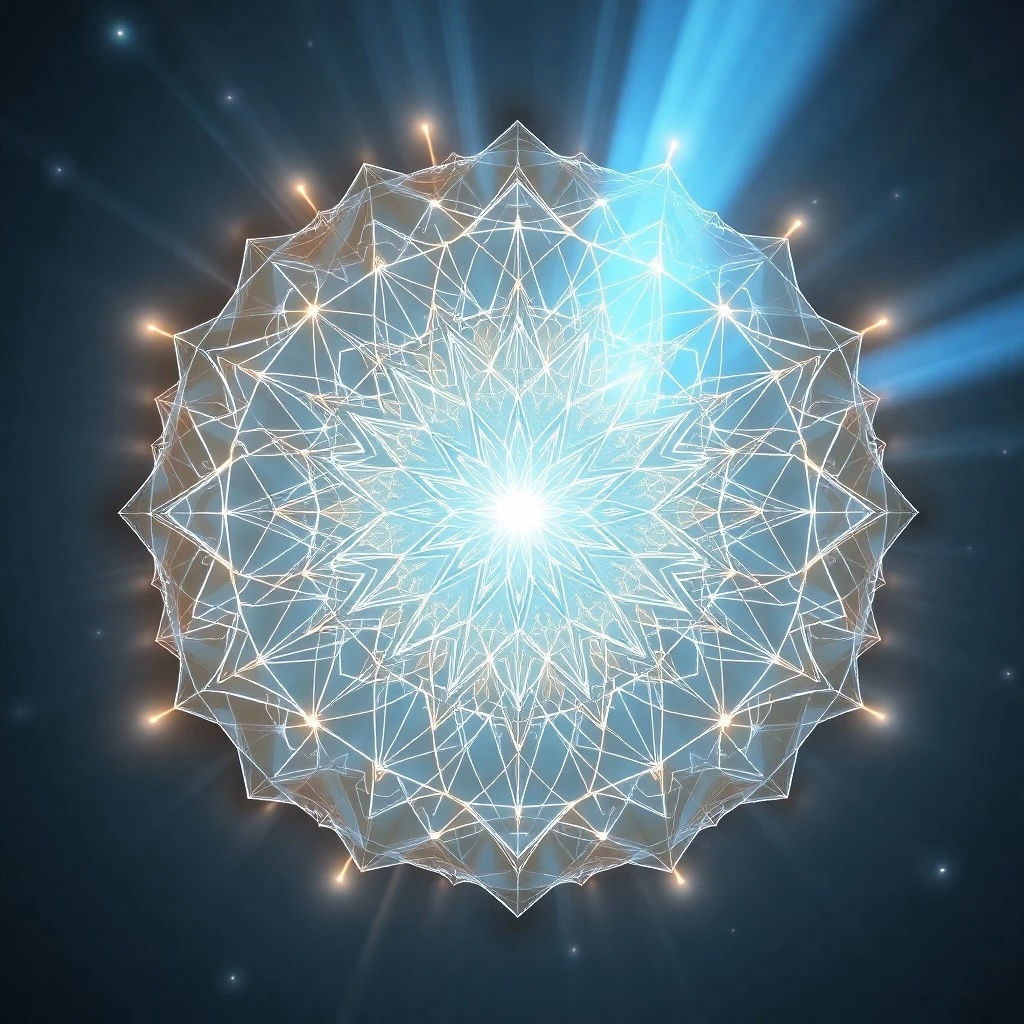
The intricate patterns of Tarot Esoteric Geometry: Unlocking Universal Truths Sacred Shapes are believed to be the underlying blueprint of all creation, guiding the structure of the cosmos.
The Flower of Life, an ancient and revered symbol of sacred geometry, is often regarded as a visual representation of the interconnectedness of all living things and the fundamental forms of space and time. The study of sacred geometry has been a cornerstone in various cultures and civilizations throughout recorded history, spanning from ancient Egypt and Greece to indigenous traditions worldwide. It has profoundly influenced art, architecture, music, and philosophy, guiding the creation of temples, cathedrals, and sacred spaces meticulously designed to resonate with cosmic harmony.
This extensive exploration will delve into its core principles, highlight key historical figures, and examine its contemporary relevance in both scientific and spiritual contexts. Prepare to uncover the hidden language of the universe.
Definition and Historical Roots
Sacred Geometry refers to the geometric patterns, shapes, and proportions that are considered to be divine or fundamental to the creation and underlying structure of the universe. It is far more than a mere collection of shapes; it represents a philosophical system that imparts profound symbolic and spiritual meaning to these forms. The core concept posits that these intricate patterns are deeply embedded in the very fabric of existence, manifesting from the microscopic realm to the macroscopic scale of the cosmos.
The origins of sacred geometry can be meticulously traced back to ancient civilizations spanning the globe. Compelling evidence of its deep understanding and sophisticated application is found in the architectural marvels of ancient Egypt, such as the pyramids and temples, which exhibit precise mathematical ratios and alignments. The ancient Greeks, particularly influential figures like Pythagoras and Plato, extensively studied these principles, firmly believing them to reveal the inherent harmony and order of the cosmos.
Within various spiritual traditions, sacred geometry is revered as a powerful means to comprehend the divine mind and the intrinsic order of creation. It is frequently employed in meditation practices, ritual ceremonies, and the thoughtful design of sacred spaces, all intended to facilitate deeper spiritual connection and transformative experiences. The dedicated study of these forms can lead to a profound appreciation for the universe's elegance, complexity, and underlying Tarot Esoteric Geometry: Unlocking Universal Truths Sacred Shapes.
Core Principles and Fundamental Forms
At the very heart of sacred geometry lie several foundational principles and forms that consistently appear throughout nature and the cosmos. These include the circle, the Vesica Piscis, the Seed of Life, the Flower of Life, and the Fruit of Life. Each of these forms carries specific symbolic meanings and represents distinct stages or aspects of the ongoing process of creation.
- The Circle: This fundamental shape represents unity, wholeness, eternity, and the ultimate divine source. It is considered the origin of all geometric forms, containing infinite possibilities within its perfect boundary.
- The Vesica Piscis: Formed by the precise intersection of two circles, it profoundly symbolizes the union of opposites, the act of creation itself, and the gateway between dimensions. It is frequently found in ancient art and architecture, often representing the birth of new life or profound spiritual insight.
- The Seed of Life: Composed of seven overlapping circles, this pattern is widely considered the fundamental blueprint of the universe, representing the seven days of creation found in many cosmologies. It serves as the foundational pattern from which the more complex Flower of Life emerges.
- The Flower of Life: An intricate geometric pattern consisting of multiple overlapping circles, forming a beautiful, flower-like motif. It is believed to contain the blueprint of all creation, including the Chrono-Astrology Ancestral Echoes Navigating Personal Time Cycles and the Golden Ratio.
- The Fruit of Life: Derived directly from the Flower of Life, this pattern consists of 13 circles and is believed to contain the complete blueprint of the universe, from which Metatron's Cube and subsequently the Platonic Solids can be extracted.
These forms are not static entities but rather dynamic representations, illustrating the unfolding process of creation and the inherent interconnectedness of all things. Their dedicated study allows for a deeper understanding of the universe's underlying structure and the harmonic relationships that govern its every aspect.
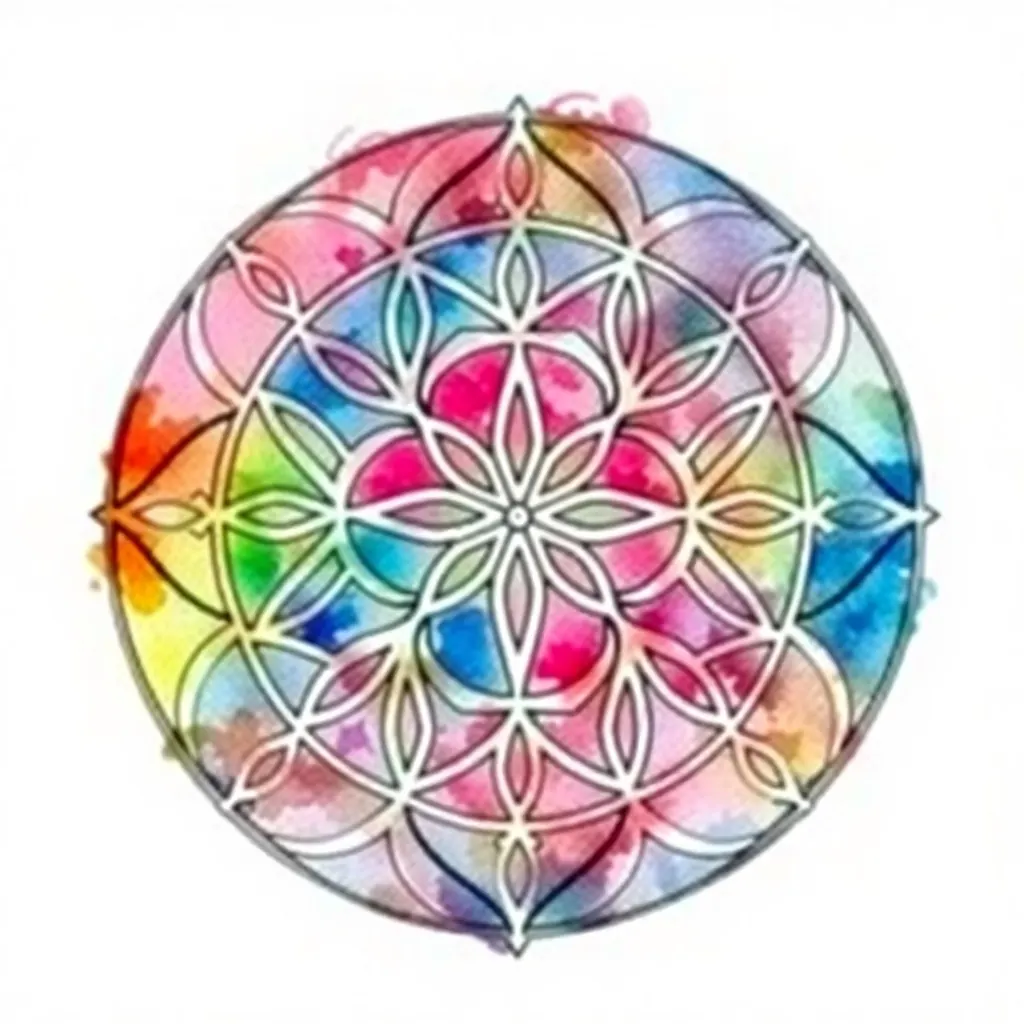
The Tarot Esoteric Geometry: Unlocking Universal Truths Sacred Shapes, a core pattern in sacred geometry, represents the interconnectedness of all existence.
The Golden Ratio and Fibonacci Sequence in Nature
Among the most revered principles in sacred geometry are the Golden Ratio (Phi, Φ) and the Fibonacci Sequence. These profound mathematical concepts describe a pervasive pattern of growth and proportion found ubiquitously throughout nature and the universe. They are often associated with intrinsic beauty, perfect harmony, and optimal efficiency in natural designs.
The Golden Ratio, approximately 1.618, is a mathematical constant that appears with remarkable frequency in natural phenomena and is highly valued for its aesthetic properties in art and design. It is an irrational number, often represented by the Greek letter Phi (Φ). It is derived when the ratio of the sum of two quantities to the larger quantity is equal to the ratio of the larger quantity to the smaller one. This specific proportion creates an inherent sense of balance and aesthetic appeal, which is precisely why it has been utilized in art and architecture for millennia.
The Fibonacci Sequence is a series of numbers where each number is the precise sum of the two preceding ones (e.g., 0, 1, 1, 2, 3, 5, 8, 13, 21, 34...). As the numbers within the sequence grow larger, the ratio of consecutive numbers progressively approaches the Golden Ratio. This sequence beautifully illustrates natural growth patterns, such as the precise arrangement of leaves on a stem, the intricate spirals of a sunflower, or the branching structure of trees.
The consistent presence of these mathematical relationships in diverse natural forms strongly suggests a universal organizing principle at play. They are not random occurrences but rather fundamental expressions of the universe's inherent design and intelligence. Understanding them can significantly deepen one's appreciation for the intricate beauty and profound order that governs our world and beyond.
Platonic Solids: Cosmic Building Blocks
The Platonic Solids are a distinguished set of five convex regular polyhedra. This means they are three-dimensional shapes with faces that are all identical regular polygons, and the same number of faces meet precisely at each vertex. These five unique shapes – the tetrahedron, hexahedron (cube), octahedron, dodecahedron, and icosahedron – were extensively studied by the ancient Greek philosopher Plato, who famously associated each with a classical element and the cosmos itself.
| Platonic Solid | Number of Faces | Associated Element | Symbolic Meaning |
|---|---|---|---|
| Tetrahedron | 4 (triangular) | Fire | Purification, energy, stability, balance |
| Hexahedron (Cube) | 6 (square) | Earth | Grounding, stability, structure, physical reality |
| Octahedron | 8 (triangular) | Air | Balance, integration, compassion, interplay of forces |
| Dodecahedron | 12 (pentagonal) | Ether (Universe) | Cosmos, divine thought, higher self, universal consciousness |
| Icosahedron | 20 (triangular) | Water | Flow, emotion, intuition, fluidity, adaptability |
These geometric forms are considered the fundamental building blocks of matter, as they are the only convex regular polyhedra possible in three-dimensional space. Their discovery and philosophical assignment by Plato highlight an early and profound understanding of the geometric principles underlying the physical world. Modern science, particularly in fields like crystallography and the study of molecular structures, frequently finds these forms recurring, thereby reinforcing their fundamental and universal nature.
Sacred Geometry in Art, Architecture, and Spiritual Practices
Throughout human history, sacred geometry has profoundly influenced human creativity, particularly in the realms of art and architecture. Ancient civilizations intuitively grasped the immense power of these forms to evoke harmony, balance, and a deep sense of the divine. This sophisticated understanding was meticulously applied to the design of temples, cathedrals, and other sacred structures, resulting in spaces that were not only aesthetically pleasing but also deeply spiritually resonant.
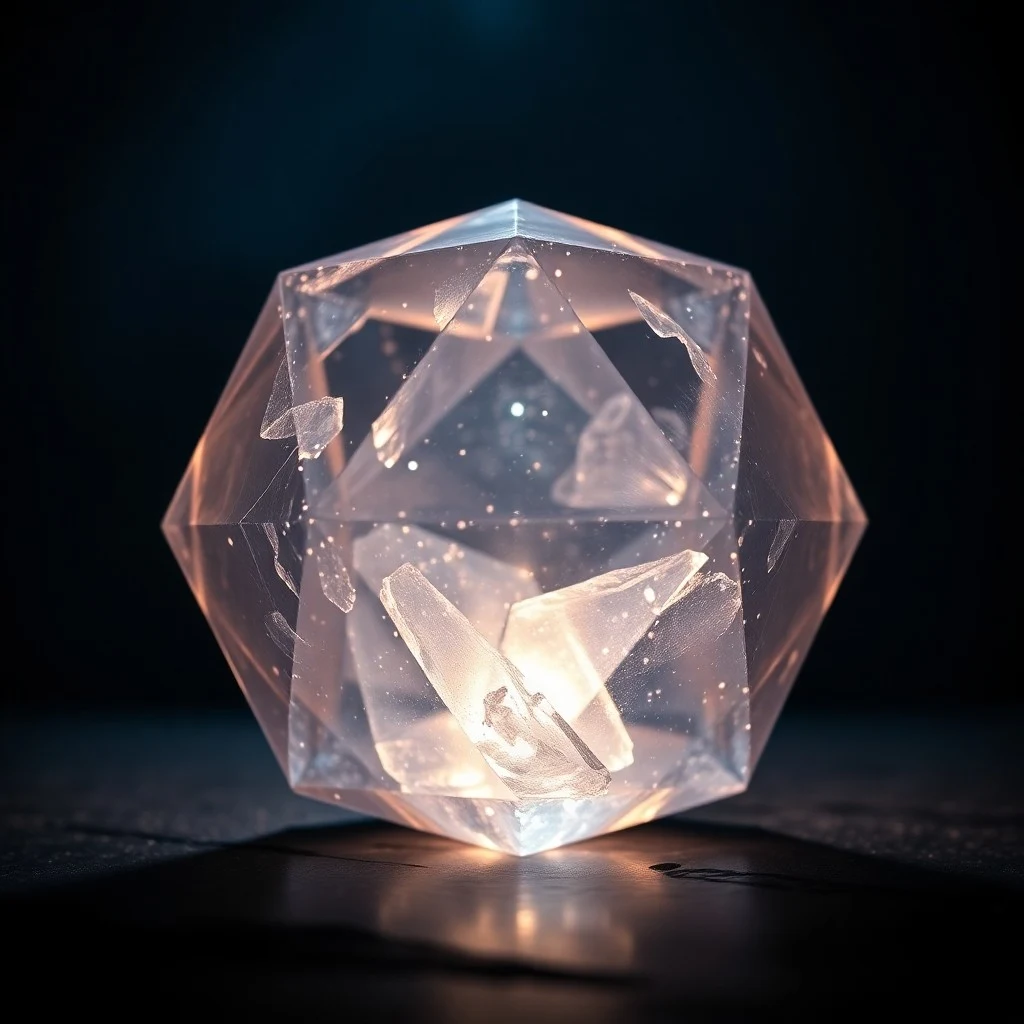
The Cosmic Sacred Geometry: Universes Underlying Patterns Unveiled, one of the Platonic Solids, is often associated with the element of Ether and universal consciousness.
The Great Pyramid of Giza, for instance, famously incorporates the Golden Ratio and other precise mathematical relationships within its monumental dimensions. Gothic cathedrals, with their intricate rose windows and soaring arches, frequently feature the Vesica Piscis and other geometric patterns specifically designed to uplift the human spirit and inspire awe. Renaissance artists, such as the legendary Leonardo da Vinci, consciously employed the Golden Ratio in their compositions, believing it to represent divine perfection and ultimate beauty.
In various spiritual contexts, sacred geometry is utilized as a powerful tool for meditation and deep contemplation. Mandalas, yantras, and other sacred symbols found in Eastern traditions are often meticulously based on geometric principles, serving as potent visual aids to focus the mind and facilitate spiritual awakening. These patterns are widely believed to hold vibrational energy that can profoundly influence consciousness and promote holistic healing.
The seamless integration of sacred geometry into human creations reflects a universal and timeless desire to connect with the divine and to manifest cosmic order within the physical world. It serves as a powerful reminder that true beauty and profound spirituality are often intricately intertwined with mathematical precision and geometric harmony, revealing a deeper layer of reality.
Modern Interpretations and Scientific Relevance
While deeply rooted in ancient wisdom, sacred geometry continues to find significant relevance in contemporary fields, influencing modern science, innovative design, and evolving spiritual practices. Its timeless principles are being explored in novel and sophisticated ways, demonstrating its enduring power and remarkable adaptability in an ever-evolving world. This ancient knowledge is proving to be a fertile ground for new discoveries.
In the realm of science, researchers are increasingly discovering geometric patterns at the quantum level, in the intricate structure of molecules, and within the dynamic complexities of biological and physical systems. The study of fractals, for example, reveals self-similar patterns that repeat at different scales, echoing the fundamental principles of sacred geometry in the infinite complexity of nature. These profound insights are actively helping scientists understand the fundamental laws governing the universe and its intricate workings.
In design and art, contemporary artists and architects continue to draw immense inspiration from sacred geometry, creating works that resonate with universal harmony and aesthetic perfection. From thoughtful urban planning to innovative product design, the conscious application of the Golden Ratio and other geometric principles can significantly enhance aesthetic appeal and optimize functional efficiency. This deliberate integration brings a sense of timeless beauty and profound order to modern creations.
Spiritually, sacred geometry is increasingly being embraced in personal growth and wellness practices. Meditating on geometric patterns, meticulously creating mandalas, or simply observing these forms in nature can profoundly help individuals achieve a state of inner peace, mental clarity, and a deeper sense of connection. It serves as a visual language for accessing deeper levels of consciousness and understanding one's rightful place within the grand cosmic order, fostering a sense of unity and purpose.
The resurgence of widespread interest in sacred geometry signifies a growing recognition of the deep interconnectedness between the material and spiritual realms. It offers a powerful and comprehensive framework for exploring the enduring mysteries of existence and fostering a more holistic and integrated understanding of our universe, bridging ancient wisdom with modern inquiry.
Conclusion
Sacred Geometry is far more than just a collection of shapes and numbers; it is a profound philosophical and spiritual system that eloquently reveals the underlying order and inherent harmony of the universe. From the intricate spirals of a seashell to the vast, awe-inspiring expanse of galaxies, these universal patterns speak a silent yet powerful language of creation, intelligent design, and profound interconnectedness. Its core principles, such as the Golden Ratio, the Fibonacci Sequence, and the Platonic Solids, are not arbitrary constructs but rather fundamental expressions of cosmic intelligence, woven into the very fabric of reality.
By diligently studying and deeply contemplating sacred geometry, individuals can gain deeper insights into the fundamental nature of reality, the intricate blueprint of life, and their own unique place within the grand tapestry of existence. It serves as an elegant bridge between the tangible and the intangible, the scientific and the spiritual, offering a clear path to understanding the divine mind that orchestrates all creation. Embracing sacred geometry can significantly enrich our perception of beauty, inspire our boundless creativity, and foster a profound sense of unity with the cosmos, leading to a more harmonious and enlightened existence.
Fuente: Contenido híbrido asistido por IAs y supervisión editorial humana.


Comments
Post a Comment