
Ceres Astrology: Nurturing, Loss, Self-Care | StarPluto
The Role of Ceres in Astrology: Nurturing, Loss, and Self-Care
In the vast tapestry of astrological influences, beyond the well-known planets, lies a wealth of information embedded in the asteroids and dwarf planets. Among these, Ceres holds a particularly profound significance, often referred to as the "Great Mother" asteroid. While not a traditional planet, its discovery and subsequent reclassification as a dwarf planet underscore its importance in understanding our deepest needs for sustenance, emotional processing, and self-worth.
Ceres, named after the Roman goddess of agriculture, grain, and motherly love, symbolizes how we nurture others, how we wish to be nurtured, and our fundamental relationship with food, loss, and self-care. It sheds light on our capacity for empathy, our responses to grief and separation, and the intrinsic value we place on ourselves. Understanding Ceres in your birth chart can unlock crucial insights into your emotional landscape and your unique journey towards self-acceptance and healing.
Table of Contents
- Understanding Ceres: The Great Mother Asteroid
- Ceres in the Birth Chart: Personal Nurturing Style
- Ceres and the Cycle of Loss and Grief
- Self-Care and Self-Worth: Ceres' Modern Message
- Aspects to Ceres: Interplay with Other Planets
- Transits and Progressions of Ceres
Understanding Ceres: The Great Mother Asteroid
Ceres was the first asteroid discovered in 1801 by Giuseppe Piazzi, initially considered a planet, then an asteroid, and finally reclassified as a dwarf planet in 2006. This celestial body orbits between Mars and Jupiter in the asteroid belt, making it a bridge between the personal planets (inner) and the social/outer planets. Its mythological namesake, Demeter in Greek mythology, is the goddess of the harvest, fertility, and maternal bonds, particularly known for her profound grief over the abduction of her daughter Persephone by Hades.
Astrologically, Ceres represents our fundamental need for sustenance, both physical and emotional. It governs our relationship with food, agriculture, and the Earth, but more deeply, it speaks to our capacity to nurture and be nurtured. This includes the unconditional love of a mother, the comfort of home, and the feeling of being truly cared for. It also highlights our personal style of giving and receiving comfort, our feelings of security, and our inherent sense of self-worth.

The essence of Ceres in astrology, representing nurturing, sustenance, and the vital importance of self-care.
The myth of Demeter and Persephone is central to understanding Ceres. Demeter's inconsolable grief over her daughter's disappearance caused the Earth to become barren, leading to winter. This narrative powerfully illustrates Ceres' connection to loss, separation, and the process of grief. It shows how deeply we can be affected by the absence of what sustains us, and how our emotional well-being is intertwined with our ability to process these experiences. Thus, Ceres also governs how we cope with endings, detachments, and the search for renewal after periods of despair.
Ceres in the Birth Chart: Personal Nurturing Style
The placement of Ceres in your birth chart—by sign and house—reveals your unique approach to nurturing, your emotional needs, and how you deal with issues of loss and self-worth. It describes what makes you feel secure, loved, and valued, as well as how you extend that care to others.
Ceres by Zodiac Sign: Your Nurturing Expression
- Ceres in Aries: Nurturing is expressed through independence, courage, and encouraging others to be self-sufficient. May struggle with patience or overly direct forms of care. Self-care involves physical activity and asserting personal boundaries.
- Ceres in Taurus: Nurturing is practical, stable, and focused on material comfort, good food, and sensory pleasures. Values security and providing tangible support. Loss can be deeply unsettling, requiring grounding and self-indulgence.
- Ceres in Gemini: Nurturing through communication, sharing information, and intellectual stimulation. Needs mental connection and variety to feel cared for. Grief may be processed through talking, writing, or seeking diverse perspectives.
- Ceres in Cancer: A natural nurturer, deeply empathetic and protective. Finds security in family, home, and emotional bonds. Can be prone to codependency or over-nurturing. Self-care involves emotional safety and comfort.
- Ceres in Leo: Nurturing through creative expression, generosity, and encouraging others to shine. Needs recognition and appreciation to feel valued. Loss can be experienced as a blow to ego or self-expression, requiring creative outlets for healing.
- Ceres in Virgo: Nurturing is expressed through practical service, health-conscious habits, and attention to detail. Values order and efficiency. Can be critical of self and others. Self-care involves routines, healthy eating, and mindful practices.
- Ceres in Libra: Nurturing through fairness, balance, and harmonious relationships. Seeks to create beauty and peace. May struggle with decision-making or people-pleasing. Self-care involves seeking equilibrium and aesthetic pleasure.
- Ceres in Scorpio: Nurturing is deep, intense, and transformative. Provides profound emotional support and helps others through crises. Can struggle with control and possessiveness. Loss is experienced with great intensity, requiring deep emotional processing and release.
- Ceres in Sagittarius: Nurturing through wisdom, freedom, and encouraging growth through exploration. Values truth and philosophical understanding. May struggle with commitment or superficiality. Self-care involves learning, travel, and expanding horizons.
- Ceres in Capricorn: Nurturing is responsible, structured, and goal-oriented. Provides practical guidance and stability. May appear reserved but offers solid support. Loss is handled with resilience and a focus on rebuilding. Self-care involves achievement and establishing boundaries.
- Ceres in Aquarius: Nurturing is unconventional, community-focused, and intellectual. Supports humanitarian causes and individual freedom. May seem detached emotionally. Self-care involves social connection, innovation, and intellectual pursuits.
- Ceres in Pisces: Nurturing is compassionate, empathetic, and spiritual. Offers unconditional love and healing. Can be prone to self-sacrifice or escapism. Loss is deeply felt, requiring spiritual connection and creative outlets for processing.
Ceres by House: Where Nurturing Energy Manifests
- Ceres in 1st House: Nurturing the self and physical body. Strong need for self-care and asserting one's identity. Issues of self-worth are prominent.
- Ceres in 2nd House: Nurturing through financial security, material possessions, and self-worth. Relationship with food and resources is key.
- Ceres in 3rd House: Nurturing through communication, learning, and local community. Supporting siblings or neighbors.
- Ceres in 4th House: Deep connection to home, family roots, and emotional security. Nurturing instincts are strong within the domestic sphere.
- Ceres in 5th House: Nurturing through creativity, children, and self-expression. Finding joy in play and inspiring others.
- Ceres in 6th House: Nurturing through daily routines, health, and service to others. Focus on well-being and practical assistance.
- Ceres in 7th House: Nurturing in partnerships and close relationships. Seeking balance and care within unions.
- Ceres in 8th House: Nurturing through shared resources, transformation, and deep emotional bonds. Dealing with loss and regeneration.
- Ceres in 9th House: Nurturing through higher learning, philosophy, and travel. Expanding horizons and sharing wisdom.
- Ceres in 10th House: Nurturing through career, public image, and social responsibility. Providing leadership and structure.
- Ceres in 11th House: Nurturing through friendships, groups, and humanitarian causes. Supporting collective well-being.
- Ceres in 12th House: Nurturing through spirituality, compassion, and hidden acts of service. Dealing with unconscious patterns related to loss and self-sacrifice.
Ceres and the Cycle of Loss and Grief
The myth of Demeter's anguish over Persephone's abduction is a powerful metaphor for the human experience of loss and grief. Ceres in astrology speaks directly to how we cope with separation, endings, and the feeling of something vital being taken away. It highlights our emotional response to these events and the journey we undertake to find sustenance and meaning in their aftermath.
When we experience loss—be it a loved one, a job, a dream, or a sense of security—Ceres' influence becomes particularly prominent. Our Ceres placement can indicate our natural coping mechanisms: some may retreat and internalize their grief (Scorpio Ceres), others may seek solace in practical tasks (Virgo Ceres), while some might express their sorrow openly and dramatically (Leo Ceres). The key lesson of Ceres in this context is the necessity of acknowledging and processing grief, rather than suppressing it.
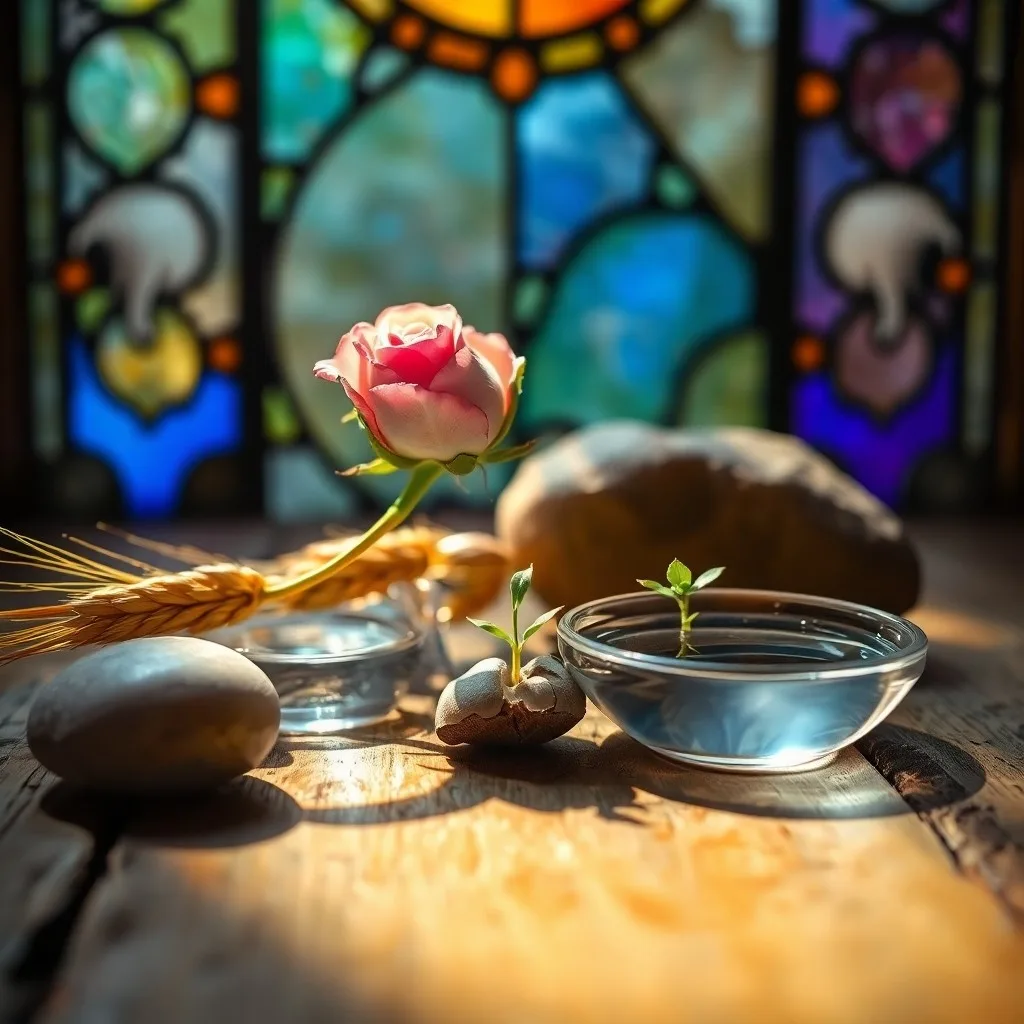
Ceres illuminates our personal journey through grief, reflection, and the search for renewal after separation.
The cycle of Persephone's return from the underworld symbolizes the eventual renewal and the re-establishment of fertility and life. This astrological archetype teaches us that even after profound loss, there is potential for growth, healing, and finding new ways to nurture ourselves and our world. It's about finding sustenance again, even if it's in a different form than before, and understanding that periods of barrenness can lead to new forms of abundance.
Self-Care and Self-Worth: Ceres' Modern Message
In contemporary astrology, Ceres has gained significant attention for its connection to self-care and self-worth. In a world that often demands constant output, the ability to nurture oneself is paramount. Ceres in your chart reveals what makes you feel truly nourished and how you can best provide that care for yourself. This isn't just about physical sustenance, but also emotional, mental, and spiritual well-being.
The concept of "feeding" ourselves extends beyond food. It encompasses engaging in activities that replenish our energy, setting healthy boundaries, seeking supportive relationships, and pursuing passions that bring us joy. A well-aspected Ceres or one that is consciously integrated can lead to a strong sense of self-worth, knowing that you are deserving of care and love, both from others and from yourself.
Conversely, challenges to Ceres in the chart, or a lack of awareness of its energies, can manifest as issues with body image, disordered eating patterns, or a feeling of being unworthy of love and sustenance. It can also point to difficulties in receiving care from others or an inability to prioritize one's own needs over those of others. Addressing these challenges often involves cultivating self-compassion and consciously developing practices that align with one's unique Ceres expression.
The delicate yet powerful act of self-nurturing, crucial for fostering a strong sense of self-worth and inner growth.
Aspects to Ceres: Interplay with Other Planets
Like all celestial bodies in a birth chart, Ceres forms aspects with other planets, adding layers of complexity and nuance to its expression. These aspects describe how the energy of nurturing, loss, and self-care interacts with other facets of your personality and life.
- Ceres-Sun Aspects: Influence on one's core identity and ego through nurturing. A harmonious aspect might indicate a strong sense of self-worth derived from giving and receiving care, while challenging aspects could point to struggles with feeling seen or valued.
- Ceres-Moon Aspects: Deeply affects emotional needs and responses. A conjunction can amplify maternal instincts and emotional sensitivity. Squares or oppositions might indicate tension between personal emotional needs and the need to nurture others.
- Ceres-Mercury Aspects: How communication is used to nurture or process loss. Harmonious aspects suggest clear and supportive communication, while challenging ones might indicate difficulties expressing emotional needs or grief.
- Ceres-Venus Aspects: Impact on relationships, love, and values. Harmonious aspects foster loving and caring relationships. Challenging aspects could reveal issues with self-worth impacting romantic connections or a desire for nurturing that feels unfulfilled.
- Ceres-Mars Aspects: How we assert our nurturing needs and actions. A conjunction can make one a fierce protector. Challenging aspects might lead to conflicts over care or an aggressive approach to getting needs met.
- Ceres-Jupiter Aspects: Expands and magnifies Ceres' themes. Harmonious aspects suggest abundant nurturing and a generous spirit. Challenging aspects might lead to over-indulgence or an exaggerated sense of loss.
- Ceres-Saturn Aspects: Brings structure, discipline, and sometimes restriction to nurturing. Harmonious aspects indicate responsible and stable care. Challenging aspects might point to feelings of deprivation, difficulty receiving nurturing, or a need to overcome early experiences of lack.
- Ceres-Uranus Aspects: Introduces unconventional or sudden elements to nurturing and loss. Harmonious aspects can bring innovative ways of caring. Challenging aspects might involve sudden separations or a need for freedom in nurturing roles.
- Ceres-Neptune Aspects: Connects Ceres to spirituality, compassion, and sometimes illusion. Harmonious aspects foster empathetic and spiritual nurturing. Challenging aspects might lead to confusion around boundaries in caregiving or idealized views of nurturing.
- Ceres-Pluto Aspects: Brings intensity, transformation, and power dynamics to nurturing and loss. Harmonious aspects can signify profound healing through intense experiences. Challenging aspects might involve power struggles related to care, deep-seated fears of abandonment, or transformative experiences of loss.
Transits and Progressions of Ceres
Like planets, Ceres undergoes transits and progressions, activating its themes in our lives at different times. These periods can bring opportunities for growth, healing, or challenges related to nurturing, loss, and self-care. Understanding these cycles can help us navigate personal transformations with greater awareness.
- Ceres Transits to Natal Planets: When transiting Ceres aspects a natal planet, it brings the themes of nurturing, sustenance, and self-worth to the fore in relation to that planet's energy. For example, transiting Ceres conjunct your natal Moon might highlight your emotional needs for comfort and security, or bring up issues related to your mother.
- Natal Ceres Transited by Outer Planets: When a slow-moving outer planet (Jupiter, Saturn, Uranus, Neptune, Pluto) aspects your natal Ceres, it signifies a longer-term developmental phase concerning your nurturing patterns, experiences of loss, or the evolution of your self-worth. For instance, transiting Saturn square natal Ceres might bring a period where you feel deprived of nurturing or need to take more responsibility for your self-care.
- Ceres in Progressions: Progressed Ceres shows the evolution of your nurturing style and your relationship with sustenance and loss over your lifetime. Its movement through signs and houses, and the aspects it forms, can indicate periods of significant change in how you give and receive care, or how you process deep emotional experiences.
These astrological movements can trigger moments where we are called to re-evaluate our relationship with food, our caregiving roles, our capacity for self-love, or our ability to heal from past wounds. They offer a chance to deepen our understanding of what truly nourishes us and to cultivate a more compassionate relationship with ourselves and others.
In conclusion, Ceres, though a lesser-known body in astrology, offers profound insights into the fundamental human experiences of nurturing, sustenance, loss, and the journey towards self-worth. Its placement in your birth chart provides a unique blueprint of your emotional needs, your capacity for empathy, and your personal path to healing and self-care. By exploring Ceres, we can better understand how to nourish ourselves and others, navigate the inevitable cycles of grief, and ultimately cultivate a life filled with genuine care and self-acceptance.
Fuente: Contenido híbrido asistido por IAs y supervisión editorial humana.


Comments
Post a Comment