
Cosmo-Sociology Digital Age: Neural Networks Consciousness Ethics
In an era defined by rapid technological advancement and unprecedented global connectivity, the traditional boundaries of sociological inquiry are expanding. The emergence of cosmo-sociology offers a fresh lens through which to examine human societies, not merely as isolated terrestrial phenomena but as integral components of a larger cosmic tapestry. This perspective becomes particularly salient in the digital age, where neural networks, both biological and artificial, are reshaping our understanding of collective consciousness and posing profound ethical questions.
This article delves into the intricate relationship between cosmo-sociology, the pervasive influence of digital neural networks, and the evolving nature of collective consciousness, culminating in a critical examination of the ethical frameworks necessary to navigate this new frontier. We will explore how the digital realm acts as a crucible for new forms of social organization, thought patterns, and shared realities, pushing the boundaries of what it means to be a connected human society in the vastness of the cosmos.
Table of Contents
- Cosmo-Sociology Defined: Bridging the Terrestrial and the Cosmic
- The Digital Age: A Catalyst for Societal Transformation
- Neural Networks: Architects of the Collective Mind
- Collective Consciousness in the Digital Sphere
- Ethical Imperatives in the Digital Cosmos
- Challenges and Opportunities in a Connected Universe
- The Future Outlook: Co-evolution with Digital Intelligence
Cosmo-Sociology Defined: Bridging the Terrestrial and the Cosmic
Cosmo-sociology, as an emerging field, seeks to integrate traditional sociological analysis with a broader, cosmic perspective. It moves beyond anthropocentric views, considering humanity as part of a larger universal system, influenced by and influencing cosmic phenomena. This discipline encourages us to think about societal structures, cultural evolution, and human behavior within the context of astronomical scales, planetary influences, and potentially, extraterrestrial life.
Historically, sociology has focused on human interactions within Earth-bound societies. However, the advent of space exploration, astrobiology, and the philosophical implications of our place in the universe necessitate a more expansive framework. Cosmo-sociology posits that understanding our cosmic environment is crucial for comprehending the full spectrum of human social development and potential future trajectories. It asks fundamental questions about how cosmic awareness might alter our social norms, ethical systems, and collective identity.
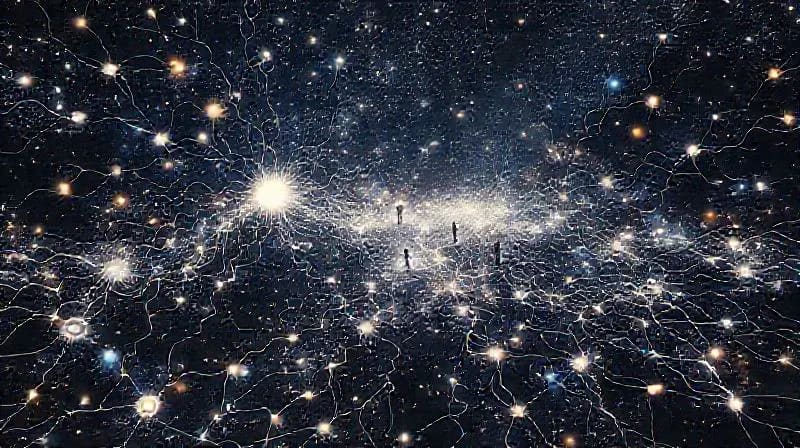
Conceptual art illustrating the intricate web of digital pathways and cosmic influences that shape our understanding of society and consciousness in the modern era.
This visual representation is a conceptual render generated by advanced AI, reflecting the abstract nature of cosmo-sociological theories and digital integration.The Digital Age: A Catalyst for Societal Transformation
The digital age, characterized by the internet, artificial intelligence, and ubiquitous connectivity, has fundamentally reshaped human societies. Information now travels at the speed of light, transcending geographical and cultural barriers. This instantaneous exchange has led to the formation of global communities, the rapid dissemination of ideas, and the emergence of new forms of social interaction that exist primarily in virtual spaces.
Digital platforms act as powerful amplifiers of human thought and emotion, capable of mobilizing large populations for social change or, conversely, polarizing them through echo chambers and filter bubbles. The sheer volume of data generated by human activity online provides unprecedented insights into collective behavior, preferences, and emerging trends. This data, when analyzed by sophisticated algorithms, begins to paint a picture of a digitally mediated collective human experience.
The digital transformation is not merely about communication; it's about the very fabric of our reality. From economic systems to political discourse, from personal relationships to global crises, digital technologies are intertwined with every aspect of modern life. This pervasive influence sets the stage for understanding how neural networks, both biological and artificial, contribute to a new form of collective consciousness.
Neural Networks: Architects of the Collective Mind
The concept of neural networks is central to understanding the digital age's impact on consciousness. We can examine this in two primary ways: as a metaphor for human social structures and as a literal technological force.
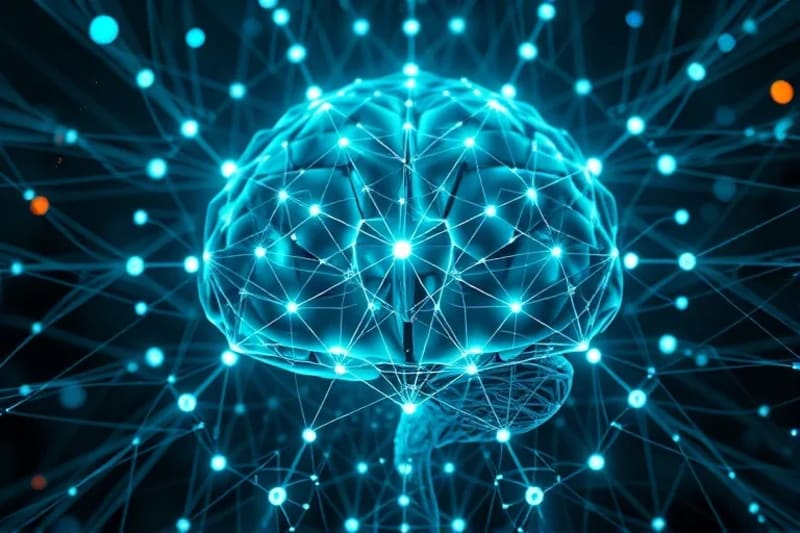
A visual metaphor for the intricate merging of human biological cognition with artificial intelligence networks, shaping new forms of collective thought.
This 3D conceptual artwork is an AI-generated visualization, exploring the abstract connections between human brains and digital neural architectures.- Human Societies as Neural Networks: Sociologists have long drawn parallels between the intricate connections within a brain and the complex web of relationships in human society. Individuals are like neurons, communicating, influencing, and being influenced by others. Information flows through social networks, creating emergent properties like culture, norms, and collective behavior. The digital age has made these connections more explicit and measurable, allowing for the mapping of global social graphs that resemble vast neural architectures.
- Artificial Neural Networks (ANNs): These are computational models inspired by the structure and function of biological neural networks. ANNs are the backbone of modern AI, powering everything from search engines and social media algorithms to autonomous vehicles and scientific discovery tools. These networks process vast amounts of data, learn patterns, and make predictions or decisions, often influencing human behavior and perception on a massive scale.
The interaction between these two forms of neural networks is where the digital age truly transforms collective consciousness. ANNs are not just tools; they are increasingly becoming active participants in shaping our shared reality. They curate the information we see, influence our purchasing decisions, and even contribute to our emotional states through personalized content delivery. This creates a feedback loop where human collective thought influences AI, and AI, in turn, influences human collective thought, leading to a co-evolutionary dynamic.
Collective Consciousness in the Digital Sphere
Émile Durkheim's concept of collective consciousness refers to the shared beliefs, ideas, and moral attitudes that operate as a unifying force within society. In the digital age, this concept takes on new dimensions. The internet, with its global reach and instant communication, facilitates the rapid formation and transformation of shared understandings.
Digital platforms enable the emergence of a "global mind" where events in one part of the world can instantly evoke collective responses across continents. Hashtag movements, viral trends, and global news cycles demonstrate a form of real-time, distributed collective consciousness. However, this digital collective consciousness is not without its complexities:
- Fragmentation vs. Unification: While digital tools can unite people around common causes, they can also fragment society into echo chambers, where individuals are exposed only to information that confirms their existing beliefs, leading to polarization.
- Algorithmic Influence: AI-driven algorithms play a significant role in shaping what information reaches individuals, thus influencing the collective narrative. These algorithms, designed for engagement, can inadvertently amplify extreme views or misinformation, impacting the quality and coherence of collective thought.
- Emergent Properties: The sheer scale and complexity of digital interactions mean that new ideas, cultural memes, and social phenomena can emerge rapidly and unpredictably, reflecting a dynamic and evolving collective consciousness that is partly human, partly algorithmic.
Understanding this digitally mediated collective consciousness is crucial for cosmo-sociology. As humanity potentially expands beyond Earth, the digital infrastructure we build will likely carry our collective consciousness with us, shaping how future off-world societies perceive themselves and their place in the universe. For further exploration of how consciousness can be shaped, consider the principles of quantum manifestation.
Ethical Imperatives in the Digital Cosmos
The profound influence of digital neural networks on collective consciousness necessitates a robust ethical framework. As we build increasingly sophisticated AI systems and integrate them into the fabric of society, critical ethical questions arise:
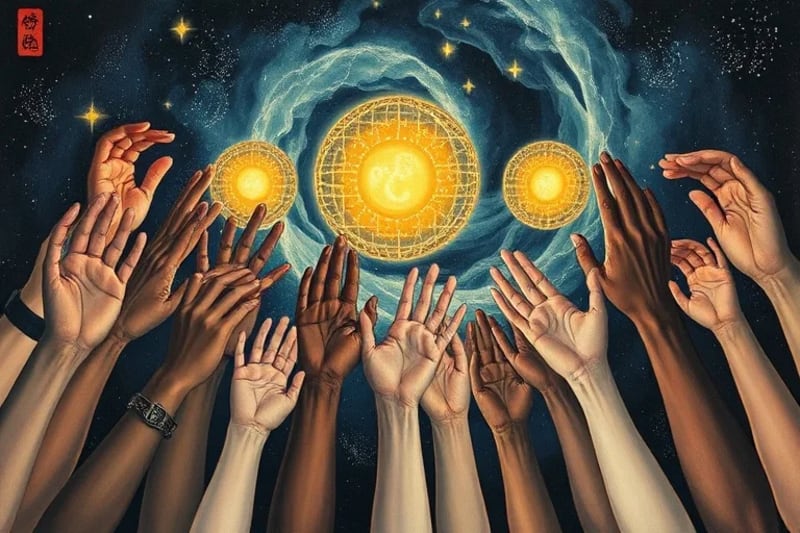
A symbolic representation of humanity grappling with the complex ethical considerations that arise from our increasingly digital and interconnected existence.
This oil painting is an AI-generated artistic interpretation, reflecting the universal human struggle with ethical choices in technological advancement.- Algorithmic Bias and Fairness: AI systems learn from data, and if that data reflects societal biases (e.g., racial, gender, socioeconomic), the AI will perpetuate and even amplify those biases. Ensuring fairness and equity in algorithmic decision-making is paramount to prevent the digital reinforcement of existing inequalities.
- Data Privacy and Surveillance: The vast collection of personal data fuels neural networks but also raises concerns about privacy, surveillance, and the potential for misuse. Striking a balance between innovation and individual rights is a constant challenge.
- Autonomy and Control: As AI becomes more autonomous, questions emerge about who is responsible when things go wrong, and to what extent humans should cede control over critical societal functions to machines.
- Digital Divide: Unequal access to digital technologies and literacy creates a new form of social stratification. Ethical considerations must include ensuring equitable access and preventing the further marginalization of already vulnerable populations.
- Manipulation of Consciousness: The ability of algorithms to personalize content and influence behavior raises concerns about the potential for manipulation, propaganda, and the erosion of critical thinking. Safeguarding cognitive autonomy is a growing ethical imperative.
These ethical dilemmas are not merely technological; they are deeply sociological and philosophical. They require interdisciplinary approaches, involving ethicists, policymakers, technologists, and sociologists, to develop guidelines and regulations that promote a beneficial and equitable digital future. The intersection of AI and divination also presents unique ethical considerations, as explored in The Intersection of AI and Divination: Ethical Considerations.
Challenges and Opportunities in a Connected Universe
The confluence of cosmo-sociology, digital neural networks, and collective consciousness presents both formidable challenges and unprecedented opportunities for humanity.
Challenges:
- Information Overload and Disinformation: The sheer volume of information, coupled with the ease of spreading misinformation, can overwhelm individuals and distort collective understanding, making it difficult to discern truth.
- Existential Risks from AI: Uncontrolled or misaligned AI development could pose significant risks to human autonomy, societal stability, and even the existence of humanity.
- Loss of Human Connection: Over-reliance on digital interactions might lead to a degradation of face-to-face social skills and deeper human empathy, impacting the quality of collective consciousness.
- Global Governance: Establishing effective global governance mechanisms for digital ethics and AI regulation is complex, given diverse national interests and values.
Opportunities:
- Enhanced Collective Intelligence: AI can augment human intelligence, helping us solve complex global problems like climate change, disease, and poverty through advanced data analysis and predictive modeling.
- Global Empathy and Understanding: Digital platforms can foster cross-cultural understanding and empathy by connecting people from diverse backgrounds, potentially leading to a more unified global consciousness.
- Democratization of Knowledge: The internet provides unprecedented access to information and education, empowering individuals and fostering collective learning on a global scale.
- New Forms of Social Organization: Digital tools enable innovative forms of collaboration, activism, and community building, potentially leading to more adaptive and resilient societal structures.
- Cosmic Awareness: Digital tools can help disseminate scientific knowledge about the universe, fostering a broader cosmic awareness that could unite humanity under a shared sense of wonder and responsibility for our place in the cosmos.
The Future Outlook: Co-evolution with Digital Intelligence
The trajectory of human society in the digital age points towards an increasingly intertwined future with artificial intelligence. This co-evolution will profoundly impact our collective consciousness and our understanding of ourselves within the cosmos. Cosmo-sociology will be essential in analyzing these shifts, providing frameworks to understand how human values, social structures, and cosmic perspectives adapt to a world where digital intelligence is a fundamental component of our shared reality.
Future research in this domain will likely explore the emergence of hybrid consciousness, where human and artificial intelligences merge and interact in novel ways. It will also examine the implications of sending AI-powered probes or even digital consciousness into space, extending humanity's presence and influence beyond Earth in new and unpredictable forms. The ethical considerations will only grow in complexity, demanding continuous dialogue and adaptation.
Ultimately, the digital age, viewed through the lens of cosmo-sociology, is not just about technological advancement; it's about a fundamental re-evaluation of what it means to be human, to be part of a society, and to exist in a vast, interconnected universe. The choices we make today regarding the development and deployment of neural networks will shape the collective consciousness of tomorrow, both on Earth and potentially beyond.
Explore More Insights
The Intersection of AI and Divination: Ethical Considerations: Examine the moral landscape of AI's role in human foresight.
Hermetic Principles Manifestation: Unlocking Divine Laws: Understand ancient wisdom applied to modern manifestation practices.
Esoterismo Cuántico: Entrelazamiento, Multiversos, Intención: Explore the mystical side of quantum physics and its implications for consciousness (Note: This link is in Spanish, but the topic is relevant).
Propiedad Intelectual Contenido Generado IA Desafío Legal Creativo: Understand the legal and creative challenges posed by AI-generated content (Note: This link is in Spanish, but the topic is relevant).
Source: Hybrid content assisted by AI and human editorial supervision.


Comments
Post a Comment