
AI Dream Interpretation: Ethical Dilemmas, Digital Consciousness
Dreams have fascinated humanity for millennia, serving as a mysterious canvas where our deepest fears, desires, and unresolved thoughts play out. From ancient shamans to Freudian psychoanalysts, the quest to understand these nocturnal narratives has been a constant. Today, as artificial intelligence (AI) rapidly advances, a new frontier in dream interpretation is emerging, promising unprecedented insights into the subconscious mind. However, this technological leap brings with it a complex web of ethical considerations that demand careful scrutiny. The ability of AI to potentially decode subconscious algorithms and interact with what we might call "digital consciousness" raises profound questions about privacy, autonomy, bias, and the very nature of human experience.
This article delves into the burgeoning field of AI-driven dream interpretation, exploring its potential benefits while critically examining the ethical dilemmas it presents. We will navigate the intricate landscape where technology meets the most intimate aspects of our psyche, seeking to understand how we can harness AI's power responsibly.
Table of Contents
- The Rise of AI in Dream Analysis
- Ethical Concerns: Privacy and Data Security
- Algorithmic Bias and Misinterpretation
- Autonomy, Agency, and Psychological Impact
- The Nature of Consciousness and AI Understanding
- Navigating the Future: Responsible AI Development
- Human Oversight and Interdisciplinary Collaboration
- Conclusion: Balancing Innovation with Ethics
The Rise of AI in Dream Analysis
Traditionally, dream interpretation has been a subjective art, relying on cultural symbolism, personal associations, and the interpretive skills of a therapist or analyst. The advent of AI introduces a paradigm shift. Machine learning algorithms can process vast amounts of dream reports, identify recurring patterns, and cross-reference them with psychological theories, cultural contexts, and even physiological data collected during sleep. This capability promises to move dream analysis beyond anecdotal evidence towards a more data-driven, potentially objective understanding.
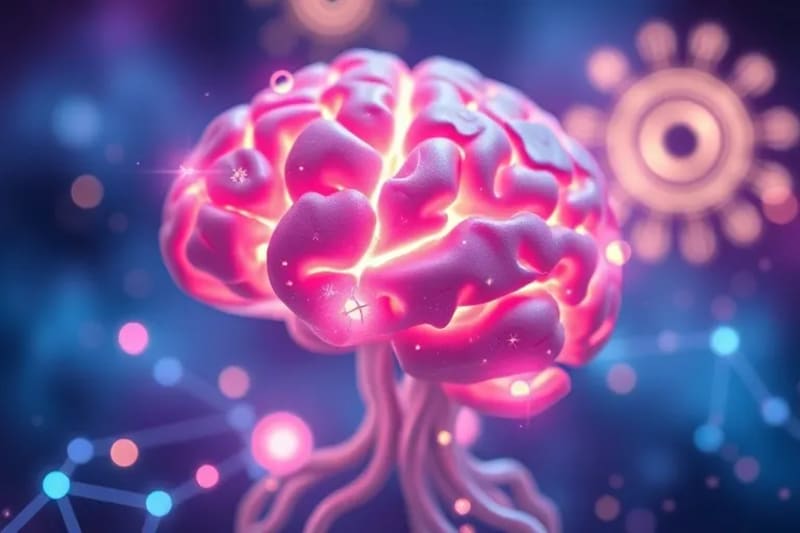
Exploring the intricate convergence of artificial intelligence and the human subconscious, revealing new pathways for understanding dream narratives.
Conceptual rendering generated by advanced AI models, illustrating the complex interplay between neural networks and dream states.AI-powered tools could offer personalized dream insights, helping individuals understand their emotional states, identify stressors, and even uncover creative solutions. Imagine an AI that, over time, learns your unique dream language, providing interpretations that evolve with your personal growth. This could democratize access to self-understanding, making sophisticated psychological insights available to a broader audience. Furthermore, AI could assist researchers in identifying universal dream archetypes or cultural variations in dream content at an unprecedented scale, contributing significantly to our collective knowledge of the human mind. For more on how AI is shaping our spiritual and ethical futures, consider exploring Modern Spirituality AI Divination Ethical Futures.
Ethical Concerns: Privacy and Data Security
The most immediate ethical concern revolves around privacy and data security. Dream reports are inherently intimate, often containing raw, unfiltered thoughts, fears, and desires that individuals might not even consciously acknowledge. Feeding such deeply personal data into an AI system raises critical questions:
- Who owns this data? Is it the individual, the AI developer, or a third party?
- How is it stored and protected? The potential for data breaches involving such sensitive information is immense, leading to psychological distress, blackmail, or even identity manipulation.
- How is it used? Could dream data be used for targeted advertising, political manipulation, or even in legal contexts without explicit consent?
- Anonymization Challenges: While data anonymization is a standard practice, the unique patterns within dream narratives might make true anonymization difficult, especially when combined with other personal data.
The very act of sharing one's dreams with an AI system requires a level of trust that current data protection regulations may not adequately address. As AI delves into the subconscious, the need for robust ethical frameworks and legal protections becomes paramount.
Visualizing the critical intersection of personal data and AI interpretation, highlighting the need for robust privacy safeguards.
Algorithmic Bias and Misinterpretation
AI systems learn from the data they are trained on. If this data reflects societal biases—racial, gender, cultural, or socioeconomic—then the AI's interpretations will inevitably perpetuate and amplify these biases. A dream interpretation AI trained predominantly on Western psychological theories might misinterpret dreams from individuals of different cultural backgrounds, leading to inaccurate or even harmful conclusions. For instance, a symbol that is positive in one culture might be negative in another.
Furthermore, dreams are highly subjective and often metaphorical. AI, while adept at pattern recognition, may struggle with the nuanced, context-dependent nature of dream symbolism. A misinterpretation by an AI could lead to:
- Psychological Harm: Incorrectly labeling a dream as indicative of severe mental distress when it's simply a creative expression.
- Reinforcement of Negative Self-Perception: If an AI consistently interprets certain dream elements negatively, it could reinforce maladaptive thought patterns.
- Loss of Nuance: Reducing complex subconscious narratives to simplistic, data-driven conclusions, stripping away the richness of personal meaning.
The challenge lies in developing AI that is culturally sensitive, context-aware, and capable of acknowledging the inherent ambiguity of dream language. This requires diverse training datasets and sophisticated algorithms that can handle the complexities of human subjective experience. The societal implications of AI mapping global consciousness trends are further explored in Cosmic Sociology AI Mapping Global Consciousness Trends.
Autonomy, Agency, and Psychological Impact
Another critical ethical dimension concerns human autonomy and agency. If individuals become overly reliant on AI for dream interpretation, could it diminish their capacity for self-reflection and personal insight? The process of interpreting one's own dreams, or working with a human therapist, often involves deep introspection and the construction of personal meaning, which is a vital part of psychological growth. Outsourcing this process entirely to an AI might inadvertently disempower individuals.
The psychological impact of AI-driven dream interpretation also warrants attention:
- Emotional Vulnerability: Dreams can evoke strong emotions. An AI's interpretation, especially if delivered without empathy or context, could trigger anxiety, fear, or confusion.
- Manipulation Potential: In a worst-case scenario, malicious actors could design AI systems to manipulate individuals through dream interpretations, subtly influencing their beliefs, decisions, or emotional states.
- Over-Pathologizing: AI might be prone to identifying "problems" or "disorders" based on patterns, potentially leading to unnecessary self-diagnosis or anxiety about normal psychological processes.
Maintaining a balance where AI serves as a tool for exploration rather than a definitive authority is crucial for preserving human agency and promoting healthy psychological engagement with one's inner world.
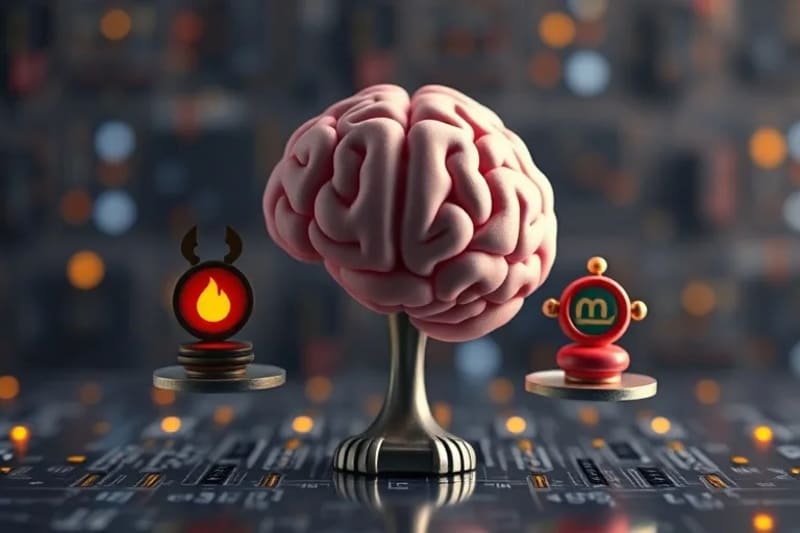
An artistic depiction of the delicate ethical balance required when artificial intelligence delves into the intricate algorithms of the human subconscious.
The Nature of Consciousness and AI Understanding
Perhaps the most philosophical ethical implication touches upon the very nature of consciousness. Can an AI truly "understand" a dream, or does it merely process patterns and correlations? Dreams are deeply experiential, imbued with subjective feeling, meaning, and qualia. An AI, lacking subjective experience, can only interpret these phenomena through a computational lens. This raises questions:
- The "Hard Problem" of Consciousness: If we don't fully understand human consciousness, how can an AI accurately interpret its manifestations in dreams?
- Digital Consciousness: As AI systems become more sophisticated, some theories propose the emergence of a form of "digital consciousness." How would this digital consciousness interpret human subconsciousness, and what biases might it introduce?
- Reductionism: Is there a risk that AI dream interpretation reduces the rich, multifaceted experience of dreaming to mere data points, diminishing its spiritual, artistic, or existential significance?
This area pushes the boundaries of our understanding of both human and artificial intelligence, demanding a philosophical and ethical dialogue about what it means to understand the self. The intersection of AI, consciousness, and symbolic art offers further insights, as explored in Esoteric Symbolism AI Art: Digital Consciousness.
Navigating the Future: Responsible AI Development
To navigate these ethical complexities, a multi-faceted approach to responsible AI development in dream interpretation is essential. This includes:
- Transparency and Explainability: Users should understand how the AI arrives at its interpretations, including the data sources and algorithms used. "Black box" AI models are unacceptable in such sensitive domains.
- Robust Data Governance: Implementing strong encryption, anonymization techniques, and strict access controls for dream data is non-negotiable. Clear consent mechanisms and data deletion policies must be in place.
- Bias Mitigation: Actively working to identify and mitigate biases in training data and algorithms through diverse datasets and fairness-aware AI techniques.
- Ethical Guidelines and Regulations: Developing industry-specific ethical guidelines and, eventually, legal regulations that address the unique challenges of AI in mental and psychological domains.
- User Education: Educating users about the limitations of AI dream interpretation, emphasizing that it is a tool for exploration, not a definitive psychological diagnosis.
The goal should be to create AI systems that augment human understanding and well-being, rather than replacing or undermining it. This requires a commitment to ethical design from the outset, integrating ethical considerations into every stage of development.
Human Oversight and Interdisciplinary Collaboration
Ultimately, human oversight remains indispensable. AI in dream interpretation should function as an assistive tool, providing insights that can then be explored and integrated by the individual, perhaps with the guidance of a human therapist. The nuanced understanding of human emotion, context, and personal history that a human can provide is something AI cannot replicate.
Furthermore, addressing these ethical implications requires interdisciplinary collaboration. AI developers, psychologists, ethicists, philosophers, legal experts, and cultural anthropologists must work together to:
- Define ethical boundaries for AI's involvement in the subconscious.
- Develop best practices for data collection, analysis, and interpretation.
- Create frameworks for responsible innovation that prioritize human well-being and autonomy.
- Explore the philosophical implications of AI interacting with consciousness.
This collaborative effort will ensure that as we venture into the digital decoding of dreams, we do so with wisdom, caution, and a deep respect for the complexities of the human mind. The journey into consciousness, whether human or digital, is a profound one, as discussed in Quantum Leap Consciousness: Bridging Physics Metaphysics Transformation.
Conclusion: Balancing Innovation with Ethics
The ethical implications of AI in dream interpretation are vast and multifaceted, touching upon fundamental aspects of privacy, bias, autonomy, and the very definition of consciousness. While AI offers exciting possibilities for unlocking deeper insights into the subconscious, these advancements must be tempered with rigorous ethical considerations and robust safeguards. The path forward requires a delicate balance between innovation and responsibility, ensuring that technology serves to enhance human understanding and well-being without compromising our most intimate inner world. By fostering transparency, mitigating bias, protecting privacy, and prioritizing human oversight, we can guide the development of AI dream interpretation towards a future that is both insightful and ethically sound, respecting the profound mystery and personal significance of our dreams.
Explore More Content
- Modern Spirituality AI Divination Ethical Futures
- Ecological Divination: Tarot, Runes, Oracles for Earth Healing
- Misticismo Cuántico: Conexión Fe Mariana Singularidad Tecnológica
- Deidades Planetarias: Mitología y Arquetipos en Astrología
Source: Hybrid content assisted by AI and human editorial supervision.


Comments
Post a Comment