
Lunar Calendar Fertility: Harmonizing Conception Cycles
For millennia, humanity has looked to the heavens, observing the moon's rhythmic dance across the night sky and its profound influence on Earth's tides, plant growth, and even animal behavior. This ancient reverence for lunar cycles naturally extended to human life, particularly concerning fertility and reproduction. The concept of harmonizing human biological rhythms with the lunar calendar for conception and natural family planning is not new; it is a tapestry woven through various cultures and historical periods, offering a unique perspective on understanding our bodies.
In an age dominated by advanced medical science, the wisdom of connecting our reproductive cycles to celestial patterns might seem counterintuitive. However, a deeper exploration reveals a fascinating interplay between traditional knowledge, anecdotal evidence, and emerging scientific inquiry. This article delves into the historical context, theoretical underpinnings, and practical applications of using the lunar calendar to enhance fertility awareness, providing an educational and informed perspective on this intriguing subject.
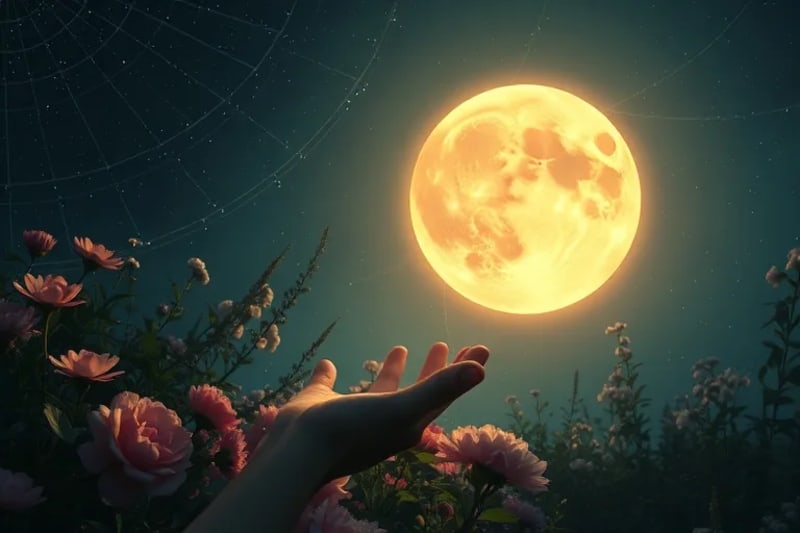 Conceptual visualization of the moon's serene influence on growth and fertility, reflecting ancient beliefs in cyclical harmony.
This conceptual render, generated by advanced AI, explores the timeless connection between celestial bodies and earthly vitality, drawing inspiration from diverse cultural interpretations of lunar power.
Table of Contents
- Historical Roots of Lunar Fertility Beliefs
- The Lunar Cycle and the Female Body
- Scientific Perspectives and Modern Research
- Lunar Calendar and Natural Family Planning (NFP)
- The Chinese Lunar Calendar and Fertility
- Practical Application: Tracking Your Lunar Fertility
- Common Misconceptions and Cautions
- Conclusion: Embracing Cyclical Wisdom
Historical Roots of Lunar Fertility Beliefs
The moon's 29.5-day cycle closely mirrors the average length of the human menstrual cycle, a correlation that has not escaped the notice of ancient civilizations. Across diverse cultures, from the ancient Egyptians and Babylonians to indigenous tribes in the Americas and Africa, the moon was often revered as a feminine deity, intrinsically linked to fertility, birth, and the rhythms of life. These societies observed the moon's phases and sought to align their agricultural, spiritual, and reproductive practices with its perceived influence.
In many traditions, the new moon was associated with menstruation, while the full moon was linked to ovulation, creating a natural framework for understanding fertility windows. This observational knowledge was passed down through generations, forming the basis of various folk remedies, rituals, and natural family planning methods. While not always scientifically validated by modern standards, these practices highlight a deep-seated human desire to connect with the natural world and understand our place within its grand design.
The Lunar Cycle and the Female Body
The average human menstrual cycle lasts approximately 28 days, a duration remarkably similar to the moon's synodic cycle of 29.5 days. This synchronicity has led many to hypothesize a direct connection, suggesting that women's bodies are naturally attuned to lunar rhythms. Proponents of lunar fertility theories often propose that ovulation is more likely to occur around the full moon, while menstruation aligns with the new moon. However, it is important to note that individual cycles vary significantly, and not all women experience this exact alignment.
The female reproductive system is regulated by a complex interplay of hormones, primarily estrogen and progesterone, which dictate the phases of the menstrual cycle: menstruation, follicular phase, ovulation, and luteal phase. While external factors like light exposure and stress can influence hormonal balance, the direct mechanism by which lunar phases might trigger specific hormonal events remains largely unproven by conventional science. Nevertheless, the concept encourages a mindful awareness of one's own body and its unique patterns.
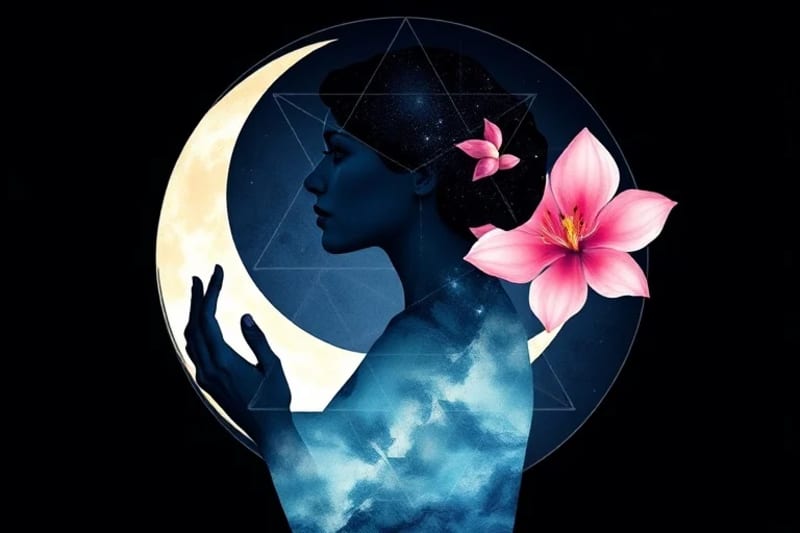 An artistic representation of the delicate link between female physiology and the waxing and waning of the moon.
This AI-generated watercolor piece visually interprets the subtle synchronicity often observed between the human menstrual cycle and the lunar phases, a concept rooted in ancient wisdom.
Scientific Perspectives and Modern Research
The scientific community largely approaches the direct link between lunar phases and human fertility with skepticism, citing a lack of robust, peer-reviewed evidence. While some observational studies have explored the correlation, many have yielded inconclusive or contradictory results. The primary challenge lies in isolating the lunar effect from numerous other variables that influence the menstrual cycle, such as nutrition, stress, genetics, and overall health.
However, research into circadian rhythms and the impact of light exposure on hormonal regulation offers an indirect avenue for understanding potential lunar influences. For instance, the pineal gland, responsible for melatonin production, is sensitive to light. Melatonin, in turn, can influence reproductive hormones. While the moon's light is significantly dimmer than sunlight, prolonged exposure to artificial light at night can disrupt natural sleep-wake cycles and potentially impact hormonal balance, which might indirectly relate to a perceived disconnect from natural lunar rhythms. For a deeper understanding of biological rhythms and health, consider exploring Medical Astrology: Health Tendencies in Birth Chart.
Despite the scientific caution, the resurgence of interest in holistic health and natural living has led many individuals to explore these connections personally. The emphasis shifts from proving a direct causal link to fostering a greater awareness and attunement to one's own body and its unique cyclical patterns, irrespective of external lunar synchronicity.
Lunar Calendar and Natural Family Planning (NFP)
Natural Family Planning (NFP) encompasses various methods used to identify a woman's fertile window to either achieve or avoid pregnancy. These methods rely on observing natural biological signs, such as basal body temperature (BBT), cervical mucus changes, and cervical position. Integrating lunar calendar awareness into NFP can provide an additional layer of observation and self-knowledge, though it should not replace established NFP techniques.
For those seeking to conceive, understanding their personal lunar fertility pattern might involve tracking their cycle in relation to the moon's phases. If a woman consistently ovulates around a particular lunar phase (e.g., full moon or new moon), this can serve as an additional indicator to anticipate the fertile window. Conversely, for those avoiding pregnancy, identifying these patterns can help reinforce periods of abstinence or alternative protection.
It is crucial to emphasize that the lunar calendar should be used as a complementary tool, not a standalone method for NFP, especially when avoiding pregnancy. The effectiveness of NFP largely depends on consistent and accurate observation of primary fertility signs. For a broader perspective on aligning intentions with cosmic rhythms, consider reading about Mindful Manifestation Planetary Transits Aligning Intentions.
The Chinese Lunar Calendar and Fertility
The Chinese lunar calendar, unlike the Gregorian calendar, is lunisolar, meaning it takes into account both the moon's phases and the sun's position. This calendar system has profound cultural and philosophical significance in China, influencing everything from festivals to agricultural practices and personal destiny, often associated with the Rooster Chinese Zodiac: Traits, Compatibility, Elements Guide and other animal signs.
In traditional Chinese medicine (TCM) and philosophy, the concept of Yin and Yang, along with the five elements, plays a crucial role in understanding health and fertility. The moon is often associated with Yin energy, representing femininity, receptivity, and nurturing. The menstrual cycle is viewed as a manifestation of the body's energetic balance, and imbalances can affect fertility. While the Chinese lunar calendar doesn't prescribe specific "fertile days" based solely on lunar phases in the same way some Western lunar fertility methods might, it emphasizes harmonizing one's internal energies with the broader cosmic rhythms.
Practices such as acupuncture, herbal medicine (see Astro-Herbalism: Crafting Custom Natal Tinctures Planetary Rulerships for a related concept), and dietary adjustments are often employed to support reproductive health within this framework. The goal is to cultivate a balanced internal environment that is receptive to conception, aligning the body's natural processes with the flow of nature, as governed by the lunisolar calendar. This holistic approach views fertility not just as a biological function but as an energetic and spiritual state.
Practical Application: Tracking Your Lunar Fertility
For those interested in exploring their personal connection to lunar fertility, the first step is consistent self-observation and tracking. This involves more than just noting menstruation dates; it requires a holistic approach to understanding your body's signals.
- Cycle Charting: Maintain a detailed chart of your menstrual cycle, noting the first day of your period, the estimated day of ovulation (using NFP methods like BBT or cervical mucus), and the length of your cycle.
- Lunar Phase Tracking: Simultaneously, track the moon's phases. Note whether your period begins around the new moon, full moon, or another phase. Observe if ovulation consistently occurs around a specific lunar phase.
- Symptom Journaling: Beyond physical signs, keep a journal of your emotional state, energy levels, dreams, and overall well-being throughout the month. Some believe that different lunar phases can influence mood and intuition.
- Light Exposure: Consider your exposure to natural and artificial light. Some theories suggest that minimizing artificial light at night, especially during the follicular phase, can help attune the body to natural light-dark cycles, potentially influencing hormonal regulation.
- Mindful Connection: Engage in practices that foster a connection with natural rhythms, such as spending time outdoors, observing the night sky, or meditation. This mindful approach can enhance overall well-being, which is conducive to fertility.
 A conceptual artwork representing the intricate and harmonious flow of natural and biological rhythms.
This vibrant AI-generated abstract piece visualizes the complex interplay of cosmic and biological cycles, emphasizing the interconnectedness of life and natural processes.
Common Misconceptions and Cautions
While exploring lunar fertility can be an empowering journey of self-discovery, it is important to address common misconceptions and exercise caution. One significant misconception is that the lunar calendar is a foolproof method for contraception. This is not the case. As discussed, individual cycles vary, and relying solely on lunar phases without corroborating physical signs can lead to unintended pregnancies.
Another pitfall is the expectation of immediate and perfect synchronization. Not every woman will find her cycle perfectly aligned with the moon, and this is entirely normal. The goal is not to force an alignment but to observe and understand one's unique biological rhythm. It is also crucial to avoid falling into deterministic beliefs that the moon dictates fertility absolutely, as numerous factors contribute to reproductive health.
Always consult with healthcare professionals for any fertility concerns or when making significant decisions about family planning. The lunar calendar approach is best viewed as a complementary practice that enhances self-awareness and connection to natural rhythms, rather than a substitute for medical advice or proven fertility treatments. It's about harmonizing with nature, not replacing science.
Conclusion: Embracing Cyclical Wisdom
The journey to understanding fertility, whether for conception or natural family planning, is deeply personal and multifaceted. While modern science provides invaluable tools and insights, the ancient wisdom embedded in lunar calendars offers a complementary perspective—one that encourages a deeper connection to our bodies and the natural world. By observing the moon's phases and charting our own physiological rhythms, we can cultivate a heightened sense of self-awareness and attunement.
This approach is not about replacing medical science but about enriching our understanding of fertility through a holistic lens. It invites us to consider the subtle influences of celestial cycles, to listen more closely to our bodies' innate wisdom, and to embrace the cyclical nature of life itself. Whether you seek to conceive or simply to understand your body better, exploring the lunar calendar and fertility can be a profoundly empowering and enlightening experience, fostering harmony between inner and outer worlds.
Explore More Cosmic Connections
- Quincunx Aspect: Navigating Uncomfortable Growth in Your Chart
- Esoteric Tarot History: From Game to Divination Tool
- Planetary Dignities Self-Mastery: Natal Chart Strengths
- Financial Astrology Timing Investments Planetary Cycles Guide
- Cosmic Sociology: AI Ethics, Global Consciousness Shifts Digital Age
- Scrying: Divination Through Reflective Surfaces
- Planetary Dignities Electional Astrology Mastering Timing
- Wheel of the Year: Astrological Significance
- Astro-Archeology Unearthing Ancient Celestial Narratives Significance
- Pet Astrology Chart: Understanding Animal Companion's Cosmic Blueprint
- Mesoamerican Astrology AI Oracles: Decoding Ancient Wisdom
- Astrología Estacional: Rituales Celta Conectar Naturaleza
- Marte Tránsitos: Acción, Impulso y Desafíos
- Luna Nueva Géminis: Manifestando Ideas, Comunicación, Aprendizajes
Source: Hybrid content assisted by AI and human editorial supervision.


Comments
Post a Comment