
Tarot Chinese Elements: Forecasting Rhythms Zodiacal
The ancient arts of Tarot and Chinese Elemental Cycles, though originating from vastly different cultural landscapes, offer profound frameworks for understanding the universe and our place within it. While Tarot, rooted in Western esoteric traditions, uses symbolic cards to explore psychological archetypes and spiritual journeys, the Chinese Elemental Cycles, fundamental to traditional Chinese philosophy, describe the dynamic interplay of natural forces that govern everything from health to destiny. This article delves into the intriguing intersection of these two powerful systems, exploring how their combined wisdom can enhance our ability to forecast nature's rhythms and refine zodiacal predictions.
By integrating the symbolic depth of Tarot with the cyclical nature of the Five Elements (Wood, Fire, Earth, Metal, Water), practitioners can unlock a more nuanced and comprehensive understanding of energetic flows and future trends. This synergistic approach moves beyond conventional divination, offering a holistic lens through which to interpret the subtle shifts in both the macrocosm of the world and the microcosm of individual experience. It provides a unique methodology for those seeking to deepen their spiritual practice and predictive capabilities.
Table of Contents
- Introduction to Tarot and Chinese Elemental Cycles
- The Five Elements: A Dynamic Framework
- Tarot as a Symbolic Mirror
- Integrating the Systems: A Methodological Approach
- Forecasting Nature's Rhythms: Seasonal and Environmental Insights
- Zodiacal Predictions: Combining Western and Chinese Astrology
- Practical Applications and Benefits
- Conclusion: A Holistic Path to Foresight
Introduction to Tarot and Chinese Elemental Cycles
Tarot cards, with their rich iconography and archetypal narratives, have long served as a tool for self-reflection, spiritual guidance, and divination. Each card, from the Major Arcana's grand life lessons to the Minor Arcana's daily experiences, offers layers of meaning that resonate with the human condition. The system's power lies in its ability to tap into the subconscious, revealing hidden truths and potential pathways.
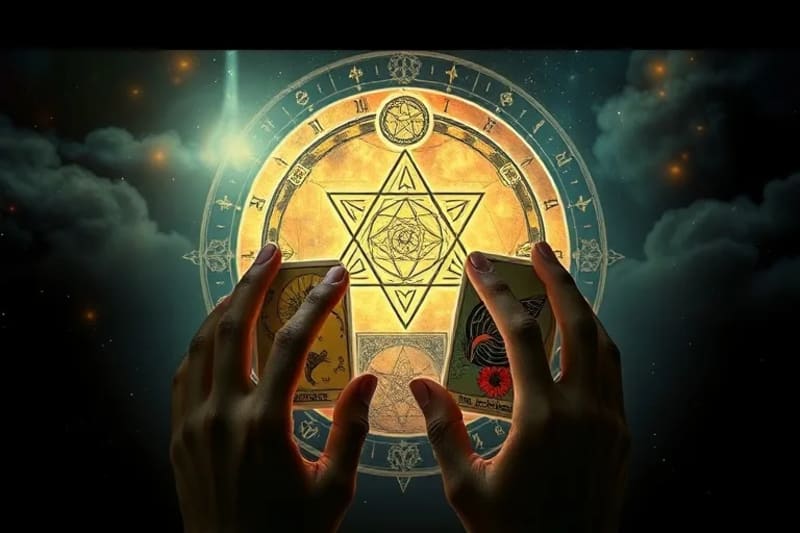 Precursors intellectuales, diagramas fundamentales y representaciones conceptuales que forjaron la visión de los sistemas adivinatorios sobre la interconexión cósmica y las energías fundamentales.
This conceptual rendering, blending ancient symbols with modern artistic interpretation, exemplifies the rich tapestry of esoteric knowledge that informs our understanding of divination. It is an AI-generated artwork, freely available for educational purposes.
Conversely, the Chinese Elemental Cycles provide a foundational understanding of the universe as a constantly changing system of interactions. The Five Elements—Wood, Fire, Earth, Metal, and Water—are not static substances but dynamic energies that transform and influence one another in cycles of creation (Sheng) and control (Ke). This philosophy underpins traditional Chinese medicine, feng shui, and various forms of Chinese astrology, including the Bazi (Four Pillars of Destiny).
The beauty of combining these systems lies in their complementary strengths. Tarot offers specific narratives and psychological insights, while the Five Elements provide a framework for understanding the energetic quality and timing of events. By mapping Tarot archetypes onto elemental phases, we can gain a deeper perspective on the underlying forces at play in any given situation, moving beyond simple prediction to a more profound comprehension of cosmic mechanics.
The Five Elements: A Dynamic Framework
The Five Elements are more than just categories; they represent phases of energy, qualities, and processes. Understanding their characteristics and interactions is crucial for any form of Chinese metaphysical analysis. Each element is associated with specific directions, seasons, colors, emotions, and even body organs, creating a comprehensive system of correspondences.
- Wood: Represents growth, new beginnings, expansion, creativity, and assertiveness. Associated with spring, the East, and the color green.
- Fire: Symbolizes passion, transformation, illumination, enthusiasm, and rapid change. Linked to summer, the South, and the color red.
- Earth: Embodies stability, nurturing, grounding, practicality, and balance. Connected to late summer/seasonal transitions, the Center, and the color yellow/brown.
- Metal: Signifies structure, discipline, refinement, introspection, and organization. Associated with autumn, the West, and the color white/silver.
- Water: Represents wisdom, intuition, flow, adaptability, and deep emotions. Linked to winter, the North, and the color black/blue.
The cycles of creation and control illustrate how these elements interact. In the creation cycle, Wood feeds Fire, Fire creates Earth (ash), Earth bears Metal, Metal holds Water, and Water nourishes Wood. In the control cycle, Wood controls Earth (roots), Earth controls Water (dams), Water controls Fire, Fire controls Metal (melts), and Metal controls Wood (cuts). These intricate relationships provide a dynamic model for understanding the ebb and flow of energy in the universe, which can be particularly useful when analyzing planetary influences and their impact, as explored in Celestial Mechanics: Mundane Astrology Planetary Dance.
Tarot as a Symbolic Mirror
The Tarot deck, typically consisting of 78 cards, is divided into the Major Arcana and Minor Arcana. The Major Arcana cards represent significant life lessons and archetypal influences, while the Minor Arcana, subdivided into four suits (Wands, Cups, Swords, Pentacles), reflect daily events and practical concerns. Each suit is often associated with an element: Wands with Fire, Cups with Water, Swords with Air (sometimes mapped to Metal in a Chinese context for its sharpness and intellect), and Pentacles with Earth.
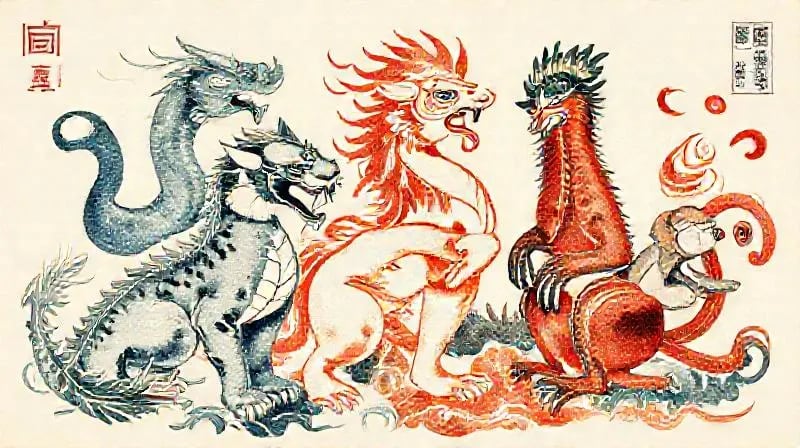 An illustrative representation of the Chinese Zodiac animals, each imbued with the essence of the Five Elements, symbolizing the intricate dance of energies that shape destiny.
This vibrant watercolor art piece captures the spirit of elemental and zodiacal symbiosis, offering a visual metaphor for the dynamic forces at play in metaphysical systems. Created by AI.
However, a deeper integration with the Chinese Elements can go beyond these basic suit correspondences. For instance, the Fool card, representing new beginnings and boundless potential, resonates strongly with the Wood element's energy of growth. The Tower card, signifying sudden destruction and radical change, aligns with the intense, transformative power of Fire. The Empress, a symbol of nurturing and abundance, embodies the stable and fertile qualities of Earth.
By analyzing the archetypal themes of each Tarot card through the lens of elemental energy, we can gain a richer understanding of the forces at play. This approach allows for a more dynamic interpretation of Tarot readings, moving beyond static meanings to consider the energetic phase and direction of a situation. It also provides a framework for understanding how different archetypes interact, similar to how elements interact in their cycles.
Integrating the Systems: A Methodological Approach
The integration of Tarot and Chinese Elemental Cycles can be approached through several methods. One effective technique involves assigning an elemental quality to each Tarot card, not just by suit, but by its individual meaning and numerological association. For example, a card like the Three of Wands, signifying expansion and looking to the future, clearly aligns with the Wood element, even though Wands are generally Fire.
Another method involves using the elemental cycles to interpret the timing and progression of events revealed in a Tarot spread. If a reading indicates a challenge, understanding which element is dominant can inform the best course of action. For instance, a challenge related to the Metal element (structure, discipline) might suggest a need for refinement or letting go, while a Water-related challenge might call for emotional processing and adaptability. This deep dive into energetic patterns can also be enhanced by understanding Lunar Nodes Aspects: Unpacking Soul Contracts & Karmic Connections, which adds another layer of karmic timing.
Furthermore, the Chinese concept of Yin and Yang can be applied to Tarot cards, categorizing them as primarily receptive (Yin) or active (Yang). This adds another layer of dynamic interpretation, allowing for a more nuanced understanding of the energy flow within a reading. For example, the High Priestess embodies strong Yin energy, while the Emperor represents robust Yang energy. This dualistic lens helps in understanding the balance and imbalance of forces.
The synergy between Tarot and Chinese Elemental Cycles offers a powerful framework for divination and self-discovery. By combining the symbolic richness of Tarot with the dynamic principles of the Five Elements, practitioners can achieve a more comprehensive and actionable understanding of life's intricate patterns.
This integration allows for a multi-dimensional analysis, moving beyond surface-level interpretations to reveal the energetic undercurrents influencing events and personal growth.
Forecasting Nature's Rhythms: Seasonal and Environmental Insights
One of the most compelling applications of this integrated system is in forecasting nature's rhythms. The Five Elements are intrinsically linked to the seasons: Wood with spring, Fire with summer, Earth with late summer, Metal with autumn, and Water with winter. By drawing Tarot cards with an elemental focus, one can gain insights into the energetic quality of an upcoming season or environmental trend.
 A conceptual visualization of the intricate mechanisms that govern the universe, depicting the harmonious interplay of elemental and cosmic forces.
This detailed 3D rendering explores the abstract principles of universal order, providing a metaphorical insight into the unseen currents that shape our reality. AI-generated and available under a public domain equivalent license.
For example, if a Tarot reading for the upcoming spring (Wood element) yields cards like the Emperor (structure, control) or the Ten of Swords (endings, collapse), it might suggest a spring season where traditional growth is stifled or met with significant resistance, perhaps indicating environmental challenges or a need for strong leadership to navigate new beginnings. Conversely, cards like the Ace of Wands (new inspiration) or the Star (hope, renewal) would align perfectly with the Wood element's natural expansive energy.
This method can be particularly useful for agricultural planning, understanding market trends influenced by natural cycles, or even preparing for personal energy shifts throughout the year. It allows for a more proactive approach to life, aligning personal actions with the prevailing natural energies. Furthermore, this forecasting can be integrated with broader astrological insights, such as those found in Planetary Transits Daily Guidance Astrology, to provide a comprehensive predictive model.
Zodiacal Predictions: Combining Western and Chinese Astrology
The Chinese Zodiac, with its twelve animal signs, is deeply intertwined with the Five Elements. Each animal is associated with a specific element, and the elemental year (e.g., Wood Dragon, Fire Snake) adds another layer of complexity to individual and collective destinies. By integrating Tarot readings with these zodiacal and elemental influences, predictions can become remarkably precise and insightful.
For instance, if a person born in a Metal Rooster year (Metal element, Rooster sign) draws the Knight of Swords (assertive, intellectual, sometimes aggressive) in a Tarot reading, the elemental interpretation would highlight the sharp, cutting nature of Metal combined with the directness of the Rooster. This might suggest a period where intellectual battles or decisive actions are prominent, but also warns against being overly critical or confrontational.
The synergy extends to understanding compatibility and relationship dynamics. When comparing two individuals, their Chinese Zodiac signs and ruling elements can be assessed alongside a Tarot synastry reading. For example, a Fire element person and a Water element person might face challenges, but a Tarot reading could reveal specific cards (e.g., the Lovers, Two of Cups) that indicate how these elemental differences can be harmonized or leveraged for growth, similar to insights gained from Virgo Scorpio Synastry Challenges: Navigating Power Dynamics.
This multi-layered approach allows for a more holistic understanding of an individual's energetic blueprint and their interactions with others, providing guidance that is both personal and cosmically informed. It bridges the gap between the symbolic narrative of Tarot and the cyclical energetic patterns of Chinese metaphysics.
Practical Applications and Benefits
The practical applications of integrating Tarot and Chinese Elemental Cycles are vast and varied, extending beyond personal divination to broader strategic planning. Individuals can use this combined system for:
- Personal Growth: Gaining deeper insights into one's own elemental constitution and how it interacts with current life challenges and opportunities.
- Decision Making: Using elemental timing to choose optimal moments for launching projects, making career changes, or entering new relationships.
- Relationship Dynamics: Understanding the elemental compatibility between individuals and how to navigate potential conflicts or enhance harmony.
- Environmental Awareness: Forecasting seasonal energies to align personal activities with natural rhythms, promoting well-being and productivity.
- Creative Endeavors: Tapping into elemental influences to foster specific types of creativity, such as Wood for innovation or Water for intuitive artistic expression.
- Spiritual Practice: Deepening meditation and ritual work by incorporating elemental correspondences and Tarot archetypes, fostering a more profound connection to the cosmos.
The benefits of this integrated approach include enhanced clarity, improved timing, a more holistic perspective on challenges, and a deeper connection to the natural world. It empowers individuals to become more active participants in their destiny, rather than passive observers, by understanding the energetic currents that shape their lives. This aligns with broader themes of self-mastery and integrating archetypes, as discussed in Psycho-Astrology Shadow Work: Integrating Archetypes Self-Mastery.
Conclusion: A Holistic Path to Foresight
The convergence of Tarot and Chinese Elemental Cycles represents a powerful evolution in the field of divination and self-understanding. By weaving together the symbolic narratives of Tarot with the dynamic, cyclical energies of the Five Elements, practitioners can access a richer, more nuanced tapestry of insights. This approach offers a comprehensive framework for not only forecasting external events, such as nature's rhythms and zodiacal predictions, but also for understanding the internal energetic landscape of individuals.
In an increasingly complex world, tools that offer clarity and foresight are invaluable. The integrated system of Tarot and Chinese Elements provides a holistic path to navigating life's challenges and opportunities, fostering a deeper connection to both personal intuition and universal patterns. It invites a continuous journey of learning and adaptation, encouraging us to dance in harmony with the cosmic ballet of creation and transformation.
Explore More Insights
- Saturn in Signs and Houses: Lessons, Discipline, Foundations
- Planetary Dignities Synastry: Relationship Potential
- Imum Coeli Aspects: Family Dynamics, Ancestral Influence
- Modern Spirituality AI Ethics Divination Tools Future Readings
- Zodiac Archetypes: Hero's Journey Through Sun Signs
- Astrology Food Guide: Eating Zodiac Planetary Needs
- Numerology Dream Interpretation Subconscious Messages Unlocked
- Advanced Synastry: Intercepted Planets, Karmic Links Explained
- Capricorn Zodiac Sign: Traits, Ambition, and Practicality
- Gnostic Wisdom Modern Spirituality Reclaiming Inner Knowledge
Source: Hybrid content assisted by AI and human editorial supervision.


Comments
Post a Comment