
Lunar Mansions Predictive Astrology: Advanced Timing
The intricate tapestry of predictive astrology extends far beyond planetary transits and progressions, delving into more nuanced and ancient systems that offer unparalleled precision in timing life events. Among these, the Lunar Mansions stand out as a profound yet often underutilized tool. These divisions of the ecliptic, based on the Moon's daily journey, provide a granular level of detail, allowing astrologers to pinpoint auspicious moments, understand the unfolding of fate, and interpret the subtle energies influencing daily life. This advanced exploration delves into the historical context, calculation, interpretation, and practical application of Lunar Mansions in contemporary predictive astrology.
Table of Contents
- Historical Foundations of Lunar Mansions
- Systems of Lunar Mansions: A Comparative Overview
- Calculating and Delineating Lunar Mansions
- Predictive Applications of Lunar Mansions
- Advanced Interpretations and Nuances
- Integrating Lunar Mansions into Modern Practice
- Conclusion: The Precision of Celestial Rhythms
Historical Foundations of Lunar Mansions
The concept of dividing the ecliptic into segments based on the Moon's daily motion is an ancient practice, predating many of the zodiacal systems we recognize today. These divisions, often numbering 27 or 28, represent the approximate distance the Moon travels in a single day against the backdrop of the fixed stars. Historically, Lunar Mansions served as a celestial calendar, a navigational tool, and a crucial element in electional astrology, determining propitious times for various undertakings.

Exploration of ancient astronomical instruments, celestial charts, and conceptual representations that underscore the historical depth and intricate mechanics of lunar astrology.
This conceptual rendering, generated by advanced AI, reflects the profound historical legacy and the complex astronomical principles that underpin the study of Lunar Mansions across various ancient cultures.Across diverse cultures, from the Middle East to India and China, similar systems emerged independently, each reflecting a deep observational understanding of lunar cycles. These systems were not merely astrological; they were interwoven with agricultural practices, religious rituals, and even medical diagnostics. The Moon, as the fastest-moving celestial body, was seen as the primary timer of earthly events, and its position within these mansions provided immediate insights into the quality of the day or hour.
Systems of Lunar Mansions: A Comparative Overview
While the core concept remains consistent, the specific divisions, names, and interpretations of Lunar Mansions vary significantly between different traditions. Understanding these distinctions is crucial for a comprehensive application in predictive astrology.
Arabic Mansions (Manazil al-Qamar): This system typically comprises 28 mansions, each approximately 12 degrees and 51 minutes of arc. Rooted in Hellenistic and Persian astrology, the Arabic Mansions are often associated with specific magical operations, talismans, and electional astrology. Each mansion has a unique nature (e.g., fortunate, unfortunate, binding, separating) and is linked to specific activities or outcomes. Their influence is often described in terms of elemental qualities and planetary associations.
Vedic Nakshatras: In Vedic astrology (Jyotish), the lunar divisions are known as Nakshatras. There are 27 Nakshatras, each spanning 13 degrees and 20 minutes. These are perhaps the most intricately developed system, with each Nakshatra possessing a ruling deity, a planetary ruler, a symbol, an animal, and specific qualities that describe personality traits, karmic patterns, and life events. Nakshatras are fundamental to Vedic chart analysis, compatibility (Kuta), and precise timing of events (Dasha systems, Muhurta).
Chinese Xiù (宿): The Chinese system also utilizes 28 Lunar Mansions, known as Xiù, which are grouped into four symbolic animals representing the cardinal directions (Azure Dragon of the East, Vermilion Bird of the South, White Tiger of the West, Black Tortoise of the North). Each Xiù has a specific width, often irregular, and is associated with constellations, mythological figures, and influences on weather, agriculture, and imperial affairs. They play a significant role in Feng Shui and traditional Chinese astronomy.
While the number of mansions might differ slightly (27 vs. 28), the underlying principle of dividing the Moon's path remains the same. Modern predictive astrologers often find value in exploring the interpretations from all three traditions, as they offer complementary perspectives on the subtle energies of each lunar segment. For further exploration of foundational astrological concepts, understanding Astrological Houses can provide a broader context for planetary placements.
Calculating and Delineating Lunar Mansions
To effectively use Lunar Mansions, one must first accurately calculate the position of planets, sensitive points, and the Moon itself within these divisions. Most astrological software now includes Nakshatra calculations, and some also provide Arabic Mansion placements. For manual calculation, one typically uses a sidereal zodiac for Vedic Nakshatras, while Western tropical zodiacs can be adapted for Arabic Mansions, though this is a point of debate among practitioners.

A visual metaphor for the precise timing mechanisms inherent in astrological cycles, particularly those governed by lunar movements.
Each Lunar Mansion carries a distinct energetic signature. Delineation involves understanding these core significations and how they interact with the planet or point placed within them. Key elements to consider include:
Core Meaning: Each mansion has a primary theme (e.g., initiation, conflict, healing, completion, travel). This theme colors the expression of any planet within its bounds.
Planetary Rulers: In Vedic astrology, each Nakshatra has a planetary ruler (e.g., Ashwini is ruled by Ketu). This ruler's condition in the chart significantly impacts the Nakshatra's expression.
Deities and Symbols: These provide archetypal insights into the mansion's nature and potential manifestations.
Qualities: Mansions can be described by qualities such as sharp, soft, fixed, movable, fierce, gentle, etc., which indicate their suitability for different actions.
For instance, a planet in a "sharp" mansion might indicate a time for decisive action, surgery, or confrontation, while a planet in a "soft" mansion might be better suited for healing, reconciliation, or creative pursuits. The interpretation becomes more nuanced when considering the planetary dignities and aspects within the context of the mansion's specific influence. Understanding Advanced Planetary Dignities further refines these interpretations.
Predictive Applications of Lunar Mansions
The true power of Lunar Mansions lies in their application to predictive astrology, offering unparalleled precision for timing and understanding unfolding events.
Natal Chart Analysis: The Nakshatra placement of the Moon, Ascendant, and other planets in the birth chart reveals deep insights into an individual's core nature, karmic predispositions, and life path. For example, the Moon's Nakshatra often describes emotional patterns and the general disposition of the mind.
Transits: Observing the transit of the Moon, Sun, and other planets through the Lunar Mansions is a powerful predictive technique. The Moon's daily transit through a mansion can indicate the daily energetic theme, influencing mood, opportunities, and challenges. Slower-moving planets transiting a natal planet's mansion can signify periods of significant activation related to that planet's themes.
Electional Astrology (Muhurta): This is arguably where Lunar Mansions shine brightest. By selecting a specific mansion for the Moon at the start of an endeavor (e.g., marriage, business launch, surgery), one can significantly influence the outcome. Certain mansions are highly auspicious for specific activities, while others are detrimental. This precise timing ensures alignment with cosmic energies.
Mundane Astrology: In mundane charts, Lunar Mansions can indicate the nature of events affecting nations or large groups. The Moon's mansion at the time of a significant event (e.g., an election, a natural disaster) can provide clues about its underlying dynamics and future implications.
Profections and Mansions: When combining traditional Western predictive techniques like profections with Lunar Mansions, an astrologer can gain additional layers of insight. For example, if a particular house is profected for the year, examining the Lunar Mansion of the ruler of that house, or the mansion the Moon is in when it activates that house, can provide more specific timing and qualitative details.
Advanced Interpretations and Nuances
Beyond the basic applications, several advanced techniques deepen the understanding and utility of Lunar Mansions.
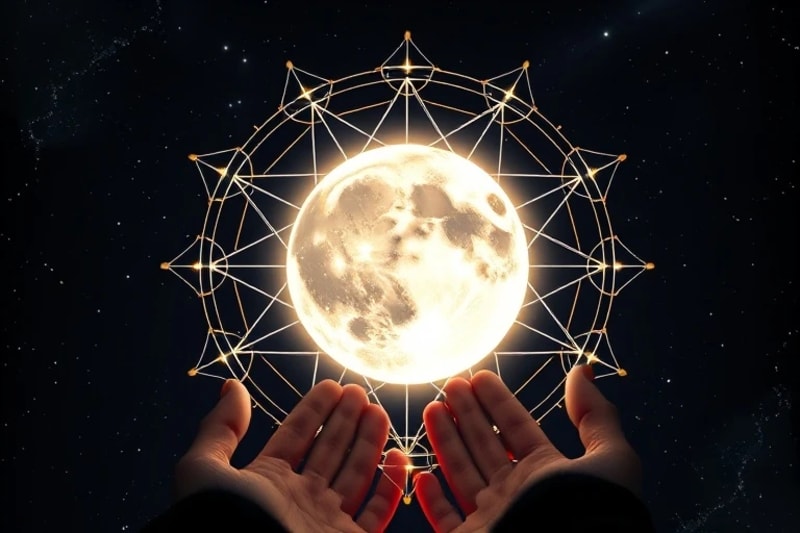
A conceptual visualization of the intricate energetic web that connects lunar cycles to terrestrial occurrences and individual destinies.
Decanates and Mansions: Each zodiac sign is divided into three decanates (10-degree segments), each with its own planetary ruler and thematic influence. Analyzing how a planet's decanate ruler interacts with the Lunar Mansion it occupies can provide a richer, more layered interpretation. For example, a planet in a specific decanate of Aries that falls into a particular Lunar Mansion will carry the combined energies of Mars (Aries), the decanate ruler, and the mansion's specific quality.
Fixed Stars within Mansions: Many Lunar Mansions are defined by or contain prominent fixed stars. The influence of these stars, which carry their own potent significations, can dramatically alter or amplify the energy of the mansion. A planet conjoining a significant fixed star within a particular mansion will express the combined themes of the planet, the star, and the mansion, creating a highly specific and powerful influence.
Lunar Mansion Rulers and Their Condition: In systems like the Arabic Mansions, each mansion has a planetary ruler. The condition of this ruler in the natal chart or by transit (its dignity, aspects, house placement) will directly impact how the energy of that mansion manifests. A well-placed and dignified ruler will allow the mansion's positive qualities to flourish, while an afflicted ruler might bring challenges or blockages related to the mansion's themes.
Lunar Nodes in Mansions: The placement of the North and South Nodes (Rahu and Ketu in Vedic astrology) within specific Lunar Mansions provides profound insights into an individual's karmic destiny, life lessons, and soul purpose. The Nakshatra of the Nodes is considered highly significant in Vedic astrology for understanding past life influences and future evolutionary paths.
The interplay of these elements creates a highly sophisticated interpretive framework, allowing for predictions that are remarkably precise and deeply insightful. This level of detail complements other advanced techniques such as those found in Uranian Astrology, providing a holistic view of celestial influences.
Integrating Lunar Mansions into Modern Practice
While deeply traditional, Lunar Mansions are highly relevant for contemporary predictive astrology. Integrating them requires a systematic approach:
Choose a System: Begin by focusing on one system (e.g., Vedic Nakshatras or Arabic Mansions) to build a solid foundation before cross-referencing.
Master the Basics: Understand the core meaning, rulers, and qualities of each mansion within your chosen system.
Natal Chart Integration: Analyze the Nakshatra/Mansion placements of key planets in natal charts to understand inherent predispositions.
Daily Transits: Observe the Moon's daily transit through the mansions and correlate it with personal experiences and world events. Keep a journal to track these correlations.
Electional Practice: Experiment with electional astrology by choosing auspicious mansions for small, personal undertakings and observing the results.
Combine with Other Techniques: Use Lunar Mansions as an additional layer of detail for transits, progressions, and other predictive methods. For example, if a major transit is occurring, note the Lunar Mansion it falls into for a more specific interpretation of its manifestation.
The precision offered by Lunar Mansions can significantly enhance the accuracy and depth of astrological readings, providing clients with highly actionable insights for timing important life decisions and navigating their path with greater awareness.
Conclusion: The Precision of Celestial Rhythms
The study of Lunar Mansions in predictive astrology unlocks a profound dimension of celestial timing and influence. From the ancient Manazil al-Qamar to the intricate Vedic Nakshatras and the symbolic Chinese Xiù, these systems offer a detailed roadmap of the Moon's daily journey and its energetic implications. By understanding and applying these divisions, astrologers can move beyond broad planetary influences to pinpoint precise moments, delineate subtle karmic patterns, and guide individuals toward optimal timing for their life events. Embracing the wisdom of Lunar Mansions enriches the practice of astrology, providing a powerful tool for navigating the intricate rhythms of fate with greater clarity and purpose.
Explore More Astrological Insights
Source: Hybrid content assisted by AI and human editorial supervision.


Comments
Post a Comment