
AI Mandalas: Algorithms, Spirituality, Visual Meditation
In an increasingly digital world, the ancient practice of mandala creation is experiencing a profound transformation through artificial intelligence. AI-generated mandalas represent a fascinating intersection of advanced algorithms, profound spiritual traditions, and the modern quest for visual meditation and mindfulness. This innovative approach not only redefines artistic expression but also offers new avenues for personal growth and spiritual exploration, making these intricate designs more accessible and personalized than ever before.
Traditionally, mandalas have served as sacred symbols in various spiritual practices, particularly in Hinduism and Buddhism, acting as tools for meditation, spiritual guidance, and the establishment of a sacred space. Their symmetrical and intricate patterns are believed to represent the cosmos, the journey of the self, and the path to enlightenment. Today, AI is breathing new life into this ancient art form, allowing for the creation of an infinite array of unique and complex designs that resonate with individual spiritual needs.
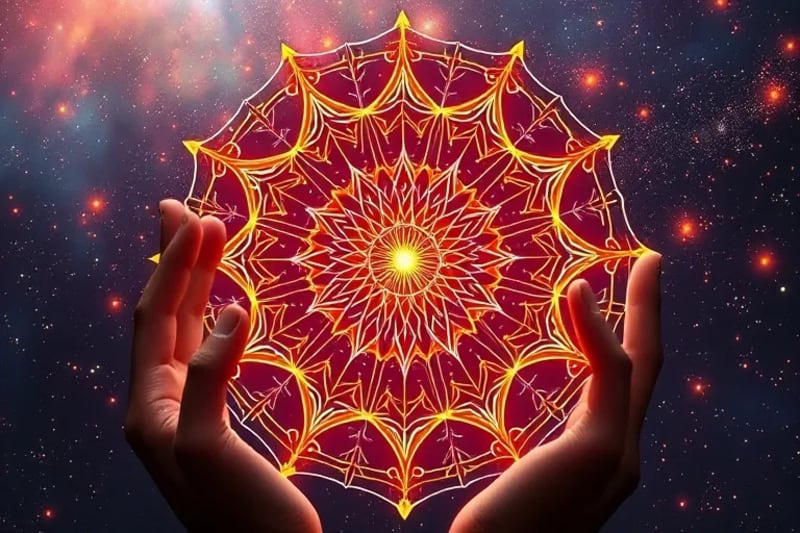
Conceptual representation of AI-generated sacred geometry, illustrating the fusion of advanced algorithms with ancient spiritual symbols to foster visual meditation.
This conceptual render, blending digital artistry with symbolic forms, is provided under a creative commons-like license, illustrating the evolving landscape of spiritual art.Table of Contents
- The Evolution of Mandalas in the Digital Age
- Understanding AI-Generated Mandalas
- The Spiritual and Psychological Impact
- Practical Applications and Benefits
- Ethical Considerations and Future Prospects
- Frequently Asked Questions
The Evolution of Mandalas in the Digital Age
Mandalas, meaning "circle" in Sanskrit, have been central to spiritual practices for millennia. Their creation was often a meticulous, meditative process, involving precise geometric constructions and symbolic color choices. These intricate designs served not only as visual aids for meditation but also as cosmological diagrams representing the universe and the divine order. From Tibetan sand mandalas, painstakingly created and then ritually destroyed, to the rose windows of Gothic cathedrals, the mandala's universal appeal lies in its ability to evoke harmony and wholeness.
The advent of digital art tools marked the first significant shift in mandala creation, allowing for greater experimentation and accessibility. However, it is with the integration of artificial intelligence that a truly revolutionary leap has occurred. AI algorithms can now generate mandalas with unprecedented complexity and variety, often surpassing what human artists could conceive or execute manually. This evolution opens up a new frontier for personal spiritual practice, offering tailored visual experiences that adapt to individual preferences and intentions.
This digital evolution aligns with a broader trend of integrating ancient wisdom with modern technology, seen in fields like Cosmic Sociology AI Mapping Global Consciousness Trends. Just as AI helps us understand collective consciousness, it can also aid in personal spiritual journeys through visual aids. The digital medium allows for dynamic, interactive mandalas that can change and evolve, providing a fresh perspective on visual meditation.
Understanding AI-Generated Mandalas
At the heart of AI-generated mandalas lies a blend of computational geometry, generative adversarial networks (GANs), and other machine learning techniques. These algorithms are trained on vast datasets of existing mandalas, sacred geometry, and abstract art, learning the underlying principles of symmetry, pattern repetition, and color theory that make these designs visually appealing and spiritually resonant. The AI doesn't merely copy; it learns to create novel patterns that adhere to these learned principles, often with unique and unexpected variations.
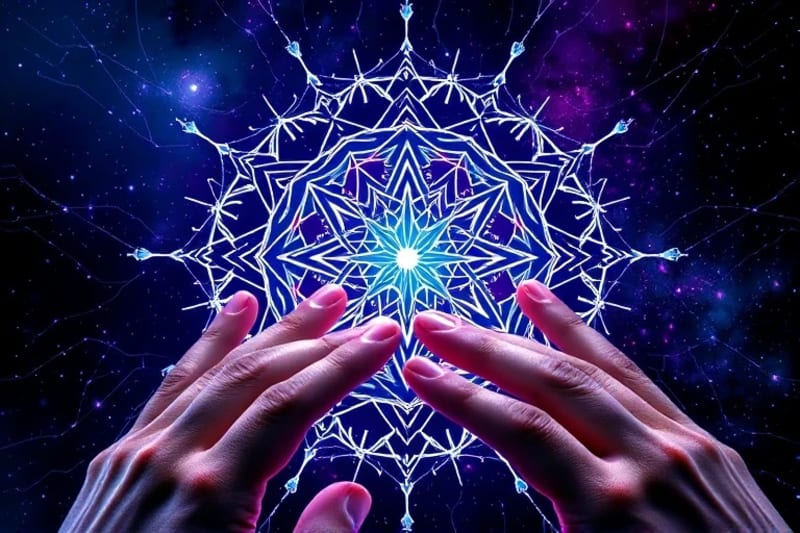
Visualizing the intricate algorithmic processes and neural networks that underpin the creation of complex geometric art by artificial intelligence.
This digital artwork, a conceptual visualization of AI's creative capacity, is presented under an open-source artistic license, fostering exploration of technology in art.Users can often input specific parameters, such as desired colors, themes (e.g., nature, cosmos, specific emotions), or even personal intentions, guiding the AI to generate a mandala that aligns with their current needs. This level of personalization is a significant advantage, allowing individuals to receive a visual tool that feels uniquely their own, fostering a deeper connection during meditation. The algorithms can also be designed to evolve the mandala over time, creating dynamic visual experiences that prevent monotony and encourage sustained engagement.
The process often involves iterative refinement, where the AI generates multiple versions, and users can select or provide feedback on their preferences, further tailoring the output. This human-in-the-loop approach ensures that the final mandala is not just a product of code but a collaborative creation that reflects both algorithmic precision and human intuition. It's a testament to how technology can augment, rather than replace, human spiritual and artistic endeavors.
The Spiritual and Psychological Impact
The spiritual benefits of engaging with mandalas, whether traditional or AI-generated, are well-documented. They serve as powerful focal points for visual meditation, helping to quiet the mind, reduce stress, and promote a state of relaxed awareness. The symmetrical nature of mandalas is inherently calming, providing a sense of order and balance that can be particularly beneficial in chaotic times. Focusing on the intricate patterns can draw attention away from distracting thoughts, grounding the individual in the present moment.
From a psychological perspective, interacting with mandalas can enhance concentration, stimulate creativity, and even facilitate self-discovery. Carl Jung, the renowned psychiatrist, saw mandalas as archetypal symbols of the self, representing the totality of the psyche. He used them in his own practice and encouraged patients to draw them as a way to explore their unconscious. AI-generated mandalas offer a modern pathway to this same introspective journey, providing an endless source of unique visual stimuli for contemplation.
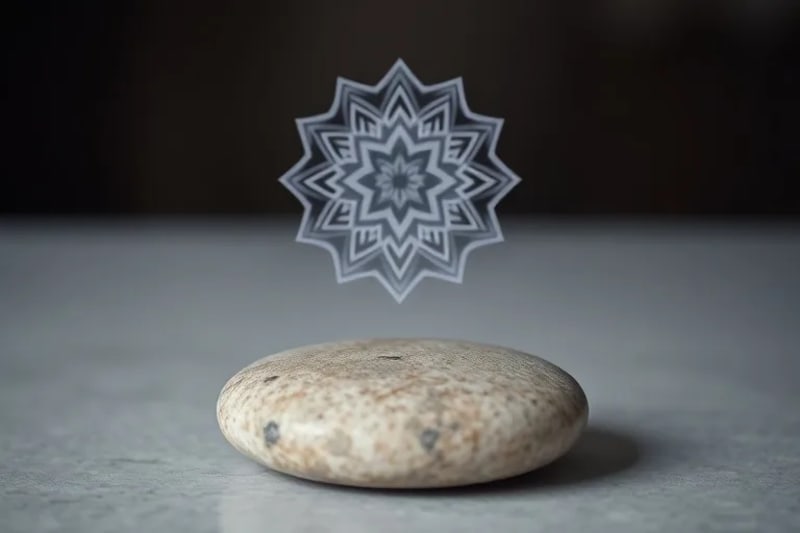
A serene, conceptual image depicting a meditation stone illuminated by a holographic mandala, symbolizing the integration of modern technology with ancient practices for enhanced mindfulness.
This abstract composition, merging natural elements with digital light, is shared under a creative commons attribution, encouraging artistic and spiritual exploration.The personalization offered by AI ensures that the mandala resonates more deeply with the individual's current emotional or spiritual state. For someone navigating significant life changes, such as a Saturn Return: Navigating Major Life Transitions, an AI-generated mandala could be designed to incorporate colors or symbols associated with transformation and resilience, providing a personalized anchor during challenging periods. The sheer novelty and beauty of these digital creations can also spark a renewed interest in spiritual practices for those who might otherwise find traditional methods less engaging.
Practical Applications and Benefits
The applications of AI-generated mandalas extend beyond personal meditation. They are increasingly being used in various therapeutic settings, including art therapy, to help individuals express emotions, reduce anxiety, and improve focus. Their dynamic nature can be particularly engaging for children or individuals with short attention spans, providing a gentle introduction to mindfulness practices.
In the realm of digital art and design, AI mandalas offer artists a powerful tool for inspiration and creation. Designers can use AI to generate complex patterns for textiles, wallpapers, or digital interfaces, bringing a touch of sacred geometry into everyday life. The ability to rapidly prototype and iterate on designs makes AI an invaluable assistant in creative industries. Furthermore, these mandalas can be integrated into virtual reality (VR) and augmented reality (AR) environments, creating immersive meditative experiences that transport users to serene digital spaces.
The benefits are manifold:
- Enhanced Mindfulness: Provides a captivating focal point for meditation, aiding in present-moment awareness.
- Stress Reduction: The symmetrical and harmonious patterns naturally induce a state of calm and relaxation.
- Personalized Spiritual Practice: Tailored designs resonate more deeply with individual intentions and needs.
- Accessibility: Makes complex, beautiful mandalas available to anyone with a digital device, regardless of artistic skill.
- Creative Inspiration: Offers a limitless source of unique patterns for artists, designers, and spiritual practitioners.
- Therapeutic Aid: Utilized in art therapy for emotional expression and cognitive improvement.
These applications highlight the versatility and potential of AI-generated mandalas to enrich both our inner lives and our external environments.
Ethical Considerations and Future Prospects
While the benefits are clear, the rise of AI-generated mandalas also brings forth ethical considerations. Questions about authenticity and the role of human intention in spiritual art are pertinent. Is an AI-generated mandala as "sacred" as one created through human hands and meditative effort? Proponents argue that the intention of the user in engaging with the mandala is what truly imbues it with spiritual significance, regardless of its origin. Others suggest that the human creative process itself is an integral part of the spiritual journey.
Another aspect is the potential for commercialization and commodification of spiritual symbols. As AI tools become more prevalent, ensuring respectful and ethical use of these sacred designs is crucial. Education about the historical and cultural significance of mandalas can help mitigate potential misuse and foster a deeper appreciation for their origins.
Looking to the future, AI-generated mandalas are likely to become even more sophisticated. We might see AI systems that can generate mandalas in real-time, responding to biometric data like heart rate or brainwave patterns, creating truly personalized and adaptive meditative experiences. The integration with advanced haptic feedback systems could allow users to "feel" the patterns, adding another dimension to visual meditation. This continuous evolution promises to further bridge the gap between technology and spirituality, offering new pathways to inner peace and self-understanding in an increasingly complex world.
Discover More Insights
Delve deeper into the fascinating world where ancient wisdom meets modern innovation:
- Predictive Fixed Stars: Global Events & Personal Turning Points
- Quantum Tarot Entangled Meanings Divination
- Advanced Sacred Geometry Manifestation: Practical Applications Guide
- Sound Alchemy Cellular Regeneration Frequencies Energy
- Feng Shui Cuántico Evolutivo: Armoniza Espacios Sagrados
- Geometría Sagrada Catedrales Góticas: Mensajes Ocultos Arquitectura Celestial
Frequently Asked Questions
Q: How do AI-generated mandalas differ from traditional ones?
A: AI-generated mandalas are created using algorithms, offering infinite unique designs and personalization based on user input, whereas traditional mandalas are meticulously crafted by human artists following established spiritual and geometric principles.
Q: Can AI-generated mandalas be used for spiritual practices?
A: Yes, many individuals find AI-generated mandalas to be effective tools for visual meditation, mindfulness, and spiritual contemplation, as their intricate patterns and personalized designs can help focus the mind and promote inner peace.
Source: Hybrid content assisted by AI and human editorial supervision.


Comments
Post a Comment