
Alchemical Architecture Sacred Spaces Geomantic Biophilia
Alchemical Architecture of Sacred Spaces: Geomantic Resonance and Urban Biophilia
The design of sacred spaces has historically transcended mere functionality, aiming to create environments that foster spiritual connection, healing, and profound introspection. This pursuit has led to the emergence of what can be termed "alchemical architecture," a discipline that integrates ancient esoteric principles with contemporary understanding of human-environment interaction. It seeks to transmute ordinary materials and forms into extraordinary experiences, much like alchemy transforms base metals into gold.
At its core, alchemical architecture is not just about aesthetics; it is about creating living structures that resonate with cosmic energies and human consciousness. This involves a meticulous consideration of geomantic resonance, the energetic qualities of a site, and urban biophilia, the innate human connection to nature within built environments. By harmonizing these elements, architects and designers can craft spaces that are not only visually appealing but also deeply impactful on the human psyche and spirit.

A conceptual sacred structure where alchemical symbols are integrated into its design, creating an atmosphere of spiritual awakening and ancient wisdom.
This evocative image, a digital rendering, captures the essence of alchemical architectural principles, blending esoteric symbolism with modern design to foster a profound connection between the built environment and cosmic energies.
The concept of alchemical architecture draws from a rich tapestry of historical and philosophical traditions. From ancient Egyptian temples aligned with celestial bodies to Gothic cathedrals designed to evoke divine presence through light and geometry, the intention has always been to build structures that facilitate a transformative experience. These spaces were often seen as microcosms reflecting the macrocosm, designed to align human experience with universal order.
The integration of these principles requires a multidisciplinary approach, blending insights from sacred geometry, astrology, ecology, and psychology. It moves beyond conventional architectural paradigms to explore how form, material, light, and orientation can influence emotional states, cognitive functions, and spiritual awareness. The goal is to create environments that actively participate in the well-being and spiritual evolution of their inhabitants.
The Foundations of Alchemical Architecture
Alchemical architecture is rooted in the belief that the built environment can be imbued with transformative power. This involves understanding the energetic properties of materials, the symbolic meaning of forms, and the psychological impact of spatial arrangements. It is a holistic approach that considers the entire lifecycle of a building, from its initial conception and site selection to its ongoing use and eventual dissolution.
- Symbolic Integration: Incorporating esoteric symbols, sacred geometries, and archetypal forms that resonate with universal principles and human consciousness.
- Material Alchemy: Selecting and treating materials not just for their structural integrity but for their energetic qualities and symbolic associations, such as the use of specific crystals, metals, or woods.
- Energetic Alignment: Designing spaces to channel or amplify specific energies, often through precise orientation, proportion, and the manipulation of natural light and sound.
- Phenomenological Experience: Prioritizing the subjective experience of the inhabitant, ensuring that the space evokes feelings of awe, peace, clarity, or spiritual connection.
This approach contrasts sharply with purely utilitarian or aesthetically driven design, emphasizing the unseen forces and subtle influences that shape human experience within a built environment. It posits that a truly sacred space is not merely a container for spiritual activities but an active participant in facilitating them, acting as a catalyst for personal and collective transformation.
Geomantic Resonance in Site Selection
Geomancy, the ancient art of divining the Earth's energies, plays a crucial role in alchemical architecture. It involves identifying and harmonizing with the natural energetic currents of a site, often referred to as ley lines or dragon currents. These energies are believed to influence the vitality and spiritual quality of a location, making proper site selection paramount for sacred spaces.
Traditional geomantic practices involve careful observation of topography, water flow, vegetation, and subtle energetic indicators to determine the most auspicious location for a building. This ensures that the structure is not only physically stable but also energetically supportive of its intended purpose. Modern applications of geomancy often incorporate geophysical surveys and dowsing techniques to map these subtle energies.
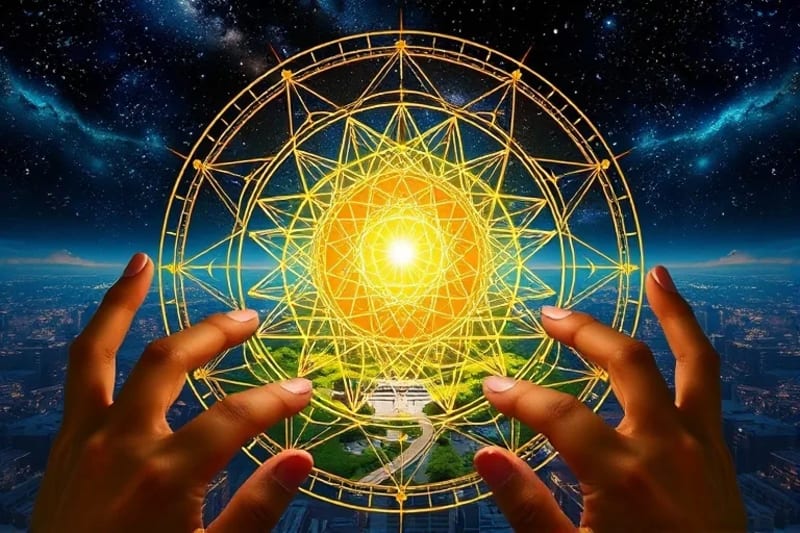
An intricate depiction of geomantic energy lines influencing urban structures and green spaces, highlighting the hidden energetic currents.
This digital artwork visualizes the concept of geomantic resonance, illustrating how subtle Earth energies are believed to flow through and impact the design and vitality of urban sacred sites.
The alignment of buildings with specific celestial events or terrestrial energy grids is a hallmark of geomantically informed design. This can range from orienting a temple towards the solstices to positioning a meditation hall on a nodal point of telluric energy. The aim is to create a symbiotic relationship between the structure and its environment, enhancing the spiritual potency of the space.
The principle of geomantic resonance is often cited in historical texts and contemporary research regarding the optimal placement of structures for well-being. For instance, ancient Chinese Feng Shui, a form of geomancy, meticulously details how the flow of 'qi' (life force) can be managed through architectural design to promote health and prosperity.
Modern interpretations suggest that these 'energy lines' might correlate with geological features, electromagnetic fields, or even subtle psycho-spiritual influences of a landscape.
Further exploration into how these energies influence our daily lives can be found in the study of Urban Geomancy: Aligning City Dwellings Cosmic Energies, which delves into the practical applications of these ancient principles in contemporary urban settings. Similarly, the broader field of Locational Astrology: Finding Power Spots Earth Astrocartography offers insights into how planetary influences intersect with geographical locations to create areas of heightened energetic significance.
Urban Biophilia and Sacred Design
Urban biophilia, the innate human tendency to connect with nature, is an increasingly vital component of sacred space design, especially in dense urban environments. Integrating natural elements into architecture helps mitigate the stresses of city life, promoting psychological well-being, cognitive function, and a sense of spiritual connection. This is particularly crucial in sacred spaces, where the goal is to uplift and restore the human spirit.
Biophilic design principles in sacred architecture include incorporating natural light, ventilation, and views of nature. It also involves the use of natural materials, water features, and abundant plant life. These elements not only enhance the aesthetic appeal of a space but also create a calming and restorative atmosphere, fostering a deeper sense of peace and connection to the divine.
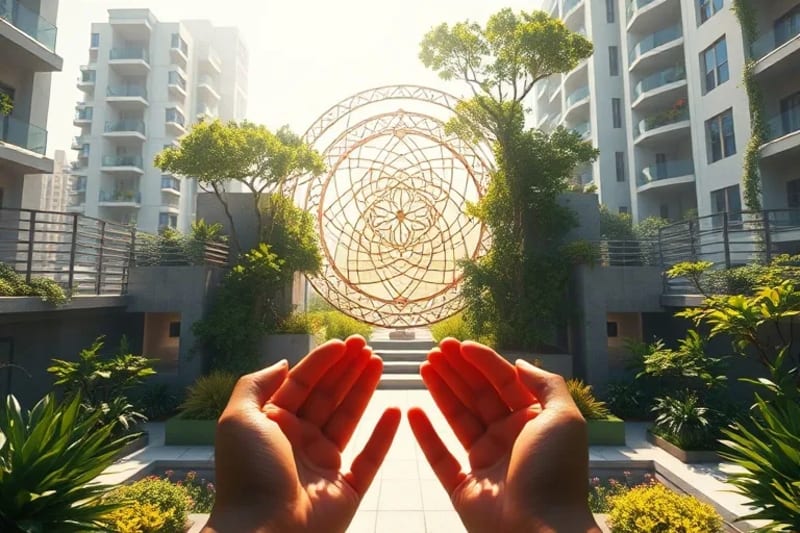
A conceptual urban sacred garden, where lush biophilic elements intertwine with minimalist architectural forms, creating tranquility.
This 3D rendering illustrates the principles of urban biophilia, showcasing how natural elements can be seamlessly integrated into sacred spaces within dense city environments to promote well-being.
The presence of natural elements within sacred spaces can evoke a sense of the sublime, connecting individuals to something larger than themselves. This connection is fundamental to many spiritual traditions, which often view nature as a manifestation of the divine. By bringing nature into the built environment, alchemical architecture facilitates this profound relationship, even in the heart of a bustling city.
Integrating Principles: Case Studies and Modern Challenges
The successful integration of alchemical architecture, geomantic resonance, and urban biophilia can be observed in various contemporary projects and historical precedents. For example, some modern spiritual centers are designed with precise orientations to capture specific solar or lunar alignments, while also incorporating extensive green roofs and vertical gardens to enhance biophilic connection.
Challenges in implementing these principles in modern urban contexts include land scarcity, regulatory hurdles, and the often-linear thinking of conventional development. However, the growing recognition of the importance of holistic well-being and sustainable design is paving the way for more innovative and spiritually resonant architectural solutions.
- The Sagrada Familia, Barcelona: While a historical project, Gaudí's masterpiece exemplifies alchemical architecture through its organic forms, symbolic light play, and profound connection to nature, embodying a living, evolving sacred space.
- Lotus Temple, New Delhi: Its unique lotus flower shape, open to all faiths, uses natural light and geometry to create a universal space for meditation and prayer, reflecting both symbolic and energetic design principles.
- Bosco Verticale, Milan: Though not explicitly sacred, these residential towers integrate over 900 trees and 20,000 plants, demonstrating a powerful application of urban biophilia that could inspire future sacred urban designs.
The synthesis of these elements creates spaces that are not just buildings but living entities, capable of fostering deep spiritual experiences and promoting ecological harmony. This approach requires a shift in perspective, moving beyond purely material considerations to embrace the subtle, energetic, and spiritual dimensions of design. Understanding Esoteric Symbolism AI Art: Decoding Digital Consciousness can offer further insights into how complex symbolic systems can be rendered and understood in a modern context, bridging ancient wisdom with new technological expressions.
The Future of Sacred Spaces
As urban populations continue to grow, the need for sacred spaces that offer respite, reflection, and spiritual nourishment becomes even more critical. Alchemical architecture, informed by geomantic resonance and urban biophilia, offers a powerful framework for designing these future environments. It encourages architects to act as modern alchemists, transforming mundane urban landscapes into vibrant, spiritually charged sanctuaries.
The future of sacred spaces lies in their ability to seamlessly blend ancient wisdom with cutting-edge sustainable design, creating structures that are both ecologically responsible and spiritually potent. By embracing these principles, we can build cities that not only house us but also elevate our consciousness and foster a deeper connection to the Earth and the cosmos.
Explore More on Sacred Design and Esotericism
AI Dream Interpretation: Ethical Algorithmic Subconscious Symbolism
Planetary Dignities Horary Astrology: Essential Fortitude Insights
Source: Hybrid content assisted by AI and human editorial supervision.


Comments
Post a Comment