
Planetary Dignities Horary Astrology: Essential Fortitude Insights
Planetary Dignities in Horary Astrology: Answering Specific Questions with Essential Fortitude
Horary astrology, an ancient and highly precise branch of astrological practice, offers a unique methodology for answering specific questions by casting a chart for the exact moment a question is understood by the astrologer. Unlike natal astrology, which focuses on personality and life themes, horary provides direct, actionable insights into the potential outcome of a query. Central to its efficacy is the meticulous assessment of planetary dignities, which determine a planet's strength, influence, and capacity to act within the context of the question.
This advanced guide delves into the intricate world of essential dignities and debilities, exploring how their careful interpretation is paramount to rendering accurate judgments in horary charts. Understanding these foundational principles allows practitioners to discern the inherent "fortitude" of planetary significators, thereby unlocking deeper layers of meaning and providing clear, concise answers to even the most complex inquiries.
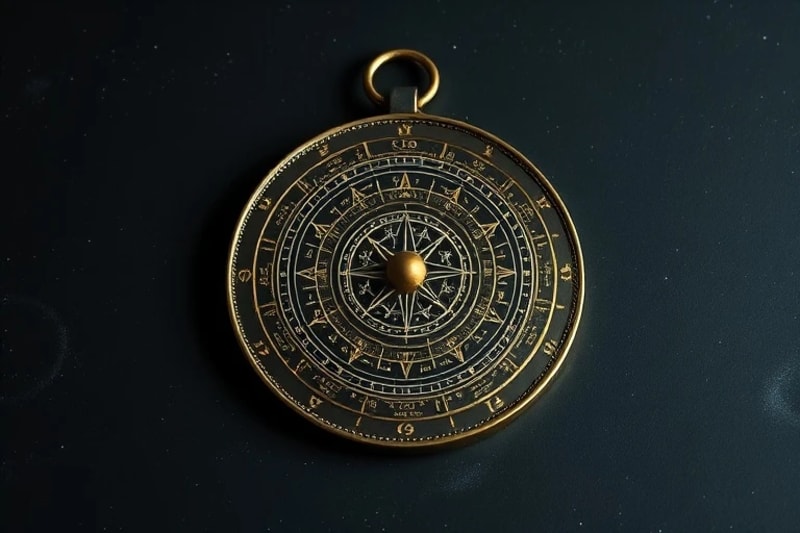
An ancient astrolabe, a tool used for celestial navigation and astrological calculations, symbolizing the precision required in horary judgments.
The concept of planetary dignity is rooted in the idea that planets behave differently depending on their zodiacal placement. Just as a person might feel more confident and capable in their own home compared to a foreign land, a planet operating from a position of dignity is considered strong, effective, and able to manifest its significations positively. Conversely, a planet in debility struggles to express its nature, often indicating weakness, obstacles, or unfavorable outcomes.
Mastering the nuances of planetary dignities is not merely an academic exercise; it is the cornerstone of reliable horary interpretation. Without a thorough grasp of these principles, a horary reading risks being superficial or misleading. This article aims to provide a comprehensive framework for applying these critical concepts to your horary practice.
Table of Contents
- Introduction to Horary Astrology and Planetary Dignities
- The Foundation: Essential Dignities Explained
- Understanding Essential Debilities
- Identifying Significators in Horary Charts
- Applying Dignities to Horary Questions
- The Role of Reception and Aspects
- Synthesizing Dignities for Accurate Judgment
- Advanced Considerations and Nuances
Introduction to Horary Astrology and Planetary Dignities
Horary astrology, derived from the Latin word "hora" meaning hour, is a divinatory technique that uses the celestial map of the moment a question is asked to provide an answer. It operates on the principle of synchronicity, where the microcosm (the chart) reflects the macrocosm (the situation). The accuracy of a horary reading hinges on the astrologer's ability to correctly identify the significators and assess their condition, particularly their essential dignities.
Planetary dignities refer to the inherent strength or weakness a planet possesses based on its zodiacal position. This concept is ancient, dating back to Hellenistic and Persian astrological traditions, and forms the bedrock of traditional astrological interpretation. A planet with strong essential dignity is said to be "well-placed" or "strong by essential dignity," indicating it is capable, comfortable, and able to exert its influence effectively. Conversely, a planet in "debility" is considered weak, hindered, or unable to act constructively.
In horary, these dignities are not merely descriptive; they are predictive. They tell us about the quality of the people or things represented by the planets, their ability to achieve their goals, and the ease or difficulty with which events will unfold. For instance, a significator for a job seeker in its rulership might indicate a highly qualified candidate, while one in its fall could suggest a lack of suitability or significant challenges.
The Foundation: Essential Dignities Explained
Essential dignities are classified into several hierarchical levels, each contributing to a planet's overall strength. Understanding these layers is crucial for a nuanced assessment.
- Rulership (Domicile): This is the strongest dignity. A planet in its own sign (e.g., Mars in Aries or Scorpio) is said to be "at home." It is comfortable, powerful, and acts according to its true nature without impediment. It signifies self-sufficiency, control, and a strong position.
- Exaltation: The second strongest dignity. A planet in its sign of exaltation (e.g., Sun in Aries) is like a respected guest of honor. It is highly esteemed, recognized, and can achieve great things, often with external support or recognition. It indicates peak performance and favorable conditions.
- Triplicity: A dignity based on the element of the sign (fire, earth, air, water) and the sect of the chart (day or night). Each triplicity has three rulers: a diurnal ruler, a nocturnal ruler, and a participating ruler. This dignity provides moderate strength, indicating a planet that is well-supported by its environment or allies.
- Term (Bounds): A minor dignity where each sign is divided into unequal segments, each ruled by a specific planet. This provides a small but significant boost to a planet's strength, offering some control or influence within its specific domain.
- Face (Decanate): The weakest of the essential dignities. Each sign is divided into three 10-degree segments, or decans, each ruled by a planet. While it offers minimal strength, it represents a planet acting with a certain "face" or appearance, often superficial or temporary.
These dignities are not simply arbitrary assignments but reflect a deep understanding of planetary archetypes and their energetic resonance with specific zodiacal sectors. A planet holding multiple dignities in a sign is exceptionally strong, often indicating a favorable outcome or a powerful entity.

Conceptual artwork depicting astrological glyphs on varied blocks, illustrating the inherent strength and condition of planetary placements.
Understanding Essential Debilities
Just as planets can be strong, they can also be weak, or "debilitated." These debilities indicate challenges, limitations, or an inability to function effectively. They are the inverse of rulership and exaltation.
- Detriment (Exile): This is the strongest debility. A planet in the sign opposite its rulership (e.g., Mars in Libra or Taurus) is in its detriment. It is like being in a foreign land where its nature is misunderstood or actively opposed. It signifies weakness, discomfort, and an inability to act effectively.
- Fall: The second strongest debility. A planet in the sign opposite its exaltation (e.g., Sun in Libra) is in its fall. It is like a respected person being brought low or disgraced. It indicates a lack of recognition, unfavorable circumstances, or a diminished capacity for positive action.
A planet in detriment or fall is significantly hindered. If a significator for the querent or quesited is in one of these debilities, it often points to a difficult situation, a lack of resources, or a disadvantageous position. It is important to note that even a debilitated planet can still act, but its actions will likely be fraught with challenges or produce less favorable results. For a deeper understanding of planetary influences, consider exploring topics like Planetary Dignities: Forecasting Life's Astrological Cycles.
Identifying Significators in Horary Charts
The first critical step in horary analysis is to correctly identify the significators – the planets and houses that represent the querent (the person asking the question) and the quesited (the subject of the question). This is determined by the specific nature of the question and the traditional house meanings.
The querent is almost always represented by the ruler of the Ascendant and the Moon. The quesited's significator is determined by the house associated with the question. For example:
- First House: Querent, their body, personality.
- Second House: Money, possessions, self-worth.
- Third House: Siblings, short journeys, communication.
- Seventh House: Relationships, partners, open enemies.
- Tenth House: Career, reputation, public standing.
Once the significators are identified, their essential dignities become the primary lens through which their capacity and condition are assessed. A strong significator for the querent suggests they are capable and well-positioned to achieve their goal, while a weak one indicates challenges or a lack of personal power. Similarly, the dignities of the quesited's significator reveal the nature and strength of the matter itself.
Applying Dignities to Horary Questions
The application of dignities transforms abstract planetary positions into concrete answers. Here's how to integrate them into your horary judgment:
When assessing a question, consider the following:
- Strength of Querent's Significator: If the querent's significator (Ascendant ruler or Moon) is in strong essential dignity (rulership, exaltation), the querent is likely in a good position, capable, and has the resources or inner strength to pursue their goal. If in debility (detriment, fall), they may be struggling, feeling powerless, or facing significant obstacles.
- Strength of Quesited's Significator: The dignity of the quesited's significator reveals the inherent quality and viability of the matter itself. A strong significator suggests the matter is sound, valuable, or likely to succeed. A weak one indicates inherent flaws, difficulties, or a low probability of success.
- Mutual Reception: When two planets are in each other's signs of rulership or exaltation (e.g., Mars in Taurus and Venus in Aries), they are in mutual reception. This acts as a powerful essential dignity, indicating a strong bond, cooperation, or a situation where two parties are working towards a common goal, even if one or both are in debility by sign. It's like two friends helping each other out of trouble.
- Translation/Collection of Light: These concepts involve a third planet carrying the influence between two significators. The dignity of this third planet is crucial, as it determines the quality of the "messenger" or intermediary.
For example, if the question is "Will I get the job?" and the querent's significator (say, Jupiter) is in its rulership in Sagittarius, while the quesited's significator (say, Mercury for the job itself, ruling the 10th house) is in its exaltation in Virgo, this paints a very optimistic picture. Both parties are strong, capable, and well-positioned. Conversely, if Jupiter is in detriment in Gemini and Mercury is in fall in Pisces, the outlook is considerably less favorable.
The Role of Reception and Aspects
While essential dignities define a planet's intrinsic strength, reception and aspects describe how planets interact and "feel" about each other. Reception refers to one planet being in a sign ruled or exalted by another, indicating a degree of care or affinity. This is distinct from mutual reception, which involves reciprocal placement.

A complex network of glowing threads, symbolizing the intricate web of planetary influences and their varying strengths in a horary chart.
Aspects, the angular relationships between planets, signify action, communication, and events. An applying aspect between significators indicates that something is happening or will happen concerning the question. The nature of the aspect (conjunction, sextile, square, trine, opposition) describes the quality of that interaction.
However, the essential dignities of the planets involved in an aspect heavily color its interpretation. A harmonious trine between two significators, where both are in strong dignity, suggests a smooth and favorable resolution. The same trine, but with both planets in debility, might indicate a superficial agreement that ultimately fails, or a favorable outcome achieved with great difficulty. Conversely, a challenging square between well-dignified planets might signify a struggle that ultimately leads to a strong, albeit hard-won, success.
The concept of reception is particularly potent. If the querent's significator is in a sign ruled by the quesited's significator, it implies the querent "loves" or desires the quesited. If the quesited's significator is in a sign ruled by the querent's significator, it means the quesited "loves" or favors the querent. These affections, combined with essential dignities, provide profound insights into the motivations and dynamics at play. For instance, understanding Synastry Relationship Dynamics Chart Comparison can shed light on planetary interactions in relationships.
Synthesizing Dignities for Accurate Judgment
The true art of horary lies in synthesizing all these factors into a coherent and precise judgment. It's not enough to simply list dignities; one must weigh their relative importance and how they interact. Here's a structured approach:
- Identify Significators: Clearly establish the planets representing the querent and quesited.
- Assess Essential Dignities: For each significator, determine its rulership, exaltation, triplicity, term, and face. Note any debilities (detriment, fall).
- Evaluate Accidental Dignities (Briefly): While essential dignities are paramount for "fortitude," a quick check on accidental dignities (e.g., angularity, speed, house placement) can add context. A planet in its own house and angular is very strong, even if not in essential dignity.
- Examine Aspects: Look for applying aspects between the significators. Note the type of aspect and whether it perfects.
- Analyze Reception: Determine if there is any reception between the significators, indicating mutual interest or affection.
- Consider Other Factors: Moon's condition, fixed stars, antiscions, and other advanced techniques can add layers of detail.
The final judgment emerges from the totality of these observations. A "yes" answer typically requires strong, well-dignified significators applying to each other, ideally with favorable reception. A "no" often involves debilitated significators, separation, prohibition, or a lack of connection. The degree of ease or difficulty is directly proportional to the strength and quality of the dignities involved.
Advanced Considerations and Nuances
While the core principles of essential dignities are straightforward, advanced horary practice involves navigating several nuances:
- Perigrination: A planet that holds no essential dignity (neither rulership, exaltation, triplicity, term, nor face) is said to be peregrine. Such a planet is considered weak and wandering, lacking direction or intrinsic power. It often signifies a person or matter that is lost, ineffective, or without strong support.
- Combustion: A planet too close to the Sun (within 8.5 degrees) is combust, significantly weakened and often indicating hidden obstacles, fear, or a loss of power. The Sun's overwhelming light "burns up" the planet's influence.
- Cazimi: The rare and powerful exception to combustion, where a planet is exactly conjunct the Sun (within 17 minutes of arc). This is a position of immense strength and honor, like being "in the heart of the Sun," indicating divine favor or a powerful, direct influence.
- Retrograde Motion: A retrograde significator often suggests delays, reversals, reconsiderations, or a change of mind. While not an essential debility, it significantly impacts a planet's ability to move forward directly.
- Void of Course Moon: When the Moon makes no applying aspects to any other planet before leaving its current sign, it is "void of course." This is a significant indicator in horary, often suggesting that "nothing will come of the matter" or that the situation will not proceed as expected.
These additional considerations, when combined with a robust understanding of essential dignities, allow for an even more refined and accurate horary judgment. The interplay of these factors creates a complex yet decipherable narrative, guiding the astrologer to the most probable outcome of any question. Exploring Celestial Mechanics Planetary Stations Direct Retrograde can provide more context on planetary motion.
In conclusion, planetary dignities are the bedrock of horary astrology, providing the essential framework for assessing the strength, capacity, and ultimate success or failure of any query. By diligently applying these ancient principles, astrologers can unlock profound insights and offer precise, actionable guidance to those seeking answers from the cosmos.
Fuente: Contenido híbrido asistido por IAs y supervisión editorial humana.


Comments
Post a Comment