
Digital Sacred Spaces: Ethical VR & AR Meditation
The convergence of advanced technology and ancient spiritual practices is ushering in a new era of personal growth and exploration. Digital sacred spaces, powered by virtual reality (VR) and augmented reality (AR), offer unprecedented opportunities for enhanced meditation, mindfulness, and spiritual immersion. This innovative field is rapidly evolving, promising to transform how individuals connect with their inner selves and the broader spiritual landscape.
Far from being a mere technological gimmick, these digital environments are meticulously designed to foster a sense of peace, focus, and transcendence. They provide accessible and customizable sanctuaries, free from the distractions of the physical world. As we delve into this exciting frontier, it is crucial to understand the underlying principles, ethical considerations, and practical applications that define this burgeoning domain.
 A serene, digitally rendered sacred space designed for deep meditation and spiritual exploration.
This article aims to provide an introductory and educational overview of digital sacred spaces, exploring their potential to enhance spiritual journeys. We will examine the technologies involved, discuss the ethical frameworks necessary for their responsible development, and highlight the diverse ways they can be utilized. Join us as we uncover the transformative power of VR and AR in cultivating deeper spiritual connections.
Table of Contents
- What Are Digital Sacred Spaces?
- The Technology Behind Immersion: VR and AR
- Ethical Considerations in Virtual Spiritual Practice
- Benefits of VR/AR for Meditation and Spirituality
- Practical Applications and Emerging Trends
- Designing Your Own Digital Sanctuary
- The Future of Digital Spirituality
What Are Digital Sacred Spaces?
Digital sacred spaces are virtual or augmented environments specifically designed to facilitate spiritual practices, mindfulness, and personal reflection. Unlike traditional physical spaces, these digital realms are infinitely customizable, accessible from anywhere, and can be tailored to individual preferences and spiritual paths. They leverage immersive technologies to create experiences that transcend the ordinary.
These spaces can range from serene virtual temples and lush digital forests to abstract environments that evoke profound emotional and spiritual states. The goal is to minimize external distractions and foster a deep sense of presence and connection. By engaging multiple senses, VR and AR can create a powerful illusion of being truly "elsewhere," allowing users to fully immerse themselves in their practice.
The concept is rooted in the understanding that environment plays a significant role in spiritual experiences. Just as a quiet church, a peaceful forest, or a dedicated meditation room can enhance focus, a well-designed digital space can amplify these effects. This accessibility democratizes spiritual practice, making it available to a wider audience regardless of physical location or mobility limitations.
The Technology Behind Immersion: VR and AR
Understanding the core technologies—Virtual Reality (VR) and Augmented Reality (AR)—is essential to appreciating digital sacred spaces. While both offer immersive experiences, they operate on different principles and provide distinct types of engagement. VR creates entirely simulated environments, completely replacing the user's real-world view, while AR overlays digital information onto the real world.
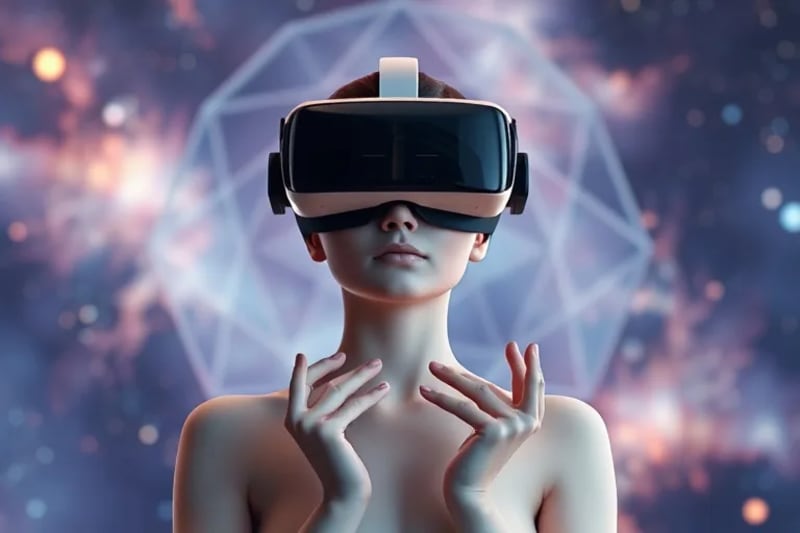 A user deeply engaged in a VR meditation session, highlighting the immersive nature of the technology.
VR systems typically involve a headset that blocks out the physical world and displays a computer-generated environment. This complete immersion is ideal for creating profound, distraction-free spiritual experiences. Users can explore vast digital landscapes, interact with virtual objects, and even participate in guided meditations led by virtual avatars.
AR, on the other hand, uses devices like smartphones or smart glasses to project digital content onto the real world. This technology can enhance existing physical spaces, adding layers of spiritual significance or guidance. Imagine walking through your own garden and seeing augmented visual cues for mindfulness, or having a digital guide appear to lead a prayer. Both technologies hold immense potential for spiritual application.
The choice between VR and AR depends on the desired level of immersion and interaction with the physical environment. VR offers a complete escape, while AR integrates spiritual elements into daily life. Developers are constantly refining these technologies to make them more comfortable, accessible, and powerful for spiritual users.
Ethical Considerations in Virtual Spiritual Practice
As with any powerful technology, the development and use of digital sacred spaces raise important ethical questions. Ensuring these environments are designed and utilized responsibly is paramount to their long-term success and positive impact. Key areas of concern include data privacy, psychological well-being, authenticity, and potential for commercial exploitation.
Data Privacy: Immersive experiences often collect vast amounts of user data, including biometric responses, gaze tracking, and emotional states. Developers must implement robust privacy policies and ensure transparency about data collection and usage. Users should have clear control over their personal information and how it is shared.
Psychological Well-being: While VR/AR can be therapeutic, prolonged or poorly designed experiences could potentially lead to disorientation, addiction, or a detachment from physical reality. Content creators have a responsibility to design experiences that promote positive mental health and offer guidance for healthy usage patterns. This includes features like time limits and reality checks.
Authenticity and Commercialization: There's a risk that spiritual practices could be trivialized or overly commercialized within digital spaces. Ethical development emphasizes creating genuine experiences that respect diverse spiritual traditions, avoiding superficial or exploitative monetization models. The focus should remain on spiritual growth, not just entertainment or profit.
 An abstract visualization of ethical digital spirituality, emphasizing interconnectedness and responsible technology.
Accessibility and Inclusivity: Ethical design also means ensuring these technologies are accessible to a wide range of users, including those with disabilities. Considerations for diverse cultural and religious backgrounds are also crucial to prevent cultural appropriation or exclusion. Developers must strive for inclusive design principles.
The European Union's General Data Protection Regulation (GDPR) provides a robust framework for data protection and privacy, which is highly relevant to the development of digital sacred spaces. Article 5 emphasizes principles relating to processing of personal data, including lawfulness, fairness, transparency, purpose limitation, data minimization, accuracy, storage limitation, integrity, and confidentiality. These principles serve as a critical guide for developers to ensure ethical handling of user data within immersive spiritual environments.
Furthermore, discussions around digital ethics often reference the "Asilomar AI Principles," which, while focused on artificial intelligence, offer valuable insights into responsible technological development. These principles advocate for beneficial AI, avoiding harm, and ensuring human control and values are prioritized. Applying similar foresight to VR/AR spiritual applications can help preempt potential pitfalls and foster trust.
By proactively addressing these ethical dimensions, digital sacred spaces can evolve into truly beneficial tools for human flourishing. Collaboration between technologists, ethicists, spiritual leaders, and users is vital to shape a responsible future for virtual spiritual practice.
Benefits of VR/AR for Meditation and Spirituality
The application of VR and AR in spiritual contexts offers numerous advantages that can significantly enhance traditional practices. These benefits range from improved accessibility to deeper engagement and personalization, making spiritual growth more attainable for many. The immersive nature of these technologies is a key factor in their effectiveness.
- Enhanced Focus and Reduced Distraction: VR's ability to completely block out external stimuli creates an ideal environment for deep meditation. Users are less likely to be interrupted by physical surroundings, allowing for sustained concentration. This is particularly beneficial in noisy or busy living situations.
- Accessibility and Inclusivity: Digital sacred spaces remove geographical and physical barriers. Individuals with mobility issues, those living in remote areas, or people unable to access physical spiritual centers can participate fully. This broadens the reach of spiritual teachings and practices.
- Personalization and Customization: Users can tailor their spiritual environment to their exact preferences, choosing landscapes, sounds, and guided meditations that resonate most deeply with them. This level of personalization can lead to more profound and effective experiences.
- Novelty and Engagement: For those new to meditation or struggling with traditional methods, the novelty of VR/AR can make spiritual practice more engaging and less intimidating. The interactive elements can help maintain interest and motivation.
- Biofeedback Integration: Advanced VR/AR systems can integrate biofeedback sensors, providing real-time data on heart rate, brainwaves, and stress levels. This allows users to receive immediate feedback on their meditative state, helping them to refine their practice more effectively.
- Exposure Therapy for Phobias: In some cases, controlled virtual environments can be used to help individuals overcome anxieties or phobias that might impede their ability to engage in spiritual practices in physical settings, such as social anxiety in group meditations.
These benefits collectively highlight the potential of digital sacred spaces to complement and enrich existing spiritual paths. They offer a powerful tool for self-discovery, stress reduction, and fostering a deeper connection to one's spiritual self in an increasingly digital world.
Practical Applications and Emerging Trends
The applications of VR and AR in spiritual immersion are diverse and continue to expand as technology advances. From guided meditation apps to virtual pilgrimages, these tools are creating new avenues for spiritual engagement. Here are some key practical applications and emerging trends:
- Guided Meditation and Mindfulness Apps: Many platforms now offer VR/AR experiences that transport users to tranquil digital landscapes, accompanied by guided audio. These can range from simple breathwork exercises to complex visualization meditations.
- Virtual Retreats and Communities: Digital sacred spaces are enabling the creation of virtual retreats where individuals can gather from around the world to participate in shared spiritual practices. This fosters a sense of community and collective intention.
- Spiritual Education and Exploration: VR can be used to recreate historical sacred sites, allowing users to explore ancient temples, cathedrals, or natural wonders from different cultures. This offers a unique educational experience, deepening understanding of various spiritual traditions.
- Therapeutic Applications: Beyond general well-being, VR is being explored in clinical settings for pain management, anxiety reduction, and even palliative care, providing calming and distracting environments for patients.
- Personalized Spiritual Guides: AI-powered virtual guides are emerging, capable of adapting meditation techniques and spiritual teachings to individual user needs and progress. These intelligent companions can offer personalized support and encouragement.
- Augmented Reality for Daily Rituals: AR applications can overlay spiritual symbols, affirmations, or interactive elements onto a user's physical environment, transforming everyday spaces into places of mindful practice.
The integration of haptic feedback, scent dispensers, and even temperature control is an emerging trend, aiming to create even more multi-sensory and convincing immersive experiences. This pursuit of hyper-realism continues to push the boundaries of what digital sacred spaces can offer. Learn more about how AI can assist in spiritual journeys by exploring AI Spiritual Guidance: Ethics, Futures, Intuitive Tools.
Designing Your Own Digital Sanctuary
While many pre-built digital sacred spaces are available, the ability to design or customize your own can significantly enhance the personal resonance of the experience. Creating a personalized digital sanctuary involves considering your spiritual needs, aesthetic preferences, and desired level of immersion. This process empowers users to actively shape their spiritual journey.
Choose Your Platform: Decide whether VR or AR best suits your needs. VR offers complete immersion, while AR integrates with your physical world. Popular VR platforms include Meta Quest and SteamVR, while AR is often accessed via smartphones or specialized glasses.
Define Your Aesthetic: What kind of environment fosters your sense of peace? Is it a serene forest, a cosmic void, a minimalist temple, or an abstract realm of light and sound? Many platforms offer tools to customize existing scenes or build new ones from scratch. Consider elements like color, light, and geometry.
Incorporate Sensory Elements: Beyond visuals, consider audio. Ambient sounds, calming music, or guided narrations can deepen immersion. Some advanced setups allow for scent diffusion or haptic feedback to further engage the senses. The more senses involved, the more profound the experience can be.
Integrate Interactive Elements: Do you want to interact with virtual objects, like lighting candles, tending a digital garden, or drawing mandalas? Interactive elements can provide a focal point for concentration and a sense of agency within the digital space. For deeper understanding of cosmic connections, explore Tarot Quantum Mechanics Intersecting Divination Reality.
Consider Guided Elements: Decide if you prefer self-guided exploration or structured meditations. Many platforms offer libraries of guided sessions, and some allow you to upload your own audio. The combination of personalized environment and expert guidance can be very effective.
By taking an active role in designing your digital sacred space, you create an environment that truly supports your unique spiritual path. This personal touch transforms the technology from a mere tool into a deeply meaningful extension of your inner world.
The Future of Digital Spirituality
The trajectory of digital sacred spaces points towards an increasingly integrated and personalized future. As VR and AR technologies become more sophisticated, affordable, and widespread, their role in spiritual practice is likely to grow exponentially. This evolution will be shaped by advancements in hardware, software, and a deeper understanding of human psychology and spirituality.
One major trend is the development of more intuitive and seamless interfaces. Future headsets and AR glasses will be lighter, more comfortable, and offer higher fidelity visuals and audio, blurring the lines between the digital and physical. This enhanced realism will make spiritual immersion even more profound and believable.
The integration of artificial intelligence will also play a pivotal role. AI could analyze a user's emotional state in real-time, dynamically adjusting the digital environment or guided meditation to optimize the spiritual experience. This adaptive personalization could lead to highly effective and tailored spiritual growth programs.
Furthermore, we can anticipate the rise of interconnected digital spiritual ecosystems. These meta-verses of mindfulness would allow individuals to seamlessly transition between various sacred spaces, join global meditation events, and interact with spiritual teachers and communities worldwide. This global connectivity could foster a new era of shared spiritual understanding and collective consciousness.
However, the future also necessitates continued vigilance regarding ethical development. Ensuring equitable access, preventing digital divides, and safeguarding against misuse will be critical challenges. The ongoing dialogue between technologists, spiritual leaders, and users will be essential to navigate this evolving landscape responsibly. The potential for these technologies to foster deeper self-awareness and global spiritual connection is immense, promising a transformative path for humanity.
Fuente: Contenido híbrido asistido por IAs y supervisión editorial humana.


Comments
Post a Comment