
28 Lunar Mansions Chinese Astrology: Destiny Mapping
Chinese astrology is a vast and intricate system, often simplified in Western understanding to the familiar cycle of the 12 animal zodiac signs. While these animals provide a foundational layer of personality traits and annual predictions, a deeper and more nuanced dimension exists: the 28 Lunar Mansions, or Xiù (宿). These ancient celestial divisions offer a sophisticated framework for understanding destiny, timing, and energetic influences, providing a granular map of the heavens that goes far beyond the terrestrial cycle of the zodiac animals.
Originating from ancient Chinese astronomy, the Lunar Mansions divide the celestial equator into 28 segments, each corresponding to a specific constellation or asterism through which the Moon passes during its monthly journey. This system is pivotal for precise astrological calculations, electional astrology, and even traditional Feng Shui, offering insights into an individual's innate character, life path, and the auspiciousness of specific moments. Understanding the Lunar Mansions unlocks a profound layer of cosmic wisdom, revealing the subtle energetic currents that shape our existence.
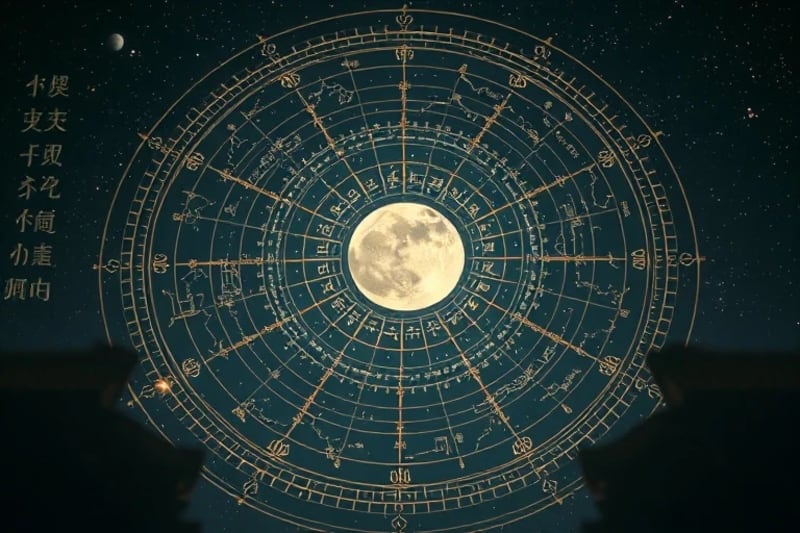
An ancient celestial map illustrating the 28 Lunar Mansions, key to Chinese destiny mapping.
The Foundation of Lunar Mansions: A Celestial Grid
The concept of Lunar Mansions dates back over two millennia, with records suggesting their use during the Warring States period (475–221 BC) and solidifying during the Han Dynasty (206 BC – 220 AD). Unlike the Western zodiac, which is based on the Sun's apparent path through 12 constellations, the Chinese system primarily tracks the Moon's daily movement. The Moon, being a faster-moving celestial body, offers more dynamic and precise timing for astrological events and daily life.
Each of the 28 Mansions occupies a segment of the sky, varying in size, and is associated with a specific star or asterism. These divisions were crucial for ancient Chinese astronomers to track the Moon, planets, and even comets, serving as a fundamental celestial coordinate system. Beyond mere observation, each mansion carries unique symbolic meanings, influencing personality, fortune, and the timing of events.
The Four Celestial Palaces: Guardians of the Sky
The 28 Lunar Mansions are further organized into four major groups, known as the Four Celestial Palaces or Four Symbols (Sì Xiàng). Each palace corresponds to a cardinal direction, a season, an element, and a mythical beast, embodying a powerful energetic archetype. These palaces provide a macro-level understanding of the Mansions' influences, setting the stage for their individual characteristics.
- Azure Dragon of the East (東方青龍 - Dōngfāng Qīnglóng): Associated with spring, the element Wood, and new beginnings. It represents vitality, growth, and renewal. This palace governs the eastern sector of the sky.
- Vermillion Bird of the South (南方朱雀 - Nánfāng Zhūquè): Linked to summer, the element Fire, and expansion. It symbolizes warmth, passion, and brilliance. This palace presides over the southern sky.
- White Tiger of the West (西方白虎 - Xīfāng Báihǔ): Connected to autumn, the element Metal, and harvest. It signifies strength, protection, and transformation. This palace rules the western sky.
- Black Tortoise of the North (北方玄武 - Běifāng Xuánwǔ): Related to winter, the element Water, and introspection. It embodies longevity, wisdom, and stability. This palace oversees the northern sky.
These four palaces are not merely directional markers but represent the cyclical flow of energy throughout the year and within an individual's life. The Mansions within each palace share a common energetic theme, though each retains its unique flavor and specific influences.
The 28 Lunar Mansions: A Detailed Exploration
Each of the 28 Mansions holds distinct astrological significance, influencing various aspects of life, from personality traits to the auspiciousness of actions. Below is a detailed overview of each mansion, its associated star, and its primary characteristics. This information is derived from classical Chinese astrological texts and astronomical observations.
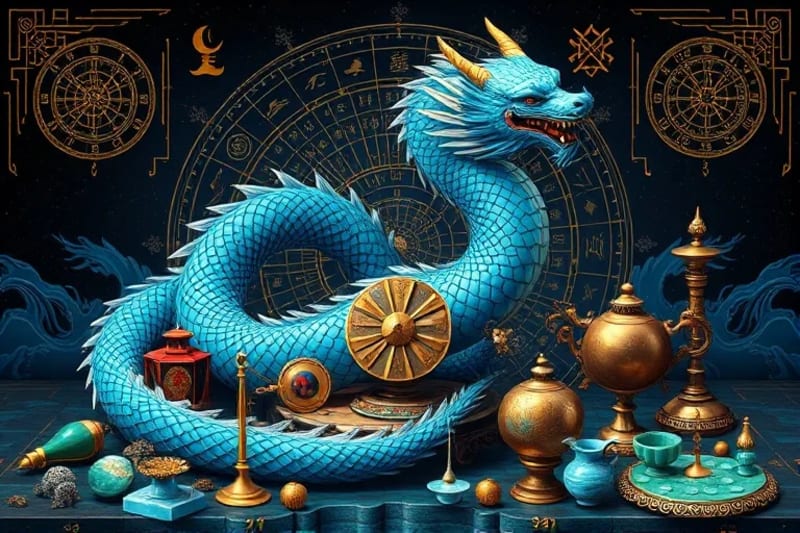
The Azure Dragon, guardian of the East, symbolizing growth and new beginnings.
Azure Dragon of the East (7 Mansions)
| Mansion (Pinyin) | Associated Star/Constellation | Key Characteristics & Influence |
|---|---|---|
| 1. Jiao (角) - Horn | Alpha Virginis (Spica) | Auspicious for marriage, construction, and new ventures. Symbolizes beginnings, leadership, and prosperity. |
| 2. Kang (亢) - Neck | Kappa Virginis | Associated with justice, legal matters, and disputes. Can bring both success and conflict. |
| 3. Di (氐) - Root/Base | Alpha Librae (Zubenelgenubi) | Good for trade, travel, and diplomacy. Represents balance, foundations, and stability. |
| 4. Fang (房) - Room | Pi Scorpii | Highly auspicious for wealth, love, and family. Symbolizes prosperity, passion, and fertility. |
| 5. Xin (心) - Heart | Antares (Alpha Scorpii) | Associated with emotions, wisdom, and spiritual insight. Can indicate strong intuition and deep feelings. |
| 6. Wei (尾) - Tail | Mu Scorpii | Favorable for business, trade, and endings that lead to new beginnings. Represents completion and transformation. |
| 7. Ji (箕) - Sieve | Gamma Sagittarii | Good for agriculture, travel, and purification. Symbolizes cleansing, innovation, and fresh starts. |
Black Tortoise of the North (7 Mansions)
| Mansion (Pinyin) | Associated Star/Constellation | Key Characteristics & Influence |
|---|---|---|
| 8. Dou (斗) - Ladle | Lambda Sagittarii | Auspicious for wealth, power, and leadership. Represents ambition, authority, and prosperity. |
| 9. Niu (牛) - Ox | Beta Capricorni | Good for agriculture, animal husbandry, and perseverance. Symbolizes diligence, stability, and hard work. |
| 10. Nu (女) - Girl | Epsilon Aquarii | Associated with relationships, arts, and communication. Can indicate creativity, charm, and social interaction. |
| 11. Xu (虚) - Emptiness | Beta Aquarii | Can be inauspicious for new ventures, favoring introspection and quietude. Represents solitude, mystery, and depth. |
| 12. Wei (危) - Danger | Alpha Aquarii | Associated with risks, challenges, and unexpected events. Requires caution and adaptability. |
| 13. Shi (室) - Encampment | Alpha Pegasi (Markab) | Auspicious for construction, travel, and new beginnings. Symbolizes stability, home, and protection. |
| 14. Bi (壁) - Wall | Gamma Pegasi (Algenib) | Good for learning, writing, and spiritual pursuits. Represents knowledge, wisdom, and enlightenment. |
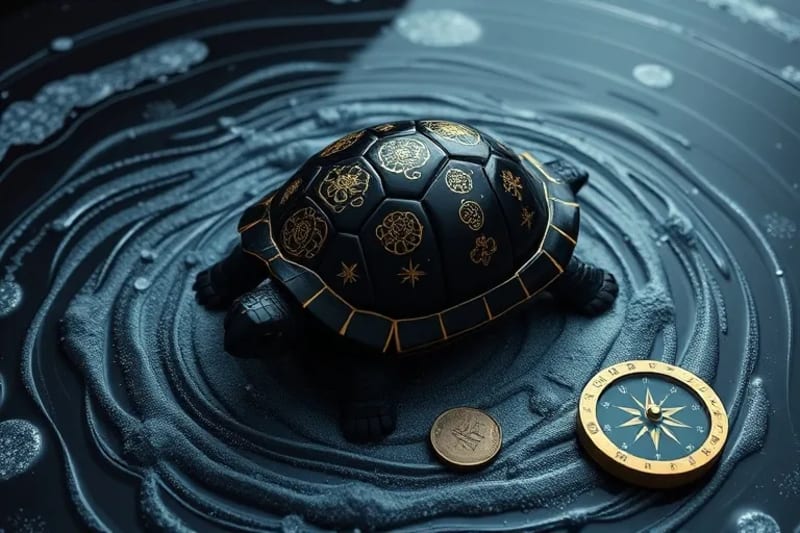
The Black Tortoise, guardian of the North, representing longevity and deep wisdom.
White Tiger of the West (7 Mansions)
| Mansion (Pinyin) | Associated Star/Constellation | Key Characteristics & Influence |
|---|---|---|
| 15. Kui (奎) - Stride | Eta Andromedae | Auspicious for education, arts, and intellectual pursuits. Symbolizes knowledge, creativity, and refinement. |
| 16. Lou (娄) - Bond | Beta Arietis | Good for relationships, partnerships, and diplomacy. Represents unity, harmony, and social connections. |
| 17. Wei (胃) - Stomach | 35 Arietis | Associated with agriculture, sustenance, and material wealth. Symbolizes nourishment, stability, and prosperity. |
| 18. Mao (昴) - Hairy Head | Pleiades | Can be inauspicious for major undertakings, favoring rest and contemplation. Represents beauty, intuition, and mystery. |
| 19. Bi (毕) - Net | Aldebaran (Alpha Tauri) | Auspicious for hunting, military, and strategic planning. Symbolizes protection, strength, and determination. |
| 20. Zi (觜) - Turtle Beak | Lambda Orionis | Good for communication, speech, and intellectual discussions. Represents eloquence, insight, and learning. |
| 21. Shen (参) - Three Stars | Orion's Belt | Highly auspicious for military, travel, and seeking justice. Symbolizes courage, power, and divine protection. |
Vermillion Bird of the South (7 Mansions)
| Mansion (Pinyin) | Associated Star/Constellation | Key Characteristics & Influence |
|---|---|---|
| 22. Jing (井) - Well | Mu Geminorum | Auspicious for learning, healing, and spiritual growth. Symbolizes wisdom, depth, and purification. |
| 23. Gui (鬼) - Ghost | Praesepe (Beehive Cluster) | Can be inauspicious for new ventures, favoring spiritual work and introspection. Represents mystery, intuition, and the unseen. |
| 24. Liu (柳) - Willow | Delta Hydrae | Associated with emotions, relationships, and artistic expression. Symbolizes flexibility, charm, and sensitivity. |
| 25. Xing (星) - Star | Alpha Hydrae (Alphard) | Auspicious for fame, recognition, and public speaking. Represents brilliance, charisma, and leadership. |
| 26. Zhang (张) - Extended Net | Upsilon Hydrae | Good for communication, writing, and social gatherings. Symbolizes openness, clarity, and connection. |
| 27. Yi (翼) - Wing | Alpha Crateris | Associated with travel, exploration, and spiritual journeys. Represents freedom, inspiration, and movement. |
| 28. Zhen (轸) - Chariot | Gamma Corvi | Auspicious for travel, trade, and strategic planning. Symbolizes mobility, foresight, and successful completion. |
Interpreting Lunar Mansions in Destiny Mapping
In Chinese astrology, the Lunar Mansions are primarily used to determine the exact position of the Moon at the time of birth. This "Moon Mansion" reveals crucial insights into an individual's emotional nature, subconscious patterns, family karma, and destiny. It complements the broader strokes provided by the 12 animal zodiac signs (which are based on the year of birth) and the individual's Bazi (Four Pillars of Destiny) chart, offering a layer of detail often overlooked in more generalized readings.
For example, someone born when the Moon was in the "Fang" (Room) mansion might exhibit strong family ties, a desire for wealth, and a passionate nature. Conversely, a person with their Moon in "Xu" (Emptiness) might be more introverted, philosophical, and prone to periods of solitude. The Mansion of the Moon at birth acts as a lens through which all other astrological influences are filtered, shaping how one experiences emotions, relationships, and personal growth.
Beyond natal charts, Lunar Mansions are invaluable in electional astrology, a practice focused on selecting the most auspicious times for important events. By observing which mansion the Moon currently occupies, practitioners can advise on ideal dates for weddings, business launches, travel, medical procedures, or even starting a new diet. Each mansion carries specific energies that can either support or hinder particular endeavors, making this system a powerful tool for strategic timing.
Practical Applications and Modern Relevance
The utility of the 28 Lunar Mansions extends beyond personal destiny readings and electional astrology. In traditional Feng Shui, the direction of a building or the placement of certain objects can be harmonized with the energies of the Mansions to enhance prosperity, health, and relationships. For instance, a sector of a home influenced by an auspicious mansion for wealth might be activated with specific elements or colors to amplify its positive effects.
Furthermore, understanding the Lunar Mansions can offer a unique perspective on daily life and personal development. By becoming aware of the Moon's current mansion, individuals can align their activities with cosmic rhythms, optimizing their efforts and minimizing potential obstacles. This conscious alignment fosters a deeper connection to natural cycles and promotes a more harmonious existence. For more insights into how celestial mechanics influence our lives, consider exploring Celestial Mechanics and Eclipses Astrological Impact.
In contemporary practice, some astrologers integrate Lunar Mansions with Western astrological techniques, creating a hybrid approach that offers an even more comprehensive understanding of an individual's chart. This cross-cultural synthesis highlights the universal appeal and enduring wisdom embedded within ancient astrological systems.
Conclusion: Unlocking Deeper Cosmic Wisdom
The 28 Lunar Mansions represent a profound and sophisticated layer of Chinese astrology, offering a detailed celestial map for destiny mapping and timing. By moving beyond the more commonly known 12 animal zodiac signs, we gain access to a rich tapestry of energetic influences, historical context, and practical applications that can enrich our understanding of ourselves and the world around us. Embracing this ancient wisdom allows for a more precise and holistic approach to astrological interpretation, guiding us towards greater awareness and alignment with cosmic rhythms.
Fuente: Contenido híbrido asistido por IAs y supervisión editorial humana.


Comments
Post a Comment