
Chinese Zodiac Elemental Energetics: Personal Growth
The intricate system of the Chinese Zodiac, deeply rooted in ancient astrological and philosophical traditions, extends far beyond simple animal signs. At its core lies the profound concept of the Five Elements (Wu Xing): Wood, Fire, Earth, Metal, and Water. These elements are not merely static categories but dynamic forces that interact, influence, and shape all aspects of existence, including human personality, health, relationships, and destiny.
Understanding the interplay between your Chinese Zodiac animal and your dominant elemental energetics offers a powerful framework for self-discovery and personal growth. By recognizing the strengths and challenges inherent in your elemental profile, you can consciously optimize your environment, make informed decisions, and cultivate a more balanced and harmonious life. This advanced guide delves into the nuances of these elemental dynamics, providing actionable insights for holistic well-being.
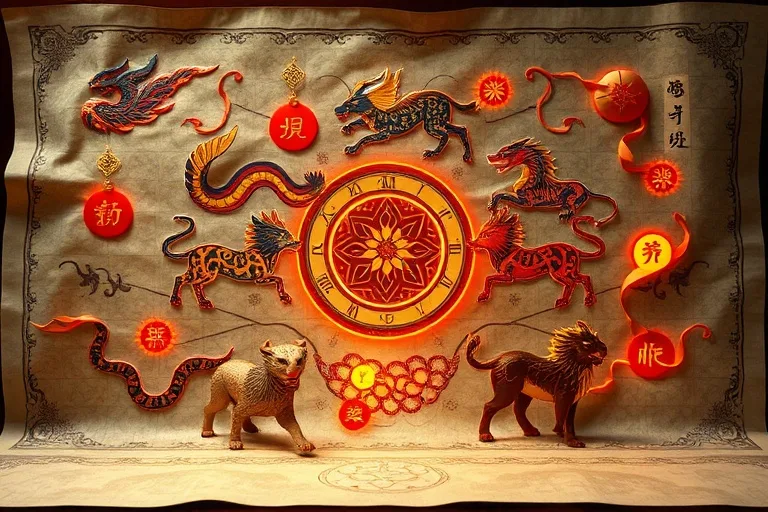
An ancient scroll visually represents the profound connection between the Chinese Zodiac animals and the foundational Five Elements, illustrating their mystical interplay.
The Five Elements theory is a cornerstone of traditional Chinese thought, permeating fields from medicine and martial arts to art and architecture. It describes a continuous cycle of transformation and interaction, where each element gives rise to the next (generating cycle) and also keeps another in check (controlling cycle). This constant flux ensures balance and prevents any single element from dominating.
When applied to personal energetics, this system reveals how individuals embody certain elemental qualities based on their birth year and, by extension, their zodiac animal. However, it's crucial to remember that a person is rarely a pure manifestation of a single element; rather, they are a complex tapestry woven from various elemental influences, with one or two often being more prominent.
Table of Contents
- Understanding the Five Elements: Core Attributes
- The Dynamic Cycles of Elements: Generating and Controlling
- Chinese Zodiac Animals and Their Fixed Elements
- Determining Your Personal Elemental Profile
- Optimizing Personal Growth Through Elemental Dynamics
- Feng Shui for Elemental Balance in Your Environment
- Practical Application and Holistic Well-being
Understanding the Five Elements: Core Attributes
Each of the Five Elements possesses distinct characteristics, strengths, and potential imbalances. Recognizing these attributes in oneself and others is the first step toward achieving elemental harmony. These elements are not just physical components but represent fundamental energies and qualities.
- Wood (木 - Mù): Associated with growth, vitality, creativity, and pioneering spirit. Wood types are often ambitious, assertive, and natural leaders. They thrive on new ideas and challenges. Imbalances can lead to anger, inflexibility, and excessive competitiveness.
- Fire (火 - Huǒ): Represents passion, enthusiasm, innovation, and dynamism. Fire types are charismatic, energetic, and love to be the center of attention. They are often quick-witted and inspiring. Potential downsides include impatience, impulsiveness, and burnout.
- Earth (土 - Tǔ): Symbolizes stability, nurturing, practicality, and reliability. Earth types are grounded, loyal, empathetic, and excellent at fostering community. They are the peacemakers and caregivers. Over-reliance can manifest as stubbornness, worry, and resistance to change.
- Metal (金 - Jīn): Embodies structure, discipline, refinement, and justice. Metal types are organized, principled, precise, and possess strong moral convictions. They are discerning and often have a keen sense of aesthetics. Imbalances can lead to rigidity, melancholy, and excessive criticism.
- Water (水 - Shuǐ): Represents wisdom, intuition, adaptability, and emotional depth. Water types are introspective, insightful, compassionate, and highly adaptable. They are often good communicators and strategists. Challenges include indecisiveness, fear, and emotional overwhelm.
These elemental qualities are not fixed but ebb and flow, influencing our daily experiences. A deeper understanding allows for conscious cultivation of desired traits and mitigation of less desirable ones, fostering a more balanced internal landscape.
The Dynamic Cycles of Elements: Generating and Controlling
The Five Elements are in constant motion, interacting through two primary cycles: the Generating (Sheng) Cycle and the Controlling (Ke) Cycle. These cycles illustrate the harmonious and corrective relationships between the elements, crucial for maintaining balance in nature and within individuals.
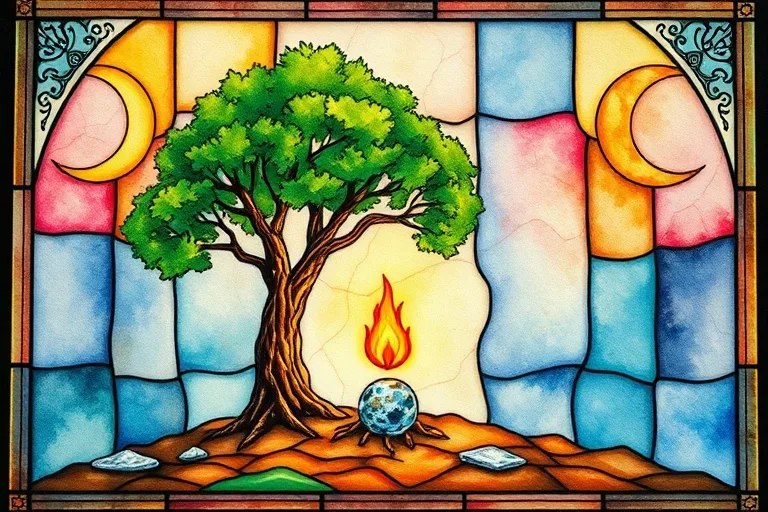
A watercolor illustration beautifully captures the continuous and nurturing flow of the elemental generating cycle, vital for balance.
The Generating Cycle describes how one element supports and nourishes the next, representing a constructive and harmonious flow of energy. This cycle is essential for growth and development, ensuring that each element has the resources it needs to thrive.
- Wood feeds Fire: Wood is fuel for fire.
- Fire creates Earth: Fire turns wood into ash, which enriches the earth.
- Earth bears Metal: Metal ores are extracted from the earth.
- Metal carries Water: Metal containers hold water, or condensation forms on metal.
- Water nourishes Wood: Water is essential for wood (plants) to grow.
The Controlling Cycle, also known as the Overcoming Cycle, describes how one element keeps another in check, preventing it from becoming too dominant. This cycle is equally important for maintaining equilibrium and preventing imbalances that could lead to disharmony or destruction.
- Wood controls Earth: Tree roots penetrate and hold the soil.
- Earth absorbs Water: Earth dams or contains water.
- Water quenches Fire: Water extinguishes fire.
- Fire melts Metal: Fire can melt and reshape metal.
- Metal chops Wood: Metal tools (axes, saws) can cut wood.
Understanding these cycles allows for a dynamic approach to elemental balance. If an element is deficient, it can be strengthened by its generating element or by weakening its controlling element. Conversely, an overactive element can be controlled by its controlling element or by draining it through its generating element.
Chinese Zodiac Animals and Their Fixed Elements
Each of the twelve Chinese Zodiac animals is associated with a fixed element, which imbues the animal's inherent characteristics with specific elemental traits. However, the specific element of your birth year (Heavenly Stem) further refines this, creating a unique elemental profile. For instance, a Wood Dragon is different from a Metal Dragon.
Below is a table outlining the fixed element for each zodiac animal. This fixed element represents a foundational energy that is always present, regardless of the annual elemental influence.
| Zodiac Animal | Fixed Element | Key Characteristics Influenced |
|---|---|---|
| Rat | Water | Intelligence, adaptability, charm, resourcefulness. |
| Ox | Earth | Diligence, reliability, strength, determination. |
| Tiger | Wood | Courage, leadership, passion, unpredictability. |
| Rabbit | Wood | Gentleness, sensitivity, elegance, compassion. |
| Dragon | Earth | Charisma, ambition, power, confidence. |
| Snake | Fire | Wisdom, intuition, mystery, charm. |
| Horse | Fire | Energy, independence, enthusiasm, adventurousness. |
| Goat (Sheep) | Earth | Creativity, gentleness, empathy, artistic flair. |
| Monkey | Metal | Intelligence, wit, curiosity, playfulness. |
| Rooster | Metal | Confidence, honesty, diligence, meticulousness. |
| Dog | Earth | Loyalty, honesty, protectiveness, integrity. |
| Pig | Water | Generosity, compassion, honesty, enjoyment of life. |
While the fixed element provides a baseline, the annual element (derived from the Heavenly Stem of your birth year) adds another layer of complexity and nuance. This combination creates a more personalized elemental blueprint, influencing specific behavioral patterns and life trajectories.
Determining Your Personal Elemental Profile
To truly harness the power of elemental energetics, you must first identify your primary elemental influences. This involves looking at the last digit of your birth year, which corresponds to your Heavenly Stem element. This method provides a quick way to determine your dominant elemental energy for personal growth.
| Last Digit of Birth Year | Associated Element |
|---|---|
| 0, 1 | Metal |
| 2, 3 | Water |
| 4, 5 | Wood |
| 6, 7 | Fire |
| 8, 9 | Earth |
For example, if you were born in 1985, your last digit is 5, making your birth element Wood. If you were born in 1992, your last digit is 2, making your birth element Water. This birth element, combined with your zodiac animal's fixed element, provides a foundational understanding of your core energetic makeup.
Advanced analysis in Chinese astrology, such as BaZi (Four Pillars of Destiny), considers not only the year but also the month, day, and hour of birth, each with its own elemental associations. This creates a much more detailed and personalized elemental chart, revealing complex interactions and potential imbalances. However, for general personal growth, understanding your birth year element is an excellent starting point.
Optimizing Personal Growth Through Elemental Dynamics
Once you understand your dominant elemental influences and the interplay of the generating and controlling cycles, you can strategically optimize your personal growth. The goal is not to eliminate certain elements but to achieve a harmonious balance, leveraging strengths and mitigating weaknesses. This approach fosters resilience and adaptability.
A dynamic 3D render illustrates the complex and harmonious flow of elemental energies, symbolizing continuous transformation and balance.
1. Strengthening Deficient Elements: If your elemental profile shows a lack or weakness in a particular element, you can consciously introduce its qualities into your life. For instance, if you lack Wood energy (growth, creativity), engage in activities like gardening, learning new skills, or artistic endeavors. Surround yourself with green colors and natural materials. If Water is deficient (intuition, adaptability), practice meditation, spend time near water, or engage in deep, introspective thought.
2. Balancing Overactive Elements: An excess of an element can lead to imbalances. For example, too much Fire energy might result in impulsiveness or anger. To balance this, introduce Water (its controlling element) through calming activities, introspection, or by seeking cooling environments. Too much Metal (rigidity, criticism) can be softened by Fire (its controlling element) through passion, warmth, and embracing spontaneity.
3. Harmonizing Relationships: Elemental compatibility extends to interpersonal dynamics. Understanding the elemental profiles of friends, family, and colleagues can illuminate the underlying energetic interactions. A Wood person might find a Fire person inspiring, while a Metal person might bring structure to a Water person's fluidity. Conversely, controlling cycles can explain friction; a Wood person might feel stifled by an Earth person's stubbornness, as Wood controls Earth.
By applying these principles, you can consciously adjust your approach to relationships, fostering greater understanding and reducing potential conflicts. This awareness allows for proactive strategies to build more supportive and balanced connections, recognizing inherent strengths and challenges.
Feng Shui for Elemental Balance in Your Environment
Feng Shui, the ancient Chinese art of arranging buildings, objects, and space to achieve harmony and balance, is deeply intertwined with the Five Elements. By consciously manipulating the elemental energies in your living and working spaces, you can create an environment that supports your personal growth and well-being. This is particularly effective when addressing elemental imbalances in your personal profile.
Each element is associated with specific colors, shapes, materials, and directions. Introducing or removing these associations can help balance the energy flow (Qi) in your surroundings. For instance, if you need more Wood energy:
- Wood: Incorporate green colors, wooden furniture, plants, and vertical patterns. Place these in the east or southeast sectors of your home or office.
- Fire: Use red, orange, or purple colors, triangular shapes, candles, and bright lighting. Place these in the south sector.
- Earth: Introduce yellow, brown, or earthy tones, square shapes, ceramic items, and stable, low furniture. Place these in the center, northeast, or southwest sectors.
- Metal: Opt for white, silver, or gray colors, round or oval shapes, metal objects, and clean, minimalist designs. Place these in the west or northwest sectors.
- Water: Utilize blue or black colors, wavy or irregular shapes, water features (fountains, aquariums), and reflective surfaces. Place these in the north sector.
By strategically placing objects and colors that represent your deficient elements, or by removing items that represent an overactive element, you can create a more supportive and energetically balanced environment. This external harmony can profoundly impact your internal state, facilitating personal growth and reducing stress. For example, if you are a Fire type prone to burnout, introducing Water elements in your workspace can help temper your intensity and promote calm.
Integrating Feng Shui principles with your personal elemental profile is a powerful way to ensure that your surroundings are actively contributing to your overall vitality and success. It's about creating a living space that acts as a continuous source of positive energy and balance, supporting your innate strengths and helping to harmonize any weaknesses. You can explore more about elemental compatibility and Feng Shui tips on resources like Chinese Zodiac Compatibility: Five Elements Hidden Clashes.
Practical Application and Holistic Well-being
The true value of understanding Chinese Zodiac and elemental energetics lies in its practical application to daily life. This isn't merely an academic exercise but a dynamic tool for fostering holistic well-being. By consistently applying these insights, individuals can cultivate greater self-awareness, improve their decision-making, and enhance their overall life experience.
- Self-Reflection and Journaling: Regularly reflect on how elemental energies manifest in your daily interactions, moods, and physical health. Journaling can help you identify patterns of imbalance (e.g., periods of excessive anger for Wood, anxiety for Earth) and track the effectiveness of your balancing strategies.
- Dietary Choices: Traditional Chinese Medicine (TCM) heavily integrates elemental theory into diet. Certain foods are associated with specific elements and can be consumed to strengthen or balance them. For instance, sour foods support Wood, bitter foods support Fire, sweet foods support Earth, pungent foods support Metal, and salty foods support Water.
- Mindfulness and Meditation: Practices like mindfulness can help you become more attuned to your internal elemental landscape. Visualizing the generating and controlling cycles within your body can be a powerful meditation technique to restore balance and flow.
- Career and Hobbies: Aligning your career path and hobbies with your dominant or desired elemental energies can lead to greater fulfillment. A Fire type might thrive in creative or public-facing roles, while a Metal type might excel in analytical or organizational positions.
- Seasonal Adjustments: Each season is also associated with an element (Spring-Wood, Summer-Fire, Late Summer-Earth, Autumn-Metal, Winter-Water). Adjusting your lifestyle, diet, and activities according to the prevailing seasonal element can further enhance your natural energetic flow and prevent seasonal imbalances.
Embracing the wisdom of Chinese elemental energetics offers a comprehensive roadmap for navigating life's complexities. It encourages a proactive approach to personal development, transforming potential weaknesses into opportunities for growth and fostering a deeper connection to the natural rhythms of the universe. This journey towards elemental harmony is a continuous process of learning, adapting, and evolving, leading to a more enriched and purposeful existence. For further insights into integrating different astrological systems, consider exploring topics like Chakra-Astrology Integration: Energy Centers Birth Chart Alignment.
Fuente: Contenido híbrido asistido por IAs y supervisión editorial humana.


Comments
Post a Comment