
Chinese Zodiac Compatibility: Five Elements Hidden Clashes | StarPluto
The Chinese Zodiac offers a fascinating framework for understanding personality traits and interpersonal dynamics. While many are familiar with the twelve animal signs, a deeper layer of compatibility analysis lies within the intricate interplay of the Five Elements: Wood, Fire, Earth, Metal, and Water. This advanced perspective moves beyond simple animal pairings, revealing nuanced connections and potential hidden clashes that can significantly impact relationships, both personal and professional.
Understanding these elemental interactions provides a more comprehensive and sophisticated view of how individuals influence each other. It allows for a more precise assessment of strengths, weaknesses, and areas of potential friction, offering valuable insights for fostering harmony and growth. This guide will delve into these advanced concepts, providing a robust framework for interpreting Chinese Zodiac compatibility.
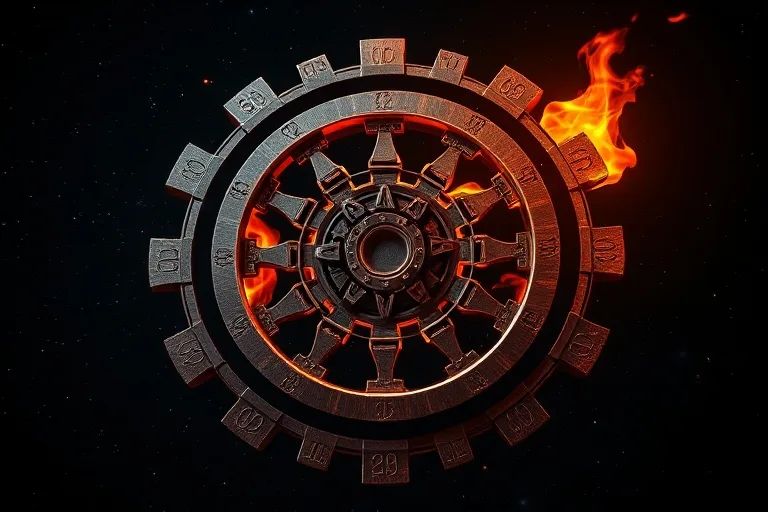
A complex digital illustration depicting the intricate gearwork of the Five Elements within Chinese Zodiac compatibility.
The traditional Chinese Zodiac, or Sheng Xiao, assigns an animal sign based on the year of birth, following a 12-year cycle. However, each year is also associated with one of the Five Elements, which rotate in a 60-year cycle. This combination creates unique elemental profiles for each individual, adding layers of complexity to compatibility readings. Ignoring these elemental influences can lead to an incomplete or even misleading understanding of interpersonal relationships.
Moreover, beyond the primary elemental associations of birth years, each animal sign itself carries an intrinsic or "fixed" element, alongside potential seasonal and daily elemental influences. These layers contribute to a dynamic and multifaceted compatibility chart, making advanced analysis a powerful tool for self-awareness and relational success. By exploring these depths, we can unlock profound insights into our connections with others.
Table of Contents
- Understanding the Foundations: Chinese Zodiac and the Five Elements
- The Productive and Destructive Cycles of Elements
- Elemental Assignments in Chinese Zodiac Animals
- Decoding Elemental Compatibility: Beyond the Surface
- Unveiling Hidden Clashes: The Subtleties of Conflict
- Advanced Layers: Yin/Yang, Fixed Elements, and Seasonal Influences
- Applying Advanced Compatibility for Harmonious Relationships
Understanding the Foundations: Chinese Zodiac and the Five Elements
The Chinese Zodiac is an ancient system of divination and personality analysis deeply rooted in Chinese philosophy and cosmology. Each of the twelve animal signs—Rat, Ox, Tiger, Rabbit, Dragon, Snake, Horse, Goat, Monkey, Rooster, Dog, and Pig—is believed to imbue individuals born in that year with specific characteristics. However, this is just the surface level of understanding.
Central to advanced Chinese astrology is the concept of the Tarot Quantum Mechanics Intersecting Divination Reality: Wood, Fire, Earth, Metal, and Water. These are not merely static substances but dynamic energies that represent various stages of transformation, growth, and interaction within the natural world and human experience. Each element is associated with specific qualities, directions, seasons, colors, and even emotions, forming a complex web of interconnectedness.
For instance, Wood is associated with growth, creativity, and new beginnings, akin to a burgeoning tree. Fire represents passion, energy, and transformation, like a blazing flame. Earth embodies stability, nurturing, and practicality, much like fertile soil. Metal signifies structure, discipline, and refinement, similar to a finely crafted sword. Finally, Water symbolizes wisdom, intuition, and adaptability, flowing like a river.
These elemental energies are not isolated but constantly interact, forming cycles of production and destruction that govern the balance of the universe. Understanding these fundamental principles is crucial before delving into compatibility, as they provide the underlying logic for how different zodiac signs and their associated elements will interact with each other.
The Productive and Destructive Cycles of Elements
The Five Elements interact in two primary cycles: the Productive (Sheng) Cycle and the Destructive (Ke) Cycle. These cycles are fundamental to understanding elemental compatibility, as they dictate whether two elements will support or challenge each other.
- Productive Cycle (Sheng Cycle): This cycle describes how one element nourishes or creates another, fostering harmony and growth.
- Wood feeds Fire: Wood is fuel for fire.
- Fire creates Earth: Fire turns wood into ash, enriching the earth.
- Earth bears Metal: Metal is extracted from the earth.
- Metal collects Water: Metal can hold water (e.g., a metal cup) or condense it.
- Water nourishes Wood: Water helps wood (plants) grow.
- Destructive Cycle (Ke Cycle): This cycle describes how one element controls or overcomes another, leading to challenge, conflict, or suppression.
- Wood controls Earth: Tree roots penetrate and break up soil.
- Earth absorbs Water: Earth can dam or soak up water.
- Water extinguishes Fire: Water puts out fire.
- Fire melts Metal: Fire can melt and reshape metal.
- Metal chops Wood: Metal (e.g., an axe) can cut wood.
These cycles are not inherently "good" or "bad" but describe natural interactions. A productive cycle suggests a supportive and harmonious relationship, while a destructive cycle indicates a challenging dynamic that requires effort and understanding to navigate. In compatibility, a balance of both can be healthy, as challenges can lead to growth, but an overwhelming destructive influence can be detrimental.
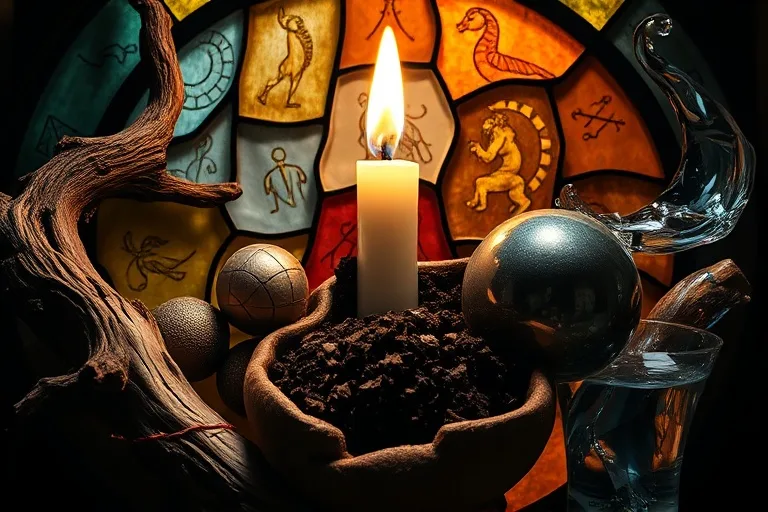
An oil painting depicting the harmonious and tense interactions of the Five Elements in a circular arrangement.
Elemental Assignments in Chinese Zodiac Animals
Each of the twelve Chinese Zodiac animals is intrinsically associated with one of the Five Elements, known as its "fixed element." This fixed element represents the core nature and underlying energy of that animal sign, influencing its personality and how it interacts with others. Additionally, the year of birth assigns a "stem element" (which cycles through Wood, Fire, Earth, Metal, Water over 60 years), further refining an individual's elemental profile.
Understanding these elemental assignments is crucial for advanced compatibility analysis. For example, a person born in the Year of the Wood Dragon will have a different elemental makeup and therefore different compatibility dynamics than a person born in the Year of the Metal Dragon, even though both are Dragons. The stem element adds an additional layer of influence, coloring the inherent traits of the animal sign.
Here's a general overview of the fixed elements for each animal sign:
| Chinese Zodiac Animal | Fixed Element | Key Characteristics Influenced by Fixed Element |
|---|---|---|
| Rat | Water | Intelligent, adaptable, resourceful, intuitive. |
| Ox | Earth | Diligent, reliable, strong-willed, grounded. |
| Tiger | Wood | Brave, confident, adventurous, impulsive. |
| Rabbit | Wood | Gentle, compassionate, artistic, diplomatic. |
| Dragon | Earth | Charismatic, ambitious, powerful, generous. |
| Snake | Fire | Wise, enigmatic, intuitive, charming. |
| Horse | Fire | Energetic, independent, enthusiastic, freedom-loving. |
| Goat (Sheep) | Earth | Gentle, artistic, compassionate, sensitive. |
| Monkey | Metal | Intelligent, witty, curious, innovative. |
| Rooster | Metal | Observant, hardworking, confident, honest. |
| Dog | Earth | Loyal, honest, protective, responsible. |
| Pig | Water | Generous, compassionate, honest, optimistic. |
Decoding Elemental Compatibility: Beyond the Surface
When assessing compatibility using the Five Elements, we look at the interaction between the elements of two individuals. This includes comparing their birth year's stem element and their animal sign's fixed element. The goal is to identify whether the elements are primarily in a productive, destructive, or neutral relationship.
For example, a Wood person and a Fire person would generally have a harmonious relationship, as Wood feeds Fire (Productive Cycle). This suggests mutual support, shared growth, and a natural understanding. They might inspire each other, with the Wood person providing ideas and the Fire person bringing energy to manifest them.
Conversely, a Water person and a Fire person might experience more challenges, as Water extinguishes Fire (Destructive Cycle). This doesn't mean incompatibility is absolute, but it indicates areas where their natural tendencies might clash. The Water person might find the Fire person too intense, while the Fire person might feel stifled by the Water person's emotional depth or cautious approach. Such a relationship would require conscious effort to balance and compromise.
A neutral relationship occurs when elements do not directly interact in either cycle, or when their influences are balanced. These relationships can be stable but might lack the dynamic energy of productive cycles or the growth potential of navigating destructive ones. Advanced analysis considers the strength of each element and the overall balance within both individuals' charts.
Unveiling Hidden Clashes: The Subtleties of Conflict
Beyond the obvious elemental interactions, Chinese astrology also identifies "hidden clashes" that can create subtle but significant friction in relationships. These clashes often stem from the intricate relationships between the Earthly Branches (which correspond to the animal signs) and the Heavenly Stems (which correspond to the Five Elements of the birth year, month, day, and hour).
- Six Clashing Branches (Liu Chong): These are direct oppositions between animal signs that are six positions apart in the zodiac cycle. For example, Rat clashes with Horse, Ox with Goat, Tiger with Monkey, Rabbit with Rooster, Dragon with Dog, and Snake with Pig. These are considered strong clashes that can lead to fundamental disagreements and opposing viewpoints.
- Three Punishments (San Xing): These are more complex interactions involving three animal signs that, when combined, create a "punishment" or self-inflicted difficulty. There are several types, such as the "Ingratitude Punishment" (Tiger, Snake, Monkey), "Bullying Punishment" (Ox, Goat, Dog), and "Uncivilized Punishment" (Rat, Rabbit). These can manifest as misunderstandings, betrayals, or self-sabotage within a relationship.
- Self-Punishment (Zi Xing): Some signs are considered to "self-punish" when paired with themselves or specific other signs (e.g., Dragon-Dragon, Horse-Horse, Rooster-Rooster, Pig-Pig). This suggests internal conflict or self-destructive tendencies that can spill over into relationships.
These hidden clashes are often overlooked in basic compatibility readings but are crucial for a complete picture. They can explain why two individuals who seem to have harmonious elemental interactions on the surface might still experience persistent underlying tension or recurring conflicts. Recognizing these clashes allows individuals to address potential issues proactively and develop strategies for mitigation.
A cinematic still life of ancient Chinese coins and a frayed silk thread, symbolizing hidden clashes and intricate connections.
Advanced Layers: Yin/Yang, Fixed Elements, and Seasonal Influences
To truly master advanced Chinese Zodiac compatibility, one must consider additional layers of influence beyond the primary animal sign and its associated year element. These include the fundamental concept of Tarot Quantum Mechanics Intersecting Divination Reality, the fixed elements of the animal signs, and the seasonal elemental strengths.
- Yin and Yang Balance: Each animal sign and element also carries a Yin or Yang polarity. Yin represents feminine, passive, receptive energy, while Yang represents masculine, active, assertive energy. A balanced mix of Yin and Yang in a relationship often leads to harmony, where partners complement each other. Too much of one polarity can create imbalance, leading to dominance or passivity.
- Fixed Elements of Animal Signs: As discussed, each animal sign has an intrinsic fixed element. This element represents the core energetic blueprint of the sign. For example, the Tiger is inherently Wood, and the Horse is inherently Fire. These fixed elements play a significant role in compatibility, sometimes overriding the influence of the birth year's stem element in certain contexts.
- Seasonal Elemental Influences: The strength of an element fluctuates with the seasons. Wood is strongest in Spring, Fire in Summer, Metal in Autumn, and Water in Winter. Earth is strongest at the end of each season. When analyzing compatibility, considering the season of birth can reveal which elements are naturally stronger or weaker in an individual's chart, affecting how they interact with others. For instance, a Fire person born in winter might have a less dominant Fire energy than one born in summer.
These layers add immense depth to compatibility readings, moving beyond simplistic interpretations. They allow for a more nuanced understanding of individual temperaments and how they might blend or clash in various relational contexts. A truly advanced analysis integrates all these factors to paint a comprehensive picture.
Applying Advanced Compatibility for Harmonious Relationships
The insights gained from advanced Chinese Zodiac compatibility, incorporating the Five Elements and hidden clashes, can be profoundly transformative. This knowledge is not meant to be deterministic but rather a guide for understanding and navigating relationships more effectively. It empowers individuals to make conscious choices and develop strategies for fostering harmony.
- Self-Awareness: Understanding your own elemental makeup and potential clashes helps you recognize your inherent tendencies and how they might impact others. This self-awareness is the first step towards personal growth and improved relationships.
- Empathy and Understanding: By knowing a partner's elemental profile and potential clashes, you can develop greater empathy for their reactions and behaviors. What might seem like an irrational conflict could be an elemental clash at play, prompting a more understanding response.
- Conflict Resolution: When hidden clashes are identified, couples can proactively address potential friction points. For example, if a "Wood controls Earth" dynamic is present, the Wood person might learn to be less overbearing, and the Earth person might practice setting stronger boundaries.
- Strategic Partnerships: In business or team settings, elemental compatibility can guide the formation of effective partnerships. Pairing individuals with complementary elements (e.g., Wood and Fire for innovation and execution) can lead to greater success, while being aware of destructive cycles can help mitigate risks.
- Personal Growth: Relationships with elemental clashes, while challenging, offer immense opportunities for growth. By consciously working through these dynamics, individuals can develop patience, compromise, and a deeper understanding of themselves and others.
In conclusion, advanced Chinese Zodiac compatibility, with its focus on the Five Elements and hidden clashes, offers a sophisticated lens through which to view human relationships. It provides a roadmap for navigating the complexities of interpersonal dynamics, fostering deeper connections, and building more harmonious and fulfilling lives. Embracing this ancient wisdom can unlock a new level of understanding and personal empowerment in all your interactions.
Fuente: Contenido híbrido asistido por IAs y supervisión editorial humana.


Comments
Post a Comment