
Chinese Zodiac Spirituality: Integrating Ancient Wisdom
The Chinese Zodiac, a venerable system of astrology rooted in ancient Chinese philosophy and cosmology, offers a profound framework for understanding personality, destiny, and interpersonal dynamics. Far from being a mere fortune-telling tool, it represents a sophisticated lens through which individuals can explore their inherent strengths, weaknesses, and life paths. In an era increasingly defined by a quest for deeper meaning and personal authenticity, integrating this ancestral wisdom into modern spiritual practices provides a unique pathway for self-discovery and holistic well-being.
Modern spirituality often emphasizes mindfulness, self-awareness, personal growth, and a connection to something greater than oneself. The Chinese Zodiac, with its rich symbolism and cyclical nature, aligns seamlessly with these contemporary pursuits. By delving into the characteristics of one's birth animal and elemental influences, individuals can gain invaluable insights that foster greater self-acceptance, guide decision-making, and enhance relationships. This article explores how the timeless principles of the Chinese Zodiac can be effectively woven into a modern spiritual tapestry, enriching our understanding of ourselves and the world around us.
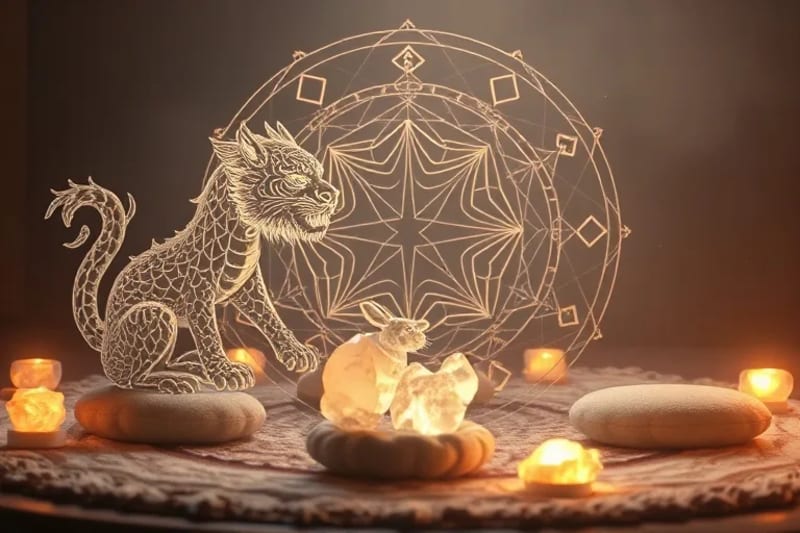
A harmonious blend of ancient Chinese astrological symbols and contemporary spiritual practices, fostering personal growth.
Origins and Structure of the Chinese Zodiac
The Chinese Zodiac, known as Sheng Xiao (生肖), is a repeating cycle of 12 years, with each year represented by an animal and its reputed attributes. This system is believed to have originated during the Han Dynasty (206 BCE – 220 CE) and has since become deeply ingrained in Chinese culture, influencing everything from marriage compatibility to career choices and personal development. Unlike Western astrology, which is based on the positions of celestial bodies at the moment of birth, the Chinese Zodiac primarily focuses on the year of birth, though month, day, and hour also contribute to a more detailed analysis.
The legend of the Great Race often explains the order of the animals. The Jade Emperor, it is said, invited all the animals to a race across a river, declaring that the first twelve to cross would be honored with a place in the zodiac. Each animal's unique characteristics and cunning played a role in their final position, reflecting the traits associated with those born under their sign. This narrative not only provides a charming origin story but also encapsulates the essence of each animal's personality.
The cyclical nature of the Chinese Zodiac emphasizes the ebb and flow of life, the constant renewal, and the interconnectedness of all things. Each year brings a new animal's energy, influencing global events and individual experiences. Understanding this energetic shift can help individuals prepare for challenges and capitalize on opportunities, fostering a more proactive and mindful approach to life.
The Twelve Zodiac Animals: Archetypes of Personality
Each of the twelve animals in the Chinese Zodiac represents a distinct archetype, embodying a set of personality traits, strengths, and potential challenges. These archetypes serve as a foundational guide for self-understanding, offering insights into one's innate character and predispositions. Exploring these animal characteristics can be a powerful tool for personal reflection and growth in modern spiritual practices.
- Rat (1924, 1936, 1948, 1960, 1972, 1984, 1996, 2008, 2020): Intelligent, quick-witted, resourceful, charming, but can be cunning and secretive.
- Ox (1925, 1937, 1949, 1961, 1973, 1985, 1997, 2009, 2021): Diligent, dependable, strong, determined, but can be stubborn and conservative.
- Tiger (1926, 1938, 1950, 1962, 1974, 1986, 1998, 2010, 2022): Brave, confident, competitive, unpredictable, but can be impulsive and rebellious.
- Rabbit (1927, 1939, 1951, 1963, 1975, 1987, 1999, 2011, 2023): Gentle, quiet, elegant, compassionate, but can be timid and overly cautious.
- Dragon (1928, 1940, 1952, 1964, 1976, 1988, 2000, 2012, 2024): Enthusiastic, confident, intelligent, charismatic, but can be arrogant and domineering.
- Snake (1929, 1941, 1953, 1965, 1977, 1989, 2001, 2013, 2025): Enigmatic, intelligent, wise, intuitive, but can be cunning and possessive.
- Horse (1930, 1942, 1954, 1966, 1978, 1990, 2002, 2014, 2026): Energetic, independent, active, amiable, but can be impatient and fickle.
- Goat/Sheep (1931, 1943, 1955, 1967, 1979, 1991, 2003, 2015, 2027): Gentle, mild-mannered, artistic, compassionate, but can be indecisive and overly sensitive.
- Monkey (1932, 1944, 1956, 1968, 1980, 1992, 2004, 2016, 2028): Sharp, clever, curious, innovative, but can be mischievous and restless.
- Rooster (1933, 1945, 1957, 1969, 1981, 1993, 2005, 2017, 2029): Observant, hardworking, courageous, confident, but can be arrogant and boastful.
- Dog (1934, 1946, 1958, 1970, 1982, 1994, 2006, 2018, 2030): Loyal, honest, responsible, sincere, but can be pessimistic and stubborn.
- Pig (1935, 1947, 1959, 1971, 1983, 1995, 2007, 2019, 2031): Compassionate, generous, diligent, honest, but can be naive and easily fooled.
Understanding these fundamental traits provides a starting point for self-reflection. It's not about rigid categorization but about recognizing patterns and tendencies within oneself. For instance, a person born in the Year of the Tiger might leverage their natural courage in spiritual pursuits, while a Rabbit might find solace in gentle, compassionate practices. This self-awareness is a cornerstone of modern spiritual development.
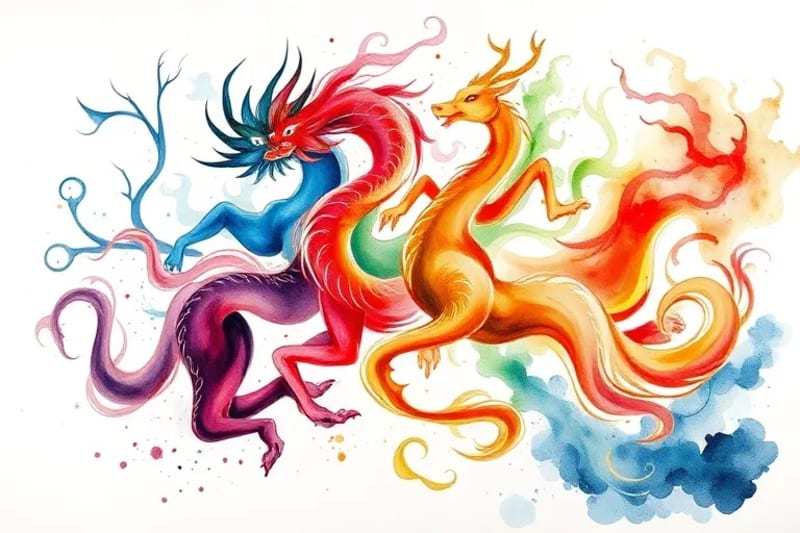
An artistic depiction of the twelve zodiac animals, illustrating their energetic interplay with the five elements.
The Five Elements: Adding Layers of Complexity
Beyond the twelve animals, the Chinese Zodiac incorporates the Five Elements (Wu Xing): Wood, Fire, Earth, Metal, and Water. These elements cycle every two years, adding a deeper layer of complexity and nuance to each animal sign. For example, a Wood Dragon will have different characteristics than a Fire Dragon, or a Metal Dragon. This elemental influence further refines one's spiritual blueprint, offering a more personalized understanding of one's energetic makeup.
- Wood: Associated with growth, creativity, flexibility, and compassion. Individuals with strong Wood energy are often innovative and seek harmony.
- Fire: Represents passion, dynamism, leadership, and intuition. Fire types are typically enthusiastic and energetic.
- Earth: Symbolizes stability, practicality, reliability, and nurturing. Earth individuals are grounded and supportive.
- Metal: Linked to discipline, determination, justice, and clarity. Metal types are often organized and principled.
- Water: Signifies adaptability, introspection, empathy, and wisdom. Water individuals are often perceptive and fluid.
By combining the animal sign with its corresponding element, one can gain a more comprehensive understanding of their unique spiritual path. For instance, a Water Rat might be more introspective and adaptable than a Metal Rat, who might be more disciplined and focused. This combination allows for a richer interpretation of one's spiritual predispositions and challenges, aiding in targeted personal development.
The interaction of these elements also provides insights into compatibility and dynamics in relationships. Understanding how one's elemental energy interacts with another's can foster greater empathy and communication, crucial components of a healthy spiritual life. The destructive and productive cycles of the elements offer a framework for navigating conflicts and building stronger connections, both personally and communally.
Integrating Ancestral Wisdom into Modern Spirituality
Modern spirituality is characterized by its eclectic nature, drawing from various traditions to create a personalized path. The Chinese Zodiac offers a powerful, yet often overlooked, resource for this journey. Its emphasis on cycles, balance, and inherent nature resonates deeply with many contemporary spiritual seekers.
One key aspect of integration is using the zodiac as a tool for self-awareness. By identifying with the traits of one's animal and element, individuals can better understand their instinctive reactions, motivations, and natural talents. This self-knowledge is foundational for any spiritual practice, enabling one to work with their authentic self rather than against it. For example, a person born under the Monkey sign might find meditation challenging due to their restless nature, but understanding this trait allows them to adapt their practice, perhaps incorporating walking meditation or more active forms of mindfulness.
Furthermore, the Chinese Zodiac provides a framework for understanding life's cyclical nature. Just as the years cycle through different animal energies, our lives also experience periods of growth, challenge, and transformation. Aligning one's spiritual practices with these broader energetic cycles can enhance their effectiveness. For instance, a year of the Dragon might be ideal for bold, expansive spiritual initiatives, while a year of the Rabbit might call for more introspective and gentle practices.
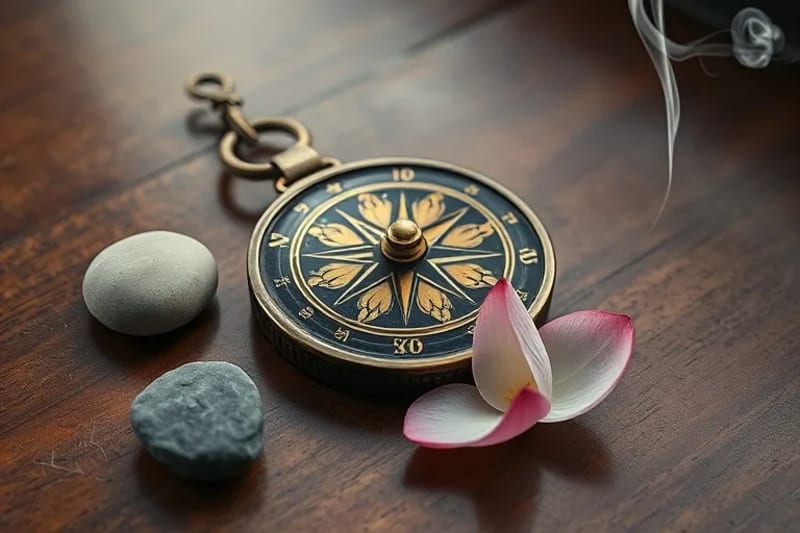
An antique Chinese compass guides the spiritual journey, surrounded by elements symbolizing peace and introspection.
Practical Applications for Personal Growth
Applying Chinese Zodiac wisdom to modern spiritual growth involves several practical steps. These applications move beyond mere prediction and into active self-cultivation and conscious living.
- Enhanced Self-Awareness: Use your zodiac animal and elemental traits as prompts for journaling or meditation. Reflect on how these characteristics manifest in your life, both positively and negatively. This can illuminate areas for spiritual development, such as cultivating patience for a Tiger or assertiveness for a Rabbit.
- Improved Relationships: Understand the zodiac signs of your loved ones, friends, and colleagues. Recognizing their inherent traits and elemental interactions can foster empathy, reduce conflict, and improve communication. For example, a Fire sign might need space to express passion, while a Water sign might need emotional depth.
- Career and Life Path Alignment: The zodiac can offer insights into suitable career paths and life choices that align with your natural talents. A Rat's resourcefulness might thrive in strategic roles, while a Horse's independence might prefer entrepreneurial ventures. This alignment leads to greater fulfillment and purpose.
- Mindfulness and Cyclical Living: Pay attention to the current zodiac year's energy and its elemental influence. Adjust your spiritual practices and goals accordingly. A year of the Earth Ox might call for grounding meditations and practical goal-setting, while a year of the Water Rabbit might encourage emotional healing and creative expression.
- Shadow Work and Integration: The negative traits associated with each animal can be viewed as shadow aspects. Instead of suppressing them, the zodiac provides a framework for acknowledging and integrating these parts of oneself. For instance, a Dragon's potential arrogance can be transformed into humble leadership through conscious effort.
Integrating these aspects allows for a more nuanced and compassionate approach to self-improvement. It moves beyond rigid self-help formulas and embraces a deeper, archetypal understanding of human nature, grounded in centuries of observation and wisdom.
Beyond Superficial Predictions: A Tool for Self-Reflection
It is crucial to approach the Chinese Zodiac not as a deterministic prophecy but as a sophisticated system for self-reflection and guidance. Reducing it to daily horoscopes or simplistic compatibility charts misses its profound potential for spiritual development. The true value lies in its ability to offer archetypal insights that can be consciously applied to one's life.
In modern spirituality, the emphasis is often on personal agency and co-creation. The Chinese Zodiac supports this by providing a map of inherent tendencies, not a fixed destiny. It empowers individuals to understand their starting point, recognize their innate potential, and consciously navigate their challenges. For example, knowing you are a Fire Horse might explain your restless energy, but it also empowers you to channel that energy into productive, passionate endeavors rather than allowing it to lead to impulsiveness.
Furthermore, the zodiac encourages a deeper connection to natural cycles and the flow of life. By observing the characteristics of each year, one can attune themselves to the prevailing energetic currents, making more informed decisions about when to initiate new projects, when to rest, or when to focus on specific areas of personal growth. This cyclical awareness fosters a sense of harmony with the universe, a core tenet of many spiritual traditions.
Conclusion: Harmonizing Ancient and Modern Paths
The Chinese Zodiac offers a rich and nuanced framework for enhancing modern spiritual practices. By integrating its ancestral wisdom, individuals can unlock deeper levels of self-awareness, improve their relationships, and align their life path with their authentic nature. It is a system that encourages introspection, adaptability, and a profound connection to the cyclical rhythms of existence.
In a world that often feels disconnected and fast-paced, turning to ancient traditions like the Chinese Zodiac can provide grounding and clarity. It reminds us that we are part of a larger cosmic dance, and by understanding our unique role within that dance, we can navigate life with greater purpose, peace, and spiritual fulfillment. Embracing this timeless wisdom is not about abandoning modernity, but about enriching it with the profound insights of the past, creating a more balanced and enlightened future.
Source: Hybrid content assisted by AIs and human editorial supervision.


Comments
Post a Comment