
Astro-Geology: Planetary Influences Earth's Geological Cycles
Astro-geology is an emerging interdisciplinary field that investigates the potential connections and influences between celestial mechanics, planetary alignments, and Earth's geological processes. While traditional geology primarily focuses on terrestrial forces, astro-geology extends its scope to consider how cosmic energies, gravitational pulls, and electromagnetic interactions from other celestial bodies might subtly, or even significantly, impact our planet's internal dynamics, seismic activity, volcanic eruptions, and even its intricate energy grids. This field seeks to bridge the gap between astrophysics and Earth sciences, exploring a holistic view of Earth as an integral part of a larger cosmic system.
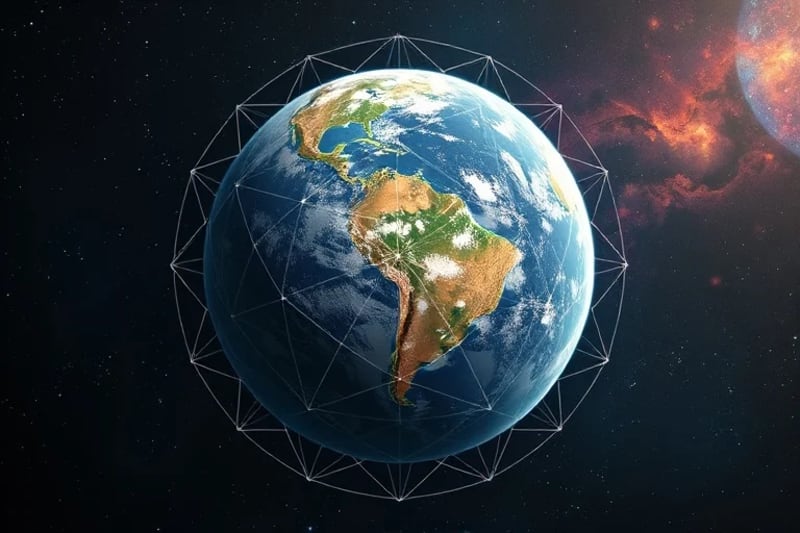
An artistic representation of Earth's geological cycles influenced by celestial mechanics and planetary energies.
The concept of celestial bodies influencing Earth is not new; ancient civilizations observed correlations between lunar cycles and tides, and solar activity with weather patterns. However, modern astro-geology delves deeper, employing advanced scientific methods and data analysis to explore more complex and subtle interactions. This includes examining gravitational resonances, electromagnetic fields, and the cumulative effects of planetary alignments that could potentially trigger or modulate geological events on Earth. The aim is to move beyond mere correlation to establish causal links, if they exist, and enhance our understanding of Earth's dynamic nature.
Table of Contents
- Historical Perspectives on Celestial-Terrestrial Links
- Gravitational Forces: Tides, Earthquakes, and Volcanism
- Planetary Alignments and Resonances: Subtle Influences
- Earth's Energy Grids: Ley Lines and Cosmic Interactions
- Geomagnetic Field, Solar Activity, and Seismic Events
- Lunar Cycles and Seismicity: The Moon's Geological Dance
- Planetary Rhythms and Long-Term Climate Shifts
- Scientific Scrutiny and Future Research Directions
Historical Perspectives on Celestial-Terrestrial Links
The idea that celestial bodies influence Earth is deeply rooted in ancient wisdom and early scientific observations. Civilizations across the globe, from the Babylonians to the Mayans, meticulously tracked planetary movements, often correlating them with terrestrial events like agricultural cycles, weather phenomena, and even societal shifts. While many of these correlations were observational and lacked a mechanistic explanation, they laid the groundwork for later scientific inquiry into the nature of cosmic influences.
Early astronomers and natural philosophers, including figures like Johannes Kepler, explored the concept of "celestial harmonies" and their potential impact on Earth. Although many of their theories were later refined or disproven, the fundamental curiosity about the interconnectedness of the cosmos and our planet persisted. The recognition of the Moon's gravitational pull on ocean tides was one of the earliest and most direct confirmations of a celestial body's tangible influence on Earth's systems, paving the way for more nuanced investigations.
Gravitational Forces: Tides, Earthquakes, and Volcanism
The most well-understood celestial influence on Earth's geology is gravity, primarily from the Moon and the Sun. These forces are responsible for oceanic tides, but they also exert subtle tidal stresses on the solid Earth, known as "solid Earth tides." These minute deformations can affect geological processes in ways that are still being fully understood. For instance, some research suggests a correlation between strong tidal forces and seismic activity.
Studies have explored whether peak tidal stresses, particularly during new and full moons when lunar and solar gravitational forces align, can trigger earthquakes or volcanic eruptions. While the effect is generally considered small, it might be sufficient to tip already stressed fault lines or volcanic systems into activity. This is especially true for shallow, low-magnitude earthquakes or for volcanoes that are already primed for eruption. The precise mechanisms are complex, involving factors like pore pressure changes in rocks and magma chamber dynamics.
A table summarizing the primary gravitational influences:
| Celestial Body | Primary Influence | Geological Impact |
|---|---|---|
| Moon | Gravitational pull, orbital cycles | Oceanic tides, solid Earth tides, potential trigger for shallow earthquakes and volcanic activity. |
| Sun | Gravitational pull, solar radiation | Contribution to tides, solar flares affecting geomagnetic field, potential indirect seismic effects. |
| Other Planets | Minor gravitational forces, orbital resonances | Hypothesized subtle influences on Earth's internal dynamics over long periods, still largely theoretical. |
Planetary Alignments and Resonances: Subtle Influences
Beyond the immediate gravitational effects of the Moon and Sun, astro-geology explores the more subtle influences of planetary alignments and orbital resonances. While the direct gravitational pull of distant planets on Earth is negligible, some theories propose that complex gravitational interactions or electromagnetic resonances during specific planetary configurations could have a cumulative effect on our planet. These effects are often hypothesized to manifest as minute changes in Earth's rotation, precession, or even the flow of magma within its mantle.
The concept of resonance is key here. Just as a small, repeated push can set a large swing in motion, subtle cosmic forces, if synchronized over long periods, might resonate with Earth's natural frequencies, potentially influencing geological processes. This area of study often overlaps with celestial mechanics, which examines the motion of celestial bodies and the forces acting upon them. While highly speculative and lacking definitive proof, the exploration of these subtle resonances represents a frontier in understanding cosmic interconnectedness.

An abstract digital painting illustrating the Earth's internal dynamics and the subtle influence of planetary orbits.
Earth's Energy Grids: Ley Lines and Cosmic Interactions
A fascinating aspect of astro-geology, particularly in its more esoteric and holistic interpretations, involves the concept of Earth's energy grids. These theoretical grids, often referred to as ley lines, Hartmann grids, or Curry grids, are believed to be invisible lines of energy that crisscross the planet, connecting ancient sites, sacred spaces, and areas of geological significance. Proponents suggest these grids act as conduits for telluric energy, which can be influenced by cosmic forces.
The idea is that planetary alignments and other celestial phenomena might modulate the flow and intensity of energy within these grids. This could, in turn, influence localized geological activity, biological processes, and even human consciousness. While mainstream science largely regards these energy grids as pseudoscientific, the study of geomagnetism and its effects on living systems provides a potential bridge for future research. Understanding the subtle interplay between cosmic energies and Earth's inherent energetic structures is a core tenet of this broader perspective.
Geomagnetic Field, Solar Activity, and Seismic Events
The Sun, our closest star, exerts a powerful and direct influence on Earth's geomagnetic field. Solar flares, coronal mass ejections (CMEs), and solar wind streams can cause geomagnetic storms, which are significant disturbances to Earth's magnetosphere. These events can disrupt communications, power grids, and even influence weather patterns. More controversially, some researchers propose a link between intense solar activity and seismic events.
The hypothesis suggests that changes in the geomagnetic field caused by solar storms could induce currents within Earth's crust, potentially affecting the stress on fault lines or altering the properties of rocks, thereby influencing earthquake occurrence. While direct causal links remain elusive and are subject to ongoing debate, studies have attempted to find correlations between periods of high solar activity and increased seismic frequency or magnitude. This area highlights the complex electromagnetic interactions between celestial bodies and Earth's geological systems. Further research on the impact of solar activity is crucial for a complete understanding.
Lunar Cycles and Seismicity: The Moon's Geological Dance
The Moon's gravitational influence on Earth is not limited to oceanic tides. As mentioned earlier, it also creates solid Earth tides, causing the planet's crust to bulge and recede by several centimeters. This constant deformation generates stress within the Earth's crust. Scientific investigations have long debated whether these lunar tidal stresses can act as a trigger for earthquakes and volcanic eruptions. While the overall tidal stress is small compared to the tectonic forces that build up strain in fault zones, it might be enough to initiate a rupture in an already critically stressed area.
Several studies have found weak, but statistically significant, correlations between specific lunar phases (e.g., new moon and full moon, when tidal forces are strongest) and an increase in certain types of seismic events, particularly shallow thrust earthquakes or events in specific geological settings like mid-ocean ridges. Other research, however, has found no such correlation or has attributed observed patterns to random chance. The scientific consensus is that while lunar tides do exert stress, their role as a primary trigger for major seismic events is limited, acting more as a minor modulating factor. Nonetheless, the precise mechanisms and conditions under which lunar tides might influence seismicity continue to be an active area of research in astro-geology and geophysics.
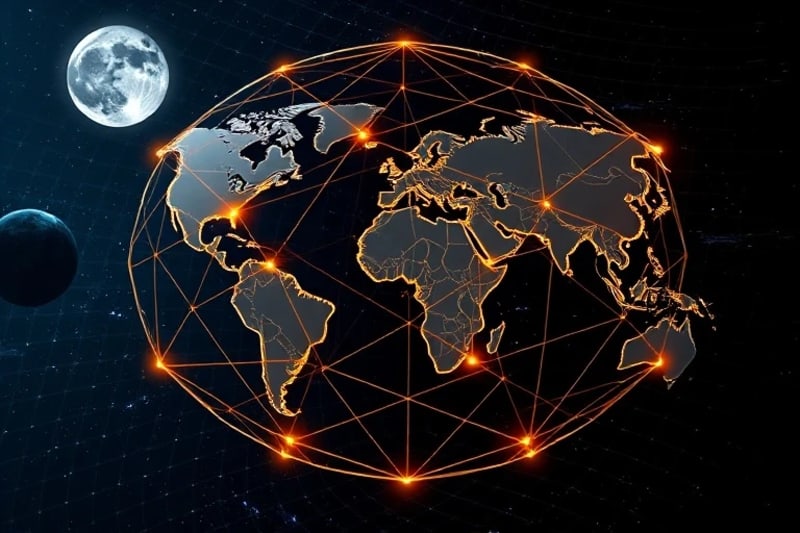
An intricate vector art representation of Earth's geometric energy grids, subtly influenced by celestial bodies.
Planetary Rhythms and Long-Term Climate Shifts
Beyond short-term seismic triggers, astro-geology also considers the potential for long-term planetary rhythms to influence Earth's climate and major geological cycles over millennia. These long-term cycles include variations in Earth's orbit, tilt, and wobble (Milankovitch cycles), which are primarily driven by gravitational interactions with other planets. It is well-established that these cycles play a significant role in glacial and interglacial periods, influencing global temperatures and sea levels.
Furthermore, some theories propose that the cumulative gravitational and electromagnetic effects of the outer planets, particularly Jupiter and Saturn, could subtly influence the Sun's activity or even Earth's internal heat engine over geological timescales. While these are complex and often controversial hypotheses, they highlight the potential for a deeper, more integrated understanding of Earth's place within the solar system. The study of planetary cycles and eco-spirituality often touches upon these long-term cosmic influences on our planet's health.
Scientific Scrutiny and Future Research Directions
Astro-geology, particularly its more speculative aspects concerning planetary alignments and energy grids, faces significant scientific scrutiny. The challenge lies in isolating subtle cosmic influences from the myriad of complex terrestrial forces that drive geological processes. Many proposed correlations often lack robust statistical significance or a clear physical mechanism that can be consistently replicated and verified.
However, the field is evolving with advancements in data collection, computational modeling, and interdisciplinary collaboration. Future research will likely focus on:
- High-Precision Geodetic Measurements: Utilizing satellite data and advanced sensors to detect minute changes in Earth's crustal deformation and gravity field in response to celestial events.
- Long-Term Data Analysis: Analyzing extensive historical records of seismic, volcanic, and geomagnetic activity alongside precise astronomical data to identify any statistically significant, non-random patterns.
- Electromagnetic Interaction Models: Developing sophisticated models to understand how solar and planetary electromagnetic fields might interact with Earth's ionosphere, magnetosphere, and even its internal structure.
- Laboratory Experiments: Simulating cosmic influences on rock properties under controlled laboratory conditions to identify potential physical mechanisms.
- Interdisciplinary Collaboration: Fostering greater collaboration between astrophysicists, geophysicists, seismologists, and climate scientists to approach these complex questions from multiple angles.
The goal is to move beyond anecdotal evidence and establish a rigorous scientific framework for understanding any genuine cosmic influences on Earth's geology, thereby expanding our comprehension of our planet's dynamic and interconnected existence within the solar system.
Source: Hybrid content assisted by AIs and human editorial supervision.


Comments
Post a Comment