
Ethical AI Predictive Astrology: Navigating Cosmic Guidance
The intersection of Artificial Intelligence (AI) and predictive astrology marks a pivotal moment in how humanity seeks cosmic guidance. As technology advances, AI offers unprecedented capabilities for processing vast datasets, identifying complex patterns, and generating insights with remarkable speed and scale. This evolution promises to transform the ancient practice of astrology, moving beyond traditional interpretations to potentially unlock deeper, more nuanced understandings of planetary influences and their correlation with human experience. However, this powerful convergence also introduces critical ethical considerations that demand careful navigation to ensure responsible and beneficial application.

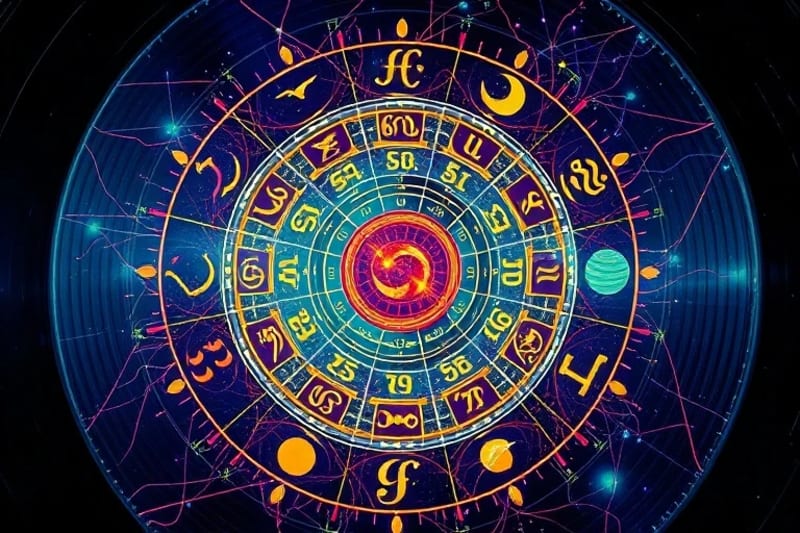
A futuristic control room where AI interfaces project complex astrological charts, illustrating the advanced integration of technology in cosmic guidance.
Predictive astrology, at its core, involves interpreting celestial movements to forecast potential trends, events, and individual experiences. Historically, this has been a labor-intensive process, relying on human astrologers' deep knowledge, intuition, and meticulous calculations. The introduction of AI systems, particularly machine learning algorithms, offers the potential to automate these calculations, analyze millions of birth charts, and correlate astrological configurations with real-world outcomes on an unprecedented scale. This could lead to more precise, personalized, and accessible astrological insights for a global audience.
Table of Contents
Benefits of AI in Predictive Astrology
The integration of AI into predictive astrology offers several compelling advantages that can enhance the practice and expand its reach. These benefits primarily stem from AI's capacity for advanced data processing, pattern recognition, and personalization, which can overcome many traditional limitations.
- Enhanced Accuracy and Precision: AI algorithms can analyze vast amounts of historical astrological data and correlate it with real-world events, potentially identifying patterns that are too subtle or complex for human observation alone. This can lead to more precise predictions and interpretations.
- Personalized Insights at Scale: Traditional astrology often involves one-on-one consultations. AI can generate highly personalized astrological reports and forecasts for millions of users simultaneously, making tailored guidance accessible to a much wider audience.
- Identification of Nuanced Correlations: Beyond basic planetary aspects, AI can explore intricate relationships between multiple celestial bodies, fixed stars, asteroids, and other astrological points, uncovering previously unrecognized influences. This deep dive into data can enrich astrological theory.
- Accessibility and Democratization: AI-powered astrological tools can lower the barrier to entry for individuals interested in their birth charts and future transits. This can democratize access to astrological knowledge, making it available to those who might not have access to or afford human astrologers.
- Research and Validation: AI provides a powerful research tool for astrologers. By analyzing large datasets, it can help validate existing astrological principles and identify areas where traditional interpretations might need refinement or re-evaluation based on empirical evidence.
These advantages highlight AI's potential to revolutionize predictive astrology, offering a future where cosmic insights are more accurate, personalized, and widely available. However, realizing this potential responsibly requires a deep understanding and proactive mitigation of the ethical challenges involved.
Ethical Challenges and Risks
While the benefits of AI in astrology are significant, the ethical landscape is complex and fraught with potential pitfalls. Addressing these challenges is paramount to ensuring that AI-driven astrological guidance remains a force for good and avoids unintended negative consequences.
A digital art piece depicting algorithmic data flowing into astrological symbols, overseen by a human silhouette, symbolizing ethical vigilance.
One of the primary concerns is **data bias**. AI models are only as good as the data they are trained on. If historical astrological data reflects societal biases (e.g., gender, race, socioeconomic status), the AI's predictions could inadvertently perpetuate or amplify these biases. This could lead to discriminatory or unfair interpretations, undermining the very purpose of personalized guidance.
**Privacy and data security** are also critical. Astrological readings often involve highly personal and sensitive information, including birth dates, times, and locations, which can be used to identify individuals. Storing and processing such data through AI systems raises concerns about potential breaches, misuse, or unauthorized access, necessitating robust security protocols and strict adherence to data protection regulations.
The question of **over-reliance and diminished human agency** is another significant ethical dilemma. If individuals become overly dependent on AI-generated astrological predictions, it could reduce their critical thinking, decision-making capabilities, and personal responsibility. Astrology is meant to be a tool for self-understanding and empowerment, not a definitive determinant of fate. AI's authoritative output might inadvertently encourage a passive approach to life.
Furthermore, the **lack of human intuition and empathy** in AI systems is a fundamental limitation. A human astrologer brings not only intellectual understanding but also emotional intelligence, compassion, and the ability to tailor advice to a client's unique emotional state and context. AI, by its nature, cannot replicate this nuanced human connection, which is often crucial for effective guidance, especially when dealing with sensitive life issues.
Finally, **accountability and transparency** are vital. When an AI system provides a prediction or interpretation that leads to negative outcomes for a user, who is responsible? Is it the developer, the data provider, or the user? The "black box" nature of some advanced AI models makes it difficult to understand how they arrive at their conclusions, hindering accountability and trust. Ensuring transparency in AI's astrological reasoning is essential for ethical deployment.
Framework for Ethical AI Astrology
To harness the power of AI in predictive astrology responsibly, a robust ethical framework is indispensable. This framework should be built upon principles that prioritize user well-being, data integrity, and human oversight.
**1. Transparency and Explainability:** AI systems used in astrology should strive for transparency. Users should understand how predictions are generated, what data sources are used, and the limitations of the AI model. Explainable AI (XAI) techniques can help demystify the "black box" and build trust.
**2. Data Integrity and Bias Mitigation:** Developers must rigorously vet astrological datasets for biases and actively implement strategies to mitigate them. This includes using diverse datasets, employing fairness-aware algorithms, and regularly auditing outputs for discriminatory patterns. Data anonymization and aggregation techniques can also protect individual privacy.
**3. User Consent and Privacy:** Explicit and informed user consent is non-negotiable for data collection and usage. Clear privacy policies outlining how personal astrological data is stored, processed, and protected must be easily accessible. Adherence to global data protection regulations like GDPR is crucial.
**4. Human Oversight and Intervention:** AI should serve as a tool to augment, not replace, human astrologers. A "human-in-the-loop" approach ensures that expert astrologers can review, refine, and contextualize AI-generated insights, adding the necessary intuition, empathy, and ethical judgment that AI lacks. This hybrid model combines efficiency with wisdom.
**5. Educational Emphasis and Empowerment:** AI astrological platforms should educate users about the nature of astrological predictions – that they offer probabilities and potentials, not deterministic fates. The emphasis should be on self-awareness, personal growth, and empowerment, encouraging users to use insights as a guide for conscious decision-making rather than passive acceptance.
**6. Continuous Auditing and Improvement:** Ethical AI in astrology is not a one-time achievement but an ongoing process. Regular audits of AI models for accuracy, fairness, and ethical compliance are essential. Feedback mechanisms should allow users to report concerns, fostering a continuous improvement cycle.

An abstract watercolor blending organic shapes and geometric lines, symbolizing the ethical balance between human intuition and AI precision.
Implementing these principles will create a foundation for ethical AI in predictive astrology, ensuring that technological innovation serves humanity's quest for cosmic understanding in a responsible and beneficial manner. The goal is to create tools that enhance wisdom, not diminish it.
The Future of Human-AI Collaboration
The most promising future for predictive astrology lies not in AI replacing human astrologers, but in a synergistic collaboration between them. This hybrid model leverages the strengths of both, creating a more powerful and ethically sound approach to cosmic guidance.
AI can handle the computational heavy lifting: processing vast amounts of data, identifying statistical correlations, and generating initial interpretations. This frees up human astrologers to focus on the nuanced, qualitative aspects of their practice—providing empathetic counseling, applying intuitive insights, and tailoring advice to the individual's unique life circumstances and emotional needs. The AI acts as a sophisticated assistant, providing a robust analytical foundation upon which human wisdom can build.
Consider a scenario where an AI system quickly processes a client's birth chart, current transits, and progressions, cross-referencing them with millions of historical data points to highlight significant patterns and potential future trends. This comprehensive report is then presented to a human astrologer. The astrologer, armed with this detailed analysis, can then engage with the client, offering personalized insights, discussing potential challenges and opportunities, and helping them navigate their path with greater clarity and self-awareness. This approach ensures that the depth of human understanding and the richness of personal connection remain central to the astrological experience.
Moreover, this collaboration can foster innovation within astrology itself. AI's ability to identify novel patterns and correlations can inspire new astrological theories and research questions, pushing the boundaries of the discipline. Human astrologers, in turn, can provide valuable feedback to AI developers, helping to refine algorithms and improve the ethical alignment of AI tools. This iterative process of development, application, and feedback will be crucial for the continuous evolution of ethical AI in predictive astrology.
Ultimately, the goal is to create a future where technology amplifies human wisdom, making astrological insights more accessible, accurate, and ethically sound. By embracing a collaborative model and adhering to a strong ethical framework, we can ensure that AI serves as a valuable ally in humanity's ongoing journey of self-discovery and cosmic understanding.
Frequently Asked Questions (FAQ)
| Question | Answer |
|---|---|
| Can AI truly replace human astrologers? | No, AI is best viewed as a powerful tool to augment human astrologers. It can handle complex calculations and data analysis, but it lacks the intuition, empathy, and nuanced understanding that human astrologers provide. |
| How does AI address bias in astrological predictions? | Ethical AI development requires rigorous auditing of training data for historical biases and implementing fairness-aware algorithms. Continuous monitoring and diverse datasets are crucial to mitigate bias. |
| Is my personal astrological data safe with AI systems? | Reputable AI astrology platforms must adhere to strict data privacy regulations (e.g., GDPR) and employ robust security measures to protect sensitive personal data. User consent and transparent policies are essential. |
| What is the main ethical concern with AI in astrology? | The primary ethical concerns include data bias, privacy issues, the potential for over-reliance on AI, and the absence of human intuition and empathy in algorithmic interpretations. |
Source: Hybrid content assisted by AIs and human editorial supervision.


Comments
Post a Comment