
Decumbiture Astrology: Illness, Recovery, Onset Analysis
Decumbiture astrology represents a specialized and ancient branch of astrological practice focused on understanding the nature, progression, and potential outcomes of an illness. Unlike general medical astrology, which might analyze a natal chart for predispositions, decumbiture astrology specifically casts a chart for the precise moment an individual falls ill or first experiences symptoms. This "moment of decumbiture" is considered a cosmic snapshot, offering profound insights into the patient's condition and the potential path to recovery or decline.
This intricate system, rooted in the Hellenistic and medieval traditions, treats the onset of sickness as a significant event, much like a birth. By meticulously analyzing the planetary positions, house placements, and aspects at that exact time, practitioners aim to discern the severity of the ailment, its likely duration, and the most probable course of recovery. It serves as a diagnostic and prognostic tool, offering a unique perspective that complements conventional medical understanding.
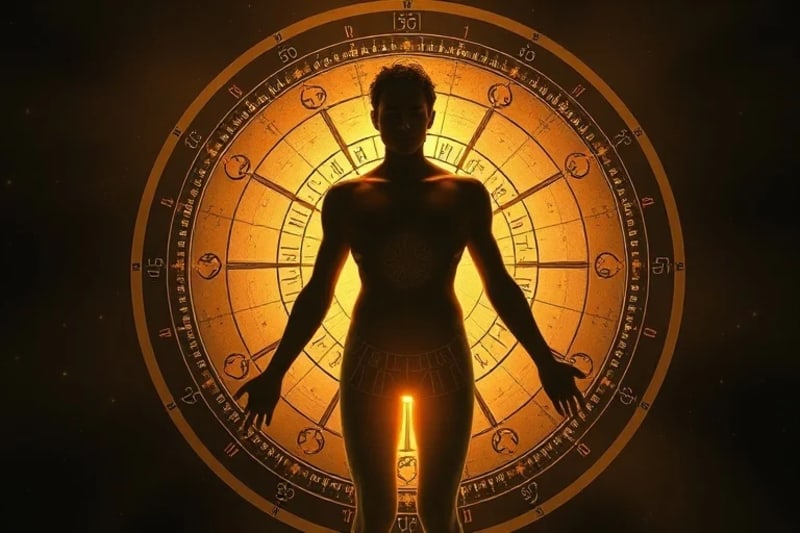
A celestial blueprint revealing the energetic patterns at the moment of illness onset.
The concept is built upon the premise that the cosmos reflects earthly events, and just as a natal chart describes an individual's life path, a decumbiture chart details the life cycle of an illness. Understanding this ancient art provides a fascinating glimpse into historical medical practices and the enduring human quest to comprehend health and disease through celestial influences.
Understanding Decumbiture Astrology's Core
Decumbiture astrology, derived from the Latin "decumbere" meaning "to lie down," is a specific application of horary astrology to medical questions. It involves casting an astrological chart for the precise moment a person becomes ill, takes to their bed, or first reports symptoms. This chart is then meticulously analyzed to understand the nature of the illness, its prognosis, and potential treatments.
The fundamental principle is that the celestial configuration at the moment of decumbiture encapsulates the entire trajectory of the illness. This includes its cause, the affected body parts, the severity, the duration, and whether the patient will recover fully, partially, or succumb to the disease. It's a highly detailed and technical form of astrological inquiry.
Practitioners of decumbiture astrology believe that the planets and signs correspond to specific organs, body systems, and types of diseases. For example, Mars might indicate fever or inflammation, while Saturn could point to chronic conditions or blockages. The houses of the chart further delineate the areas of life affected, with the 6th house being particularly relevant for acute illness.
Historical Foundations: From Antiquity to the Renaissance
The roots of decumbiture astrology stretch back to ancient civilizations, where medicine and astrology were often intertwined. Early Babylonian and Egyptian texts contain references to celestial influences on health. However, it was in Hellenistic Greece that medical astrology began to formalize, with figures like Hippocrates advocating for physicians to understand astronomy.
Claudius Ptolemy, in his seminal work "Tetrabiblos," laid much of the theoretical groundwork for medical astrology, connecting planets and signs to parts of the body and types of ailments. This knowledge was preserved and expanded upon by Arab scholars during the Islamic Golden Age, who further developed sophisticated techniques for medical prognostication.
During the European Middle Ages and Renaissance, decumbiture astrology reached its zenith. Physicians were often trained in astrology, and it was common practice to consult an astrological chart before diagnosing or treating a patient. Notable astrologers like Guido Bonatti and William Lilly dedicated significant portions of their work to medical questions, refining the rules for interpreting decumbiture charts.

Antique instruments used by ancient astrologers and physicians for celestial observations.
William Lilly's "Christian Astrology" (1647) remains a cornerstone text, providing detailed instructions on how to erect and interpret decumbiture charts. His methods, though complex, offered a structured approach to medical prognostication that was widely adopted. The decline of medical astrology began with the rise of the scientific revolution and the Enlightenment, which favored empirical observation over celestial correlation.
The Decumbiture Chart: A Snapshot of Illness Onset
Creating a decumbiture chart requires precise information: the exact date, time, and location when the patient first felt ill or took to their bed. This moment is crucial, as even a few minutes can significantly alter the Ascendant and house cusps, thereby changing the entire interpretation. Accuracy in timing is paramount for a reliable reading.
Once the chart is cast, it functions much like a horary chart. The Ascendant (the rising sign) and its ruling planet (the Lord of the Ascendant) represent the patient and their overall constitution. The Descendant (7th house cusp) and its ruler often symbolize the physician or the illness itself, depending on the context.
The houses of the chart are assigned specific meanings related to health and disease:
- 1st House: The patient's vitality, physical body, and general condition.
- 6th House: Acute illness, symptoms, specific ailments, and the nature of the disease.
- 8th House: Crisis, surgery, and potential for death or transformation.
- 12th House: Chronic illness, hidden diseases, hospitals, and confinement.
The planets within these houses, their aspects, and their essential dignities (strength or weakness in a sign) all contribute to the complex tapestry of the diagnosis. For instance, a strong, well-placed Lord of the Ascendant suggests a robust constitution and good chances of recovery, while a debilitated or afflicted one might indicate a more challenging prognosis.
Key Astrological Indicators in Decumbiture Analysis
Several astrological factors are paramount in a decumbiture chart analysis. The Moon is particularly significant, representing the body, its changes, and the course of the illness. Its condition—its sign, house, and aspects—can indicate the patient's comfort, the severity of symptoms, and the waxing or waning of the disease.
Planetary rulerships are also critical. Each planet is associated with specific body parts and types of ailments:
| Planet | Associated Body Parts | Associated Ailments |
|---|---|---|
| Sun | Heart, spine, eyes (right for men, left for women) | Fever, heart conditions, vitality issues |
| Moon | Stomach, breasts, lymph, fluids, eyes (left for men, right for women) | Edema, digestive issues, emotional disturbances |
| Mercury | Nervous system, lungs, hands, speech | Respiratory problems, anxiety, nervous disorders |
| Venus | Kidneys, throat, reproductive organs, skin | Kidney issues, venereal diseases, skin conditions |
| Mars | Muscles, blood, head, adrenal glands | Inflammation, fevers, cuts, accidents, acute pain |
| Jupiter | Liver, thighs, arterial system | Liver disorders, obesity, blood sugar imbalances |
| Saturn | Bones, teeth, skin, spleen, joints | Chronic diseases, arthritis, skin problems, depression |
Aspects between planets, especially to the Ascendant, Moon, and the rulers of the 1st and 6th houses, reveal the dynamics of the illness. Hard aspects (squares, oppositions) often indicate challenges and complications, while harmonious aspects (trines, sextiles) suggest easier recovery or less severe symptoms. Retrograde planets can imply a recurrence or a prolonged recovery. For more on planetary influences, explore planetary cycles and their impact.
Interpreting Illness Severity and Recovery Potential
Prognosis in decumbiture astrology is a complex process, weighing multiple factors. A strong, well-dignified Lord of the Ascendant, especially if it's in a favorable house (like the 1st, 10th, or 11th) and receives benevolent aspects, points towards a good recovery. Conversely, a debilitated or afflicted Lord of the Ascendant in a difficult house (6th, 8th, 12th) suggests a more serious condition.
The Moon's condition is equally vital. A fast-moving Moon applying to a benefic planet (Jupiter or Venus) indicates a quick recovery. If the Moon is void of course or applying to a malefic (Mars or Saturn) without intervention from a benefic, the prognosis can be more challenging. The Moon's phase also plays a role, with a waxing Moon sometimes indicating increasing symptoms and a waning Moon suggesting a decrease.

The ankh, an ancient symbol of life, representing the journey towards healing and renewed vitality.
Critical degrees, often found at the beginning or end of signs, can highlight moments of crisis or turning points in the illness. Fixed stars, if conjunct significant points in the chart, can also add layers of meaning to the prognosis, sometimes indicating sudden changes or specific types of afflictions. For deeper insights into these celestial markers, refer to our article on Fixed Stars and Arabic Parts.
The condition of the Lord of the 6th house (representing the illness) and its aspects to the Lord of the 1st house (the patient) are crucial. A strong, well-aspected Lord of the 6th can mean a potent illness, while a weak one might suggest a less formidable foe. The interaction between these rulers often dictates the battle between the patient and the disease.
Decumbiture Astrology vs. General Medical Astrology
While both decumbiture astrology and general medical astrology fall under the umbrella of health-related astrological practices, they differ significantly in their approach and application. General medical astrology typically involves analyzing an individual's natal chart to identify predispositions to certain health conditions, constitutional strengths and weaknesses, and general patterns of wellness throughout life.
The natal chart can reveal inherent vulnerabilities, such as a weak digestive system or a tendency towards respiratory issues, based on planetary placements and aspects at birth. It provides a broad overview of health potential and challenges, often used for preventative measures or understanding chronic patterns. For example, a prominent Saturn in the 6th house of a natal chart might suggest a lifelong struggle with chronic illness or structural issues.
Decumbiture astrology, on the other hand, is highly specific and event-oriented. It doesn't look at lifelong patterns but rather focuses intensely on a singular event: the onset of an illness. Its purpose is to answer immediate questions about an existing condition, such as "Will this fever pass quickly?" or "What is the nature of this sudden pain?". It's a snapshot, providing acute diagnostic and prognostic information.
The key distinction lies in the timing of the chart. Natal medical astrology uses the birth chart, a static representation of an individual's inherent nature. Decumbiture astrology uses a dynamic chart, erected for the precise moment of illness, making it a form of horary astrology applied to health. This allows for very specific and time-sensitive predictions about the illness itself, rather than the patient's general health profile.
Modern Perspectives and Ethical Practice
In contemporary society, decumbiture astrology is not recognized as a scientific medical practice. However, it continues to be studied and practiced by a niche community of astrologers and holistic practitioners. Its value today is often seen in its ability to offer a complementary perspective, providing insights into the energetic and symbolic dimensions of illness that conventional medicine might overlook.
Ethical practice in decumbiture astrology is paramount. Practitioners must emphasize that astrological readings are not a substitute for professional medical diagnosis or treatment. It should be presented as a tool for self-understanding, spiritual insight, or as a complementary approach to wellness, rather than a definitive medical prognosis.
For individuals interested in integrating astrological insights into their health journey, decumbiture charts can offer a unique framework for understanding the timing and nature of health challenges. It can empower individuals to engage more deeply with their healing process by understanding potential energetic influences. This holistic approach aligns with broader trends in wellness that seek to understand the interconnectedness of mind, body, and spirit.
The study of decumbiture astrology also serves as a historical bridge, connecting us to the medical wisdom of past eras. It reminds us that for centuries, humanity looked to the stars not just for spiritual guidance, but also for practical solutions to earthly problems, including health and disease. For further exploration of advanced astrological techniques, consider reading about Uranian Astrology.
Limitations and Complementary Approaches
Despite its historical significance and intricate methodology, decumbiture astrology has inherent limitations. Its predictions are based on symbolic correlations and historical observations, not on empirical scientific evidence. Therefore, it cannot and should not replace modern medical diagnostics, treatments, or professional medical advice.
One major challenge is the precise timing of illness onset. In many cases, symptoms develop gradually, or the exact moment of "taking to bed" is ambiguous. This can lead to inaccuracies in chart erection and, consequently, in interpretation. Modern medicine, with its advanced diagnostic tools, offers a level of precision that astrology cannot provide for physical ailments.
However, decumbiture astrology can be viewed as a valuable complementary tool within a broader holistic health framework. It can be used alongside other alternative therapies, such as herbal medicine, acupuncture, or energy healing, to gain a multi-faceted understanding of a patient's condition. It offers a unique lens through which to consider the energetic and symbolic underpinnings of health challenges.
For example, if a decumbiture chart points to a strong Saturnian influence on a chronic condition, it might encourage a patient to focus on long-term, disciplined approaches to healing, such as dietary changes or consistent physical therapy, aligning with Saturn's themes of structure and endurance. It's about enriching the healing journey, not replacing it.
Ultimately, the most responsible approach to health involves integrating the best of conventional medicine with appropriate complementary practices. Decumbiture astrology, when used ethically and with a clear understanding of its scope, can add a layer of personal insight and historical wisdom to the complex narrative of human health and recovery.
Fuente: Contenido híbrido asistido por IAs y supervisión editorial humana.


Comments
Post a Comment