
Feng Shui Modern Living: Align Home Energy Chinese Zodiac
In our fast-paced modern world, finding sanctuaries of peace and balance within our homes has become more crucial than ever. Feng Shui, an ancient Chinese art and science, offers a profound framework for achieving this harmony by aligning our living spaces with natural energy flows. While often associated with intricate rules and traditional aesthetics, Feng Shui can be seamlessly integrated into contemporary design, creating environments that not only look good but also feel right.
This comprehensive guide explores how to apply Feng Shui principles to modern living, with a unique focus on harmonizing your home's energy with your individual Chinese Zodiac element. By understanding your elemental nature and its corresponding needs, you can transform your dwelling into a personal haven that supports your well-being, prosperity, and overall life goals. We will delve into the core tenets of Feng Shui, help you discover your elemental affinity, and provide practical, actionable advice for each of the five Chinese Zodiac elements: Wood, Fire, Earth, Metal, and Water.

A modern living space designed with Feng Shui principles, emphasizing natural light and balanced elements for a serene environment.
Table of Contents
- Understanding Feng Shui in the Modern Home
- Discover Your Chinese Zodiac Element
- Wood Element: Enhancing Growth and Vitality
- Fire Element: Igniting Passion and Recognition
- Earth Element: Cultivating Stability and Nurturing
- Metal Element: Fostering Clarity and Precision
- Water Element: Inviting Flow and Wisdom
- Integrating Feng Shui Principles for Holistic Harmony
- Common Misconceptions and Practical Tips
- Conclusion: Your Harmonious Home, Your Aligned Self
Understanding Feng Shui in the Modern Home
Feng Shui, literally translating to "wind-water," is an ancient Chinese philosophical system of harmonizing everyone with their surrounding environment. It's about arranging buildings, objects, and spaces to achieve harmony and balance, ultimately influencing health, wealth, and relationships. The core principle revolves around "Chi" (or Qi), the invisible life force energy that flows through everything.
In a modern context, Feng Shui isn't about rigid adherence to ancient rules but rather adapting its wisdom to contemporary living. It encourages conscious design choices that promote positive energy flow, reduce clutter, enhance natural light, and incorporate elements that resonate with nature. This approach transforms a house into a home that nurtures its inhabitants, regardless of architectural style or location.
The practice is deeply rooted in the concept of Yin and Yang, representing complementary forces, and the Five Elements theory (Wood, Fire, Earth, Metal, Water), which describes the interactions and transformations of energy. By understanding these fundamental principles, we can create spaces that support our personal energy and intentions, fostering a sense of well-being and prosperity in our daily lives.
Discover Your Chinese Zodiac Element
The Chinese Zodiac, or Sheng Xiao, is a repeating cycle of 12 years, with each year represented by an animal and associated with one of the five elements. Your birth year determines your animal sign and, crucially for Feng Shui, your primary elemental affinity. This element provides insights into your personality, strengths, and the types of energies that best support you.
To find your Chinese Zodiac element, you typically look at the last digit of your birth year. It's important to note that the Chinese New Year falls between late January and mid-February, so if you were born in January or early February, you might belong to the previous year's zodiac sign and element. For instance, if you were born in January 1981, your element would be Metal, not Wood.
Here's a quick guide to determine your element based on the last digit of your birth year:
| Last Digit of Birth Year | Associated Element | Key Characteristics |
|---|---|---|
| 0 or 1 | Metal | Strong, determined, precise, organized |
| 2 or 3 | Water | Adaptable, intuitive, communicative, reflective |
| 4 or 5 | Wood | Creative, ambitious, growth-oriented, flexible |
| 6 or 7 | Fire | Passionate, energetic, leadership, dynamic |
| 8 or 9 | Earth | Stable, practical, nurturing, reliable |
Wood Element: Enhancing Growth and Vitality
Individuals with the Wood element are often characterized by their creativity, ambition, and a strong desire for growth and expansion. They are natural innovators and problem-solvers, always looking to move forward. To support this vibrant energy, your home environment should reflect and nurture these qualities, promoting vitality and continuous development.

Conceptual representation of the Wood element, focusing on organic shapes and vibrant greens.
For Wood element individuals, incorporating natural elements and promoting clear, unobstructed pathways is key. Think about bringing the outdoors in. Plants are your best friends; choose vibrant, leafy plants that symbolize growth. Avoid spiky or thorny plants, as they can create aggressive energy. Wood furniture, especially in light or natural finishes, is also highly beneficial.
Key Feng Shui recommendations for Wood element:
- Colors: Greens and blues, representing nature and water (which nourishes wood).
- Materials: Wood, bamboo, cotton, linen, natural fibers.
- Shapes: Rectangular, columnar shapes, symbolizing trees and growth.
- Directions: East and Southeast, associated with growth and new beginnings.
- Decor: Artwork depicting landscapes, forests, or abstract patterns with upward movement. Avoid excessive metal or sharp objects that can "cut" wood energy.
Fire Element: Igniting Passion and Recognition
Fire element individuals are known for their passion, energy, charisma, and leadership qualities. They are dynamic, enthusiastic, and often seek recognition and excitement. To support their fiery nature, the home environment should inspire and energize, but also provide spaces for rest to prevent burnout.
Incorporating elements that symbolize light, warmth, and vibrancy is crucial. This doesn't mean overwhelming your space with red, but rather using strategic accents. Good lighting is paramount, especially natural light. Candles, fireplaces, or even well-placed lamps can enhance the fire energy. Ensure there's a balance, as too much fire can lead to restlessness or aggression.
Key Feng Shui recommendations for Fire element:
- Colors: Reds, oranges, purples, and vibrant yellows.
- Materials: Leather, wool, synthetic fabrics, and items with a glossy finish.
- Shapes: Triangular, conical, or pointed shapes.
- Directions: South, associated with fame and recognition.
- Decor: Artwork with dynamic scenes, images of the sun, or abstract art with fiery colors. Use mirrors to expand light, but place them carefully to avoid reflecting negative energy.
Earth Element: Cultivating Stability and Nurturing
Earth element individuals are typically grounded, practical, reliable, and nurturing. They value stability, security, and comfort, often acting as anchors for those around them. Their ideal home environment should reflect these qualities, offering a sense of safety, warmth, and steadfastness.
Focus on creating a cozy, inviting atmosphere with sturdy furniture and earthy tones. Ceramic and stone elements are excellent for enhancing earth energy. Clutter should be minimized, as it can disrupt the sense of order and stability that Earth individuals crave. Comfortable seating arrangements and soft textiles will also contribute to a nurturing environment.
Key Feng Shui recommendations for Earth element:
- Colors: Earth tones like browns, yellows, beige, and terracotta.
- Materials: Ceramics, pottery, stone, brick, heavy fabrics.
- Shapes: Square and rectangular shapes.
- Directions: Southwest and Northeast, associated with relationships and knowledge.
- Decor: Landscape paintings with mountains or fields, sturdy and comfortable furniture, soft rugs, and cushions. Avoid excessive wood elements that can "deplete" earth energy.
Metal Element: Fostering Clarity and Precision
Metal element individuals are often characterized by their strong sense of organization, precision, clarity, and determination. They are analytical, efficient, and appreciate structure and order. Their ideal home environment should be clean, uncluttered, and conducive to focus and intellectual pursuits.
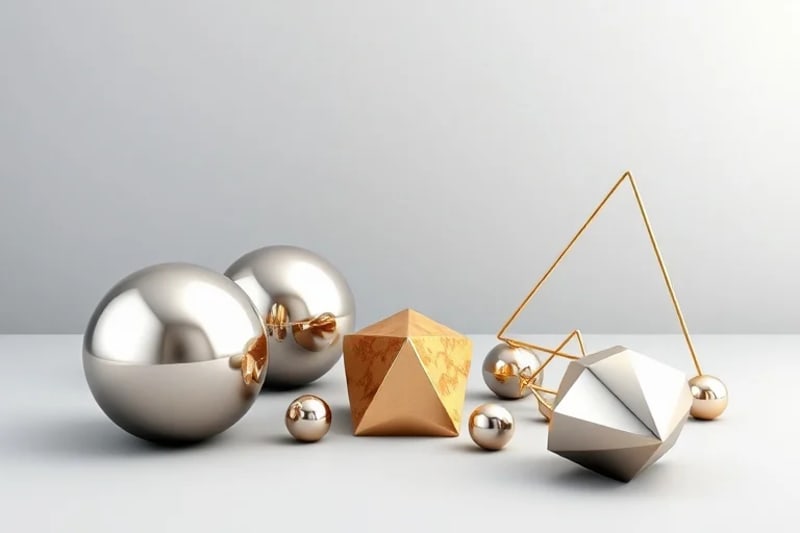
A conceptual artwork depicting the Metal element through geometric forms and reflective surfaces.
Focus on minimalist design, clean lines, and metallic accents. Decluttering is paramount for Metal types, as a messy environment can hinder their ability to think clearly. Incorporate elements that reflect light and create a sense of spaciousness. Good ventilation and air quality are also important for maintaining clear energy.
Key Feng Shui recommendations for Metal element:
- Colors: Whites, grays, silvers, and metallic tones.
- Materials: Metal (steel, iron, brass), glass, marble.
- Shapes: Circular, spherical, and arched shapes.
- Directions: West and Northwest, associated with creativity and helpful people.
- Decor: Minimalist art, sculptures, clocks, and items that sparkle or reflect light. Avoid excessive fire elements that can "melt" metal energy.
Water Element: Inviting Flow and Wisdom
Water element individuals are often intuitive, adaptable, wise, and deeply communicative. They thrive on flow, reflection, and emotional depth. Their ideal home environment should be calming, serene, and allow for introspection and emotional expression, promoting a sense of peace and fluidity.
Incorporating elements that symbolize water, such as mirrors, glass, and actual water features, is highly beneficial. Blues and blacks are key colors. Ensure that pathways are clear and unobstructed, mimicking the natural flow of water. Soft lighting and comfortable, flowing fabrics can also enhance the water energy, creating a tranquil atmosphere.
Key Feng Shui recommendations for Water element:
- Colors: Blues, blacks, and deep grays.
- Materials: Glass, crystals, mirrors, silk, flowing fabrics.
- Shapes: Wavy, undulating, and irregular shapes.
- Directions: North, associated with career and life path.
- Decor: Water features (fountains, aquariums), artwork depicting oceans, rivers, or abstract blue patterns. Avoid excessive earth elements that can "dam" water energy.
Integrating Feng Shui Principles for Holistic Harmony
Beyond aligning with your specific Chinese Zodiac element, several universal Feng Shui principles can enhance harmony in any modern home. These practices create a foundation for positive energy flow, supporting everyone in the household.
- Declutter Regularly: Clutter creates stagnant energy, blocking flow and opportunities. Regularly clear out unused items, organize spaces, and maintain a tidy environment. This is perhaps the most fundamental Feng Shui practice for modern living.
- Maximize Natural Light: Abundant natural light brings vibrant Chi into a space. Keep windows clean and unobstructed. Use sheer curtains or blinds that allow light to filter in. In areas with less natural light, strategically placed mirrors can help amplify it.
- Ensure Good Air Quality: Fresh, circulating air is vital for healthy Chi. Open windows regularly, use air purifiers, and consider incorporating air-purifying plants. Stagnant air can lead to sluggishness and poor health.
- Balance the Five Elements: Even if you emphasize your personal element, maintaining a balance of all five elements (Wood, Fire, Earth, Metal, Water) in your home is crucial. For example, a room dominated by metal might benefit from a touch of water (a small fountain) to soften its energy.
- Create Clear Pathways: Ensure that the main walkways and entrances in your home are clear and easy to navigate. This allows Chi to flow smoothly throughout the space, bringing opportunities and positive energy.
- Use the Bagua Map: The Bagua is a Feng Shui energy map that divides your home into nine areas, each corresponding to a different life aspect (wealth, health, relationships, etc.). You can overlay this map onto your home's floor plan to identify areas that need attention and apply specific elemental enhancements.
- Repair and Maintain: Broken items, leaky faucets, or peeling paint symbolize neglect and can drain energy. Promptly repair anything that is broken or in disrepair to maintain a healthy and vibrant home environment.
By consciously applying these general principles alongside your personalized elemental adjustments, you can create a home that is truly a sanctuary, supporting your aspirations and fostering a deep sense of peace and well-being.
Common Misconceptions and Practical Tips
Feng Shui, like many ancient practices, can sometimes be misunderstood or seem overly complex. Addressing common misconceptions and offering practical tips can make its application more accessible and effective for modern homeowners.
Misconceptions:
- It's only for specific cultures or aesthetics: Feng Shui principles are universal energy guidelines that can be applied to any architectural style or cultural context, from minimalist modern to rustic farmhouse.
- You need to buy expensive "cures": While some traditional Feng Shui items exist, the most powerful "cures" are often simple adjustments like decluttering, repositioning furniture, or adding plants and mirrors.
- It's instant magic: Feng Shui is a continuous process of observation, adjustment, and intention. Its effects accumulate over time, fostering gradual improvements in your environment and life.
- It's superstition: At its core, Feng Shui is about creating environments that support human well-being by optimizing natural light, air flow, and spatial arrangement, which are scientifically proven to impact mood and health.
Practical Tips for Modern Application:
- Start Small: Don't try to overhaul your entire home at once. Begin with one room or one specific area that feels stagnant or problematic.
- Trust Your Intuition: While guidelines are helpful, your personal comfort and feeling in a space are paramount. If something doesn't feel right, adjust it.
- Focus on Intent: When making changes, do so with a clear intention. For example, if you're adding a water feature, intend for it to bring abundance and calm.
- Keep it Clean and Organized: This cannot be stressed enough. A clean, organized home is the foundation for good Feng Shui, regardless of your element.
- Bring in Nature: Incorporate natural elements like plants, flowers, wood, stone, and natural light. These connect us to the earth's energy and promote vitality.
- Avoid Sharp Corners: Sharp corners or objects pointing directly at seating areas can create "sha chi" or negative energy. Soften them with plants, fabrics, or by repositioning furniture.
Conclusion: Your Harmonious Home, Your Aligned Self
Integrating Feng Shui with your Chinese Zodiac element offers a powerful and personalized approach to creating a home that truly supports your life. By understanding the unique energetic needs of your elemental nature—be it the growth of Wood, the passion of Fire, the stability of Earth, the clarity of Metal, or the flow of Water—you can make informed design choices that resonate deeply with your inner self.
Modern Feng Shui is not about rigid rules but about conscious living and thoughtful design. It empowers you to transform your living space into a dynamic reflection of your aspirations, a place where positive energy flows freely, fostering well-being, productivity, and peace. Embrace these ancient principles with a modern mindset, and unlock the full potential of your home to enhance every aspect of your life.
Fuente: Contenido híbrido asistido por IAs y supervisión editorial humana.


Comments
Post a Comment