
Egyptian Astrology: Deciphering Decans, Planetary Deities
Egyptian Astrology: Deciphering the Decans and Planetary Deities
Ancient Egypt, a civilization renowned for its profound wisdom and mystical traditions, developed a sophisticated astrological system that influenced subsequent cultures. Unlike the more commonly known Hellenistic or Babylonian models, Egyptian astrology was deeply intertwined with their religious beliefs, cosmology, and the cycles of the Nile. At its core lay the concept of the decans, 36 star groups that divided the zodiac, each linked to specific deities and influencing fate and fortune.
This ancient practice was not merely about predicting events; it was a comprehensive framework for understanding the human condition, health, and the divine will. By examining the positions of celestial bodies and the rising of specific decans, Egyptian priests and astrologers sought to interpret the cosmic blueprint that governed life on Earth. This article will delve into the fascinating world of Egyptian astrology, exploring its unique structure, the significance of the decans, and the roles of the powerful planetary deities.
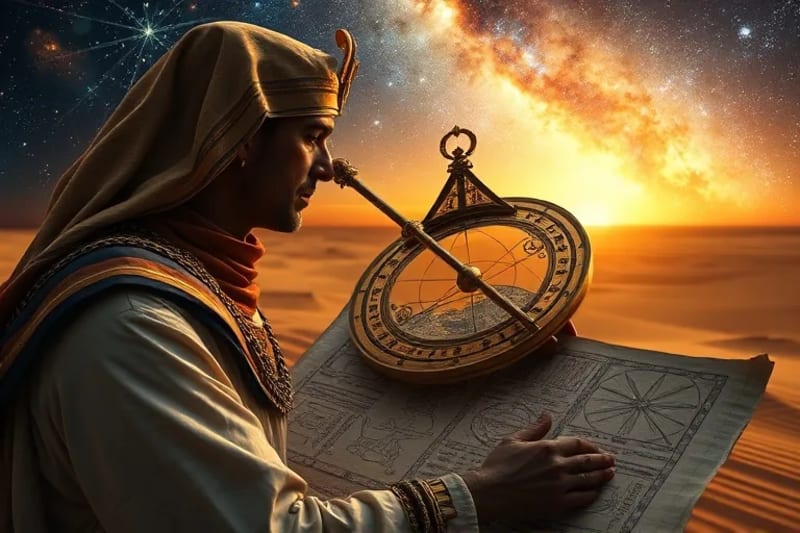
An ancient astronomer meticulously charts the heavens, revealing the profound connection between Egyptian wisdom and celestial mechanics.
Table of Contents
- Origins and Evolution of Egyptian Astrology
- The Decans: Cosmic Divisions of Time
- Planetary Deities and Their Divine Influences
- Interpreting Egyptian Birth Charts
- Medical Astrology and the Healing Arts
- Legacy and Modern Relevance
Origins and Evolution of Egyptian Astrology
The roots of Egyptian astrology can be traced back to the Old Kingdom, though its more structured form, particularly concerning the decans, developed significantly during the Middle Kingdom. Initially, Egyptian astronomy was primarily concerned with timekeeping, calendar regulation, and predicting the annual flooding of the Nile, which was crucial for agriculture and survival. The heliacal rising of Sirius (Sopdet) was a pivotal event, marking the New Year and foretelling the inundation.
Over time, these observations evolved into a complex system of celestial prognostication. Unlike Babylonian astrology, which focused heavily on planetary movements and omens, Egyptian astrology placed a strong emphasis on the fixed stars, particularly the decans. These star groups were used to mark the hours of the night and later became associated with specific influences on human destiny and health. The interaction with Hellenistic and Roman cultures during the Ptolemaic and Roman periods further integrated planetary rulerships and zodiacal signs into the existing Egyptian framework, creating a unique syncretic system.
Evidence of this astrological tradition can be found in tomb paintings, temple ceilings, and papyri, such as the famous Dendera Zodiac. These artifacts illustrate the intricate connections between the heavens, the pharaohs, and the daily lives of the Egyptian people. The priests, who were often also astronomers and physicians, were the custodians of this sacred knowledge, using it to advise rulers, guide rituals, and diagnose ailments. For a deeper understanding of ancient cosmic interpretations, explore Tarot Quantum Mechanics Intersecting Divination Reality.
The Decans: Cosmic Divisions of Time
The decans are arguably the most distinctive feature of Egyptian astrology. They are 36 groups of stars, each rising consecutively above the horizon for about ten days, marking the passage of time. These "ten-day stars" effectively divided the 360-degree zodiac into 36 segments of 10 degrees each, forming the basis of the Egyptian calendar and astrological calculations. Each decan was believed to have its own unique character, influence, and associated deity.
The rising of a particular decan at dawn (its heliacal rising) was considered highly significant. It was thought to imbue individuals born under its influence with specific personality traits, talents, and even predispositions to certain illnesses. Decans were also crucial in determining auspicious times for various activities, from agricultural tasks to religious ceremonies. They served as a celestial clock, guiding both the mundane and the sacred aspects of Egyptian life.
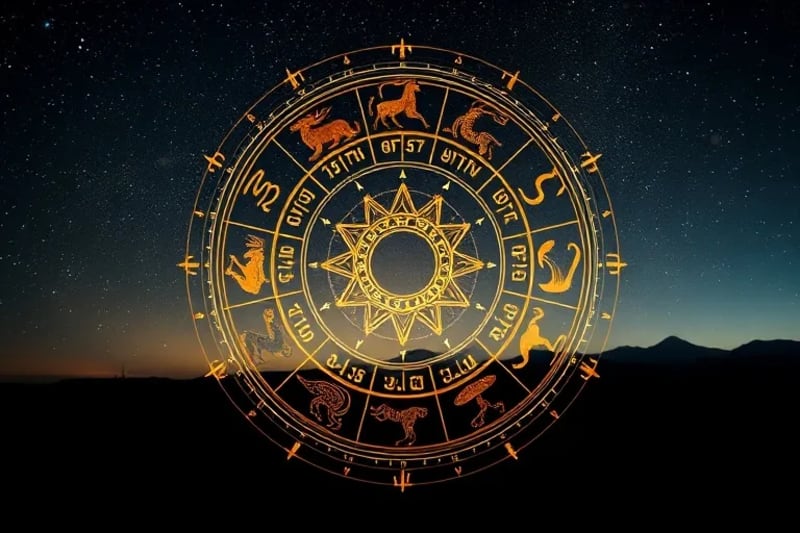
A visual representation of the 36 decans, each a cosmic gate influencing destiny and time.
The association of decans with specific deities provided a rich mythological layer to their astrological interpretations. For example, some decans were linked to protective deities, offering good fortune, while others might be associated with challenging gods, indicating periods of struggle or transformation. This intricate system allowed for highly nuanced readings of an individual's potential and life path, far beyond simple sun sign interpretations. The concept of planetary cycles also plays a role in understanding these influences; learn more about planetary cycles and numerology.
Each decan had a name, often derived from a star or constellation within its boundaries, and was sometimes depicted with specific iconography on astrological ceilings. These images were not merely decorative but served as mnemonic devices for the priests who interpreted their meanings. The decans were also integral to the "Decanal Clock," a method for telling time at night by observing which decan rose at a particular hour. This practical application underscores the deep integration of astrology into daily Egyptian life.
Planetary Deities and Their Divine Influences
While the decans were primary, the Egyptians also recognized the influence of the planets, associating them with their pantheon of powerful deities. These planetary deities were believed to exert specific influences based on their positions in the sky. The syncretism with Hellenistic astrology further solidified these associations, but the core Egyptian understanding predated these foreign influences.
- The Sun (Ra): As the supreme creator god, Ra was naturally associated with the Sun. His influence brought vitality, power, kingship, and creative energy. Individuals strongly influenced by Ra were seen as leaders, radiant, and possessing a strong life force.
- The Moon (Thoth/Isis): The Moon had dual associations. Thoth, the god of wisdom, writing, and magic, was often linked to the Moon's intellectual and mystical aspects. Isis, the great mother goddess, represented the Moon's nurturing, emotional, and magical qualities, especially in later periods.
- Mercury (Thoth): Given Thoth's role as a divine scribe and messenger, Mercury, the fastest-moving planet, was a natural fit. Thoth's influence bestowed intelligence, communication skills, and an aptitude for learning and magic.
- Venus (Hathor): Hathor, the goddess of love, beauty, music, and joy, was the primary deity associated with Venus. Her influence brought charm, artistic talent, sensuality, and a love for pleasure and harmony.
- Mars (Horus/Set): The red planet Mars was often linked to Horus, the falcon-headed god of kingship and war, embodying courage, protection, and aggressive action. However, in some contexts, Set, the god of chaos and storms, also represented Mars' more destructive and forceful aspects.
- Jupiter (Amun/Osiris): Jupiter, the largest planet, was associated with powerful deities like Amun, the king of the gods, or Osiris, the god of the underworld and rebirth. Its influence signified expansion, prosperity, justice, wisdom, and spiritual growth.
- Saturn (Geb/Nephthys): Saturn, the outermost visible planet, was sometimes linked to Geb, the earth god, representing structure, stability, and limitations. Nephthys, a goddess associated with death and protection, also held a connection, signifying boundaries and the deeper, often hidden, aspects of existence.
These divine associations provided a rich tapestry for interpreting planetary positions within a birth chart. An individual born with Venus in a prominent position, for instance, might be seen as blessed by Hathor, destined for a life filled with love and beauty. The interplay between these planetary deities and the decans created a complex and deeply meaningful astrological system. Understanding these ancient systems can also shed light on hermetic principles in natal chart interpretation.
Interpreting Egyptian Birth Charts
While the concept of a "birth chart" as we know it from Hellenistic astrology was adopted later, the Egyptians had their own methods of divining an individual's destiny based on their birth time. The rising decan at the moment of birth, along with the positions of the planets and their associated deities, formed the core of their astrological assessment. This was not a static reading but often involved a dynamic understanding of how these influences would unfold throughout a person's life.
The interpretation would consider:
- The Decan of Birth: This was paramount, indicating fundamental personality traits, strengths, weaknesses, and potential life challenges. Each decan had a specific "nature" and associated magical or protective properties.
- Planetary Rulerships: The deity associated with the planet ruling the birth decan, or planets in significant positions, would highlight dominant themes in the individual's life.
- Lunar Phases: The phase of the Moon at birth was also important, influencing emotional temperament and connection to the divine feminine or masculine principles.
- Heliacal Risings: The heliacal rising of other significant stars or constellations around the time of birth could add further layers of meaning, often related to specific events or talents.
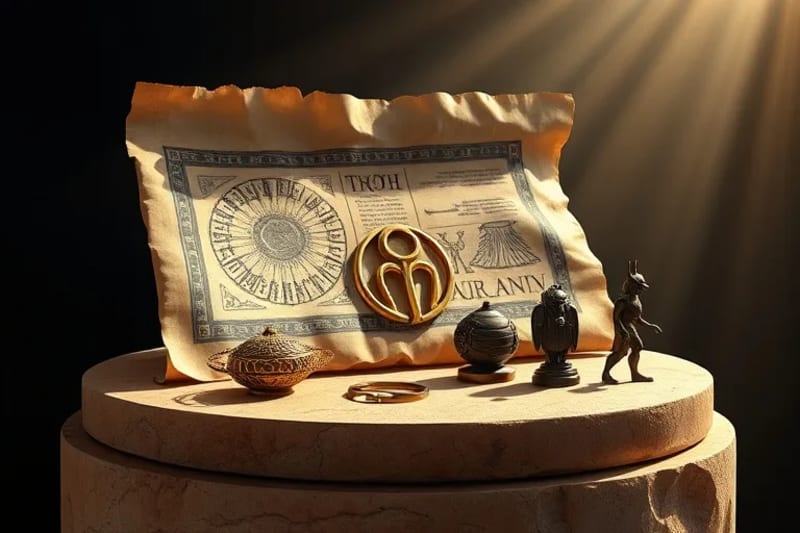
Ancient artifacts come to life, symbolizing the profound connection between Egyptian deities and celestial bodies.
Unlike modern astrology's focus on individual psychology, Egyptian astrology often served a more practical and communal purpose. It guided decisions for the pharaoh, ensured the prosperity of the kingdom, and provided comfort and direction to individuals navigating their earthly journey. The concept of "fated events" was strong, yet there was also an understanding of free will within the divine plan, particularly through rituals and offerings to appease or align with the deities. The integration of cosmic influences into personal destiny is a recurring theme in esoteric studies, including the exploration of quantum entanglement and esoteric synchronicity.
Medical Astrology and the Healing Arts
One of the most fascinating applications of Egyptian astrology was in the realm of medicine. Egyptian physicians, often priests themselves, integrated astrological principles into their diagnostic and healing practices. Each decan was associated not only with personality traits but also with specific body parts, organs, and potential ailments. This allowed for a form of medical astrology that sought to identify predispositions to illness based on an individual's birth chart and the current celestial configurations.
For instance, if a particular decan linked to the stomach was afflicted by challenging planetary influences at birth or during a transit, a physician might anticipate digestive issues. Treatment would then involve not only herbal remedies and surgical procedures but also rituals and prayers directed at the deities associated with the affected decan or planet. This holistic approach viewed health as a balance between the physical, spiritual, and cosmic realms.
The Ebers Papyrus, one of the oldest and most comprehensive medical texts, contains references that suggest an awareness of these astrological connections to health. The timing of medical treatments, the gathering of medicinal herbs, and even the performance of surgeries were often guided by astrological considerations to ensure the most favorable outcome. This sophisticated integration highlights the Egyptians' deep understanding of the interconnectedness of all things, from the stars to the human body.
"The physician knows the secrets of the sky, for the stars guide his hand and the decans reveal the body's hidden truths."
- Ancient Egyptian Proverb (Reconstructed)
This interdisciplinary approach, combining medicine with astrology and religion, was characteristic of ancient Egyptian wisdom. It underscored the belief that human well-being was inextricably linked to cosmic harmony. The concept of zodiacal release predictive techniques also touches upon the timing of life events and health. By understanding the celestial influences, the Egyptians aimed not just to cure illness but to prevent it and promote overall vitality in alignment with the divine order.
Legacy and Modern Relevance
The legacy of Egyptian astrology is profound, influencing subsequent astrological traditions, particularly Hellenistic astrology, which then spread throughout the Roman Empire and beyond. Many concepts, such as the division of the zodiac into 360 degrees and the association of planets with specific characteristics, can trace their lineage back to Egyptian and Babylonian practices. The decans, in particular, found their way into later magical and astrological texts, often used for talismans and invocations.
Today, while Western astrology largely follows the Hellenistic tradition, there is a growing interest in exploring and reviving the unique aspects of Egyptian astrology. Scholars and practitioners are delving into ancient texts and astronomical records to reconstruct a more authentic understanding of this complex system. The emphasis on fixed stars, the deep connection to deities, and the holistic approach to health offer fresh perspectives for contemporary astrological study.
The wisdom of ancient Egypt reminds us that astrology was once a sacred science, deeply integrated into the fabric of society, guiding both the individual and the collective. Deciphering the decans and understanding the planetary deities provides a window into a worldview where the cosmos was a living, breathing entity, constantly communicating its wisdom to those who knew how to listen. This journey into the past enriches our understanding of astrology's diverse history and its enduring power.
Fuente: Contenido híbrido asistido por IAs y supervisión editorial humana.


Comments
Post a Comment