
Twenty-Eight Lunar Mansions: Ancient Chinese Astrology
The Twenty-Eight Lunar Mansions, or Xiù (宿) in Chinese astronomy, represent a profound and intricate system that has guided Chinese culture for millennia. Far more than mere constellations, these mansions delineate the moon's path across the sky, serving as celestial markers for timekeeping, agricultural planning, and, most notably, predictive astrology. This ancient framework offers a unique lens through which to understand destiny, auspicious timings, and the intricate dance between humanity and the cosmos.
Rooted in observations dating back over 4,000 years, the Lunar Mansions form the backbone of traditional Chinese astrology, influencing everything from personal fate to imperial decisions. Unlike Western zodiac signs, which are based on the sun's annual journey, the Lunar Mansions track the moon's approximately 27.3-day sidereal period, dividing the celestial equator into 28 unequal segments. Each segment is identified by a prominent asterism or constellation, imbuing it with specific symbolic meanings and astrological influences.
Understanding these mansions provides invaluable insight into the cyclical nature of time and energy, offering guidance for navigating life's challenges and opportunities. This introductory guide will explore the historical context, the structure of the mansions, their symbolic significance, and their enduring applications in Chinese predictive fate and the broader cultural landscape.
Table of Contents
- Historical Roots and Astronomical Significance
- The Four Celestial Beasts: Guardians of the Directions
- Unveiling the Twenty-Eight Mansions
- Astrological Applications in Predictive Fate
- Integration with the Chinese Zodiac and Five Elements
- Modern Interpretations and Enduring Legacy
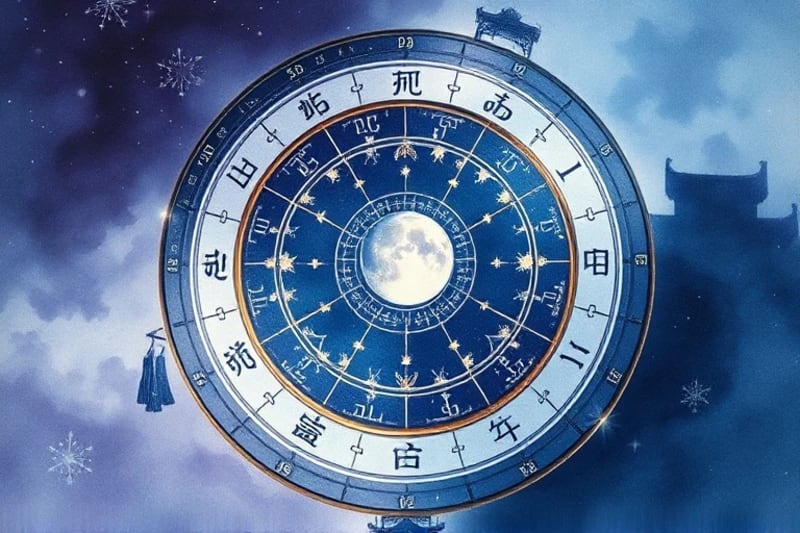
An intricate depiction of the ancient Chinese celestial map, highlighting the moon's journey through the twenty-eight mansions.
Historical Roots and Astronomical Significance
The concept of Lunar Mansions emerged in China during the Warring States period (475–221 BCE), though their observational basis likely predates this era. Early astronomers meticulously charted the night sky, observing the moon's consistent movement through distinct star groups. This led to the creation of a sophisticated system for tracking celestial phenomena, which was crucial for an agrarian society dependent on accurate seasonal predictions.
The primary function of the Lunar Mansions was to serve as a celestial calendar. By noting which mansion the moon occupied on any given night, ancient Chinese scholars could determine the time of year, predict solstices and equinoxes, and plan agricultural activities. This practical application quickly evolved into a complex astrological system, as observations revealed correlations between the moon's position in certain mansions and earthly events or human destinies.
Each mansion is defined by a specific "determinative star" (or a small group of stars) and extends a certain angular width along the ecliptic. Unlike Western constellations, which are often pictorial representations, Chinese asterisms are more functional, often named after objects or roles in the imperial court or daily life. This practical naming convention reflects the pragmatic approach of early Chinese astronomy, which was deeply intertwined with governance and societal order.
The Four Celestial Beasts: Guardians of the Directions
The Twenty-Eight Lunar Mansions are traditionally grouped into four larger constellations, known as the Four Celestial Beasts or Four Symbols. Each beast governs a cardinal direction, a season, an element, and a specific set of seven Lunar Mansions. These powerful archetypes provide an overarching symbolic framework, influencing the characteristics and energies of the mansions they oversee.
- Azure Dragon of the East (Qīng Lóng): Associated with spring, the element Wood, and the rising sun. It symbolizes growth, vitality, and new beginnings. The seven mansions under its dominion are generally considered auspicious for starting new ventures, planting, and fostering relationships.
- Vermilion Bird of the South (Zhū Què): Linked to summer, the element Fire, and warmth. It represents passion, illumination, and transformation. Its seven mansions are often associated with matters of fame, communication, and creative expression.
- White Tiger of the West (Bái Hǔ): Corresponds to autumn, the element Metal, and the setting sun. It signifies protection, strength, and harvest. The mansions under the White Tiger are often consulted for matters of defense, justice, and completion.
- Black Tortoise of the North (Xuán Wǔ): Connected to winter, the element Water, and the deep night. It embodies longevity, wisdom, and introspection. Its seven mansions are typically associated with matters of rest, contemplation, and hidden knowledge.
These four symbols are not just astronomical groupings; they are fundamental to Chinese cosmology, appearing in art, literature, and Feng Shui. Their influence extends beyond the stars, shaping the cultural understanding of cycles, directions, and the balance of energies in the universe. Each beast's influence colors the interpretation of the individual mansions within its quadrant, adding layers of meaning to predictive practices.
A harmonious watercolor composition illustrating the cyclical interaction of the five Chinese elements.
Unveiling the Twenty-Eight Mansions
Each of the twenty-eight Lunar Mansions possesses a unique character and set of associations, influencing various aspects of life. While their names often refer to specific asterisms, their astrological meanings delve into deeper symbolic realms. Here is a brief overview of each mansion, grouped by their respective Celestial Beast:
| Celestial Beast | Mansion Name | Symbolism & Influence |
|---|---|---|
| Azure Dragon (East) | Horn (角 - Jiǎo) | Prosperity, new beginnings, marriage, wealth. |
| Neck (亢 - Kàng) | Strength, resilience, legal matters, disputes. | |
| Root (氐 - Dī) | Foundation, stability, construction, agriculture. | |
| Room (房 - Fáng) | Family, home, wealth accumulation, good fortune. | |
| Heart (心 - Xīn) | Love, passion, emotions, spiritual insight. | |
| Tail (尾 - Wěi) | Endings, transitions, trade, travel. | |
| Sieve (箕 - Jī) | Harvest, wind, good weather, purification. | |
| Vermilion Bird (South) | Dipper (斗 - Dǒu) | Sacrifice, wisdom, learning, spiritual matters. |
| Ox (牛 - Niú) | Hard work, perseverance, wealth, livestock. | |
| Girl (女 - Nǚ) | Feminine energy, weaving, relationships, secrets. | |
| Emptiness (虛 - Xū) | Void, introspection, solitude, mourning. | |
| Rooftop (危 - Wēi) | Danger, risk, high places, construction. | |
| Encampment (室 - Shì) | Home, shelter, stability, military matters. | |
| Wall (壁 - Bì) | Protection, boundaries, education, literature. | |
| White Tiger (West) | Straddling (奎 - Kuí) | Scholarship, writing, travel, legal affairs. |
| Legs (婁 - Lóu) | Movement, travel, livestock, wealth. | |
| Bond (胃 - Wèi) | Digestion, storage, prosperity, agriculture. | |
| Pleiades (昴 - Mǎo) | Gathering, crowds, military, justice. | |
| Net (畢 - Bì) | Hunting, capture, legal matters, networks. | |
| Turtle Beak (觜 - Zī) | Speech, communication, gossip, disputes. | |
| Three Stars (參 - Shēn) | Military, hunting, strength, leadership. | |
| Black Tortoise (North) | Well (井 - Jǐng) | Water, purity, healing, introspection. |
| Ghosts (鬼 - Guǐ) | Spirits, ancestors, hidden knowledge, introspection. | |
| Willow (柳 - Liǔ) | Weeping, sorrow, banishment, emotional matters. | |
| Star (星 - Xīng) | Brightness, fame, recognition, artistic endeavors. | |
| Extended Net (張 - Zhāng) | Hunting, trapping, legal matters, expansion. | |
| Wings (翼 - Yì) | Flight, travel, communication, innovation. | |
| Chariot (軫 - Zhěn) | Travel, transport, military, endings. |
It is important to note that the interpretations of these mansions can vary slightly depending on the specific school of Chinese astrology or the historical period. However, the core symbolism remains consistent, providing a rich tapestry of meanings for predictive analysis. Each mansion's influence is amplified or mitigated by the specific celestial bodies traversing it, especially the Moon, which passes through each mansion approximately once a month.
Astrological Applications in Predictive Fate
The Twenty-Eight Lunar Mansions are a cornerstone of Chinese predictive astrology, particularly in selecting auspicious dates and times for various activities. This practice, known as Zeri (擇日) or Date Selection, is deeply ingrained in Chinese culture and is still widely used today for significant life events.
When planning a wedding, starting a business, undertaking construction, or even embarking on a journey, consulting the Lunar Mansions is crucial. Each mansion is classified as either auspicious (吉 - jí) or inauspicious (凶 - xiōng) for specific types of activities. For example, the Horn mansion (角) is highly favorable for marriage and new beginnings, while the Emptiness mansion (虛) is considered inauspicious for most ventures, being more suited for introspection or mourning.
Beyond daily activities, the Lunar Mansions are also used in natal astrology to understand an individual's character and destiny. The mansion the moon occupied at the time of birth can reveal inherent personality traits, potential challenges, and areas of life where one might experience greater fortune or adversity. This adds a layer of lunar influence to the more commonly known solar-based Chinese Zodiac signs.
An abstract 3D render symbolizing the intricate and interconnected patterns of cosmic destiny.
Integration with the Chinese Zodiac and Five Elements
While the Lunar Mansions primarily track the moon, their influence is often integrated with other core components of Chinese metaphysics, such as the Twelve Chinese Zodiac animal signs and the Five Elements (Wood, Fire, Earth, Metal, Water). This creates a holistic and multi-layered system for understanding cosmic influences.
The interaction between a person's birth animal sign and the Lunar Mansion active on a particular day can provide nuanced insights. For instance, a person born under the sign of the Dragon might find their inherent characteristics of leadership and ambition either amplified or challenged depending on the specific Lunar Mansion's energy. Similarly, the elemental cycle of creation and destruction plays a significant role in interpreting the auspiciousness of a mansion for a given activity.
For example, if a mansion is associated with the element Fire, and one's activity is related to Metal (which is melted by Fire), it might be considered an unfavorable combination. Conversely, if the activity is related to Wood (which feeds Fire), it could be highly auspicious. This intricate interplay demonstrates the depth and complexity of Chinese predictive systems, where no single factor is considered in isolation. To delve deeper into the elemental interactions, readers may find this article on Chinese Zodiac Element Interactions: Growth, Compatibility particularly insightful.
Modern Interpretations and Enduring Legacy
Despite their ancient origins, the Twenty-Eight Lunar Mansions continue to hold relevance in contemporary Chinese culture and beyond. While modern astronomy has provided a more precise understanding of celestial mechanics, the symbolic and astrological interpretations of the mansions remain a vital part of traditional practices. Many still consult almanacs and specialized astrologers who incorporate Lunar Mansion analysis into their readings.
In the digital age, interest in ancient wisdom traditions, including Chinese astrology, has seen a resurgence. Online resources and applications now make it easier for individuals to track the moon's position in the mansions and understand their daily influences. This renewed interest highlights a desire to reconnect with natural cycles and find deeper meaning in the rhythms of the cosmos. The mansions offer a unique perspective on the subtle energies that shape our lives, encouraging a more mindful approach to planning and decision-making.
The study of Lunar Mansions also serves as a bridge between astronomy, mythology, and philosophy, showcasing how ancient civilizations integrated scientific observation with spiritual understanding. Their enduring presence is a testament to the profound insights they offer into human experience and the universal desire to understand our place within the grand cosmic design. For those interested in the broader context of Chinese spiritual practices, exploring Chinese Zodiac Spirituality: Integrating Ancient Wisdom can provide further valuable context.
In conclusion, the Twenty-Eight Lunar Mansions are much more than a historical curiosity. They are a living system of knowledge that continues to offer guidance, wisdom, and a profound connection to the celestial realm. By understanding their meanings and applications, we can gain a richer appreciation for the intricate tapestry of ancient Chinese astronomy and its lasting impact on our understanding of fate and fortune.
Fuente: Contenido híbrido asistido por IAs y supervisión editorial humana.


Comments
Post a Comment