
Jungian Synchronicity Planetary Transits: Collective Unconscious Shifts
The intricate dance between the cosmos and the human psyche has fascinated thinkers for millennia. While astrology traditionally explores individual destinies through planetary positions, a deeper, more nuanced understanding emerges when we integrate Carl Jung's concept of synchronicity with the dynamics of planetary transits. This article delves into how these cosmic movements might not just influence personal lives but also trigger profound shifts within the collective unconscious, leading to meaningful coincidences and widespread changes in human experience.
By exploring the interplay between these two powerful frameworks, we can begin to map the subtle yet significant connections between the macrocosm and the microcosm. This journey offers a unique lens through which to interpret global events, cultural shifts, and the underlying patterns that govern our shared reality, moving beyond mere correlation to a deeper understanding of acausal connecting principles.
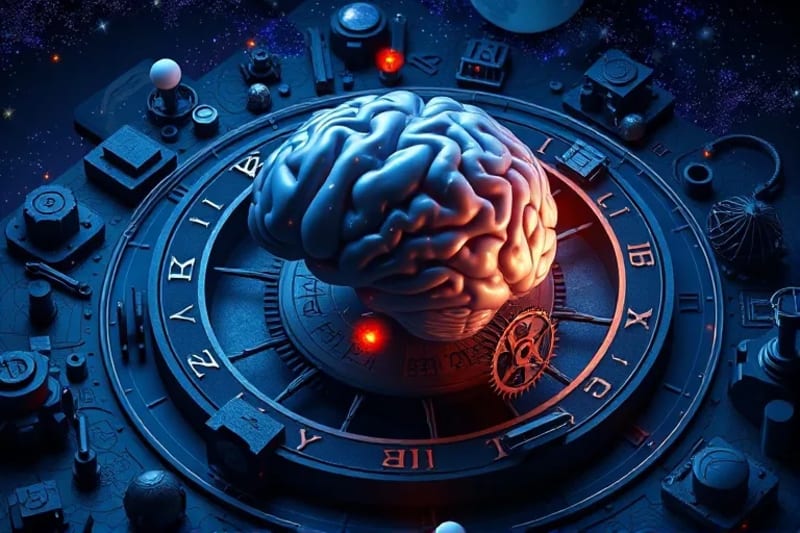
A cosmic clock intertwining with neural pathways, symbolizing the profound connection between planetary movements and the human psyche.
Table of Contents
- Understanding Jungian Synchronicity
- The Dynamics of Planetary Transits
- The Collective Unconscious: A Shared Foundation
- Bridging the Concepts: Transits and Synchronicity
- Mapping Collective Unconscious Shifts
- Astrology as a Symbolic Map
- Practical Applications and Awareness
- Conclusion
Understanding Jungian Synchronicity
Carl Jung, the renowned Swiss psychiatrist and founder of analytical psychology, introduced the concept of synchronicity to describe "meaningful coincidences." Unlike causality, where one event directly causes another, synchronicity posits an acausal connecting principle, suggesting that events are connected not by cause and effect but by meaning. These are instances where two or more seemingly unrelated events occur together in a way that is highly meaningful to the observer, yet without any discernible causal link.
Jung developed this concept in collaboration with physicist Wolfgang Pauli, recognizing that certain phenomena in both the psychological and physical realms defied purely causal explanations. He believed that synchronistic events are manifestations of the collective unconscious, often signaling a moment of psychological insight or transformation. They act as bridges between the inner subjective world and the outer objective reality, revealing an underlying order in the universe.
Key characteristics of synchronicity include:
- Acausal Connection: Events are linked by meaning, not by direct cause and effect.
- Meaningfulness: The coincidence holds significant personal or collective meaning.
- Archetypal Activation: Often involves the activation of archetypes from the collective unconscious.
- Timeliness: Occurs at a psychologically significant moment, often preceding or accompanying a shift in consciousness.
The Dynamics of Planetary Transits
In astrology, planetary transits refer to the ongoing movement of planets in the sky and their dynamic relationship to the fixed positions of planets in an individual's or a collective's natal chart. As planets move through the zodiac, they form angles (aspects) with the natal placements, triggering specific energies and themes. These transits are not seen as causing events directly, but rather as indicating periods when certain psychological and experiential potentials are activated.
Transits can be broadly categorized by the speed of the planets involved:
- Fast-moving planets (Moon, Mercury, Venus, Mars): Indicate daily moods, short-term opportunities, and immediate actions. Their influence is fleeting but can be intensely felt.
- Slow-moving planets (Jupiter, Saturn): Mark significant developmental phases, lessons, and growth periods over months or a few years. They shape personal and collective cycles.
- Outer planets (Uranus, Neptune, Pluto): Represent generational shifts, profound societal transformations, and deep psychological changes that unfold over many years or even decades. These transits often correlate with major historical events and paradigm shifts.
Each planet carries symbolic meanings related to specific psychological functions, archetypal energies, and areas of life. When a planet transits a particular point in a chart, it "lights up" that area, bringing its associated themes to the forefront of consciousness, both individually and collectively. For example, a Pluto transit often signifies deep transformation, death, and rebirth, while a Uranus transit can bring sudden changes, innovation, and liberation.
The Collective Unconscious: A Shared Foundation
Central to Jung's psychology is the concept of the collective unconscious – a universal, inherited reservoir of experiences and behavioral patterns. It is not acquired individually but is common to all humanity, manifesting through archetypes. Archetypes are primordial images and patterns of thought that are present in all cultures and individuals, such as the Hero, the Mother, the Shadow, or the Wise Old Man.
The collective unconscious acts as a deep, underlying psychic structure that connects all human beings. It influences our dreams, myths, religions, and cultural expressions. When an archetype is activated in the collective unconscious, it can lead to widespread psychological shifts, influencing societal trends, political movements, and artistic expressions. These activations are often subtle at first, bubbling up from the depths before manifesting in observable ways.
Understanding the collective unconscious is crucial for grasping how planetary transits might align with synchronous events on a global scale. It provides the shared canvas upon which cosmic influences can paint their patterns, creating a sense of universal resonance that transcends individual experience. The archetypal nature of planets in astrology directly mirrors the archetypes within this shared psychic realm.
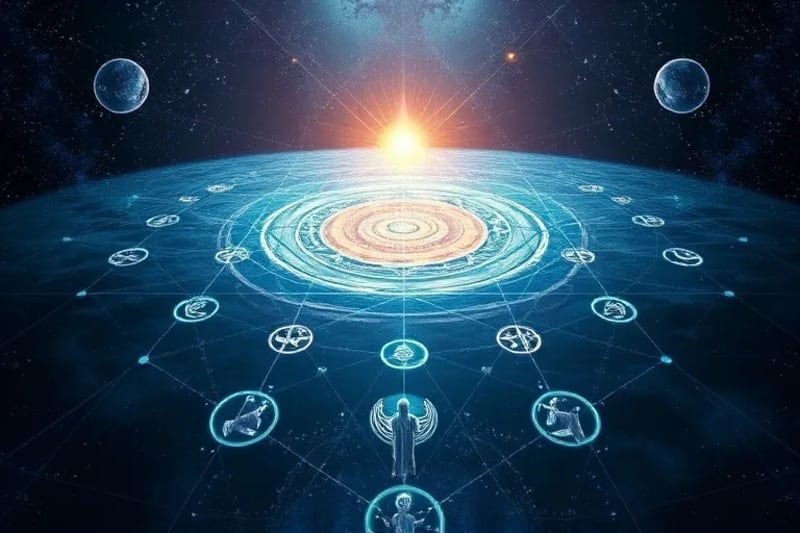
An abstract depiction of the collective unconscious, a vast ocean of interconnected minds influenced by subtle cosmic ripples.
Bridging the Concepts: Transits and Synchronicity
The profound connection between Jungian synchronicity and planetary transits lies in their shared archetypal language and their ability to signal meaningful shifts. Planetary transits can be viewed as cosmic triggers that activate specific archetypes within the collective unconscious. When these archetypes are activated, they increase the likelihood of synchronous events occurring, both individually and on a societal level.
For instance, a significant transit involving Pluto (transformation, power, shadow) might coincide with a global event that forces humanity to confront its collective shadow, such as a pandemic or a major political upheaval. During such a transit, individuals might experience personal synchronous events that mirror the larger collective theme, providing them with insights or guiding them through their own transformative processes. The outer planets, in particular, are often associated with these large-scale collective activations.
Astrology, in this context, does not predict events in a deterministic sense, but rather describes the quality of time. It maps the archetypal energies that are currently "in play." Synchronicity, then, is the manifestation of these energies in the form of meaningful coincidences, acting as a direct communication from the collective unconscious, confirming the astrological patterns in a tangible way. It's as if the universe is speaking to us through symbolic events that resonate with the prevailing cosmic themes.
Mapping Collective Unconscious Shifts
Mapping collective unconscious shifts through planetary transits and synchronicity involves observing patterns both in the sky and in human affairs. Historical analysis often reveals striking correlations between major planetary configurations and significant cultural, social, or technological transformations. These are not merely coincidences but rather synchronous expressions of activated archetypes within the global psyche.
Consider the Uranus-Pluto conjunctions and squares throughout history. These aspects often coincide with periods of profound societal upheaval, revolution, and radical change. For example, the 1960s, a time of intense social and political transformation, occurred during a Uranus-Pluto conjunction. This period saw synchronous movements worldwide for civil rights, anti-war protests, and counter-cultural expressions, all reflecting a collective urge for liberation (Uranus) and deep structural change (Pluto).
Similarly, Neptune transits, especially to outer planets or key collective points, can correlate with shifts in spirituality, idealism, disillusionment, or the rise of new artistic and mystical movements. The collective unconscious, under Neptune's influence, might seek transcendence or grapple with illusions. Synchronistic events during these times might involve widespread spiritual awakenings, collective dreams, or the sudden emergence of unifying symbols across diverse groups.
The process of mapping these shifts involves:
- Astrological Observation: Identifying significant planetary transits, especially those involving outer planets, and their aspects to collective charts (e.g., world charts, national charts).
- Cultural Analysis: Monitoring global news, artistic trends, scientific breakthroughs, and social movements for recurring themes and symbols.
- Psychological Insight: Recognizing the archetypal patterns that emerge in collective narratives, media, and shared experiences.
- Synchronistic Tracking: Noting instances of meaningful coincidences that seem to echo the prevailing astrological and archetypal themes.
Astrology as a Symbolic Map
Astrology, when viewed through a Jungian lens, transforms from a predictive tool into a symbolic language that maps the archetypal energies at play. The natal chart itself is a snapshot of the archetypal blueprint of an individual or a moment in time, reflecting the specific configuration of the collective unconscious at that instant. Planetary transits then represent the ongoing activation and evolution of these archetypes.
This perspective aligns with Jung's understanding of symbols as dynamic entities that connect the conscious and unconscious. The planets, signs, and houses in astrology are not merely physical bodies or abstract divisions; they are potent symbols that resonate with universal human experiences and psychological processes. They provide a framework for understanding the "what" and "when" of archetypal activation.
For example, a transit of Saturn (structure, discipline, limitation) through a collective chart's financial sector might synchronize with widespread economic challenges, leading to new regulations or a re-evaluation of financial systems. Individuals might simultaneously experience personal financial hurdles that prompt them to restructure their own budgets. These are not random events but meaningful patterns emerging from the collective unconscious, guided by the cosmic clock. For more on how planetary cycles decode personal timing, you can explore Planetary Cycles Numerology: Decoding Personal Timing.
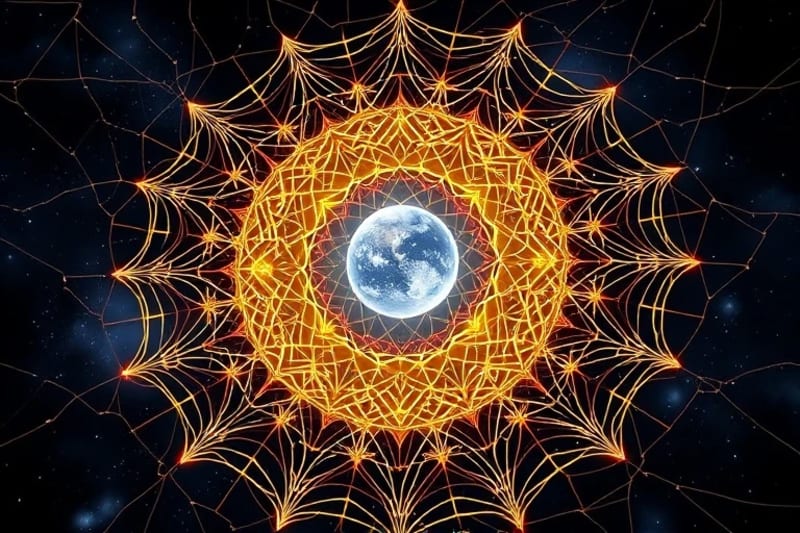
Intricate neural pathways resembling a cosmic web, illustrating the delicate interplay between micro and macro influences in the universe.
Practical Applications and Awareness
Developing an awareness of Jungian synchronicity in conjunction with planetary transits offers several practical benefits. It can help individuals and communities navigate periods of change with greater understanding and purpose. By recognizing the archetypal themes activated by transits, we can better interpret the "signs" and "meaningful coincidences" that appear in our lives and in the world around us.
Here are ways to cultivate this awareness:
- Journaling: Keep a record of significant events, dreams, and coincidences. Note down their emotional and symbolic content. Over time, patterns might emerge that correlate with major transits.
- Astrological Study: Familiarize yourself with the meanings of planets, signs, and aspects. Understand current transits and how they might be activating specific archetypes. Resources like Hermetic Principles Astrology: Natal Chart Interpretation can be a good starting point.
- Mythology and Symbolism: Engage with myths, fairy tales, and cultural narratives. These are rich sources of archetypal imagery that can help you recognize the deeper patterns at play during collective shifts.
- Mindfulness: Practice being present and observant. Synchronistic events often occur when we are open and receptive, rather than rigidly focused on linear causality.
When a major transit occurs, such as a Jupiter-Neptune conjunction (expansion of idealism, spiritual seeking, or collective delusion), pay attention to the prevailing mood, the dominant narratives in media, and any unusual or meaningful coincidences in your own life. These can be indicators of how the collective unconscious is processing and responding to these cosmic energies.
Conclusion
The convergence of Jungian synchronicity and planetary transits offers a compelling framework for understanding the profound interconnectedness of the cosmos and the human psyche. It suggests that the movements of celestial bodies are not merely random occurrences but rather a cosmic clock, signaling periods of archetypal activation within the collective unconscious. These activations manifest as meaningful coincidences, guiding humanity through its evolutionary journey.
By learning to read this symbolic language, we can gain deeper insights into the underlying currents of global events, cultural shifts, and our own personal transformations. This perspective encourages a holistic view of existence, where inner and outer realities are not separate but are intimately woven together by an acausal connecting principle, revealing the profound order and meaning inherent in the universe.
Fuente: Contenido híbrido asistido por IAs y supervisión editorial humana.


Comments
Post a Comment