
Augmented Reality Astrology: Natal Chart 3D Visualization
The ancient practice of astrology, with its intricate charts and complex planetary interactions, has long captivated humanity. However, understanding the multi-dimensional relationships within a natal chart can be challenging for both novices and seasoned practitioners. The advent of Augmented Reality (AR) technology offers a revolutionary approach, transforming static two-dimensional charts into dynamic, interactive 3D visualizations. This innovation promises to deepen our comprehension of celestial mechanics and their profound influence on individual lives.
Augmented Reality Astrology is not merely a technological gimmick; it represents a significant leap in how we engage with astrological data. By overlaying digital information onto the real world, AR allows users to explore their birth chart as a living, breathing cosmic blueprint. This immersive experience can unlock new insights, making complex astrological concepts more accessible and intuitive than ever before.
Table of Contents
- Bridging the Gap: Traditional Astrology Meets Modern Tech
- How AR Transforms Natal Chart Interpretation
- Benefits of Immersive Astrological Experiences
- Key Features of AR Astrology Platforms
- Technological Foundations of AR Astrology
- Challenges and Future Outlook
- Conclusion: The Future is Now
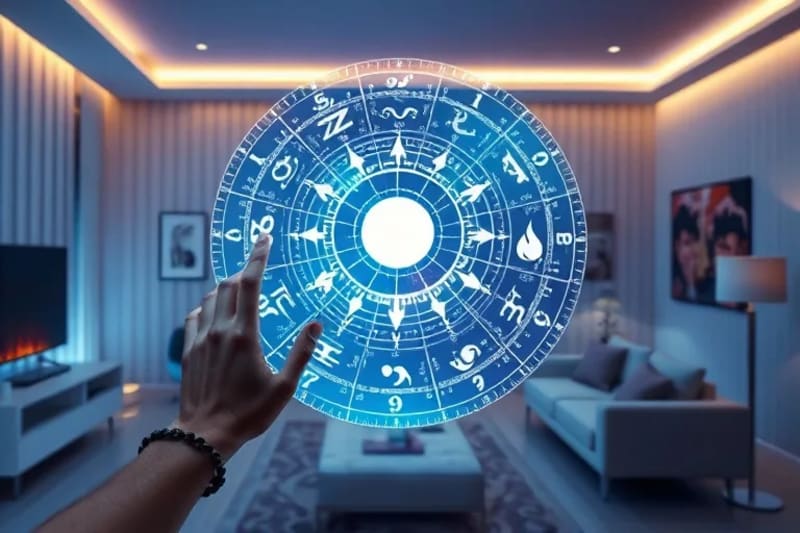
Augmented Reality Astrology offers a futuristic way to visualize complex celestial mechanics, bringing natal charts to life in immersive 3D.
Bridging the Gap: Traditional Astrology Meets Modern Tech
For centuries, astrological charts have been rendered on flat surfaces, whether parchment, paper, or computer screens. While effective, these 2D representations often require a significant mental leap to conceptualize the three-dimensional reality of planetary orbits and spatial relationships. The human mind naturally processes spatial information, and AR leverages this innate ability to make astrological data more tangible.
Traditional astrological education relies heavily on diagrams and textual descriptions. While foundational, this can sometimes create a barrier for visual learners or those new to the field. AR technology acts as a bridge, translating abstract symbols and calculations into a dynamic, interactive model that users can literally walk around and explore. This direct engagement fosters a deeper, more intuitive understanding of astrological principles.
Moreover, the integration of technology does not diminish the spiritual or esoteric aspects of astrology. Instead, it provides a powerful tool for exploration, allowing individuals to connect with their cosmic blueprint on a more profound level. It respects the ancient wisdom while embracing modern scientific and technological advancements, creating a synergy that benefits all.
How AR Transforms Natal Chart Interpretation
Imagine holding your smartphone or wearing AR glasses and seeing your natal chart projected into your living room as a shimmering, rotating celestial sphere. Each planet, house cusp, and aspect line is rendered in vivid detail, allowing you to observe their precise positions relative to each other and to your birth location. This is the core promise of AR Astrology.
The transformation goes beyond mere aesthetics. AR enables interactive exploration of complex astrological phenomena. Users can isolate specific planets, zoom in on particular aspects, or even fast-forward through planetary transits to see how they dynamically interact with their birth chart over time. This level of interaction is simply not possible with static 2D charts.
Consider the concept of planetary aspects, which describe the angular relationships between planets and are crucial for interpretation. In a 2D chart, these are often represented by lines. In AR, you can see the actual geometric angles in three dimensions, gaining a more visceral understanding of their energetic interplay. This visual clarity can dramatically improve the accuracy and depth of astrological interpretation.
A digital representation of a celestial sphere, showcasing the intricate interplay of astrological houses and planetary symbols in a clean, modern design.
Benefits of Immersive Astrological Experiences
The advantages of integrating AR into astrological practice are multifaceted, catering to a wide range of users from curious beginners to professional astrologers.
- Enhanced Comprehension: Visualizing complex concepts like planetary houses, aspects, and dignities in 3D makes them easier to grasp and remember.
- Personalized Learning: Users can interact with their own natal chart, making the learning process highly personal and engaging.
- Dynamic Exploration: The ability to rotate, zoom, and filter elements of the chart provides unparalleled flexibility in analysis.
- Educational Tool: AR applications can serve as powerful educational aids, simplifying the teaching of astrological principles.
- Real-time Data Integration: Some advanced AR systems could potentially integrate real-time planetary positions, allowing for live transit analysis.
- Accessibility: By making astrology more intuitive, AR can open up the field to a broader audience, including those who might find traditional charts intimidating.
Moreover, the immersive nature of AR can foster a deeper emotional and intuitive connection with one's astrological chart. Seeing the cosmic forces that shaped your birth moment unfold in your own space can be a profoundly moving experience, leading to greater self-awareness and personal growth. This aligns with the principles of conscious evolution through celestial mechanics.
Key Features of AR Astrology Platforms
A robust AR Astrology platform would incorporate several key features to maximize its utility and user experience. These features go beyond simple visualization, offering powerful analytical capabilities.
| Feature | Description | Benefit |
|---|---|---|
| 3D Natal Chart Model | Interactive, rotatable model of the zodiac, planets, and houses based on birth data. | Visualizes spatial relationships and planetary positions intuitively. |
| Aspect Visualization | Dynamic lines and labels showing angular relationships between planets in 3D. | Clarifies the energetic connections and tensions within the chart. |
| Real-time Transits Overlay | Superimposes current planetary positions onto the natal chart, updating dynamically. | Allows users to see how current cosmic energies interact with their birth blueprint. |
| Hous System Customization | Option to switch between different house systems (Placidus, Whole Sign, Equal, etc.). | Accommodates diverse astrological traditions and preferences. |
| Interpretive Overlays | Contextual information, descriptions, and interpretations appearing as pop-ups or side panels. | Provides immediate insights and educational content directly within the visualization. |
| Synastry and Composite Views | Ability to overlay multiple natal charts to visualize relationship dynamics. | Offers a powerful tool for understanding interpersonal connections and soul contracts. |
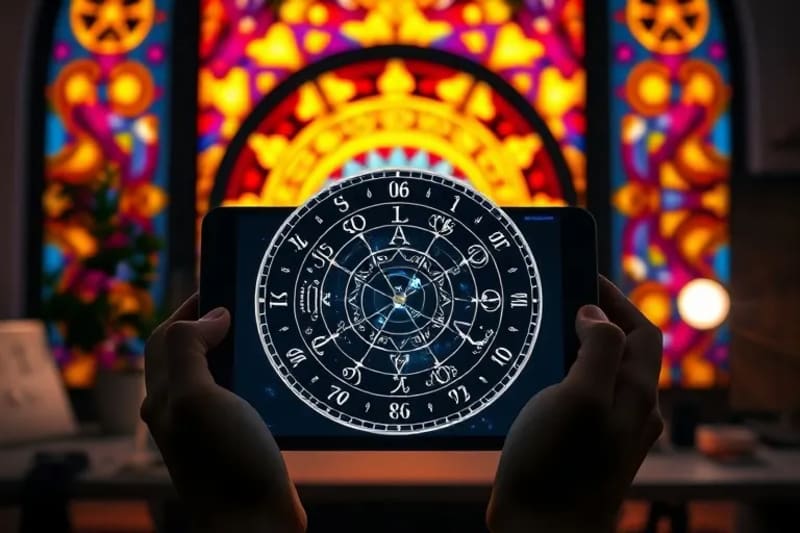
A futuristic smart device showcasing an interactive 3D natal chart, highlighting the intuitive interface and dynamic visualization capabilities of AR astrology.
Technological Foundations of AR Astrology
The development of AR Astrology applications relies on sophisticated technologies that enable the seamless integration of digital content with the physical world. Key among these are AR software development kits (SDKs) and advanced rendering engines.
Platforms like Apple's ARKit and Google's ARCore provide the foundational tools for developers to create AR experiences on smartphones and tablets. These SDKs handle crucial tasks such as motion tracking, environmental understanding (recognizing surfaces and light), and rendering virtual objects. For more advanced experiences, dedicated AR headsets like Microsoft HoloLens or Magic Leap offer even greater immersion, though they are not yet mainstream for consumer astrology applications.
Beyond the AR frameworks, the backend infrastructure for AR Astrology involves robust astronomical calculation engines to accurately determine planetary positions, house cusps, and aspects for any given birth time and location. This data is then fed into the AR application, which renders it into a visually compelling and interactive 3D model. The precision of these calculations is paramount to the integrity of the astrological interpretation.
Challenges and Future Outlook
While the potential of AR Astrology is immense, its widespread adoption faces several challenges. The primary hurdles include:
- Computational Demands: High-quality 3D rendering and real-time data processing require significant computational power, which can drain mobile device batteries quickly.
- Accuracy and Standardization: Ensuring the accuracy of astrological calculations across different platforms and adhering to various astrological traditions requires careful development and robust testing.
- User Interface Design: Creating intuitive and engaging AR interfaces that are easy to navigate for users of all technical skill levels is critical.
- Accessibility: The cost of high-end AR devices can be a barrier for many, though smartphone-based AR is becoming increasingly accessible.
- Ethical Considerations: As with any powerful interpretive tool, ensuring responsible use and preventing misinterpretation or over-reliance on technology is important.
Despite these challenges, the future of AR Astrology looks promising. As AR technology matures and becomes more integrated into everyday devices, we can expect more sophisticated and seamless experiences. Imagine AR contact lenses projecting your daily transits directly into your field of vision, or collaborative AR sessions where astrologers can guide clients through their charts in a shared virtual space. The convergence of technology and spiritual practices is just beginning.
Conclusion: The Future is Now
Augmented Reality Astrology represents a paradigm shift in how we interact with and understand our cosmic heritage. By transforming abstract data into immersive 3D experiences, it makes the profound wisdom of astrology more accessible, engaging, and intuitive. While still in its early stages, this innovative field holds the promise of unlocking deeper insights into our natal charts, fostering greater self-awareness, and connecting us more intimately with the celestial dance that influences our lives. The journey into visualizing our natal charts in 3D space has only just begun, promising a future where the stars are not just observed, but experienced.
Source: Hybrid content assisted by AIs and human editorial supervision.


Comments
Post a Comment