
Dream Interpretation Esoteric Symbolism Self-Discovery Guide
Dreams have fascinated humanity for millennia, serving as a mysterious gateway to the depths of the subconscious mind. Far from being mere random firings of neurons, many traditions and modern psychological approaches view dreams as profound messages, rich with symbolic meaning that can guide us toward greater self-understanding and personal growth. This article delves into the intricate world of dream interpretation and esoteric symbolism, offering an introductory and educational perspective on how to decode these nocturnal narratives for self-discovery.
Understanding the language of dreams is akin to learning a new dialect—one spoken by our innermost self. It requires patience, introspection, and a willingness to explore the often-unconventional logic of the dreamscape. By paying attention to the recurring motifs, emotional tones, and specific symbols that populate our dream lives, we can begin to uncover profound insights about our waking experiences, unresolved conflicts, hidden desires, and untapped potentials.

Exploring the vast, mysterious landscape of the subconscious mind through dream imagery.
The journey into dream interpretation is a deeply personal one, yet it is informed by centuries of collective wisdom and academic research. From ancient shamans and philosophers to modern psychologists like Carl Jung and Sigmund Freud, the quest to understand dreams has been a continuous human endeavor. This exploration invites us to look beyond the literal and embrace the metaphorical, recognizing that our dreams often speak in a symbolic tongue designed to bypass our conscious defenses and deliver essential truths.
This guide aims to provide a foundational understanding for beginners, offering practical tools and theoretical frameworks to embark on your own dream analysis journey. We will explore the historical context of dream interpretation, delve into the nature of esoteric symbolism, and discuss methods for integrating dream insights into your daily life for enhanced self-awareness and personal evolution.
Table of Contents
- Understanding Dream Interpretation's Foundations
- The Language of Esoteric Symbolism in Dreams
- Archetypes and the Collective Unconscious
- Practical Approaches to Dream Analysis
- Connecting Dreams to Self-Discovery and Growth
- Ethical Considerations in Dream Work
Understanding Dream Interpretation's Foundations
The practice of dream interpretation, also known as oneirology, has roots in nearly every ancient civilization. From the Egyptians who recorded dreams on papyrus and believed them to be divine messages, to the Greeks and Romans who consulted dream oracles, the belief in dreams as significant communications is universal. These early interpretations often focused on prophetic meanings or direct messages from deities, guiding important decisions in war, politics, and personal life.
In many indigenous cultures, shamans and spiritual leaders traditionally acted as dream interpreters, viewing dreams as journeys into the spirit world or as insights into communal well-being. The symbolism in these contexts was often tied to nature, animal spirits, and ancestral wisdom. This holistic view emphasized the interconnectedness of the individual, the community, and the cosmos, with dreams serving as a bridge between these realms.
The scientific and psychological study of dreams gained prominence in the late 19th and early 20th centuries with the pioneering work of Sigmund Freud and Carl Jung. Freud, in his seminal work "The Interpretation of Dreams," proposed that dreams are the "royal road to the unconscious," primarily serving as wish fulfillment. He distinguished between the manifest content (what we remember) and the latent content (the hidden, symbolic meaning) of dreams.
Carl Jung, a student of Freud who later diverged from his mentor, expanded on dream theory by introducing the concept of the collective unconscious and archetypes. Jung believed that dreams not only reveal personal unconscious material but also tap into universal symbols and patterns shared by all humanity. His approach emphasized the compensatory function of dreams, suggesting they help balance our conscious attitudes and guide us toward individuation—the process of becoming a whole and integrated self.
Contemporary dream research continues to explore the neurological basis of dreams, their role in memory consolidation, emotional regulation, and problem-solving. While the exact mechanisms are still debated, the consensus is that dreams are vital for psychological health and cognitive function. Understanding these foundations provides a rich backdrop for engaging with the symbolic language of our dreams.
The Language of Esoteric Symbolism in Dreams
Esoteric symbolism refers to symbols that carry a hidden or deeper meaning, often understood only by those initiated into a particular tradition or through careful study. In the context of dreams, almost every element can be considered an esoteric symbol, as its true meaning is often veiled and requires interpretation. These symbols are not always straightforward; they can be highly personal, universally archetypal, or culturally specific.
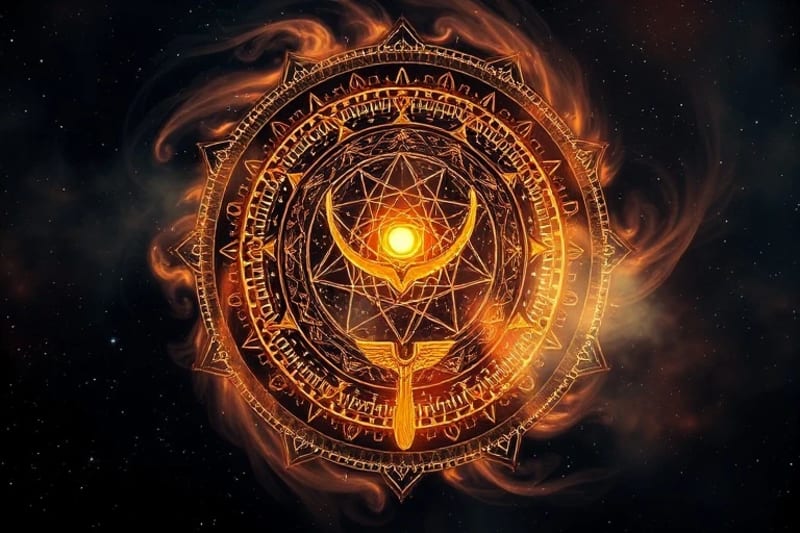
A mosaic of ancient esoteric symbols emerging from mist, representing hidden knowledge.
Understanding esoteric symbolism in dreams involves recognizing that the dream mind communicates through metaphors, analogies, and sometimes even puns. A house in a dream, for instance, rarely refers to a literal building; it more likely symbolizes the self, the dreamer's psyche, or their current state of being. The condition of the house—dilapidated, grand, empty, or full—would then offer further clues about the dreamer's internal landscape.
Colors, numbers, animals, and natural elements frequently appear as potent symbols. For example, water often represents emotions; its state (calm, turbulent, clear, muddy) reflects the dreamer's emotional state. Animals can symbolize instinctual drives, specific personality traits, or even people in the dreamer's life. A snake might represent healing and transformation in one context, or fear and betrayal in another, highlighting the polyvalence of symbols.
The key to decoding these symbols lies in personal association. While universal meanings can provide a starting point, the most accurate interpretation often comes from the dreamer's unique experiences, feelings, and cultural background. A dream dictionary can be a helpful tool, but it should always be used as a guide, not a definitive answer. The true "meaning" of a dream symbol is what it means to Tarot Quantum Mechanics Intersecting Divination Reality.
Consider the context of the dream, the emotions it evokes, and any recent waking life events that might be connected. This holistic approach allows for a richer and more nuanced understanding of the dream's message. The more you practice, the more fluent you will become in your own unique dream language.
Archetypes and the Collective Unconscious
Carl Jung's concept of the collective unconscious is a pivotal idea in understanding deeper dream symbolism. He posited that beyond our personal unconscious—which contains forgotten memories and repressed experiences—there exists a deeper, universal layer of the psyche shared by all humanity. This collective unconscious is home to archetypes: primordial images, patterns of thought, and universal themes that manifest in myths, religions, fairy tales, and, crucially, in our dreams.
Archetypes are not fixed images but rather dynamic patterns of energy that influence our perceptions and behaviors. Examples include the Hero, the Mother, the Father, the Wise Old Man/Woman, the Shadow, the Anima/Animus, and the Trickster. When these archetypes appear in dreams, they often carry profound significance, pointing to universal human experiences and developmental stages.
For instance, dreaming of a wise old figure might represent the Wise Old Man archetype, suggesting a need for guidance or the emergence of inner wisdom. Encountering a menacing figure could be an manifestation of the Shadow archetype, representing repressed aspects of oneself that need to be acknowledged and integrated. Understanding these archetypal patterns can provide a broader, more universal context for personal dream experiences.
The collective unconscious also explains why certain symbols appear across different cultures and times with similar meanings. A journey, a quest, a rebirth, or a confrontation with a monster are not merely personal fantasies but echoes of universal human narratives. By recognizing these deeper layers, dream interpretation becomes not just a tool for personal insight but also a way to connect with the shared human story.
Engaging with archetypes in dreams can be a powerful path to self-discovery, helping individuals understand their place within the larger human experience and tap into innate wisdom that transcends personal history. This often leads to a sense of deeper meaning and purpose in life, fostering a more integrated and authentic self.
Practical Approaches to Dream Analysis
To effectively interpret dreams, a systematic approach is beneficial. Here are some practical steps and techniques to begin your dream analysis journey:
- Keep a Dream Journal: This is arguably the most crucial step. Place a journal and pen by your bedside. Upon waking, immediately record everything you remember, no matter how fragmented. Include images, emotions, sounds, and any narrative flow. Even if you only recall a feeling, write it down.
- Identify Key Symbols and Themes: Once you have your dream recorded, go back and highlight recurring elements, striking images, or strong emotions. Are there animals, people, objects, or settings that stand out? Are there repetitive actions or feelings?
- Personal Associations: For each key symbol, ask yourself: "What does this mean to me personally?" What are your first associations, memories, or feelings connected to that symbol? This is often more important than a generic dream dictionary definition.
- Amplify the Symbol: Jungian analysis suggests "amplifying" a symbol by exploring its cultural, mythological, and archetypal meanings. How does a snake appear in different myths? What does a specific color symbolize in various traditions? This broadens your understanding.
- Connect to Waking Life: Reflect on your current waking life. What challenges are you facing? What thoughts or emotions have been prominent recently? Dreams often comment on our daily lives, offering alternative perspectives or solutions.
- Look for Emotional Tone: The overall feeling of the dream (fear, joy, anxiety, peace) is a critical clue. This emotional landscape often mirrors your inner emotional state regarding the dream's theme.
- Consider the Dream's "Story": Even if fragmented, dreams often have a narrative arc. What is the beginning, middle, and end? What is the central conflict or resolution?
- Dialogue with Dream Figures: A powerful technique is to imagine re-entering the dream and having a conversation with a dream figure or object. Ask it questions: "What do you want from me?" "What message do you have?"
Consistency is key. The more regularly you engage with your dreams, the more adept you will become at understanding their unique language. Remember that dream interpretation is an ongoing process, not a one-time event. Each dream offers a new piece of the puzzle of your inner world.
Connecting Dreams to Self-Discovery and Growth
The ultimate purpose of dream interpretation, particularly from an esoteric and depth psychological perspective, is to facilitate self-discovery and personal growth. Dreams provide a direct line to our authentic self, revealing aspects of our personality, desires, and fears that may be hidden from our conscious awareness. This process of uncovering and integrating unconscious material is central to psychological maturation.

A winding path illuminated by lanterns, symbolizing the journey of self-discovery through dream insights.
Through dream work, individuals can gain clarity on their life's direction, resolve internal conflicts, and heal emotional wounds. For example, a recurring dream about being lost might highlight feelings of uncertainty or a need for a new path in waking life. By acknowledging and working with this symbolism, the dreamer can consciously seek guidance or make necessary changes. This engagement with the unconscious fosters a deeper sense of self-awareness and agency.
Dreams also serve as a creative wellspring. Artists, writers, and scientists have historically drawn inspiration from their dreams, using them to solve problems or develop new ideas. The non-linear, imaginative nature of dreams can bypass logical constraints, allowing for novel solutions and creative breakthroughs. This aspect of dream work can significantly enhance one's creative potential and problem-solving abilities.
Furthermore, dreams can act as a barometer for our spiritual and psychological health. Nightmares, for instance, often signal unresolved trauma or intense stress, prompting the dreamer to address these issues in their waking life. Conversely, dreams of flying, transcendence, or profound beauty can indicate spiritual awakening or a sense of inner peace. Paying attention to these signals allows for proactive self-care and personal evolution.
The journey of self-discovery through dreams is a continuous dialogue between the conscious and unconscious mind. It encourages introspection, self-reflection, and a willingness to embrace the full spectrum of human experience. By integrating dream insights, we move closer to becoming our most authentic and fulfilled selves, aligning our inner world with our outer actions.
Ethical Considerations in Dream Work
While dream interpretation offers immense potential for self-discovery, it is important to approach this practice with ethical awareness, especially if engaging in dream work with others. The intimate nature of dreams means that they touch upon sensitive personal material, requiring respect, confidentiality, and a non-judgmental attitude.
When interpreting your own dreams, be mindful of self-judgment. Dreams can reveal uncomfortable truths or shadow aspects, but these are opportunities for growth, not reasons for self-criticism. Approach your dream self with compassion and curiosity, recognizing that all parts of your psyche are seeking integration and understanding.
If you share your dreams with others or seek interpretation from a professional, ensure that the environment is safe and confidential. A qualified dream worker or therapist will guide you in exploring your own associations rather than imposing their interpretations. They understand that the ultimate authority on a dream's meaning rests with the dreamer. This collaborative approach empowers the individual to connect with their inner wisdom.
Avoid making definitive predictions or life-altering decisions based solely on a single dream interpretation. Dreams offer guidance and insight, but they are not infallible prophecies. They are one piece of the puzzle, meant to be integrated with conscious reasoning and real-world considerations. Use dream insights as a catalyst for reflection and informed action, rather than as a rigid blueprint for the future.
Finally, be aware of the potential for over-interpretation or getting lost in symbolic complexities. Sometimes a dream is simply a processing of daily events, or a physiological response. While every dream holds potential meaning, not every dream requires deep analysis. Trust your intuition to discern when a dream is particularly significant and when it might be more superficial. This balanced approach ensures that dream work remains a healthy and enriching practice for self-discovery.
Fuente: Contenido híbrido asistido por IAs y supervisión editorial humana.


Comments
Post a Comment