
Tasseography: Tea Leaf Reading for Intuitive Guidance
Tasseography, often referred to as tea leaf reading, is an ancient and captivating form of divination that involves interpreting patterns made by tea leaves in a cup. This practice, steeped in history and cultural tradition, offers a unique pathway to intuitive guidance and self-reflection. Far from being mere superstition, tasseography can serve as a powerful tool for unlocking the subconscious mind and gaining insights into one's life path.
The allure of reading tea leaves lies in its blend of ritual, symbolism, and personal interpretation. It invites practitioners to slow down, engage their intuition, and connect with deeper layers of meaning. Understanding the origins, methods, and common symbols of tasseography can empower individuals to explore this fascinating art for their own spiritual and personal development.
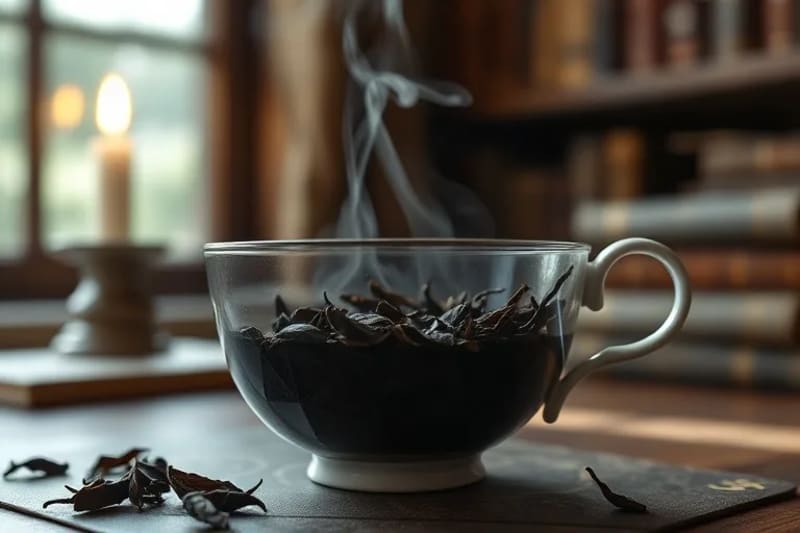
An antique porcelain teacup reveals Tarot Quantum Mechanics Intersecting Divination Reality, inviting intuitive interpretation and guidance.
Table of Contents
- History and Origins of Tasseography
- The Art of Tea Leaf Reading: A Step-by-Step Guide
- Common Tasseography Symbols and Their Meanings
- Benefits of Tasseography for Intuitive Guidance
- Tasseography vs. Dream Interpretation: Complementary Insights
- Ethical Considerations and Modern Practice
- Conclusion: Embracing the Wisdom of the Leaves
History and Origins of Tasseography
The practice of tasseography boasts a rich and diverse history, tracing its roots back centuries across various cultures. While often associated with European Gypsy traditions, the origins of reading patterns in residual liquids can be found much earlier. Ancient Chinese traditions involved interpreting patterns in the sediment of wine or coffee, long before tea became widely available.
Tea itself originated in China, and as its popularity spread, so too did the practice of interpreting its leaves. By the 17th century, tea had made its way to Europe, particularly gaining traction in England and Scotland, where tasseography flourished as a parlor game and a serious divinatory art. The term "tasseography" is derived from the French word "tasse" (cup) and the Greek suffix "-graphy" (writing or drawing), literally meaning "cup writing."
During the Victorian era, tea leaf reading became a popular social activity, particularly among women. It offered a permissible way to discuss personal concerns and future prospects in a society that often restricted open expression. This period solidified many of the symbolic interpretations still used today, passed down through generations and formalized in various guidebooks.
The Art of Tea Leaf Reading: A Step-by-Step Guide
Engaging in tasseography requires a mindful approach, transforming a simple act of drinking tea into a ritual of introspection. The process is straightforward, but its effectiveness relies on an open mind and a willingness to embrace intuitive insights. Here's a step-by-step guide to practicing tea leaf reading:
- Choose the Right Tea and Cup: Opt for loose-leaf tea, as bagged teas do not leave sufficient sediment. Black teas like Earl Grey or English Breakfast are traditional choices. Use a plain, light-colored teacup with a wide mouth, as intricate patterns or dark colors can obscure the leaves.
- Prepare and Drink Your Tea: Brew your tea as usual, allowing the leaves to settle at the bottom. As you drink, focus on a question or area of your life for which you seek guidance. Leave a small amount of liquid, about a tablespoon, at the bottom of the cup with the leaves.
- Swirl and Drain: Hold the cup in your non-dominant hand. Swirl the remaining liquid and leaves three times clockwise, allowing the leaves to coat the inside of the cup. Then, quickly invert the cup onto a saucer, letting any excess liquid drain away for a minute or two.
- Begin the Interpretation: Turn the cup right-side up. The patterns formed by the leaves are now ready for interpretation. Traditionally, the handle of the cup represents the querent (the person whose fortune is being told). The area closest to the handle signifies immediate events, while patterns further away represent future occurrences.
- Identify Symbols: Look for shapes, objects, animals, letters, or numbers within the leaf patterns. Use your intuition and imagination to identify what the shapes resemble. Do not force an interpretation; let the images emerge naturally.
- Interpret the Patterns: The placement and clarity of the symbols are crucial. Symbols near the rim of the cup suggest events happening soon, while those at the bottom indicate more distant future events. Larger, clearer symbols hold more significance.
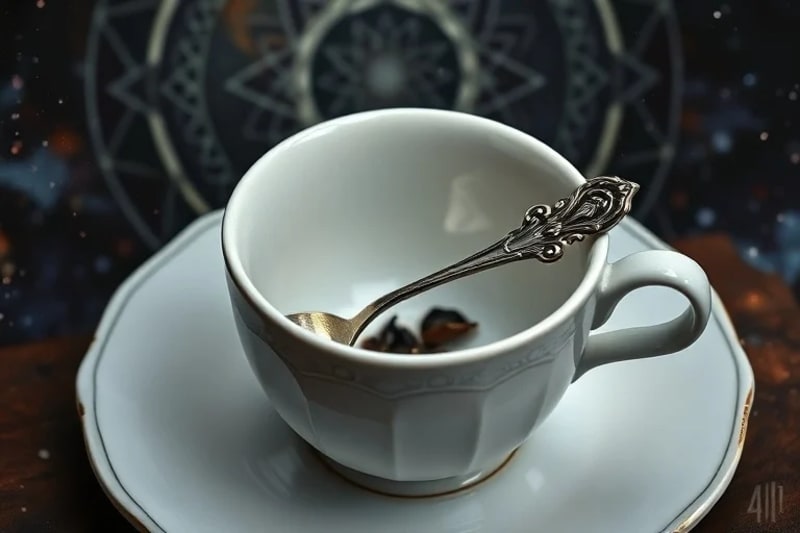
A delicate silver spoon rests beside a cup, symbolizing the tools used in the Tarot Quantum Mechanics Intersecting Divination Reality.
Common Tasseography Symbols and Their Meanings
The beauty of tasseography lies in its symbolic language, which can be both universal and highly personal. While interpretations can vary, many symbols have commonly accepted meanings. It's important to remember that context and intuition play a significant role in deciphering their message.
| Symbol | Common Interpretation |
|---|---|
| Anchor | Security, stability, hope, or a journey. If unclear, instability. |
| Bird | Good news, travel, freedom, or new opportunities. |
| Circle | Completion, success, unity, or a new cycle. |
| Cross | Protection, sacrifice, a burden, or a decision point. |
| Fish | Good fortune, abundance, spiritual growth, or creativity. |
| Heart | Love, affection, friendship, or emotional matters. |
| Key | New opportunities, solutions to problems, or hidden knowledge. |
| Mountain | Challenges, obstacles, ambition, or significant achievements. |
| Star | Hope, success, good luck, or spiritual guidance. |
| Tree | Growth, stability, family, or personal development. |
This table offers a starting point, but the true depth of tasseography comes from developing your own symbolic dictionary. Keep a journal of your readings and interpretations, noting how symbols resonate with your personal experiences. Over time, you'll find certain symbols hold particular significance for you.
Benefits of Tasseography for Intuitive Guidance
Beyond its historical charm, tasseography offers several tangible benefits for those seeking intuitive guidance and personal growth. It acts as a bridge between the conscious and subconscious mind, providing a unique lens through which to view life's challenges and opportunities.
- Enhanced Self-Reflection: The act of interpreting symbols encourages introspection. It prompts you to consider your current situation, desires, and fears, fostering a deeper understanding of yourself.
- Stimulation of Intuition: Tasseography is inherently an intuitive practice. By engaging with ambiguous shapes and assigning meaning, you actively train and strengthen your intuitive abilities, learning to trust your inner voice.
- Decision-Making Aid: While not providing definitive answers, the insights gained from tea leaf readings can illuminate different facets of a problem or decision. This can help clarify your thoughts and feelings, guiding you towards a more informed choice.
- Spiritual Connection: For many, tasseography is a spiritual practice that connects them to a sense of ancient wisdom and the subtle energies of the universe. It can be a meditative and grounding experience.
- Creative Expression: The interpretation of symbols is a creative act. It encourages imaginative thinking and the ability to see patterns and connections where others might not, fostering a more holistic perspective.

Abstract digital art captures the dynamic and fluid nature of Female Hormonal Biohacking: Longevity, Well-being Strategies, reflecting the elusive essence of intuitive insights.
Tasseography vs. Dream Interpretation: Complementary Insights
Both tasseography and dream interpretation are ancient forms of divination and self-discovery that rely heavily on symbolic language. While their mediums differ, they share a common goal: to access and understand messages from the subconscious or intuitive realms. Exploring their similarities and differences can offer a more comprehensive approach to intuitive guidance.
The primary similarity lies in their reliance on symbols. Just as tea leaves form shapes that represent concepts, dreams present narratives and imagery that carry deeper psychological or spiritual meanings. Both practices require the interpreter to move beyond literal understanding and engage with archetypal and personal associations. They both provide a mirror to our inner world, reflecting our hopes, fears, and unconscious desires.
However, key differences exist. Dream interpretation often deals with a more complex, narrative structure, involving characters, settings, and sequences of events. Dreams can be highly personal and idiosyncratic, requiring a deep understanding of the dreamer's individual psyche. Tasseography, on the other hand, tends to present more isolated symbols or clusters, often offering more direct, albeit sometimes ambiguous, answers to specific questions.
The timing of insights also differs. Dreams occur during sleep, offering retrospective insights upon waking. Tasseography is a conscious, active ritual performed in the present moment, often with a specific question in mind. This makes tasseography a more immediate and interactive form of intuitive inquiry.
Despite these differences, tasseography and dream interpretation can be highly complementary. Insights gained from a tea leaf reading might provide context or a "pre-cognitive" hint for symbols appearing in subsequent dreams. Conversely, recurring dream symbols could inform your interpretation of similar shapes found in your tea leaves. Together, they offer a rich tapestry of symbolic information, deepening your understanding of your inner landscape and guiding you on your path.
Ethical Considerations and Modern Practice
As with any divinatory art, practicing tasseography comes with ethical responsibilities. It's crucial to approach tea leaf reading with respect, integrity, and a focus on empowering the individual. Modern practitioners emphasize guidance and self-discovery over definitive fortune-telling.
- Empowerment, Not Prediction: The goal of tasseography should be to offer insights that empower individuals to make their own choices, rather than dictating a fixed future. Avoid making absolute predictions or instilling fear.
- Respect for Personal Agency: Always remind the querent that they have free will. The symbols offer potential paths or reflections of current energies, but the individual always retains the power to shape their destiny.
- Confidentiality: Maintain strict confidentiality regarding any personal information or insights shared during a reading.
- Avoid Medical or Legal Advice: Tasseography is not a substitute for professional medical, legal, or financial advice. Clearly state these limitations if you are reading for others.
- Continuous Learning: The art of tasseography is a journey of continuous learning. Stay open to new interpretations, expand your symbolic vocabulary, and refine your intuitive skills over time.
In contemporary practice, tasseography is often integrated with other spiritual or self-help modalities. It can be a part of a mindfulness routine, a tool for creative visualization, or a fun, insightful activity shared among friends. Its enduring appeal lies in its ability to connect us to ancient wisdom while remaining relevant to modern quests for meaning and purpose.
Conclusion: Embracing the Wisdom of the Leaves
Tasseography stands as a testament to humanity's enduring fascination with the unknown and our innate desire for guidance. From ancient Chinese rituals to Victorian parlors, the art of tea leaf reading has offered solace, insight, and a touch of magic to countless individuals. It is more than just a method of divination; it is a meditative practice that hones intuition, fosters self-reflection, and connects us to a rich tapestry of symbolic meaning.
By embracing the ritual, learning the language of symbols, and approaching the practice with an open heart and ethical awareness, anyone can unlock the wisdom held within the humble tea leaves. Whether seeking answers to specific questions or simply desiring a deeper connection with their inner self, tasseography provides a beautiful and accessible path to intuitive guidance, enriching the journey of self-discovery.
Fuente: Contenido híbrido asistido por IAs y supervisión editorial humana.


Comments
Post a Comment