
Five Elements Daily Rituals Modern Spirituality
In an increasingly complex and fast-paced world, many individuals seek grounding and meaning through spiritual practices. Ancient philosophies, particularly those from Eastern traditions, offer profound insights into the interconnectedness of nature and human experience. Among these, the concept of the Five Elements stands out as a powerful framework for understanding ourselves and the world around us.
This article explores the foundational principles of the Five Elements – Wood, Fire, Earth, Metal, and Water – and provides practical applications for integrating them into daily rituals. By embracing these elemental energies, modern spiritual seekers can cultivate greater balance, harmony, and resilience in their lives. We will delve into how each element manifests, its associated qualities, and simple yet effective ways to harness its power for personal growth and spiritual well-being.
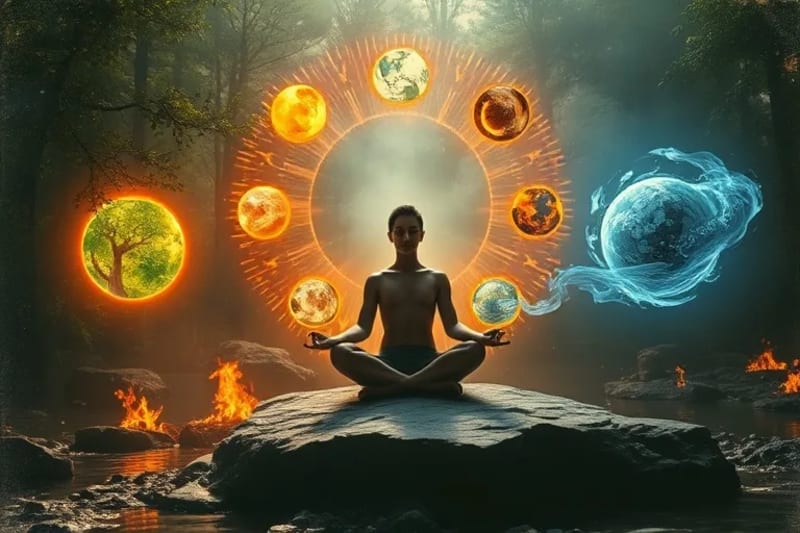
A visual representation of the interconnectedness of elemental energies surrounding a serene meditator, symbolizing balance and spiritual integration.
The journey into elemental spirituality is not about rigid adherence to dogma but rather about a flexible and intuitive approach to self-discovery. It invites us to observe the patterns of nature, recognize them within ourselves, and consciously align our actions with these universal forces. This practice can lead to a more centered existence, fostering a deeper connection to both our inner landscape and the external world.
Table of Contents
- The Five Elements: A Foundational Understanding
- The Wood Element: Growth and Renewal
- The Fire Element: Passion and Transformation
- The Earth Element: Stability and Nourishment
- The Metal Element: Structure and Clarity
- The Water Element: Intuition and Flow
- Integrating Elements into Daily Rituals
- Practical Applications for Balance and Harmony
- The Chinese Zodiac and Elemental Compatibility
- Benefits of Elemental Integration
The Five Elements: A Foundational Understanding
The theory of the Five Elements (Wu Xing) originated in ancient China and forms a cornerstone of Traditional Chinese Medicine (TCM), Feng Shui, and various martial arts and spiritual practices. It describes how five fundamental energies or phases – Wood, Fire, Earth, Metal, and Water – interact, transform, and influence all phenomena in the universe, including the human body and spirit.
These elements are not static substances but dynamic processes, constantly moving through cycles of creation (Sheng Cycle) and control (Ke Cycle). Understanding these cycles is crucial for applying elemental wisdom effectively. The Sheng Cycle describes how one element generates or nourishes the next, while the Ke Cycle illustrates how one element controls or balances another, preventing it from becoming excessive.
- Sheng (Generative) Cycle: Wood feeds Fire; Fire creates Earth (ash); Earth bears Metal; Metal carries Water; Water nourishes Wood.
- Ke (Control) Cycle: Wood penetrates Earth; Earth absorbs Water; Water extinguishes Fire; Fire melts Metal; Metal chops Wood.
These cycles provide a holistic lens through which to view health, relationships, and spiritual development. By recognizing which elements are dominant or deficient within ourselves or our environment, we can implement practices to restore equilibrium. This foundational knowledge empowers us to move beyond superficial understanding and engage with elemental energies on a deeper, more transformative level.
The Wood Element: Growth and Renewal
The Wood element embodies the energy of spring: new beginnings, growth, creativity, and expansion. It is associated with vision, planning, and the drive to move forward. When balanced, Wood brings assertiveness, flexibility, and a clear sense of purpose. An excess of Wood can manifest as anger, frustration, and rigidity, while a deficiency might lead to indecision, lack of motivation, and feeling stuck.
- Associated Qualities: Growth, vitality, ambition, compassion, flexibility, vision.
- Colors: Green, blue-green.
- Season: Spring.
- Organs (TCM): Liver, Gallbladder.
- Emotion: Anger (imbalance), assertiveness (balance).
The Fire Element: Passion and Transformation
Fire represents the peak of summer: joy, passion, enthusiasm, and transformation. It is the element of connection, communication, and spiritual illumination. A balanced Fire element fosters warmth, charisma, and a joyful spirit. Imbalances can lead to anxiety, restlessness, impulsiveness, or, conversely, a lack of joy and social withdrawal. Fire energy is essential for igniting our spiritual path and connecting with others.
- Associated Qualities: Joy, passion, love, enthusiasm, connection, intuition, transformation.
- Colors: Red, orange.
- Season: Summer.
- Organs (TCM): Heart, Small Intestine, Pericardium, Triple Warmer.
- Emotion: Joy (balance), anxiety/restlessness (imbalance).
The Earth Element: Stability and Nourishment
Earth is the central element, representing stability, grounding, and nourishment. It is associated with care, compassion, and our ability to feel centered and secure. A balanced Earth element provides a sense of belonging, empathy, and practical support. When out of balance, Earth energy can manifest as worry, overthinking, sluggishness, or a tendency to be overly critical. It is our anchor, providing a foundation for all other elements.
- Associated Qualities: Stability, grounding, nurturing, empathy, practicality, abundance.
- Colors: Yellow, brown, ochre.
- Season: Late summer, transitional periods.
- Organs (TCM): Spleen, Stomach.
- Emotion: Sympathy/Empathy (balance), worry/overthinking (imbalance).
The Metal Element: Structure and Clarity
Metal embodies the energy of autumn: harvest, organization, precision, and refinement. It is associated with clear thinking, discipline, and the ability to let go of what no longer serves us. When balanced, Metal brings integrity, courage, and a strong sense of self-worth. An imbalance can lead to grief, rigidity, perfectionism, or a feeling of detachment. Metal helps us establish boundaries and discern essential truths.
- Associated Qualities: Structure, order, discipline, clarity, discernment, integrity, letting go.
- Colors: White, silver, gold.
- Season: Autumn.
- Organs (TCM): Lung, Large Intestine.
- Emotion: Grief (imbalance), courage/righteousness (balance).
The Water Element: Intuition and Flow
Water represents the depths of winter: introspection, wisdom, intuition, and adaptability. It is the element of hidden potential, emotional depth, and the ability to navigate change with grace. A balanced Water element fosters peace, deep wisdom, and a strong sense of inner knowing. Imbalances can manifest as fear, isolation, exhaustion, or a lack of motivation. Water connects us to our deepest spiritual essence and universal flow.
- Associated Qualities: Wisdom, intuition, adaptability, introspection, flow, emotional depth.
- Colors: Black, deep blue.
- Season: Winter.
- Organs (TCM): Kidney, Bladder.
- Emotion: Fear (imbalance), peace/wisdom (balance).
Integrating Elements into Daily Rituals
Integrating the five elements into daily spiritual rituals involves consciously inviting their energies into your routine. This doesn't require elaborate ceremonies but rather small, intentional acts that resonate with each element's qualities. The goal is to create a harmonious flow throughout your day, supporting your physical, emotional, and spiritual well-being.

A serene arrangement of natural elements—wood, stone, and water—alongside a flickering candle, inviting a sense of calm and focused intention into daily practice.
Consider the natural rhythm of your day and how different elemental energies might best support various activities. For example, mornings often benefit from the expansive energy of Wood, while evenings might call for the introspective qualities of Water. By mindfully choosing activities and environments that align with elemental principles, you can enhance your spiritual journey.
Here are some suggestions for integrating elements throughout your day:
- Morning Rituals (Wood & Fire):
- Wood: Start your day with movement, like stretching or yoga, to embody growth and flexibility. Set clear intentions or goals for the day. Spend a few minutes planning your tasks.
- Fire: Greet the sun with gratitude. Light a candle during meditation to invoke warmth and clarity. Engage in uplifting activities or connect with loved ones to foster joy.
- Work/Study Practices (Metal & Earth):
- Metal: Organize your workspace, decluttering to create a clear and efficient environment. Focus on tasks that require precision and analytical thinking. Practice mindful breathing to enhance focus.
- Earth: Take grounding breaks, perhaps stepping outside barefoot or enjoying a nourishing meal mindfully. Connect with colleagues or offer support to others. Create a stable and comfortable work area.
- Evening/Rest Rituals (Water & Earth):
- Water: Take a relaxing bath or shower to cleanse and release the day's energies. Engage in journaling or quiet reflection to tap into intuition. Listen to calming music or practice gentle meditation.
- Earth: Wind down with comforting routines, like a warm herbal tea. Spend time in gentle contemplation or reading. Ensure your sleeping space is cozy and secure to promote deep rest.
Practical Applications for Balance and Harmony
The practical application of the Five Elements lies in recognizing imbalances and consciously choosing activities or environments that can restore harmony. This self-awareness is a cornerstone of modern spiritual practice. For instance, if you feel overwhelmed and scattered (excess Fire, deficient Earth), grounding practices become essential.
Identifying your dominant or deficient elements can be a continuous process of observation and self-reflection. Pay attention to your emotional states, physical sensations, and energy levels throughout the day. Are you feeling irritable and restless (Wood/Fire imbalance)? Or perhaps sluggish and unmotivated (Earth/Water imbalance)?
| Element | Sign of Imbalance | Balancing Rituals |
|---|---|---|
| Wood | Anger, frustration, rigidity, indecision. | Nature walks, gardening, stretching, creative expression, setting intentions. |
| Fire | Anxiety, restlessness, impulsiveness, lack of joy. | Candle gazing, joyful activities, social connection, heart-opening meditation. |
| Earth | Worry, overthinking, sluggishness, feeling ungrounded. | Mindful eating, grounding exercises, spending time in nature, acts of service. |
| Metal | Grief, rigidity, perfectionism, detachment. | Decluttering, deep breathing, journaling, setting boundaries, mindful organization. |
| Water | Fear, isolation, exhaustion, lack of motivation. | Baths, meditation, quiet reflection, spending time near water, adequate rest. |
These simple practices can be woven into your daily life, creating a tapestry of elemental support. For example, if you're feeling overwhelmed by a busy schedule, taking a few minutes to organize your desk (Metal) and then stepping outside for a breath of fresh air (Wood) can quickly shift your energy. The key is consistency and a willingness to experiment with what feels right for you.
The Chinese Zodiac and Elemental Compatibility
The Five Elements are also intricately linked to the Chinese Zodiac, adding another layer of depth to personal understanding and compatibility. Each of the twelve animal signs is associated with a specific element that rotates every two years, creating a 60-year cycle. This means that while you have an animal sign, you also have an elemental sign (e.g., a Wood Dragon or a Fire Horse) that further refines your personality and energetic tendencies.
A dynamic abstract sculpture, rendered in vibrant elemental colors, illustrating the intricate and harmonious interplay of the five fundamental forces.
Understanding your personal elemental sign can provide valuable insights into your strengths, challenges, and how you interact with others. For instance, a person with a strong Fire element might naturally be more outgoing and passionate, while a Water element individual might be more introspective and intuitive. Recognizing these inherent elemental leanings can help tailor your daily rituals for optimal personal growth.
Elemental compatibility within the Chinese Zodiac also plays a significant role in relationships. The Sheng and Ke cycles illustrate how different elemental combinations can either nourish and support each other or create friction and challenges. For example, a Wood person might find a Fire person stimulating and inspiring (Wood feeds Fire), while a Metal person might find a Wood person challenging (Metal chops Wood). Exploring these dynamics can foster deeper understanding and empathy in personal and professional relationships.
For those interested in delving deeper into this aspect, resources on Tarot Quantum Mechanics Intersecting Divination Reality can offer personalized insights. This knowledge allows for a more nuanced approach to self-care and interaction, moving beyond generic advice to practices that truly resonate with one's unique elemental blueprint.
Benefits of Elemental Integration
The consistent practice of integrating the Five Elements into daily rituals yields numerous benefits for modern spiritual practitioners. These advantages extend beyond mere theoretical understanding, manifesting as tangible improvements in various aspects of life. The holistic approach fostered by elemental wisdom addresses not just the spiritual, but also the mental, emotional, and physical dimensions of well-being.
One of the primary benefits is a profound sense of inner balance. By consciously working with the generative and control cycles, individuals can mitigate extremes within their own energetic makeup. This leads to greater emotional regulation, reducing the intensity of negative feelings like anger or fear, and amplifying positive ones such as joy and compassion. The result is a more stable and harmonious internal state, regardless of external circumstances.
Furthermore, elemental integration enhances self-awareness and intuition. Regularly reflecting on which elements are active or dormant helps individuals understand their own patterns and needs more deeply. This heightened awareness empowers them to make conscious choices that support their well-being, rather than reacting impulsively. The introspective qualities of the Water element, for example, can be cultivated to sharpen one's inner guidance and decision-making abilities.
Beyond personal benefits, these practices can also improve relationships. By understanding the elemental dynamics at play in interactions, individuals can approach others with greater empathy and patience. Recognizing that a friend's irritability might stem from an imbalanced Wood element, for instance, allows for a more compassionate response. This understanding fosters healthier communication and deeper connections, creating a more supportive social environment.
Finally, integrating the elements promotes a deeper connection to nature and the universal flow of life. It transforms mundane activities into sacred rituals, infusing daily existence with meaning and purpose. This perspective encourages a sense of gratitude and interconnectedness, reminding us that we are part of a larger, dynamic cosmic dance. Such a connection is vital for cultivating a resilient and fulfilling spiritual path in the modern world.
Fuente: Contenido híbrido asistido por IAs y supervisión editorial humana.


Comments
Post a Comment