
Synastry Relationship Dynamics Chart Comparison: Guide | StarPluto
Synastry, a fascinating branch of astrology, offers profound insights into the dynamics of relationships by comparing two individual birth charts. Far beyond simple sun sign compatibility, synastry delves into the intricate interplay of planetary energies, aspects, and house overlays, revealing areas of harmony, challenge, and growth potential between two people. It serves as a cosmic roadmap, helping individuals understand the underlying energetic currents that shape their interactions, fostering empathy and deeper connection.
Whether exploring romantic partnerships, familial bonds, professional collaborations, or friendships, synastry provides a unique lens through which to decode the complexities of human connection. By examining how one person's planets activate specific points in another's chart, we can gain clarity on shared strengths, potential friction points, and the lessons each individual is meant to learn from the relationship. This guide will introduce you to the fundamental principles of basic synastry, empowering you to begin unraveling the celestial tapestry of your most significant bonds.
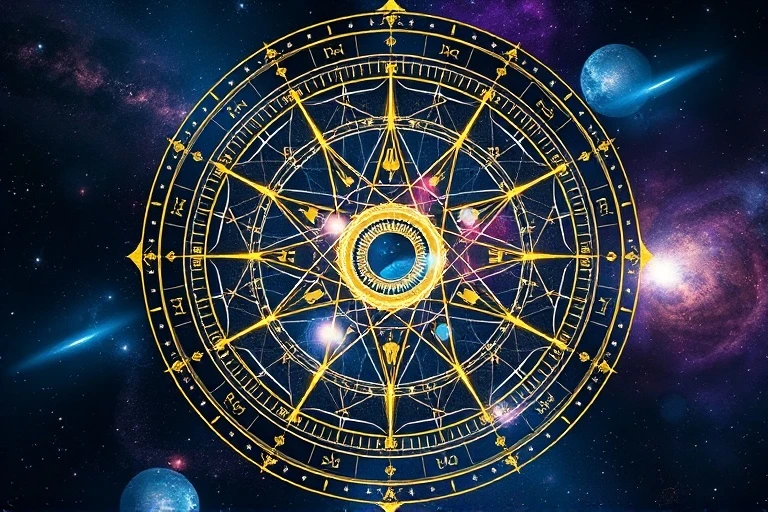
Understanding the intricate overlap of two birth charts is fundamental to deciphering relationship dynamics through synastry.
Table of Contents
- What is Synastry and How Does it Work?
- Key Planets and Their Roles in Synastry
- Understanding Synastry Aspects
- House Overlays: Where Planets Land in Your Partner's Chart
- Interpreting Synastry for Relationship Growth
- Benefits of Basic Synastry Analysis
What is Synastry and How Does it Work?
Synastry is the astrological technique of comparing two natal charts to determine the nature of their relationship. It involves overlaying one person's chart onto another's, observing how the planets and points of one chart interact with the planets and points of the other. This overlay creates a new, composite map of their energetic connection.
At its core, synastry reveals the energetic "chemistry" between individuals. It highlights areas where energies flow effortlessly, creating natural understanding and attraction, as well as points of tension or friction that can lead to conflict or opportunities for profound growth. It's not about predicting destiny, but rather about understanding the inherent patterns and potentials within a relationship.
To perform a basic synastry analysis, you need the birth date, time, and location for both individuals. This information allows for the accurate calculation of each person's natal chart, which includes the positions of the planets in signs and houses, as well as the astrological aspects formed between them. Once both charts are cast, they are placed side-by-side or one on top of the other for comparison.
Key Planets and Their Roles in Synastry
Each planet in astrology represents a different facet of our personality and experience. In synastry, the interactions between these planets reveal specific relationship dynamics. Understanding the core meaning of each planet is crucial for interpreting their combined influence.
- The Sun: Represents the core identity, ego, and life purpose. Sun-Sun aspects reveal fundamental compatibility and shared life goals.
- The Moon: Governs emotions, instincts, security needs, and inner world. Moon-Moon aspects indicate emotional resonance and comfort levels.
- Mercury: Rules communication, intellect, and thought processes. Mercury aspects show how individuals communicate and understand each other.
- Venus: Symbolizes love, affection, values, and attraction. Venus aspects highlight romantic chemistry, shared aesthetics, and how love is expressed.
- Mars: Represents drive, passion, sex, and assertion. Mars aspects indicate physical attraction, energy levels, and how conflicts are approached.
- Jupiter: Signifies expansion, luck, optimism, and philosophy. Jupiter aspects can bring good fortune, growth, and shared beliefs to a relationship.
- Saturn: Governs structure, responsibility, commitment, and challenges. Saturn aspects often point to areas of karmic lessons, commitment, or restriction.
- Uranus, Neptune, and Pluto: These outer planets influence generational themes and deeper, often subconscious, dynamics within a relationship, bringing elements of change, spirituality, and transformation.
The delicate balance of planetary energies reveals the give and take within relationship dynamics.
Understanding Synastry Aspects
Aspects are the angular relationships between planets in a chart. In synastry, aspects are formed when a planet in one person's chart makes a significant angle to a planet in the other person's chart. These angles reveal the nature of the interaction between those planetary energies.
There are several key aspects to consider in basic synastry, each with its own meaning:
- Conjunction (0 degrees): A powerful blending of energies. When two planets are conjunct, their functions merge, creating a strong, often undeniable, connection in that area of life.
- Sextile (60 degrees): An aspect of opportunity and easy flow. Sextiles suggest harmonious interaction and mutual support, making it easy for individuals to cooperate and find common ground.
- Square (90 degrees): An aspect of tension, challenge, and dynamic energy. Squares indicate areas where friction or conflict may arise, but they also provide strong motivation for growth and resolution.
- Trine (120 degrees): A harmonious and flowing aspect, signifying ease, natural talent, and good fortune. Trines create effortless understanding and support, often feeling like a natural fit.
- Opposition (180 degrees): An aspect of awareness, balance, and sometimes polarization. Oppositions highlight areas where individuals may feel pulled in different directions, requiring conscious effort to integrate and find equilibrium.
The interpretation of these aspects depends heavily on the planets involved. For example, a Venus-Mars conjunction suggests strong physical attraction and passion, while a Moon-Saturn square might indicate emotional challenges or feelings of restriction.
House Overlays: Where Planets Land in Your Partner's Chart
Beyond aspects, another critical component of synastry is understanding where one person's planets fall into the houses of the other person's chart. Each of the twelve houses represents a different area of life, and when a partner's planet lands in a specific house, it activates and influences that life area for the house owner.
For instance, if your partner's Sun falls into your 7th House of Partnerships, their core identity (Sun) will strongly impact your relationship dynamics and how you experience partnership. If their Venus falls into your 2nd House of Values and Resources, their approach to love and values (Venus) will influence your sense of security and material possessions.

Interpreting the intricate patterns within a synastry chart can unlock deeper understanding of relational dynamics.
Here's a brief overview of what each house represents:
- 1st House: Personality, self-image, first impressions.
- 2nd House: Values, resources, self-worth.
- 3rd House: Communication, siblings, local environment.
- 4th House: Home, family, roots, emotional foundations.
- 5th House: Creativity, romance, children, pleasure.
- 6th House: Work, daily routine, health, service.
- 7th House: Partnerships, marriage, open enemies.
- 8th House: Shared resources, intimacy, transformation, death/rebirth.
- 9th House: Higher education, philosophy, travel, spirituality.
- 10th House: Career, public image, reputation.
- 11th House: Friends, groups, hopes, wishes.
- 12th House: Subconscious, hidden matters, spirituality, self-undoing.
The house overlays provide context to the planetary interactions, showing where and how a partner's energy is experienced in your life. A planet in a challenging house (e.g., 6th, 8th, 12th) might bring different lessons than one in a harmonious house (e.g., 5th, 7th, 11th).
Interpreting Synastry for Relationship Growth
Synastry is not about finding a "perfect" match, as no such thing exists. Instead, it's a tool for self-awareness and relationship enhancement. By understanding the harmonious aspects, you can appreciate the natural ease and support within the relationship. By recognizing the challenging aspects, you can approach potential conflicts with greater awareness and empathy.
For example, a challenging Mars-Mars aspect might indicate frequent arguments, but with awareness, partners can learn to channel that aggressive energy into productive activities or healthy debate. A strong Moon-Venus connection, on the other hand, suggests deep emotional affection and shared values, which can be nurtured and celebrated.
Effective interpretation involves looking at the entire chart comparison, not just isolated aspects. A relationship with many challenging aspects can still be deeply fulfilling if both individuals are committed to growth and understanding. Conversely, a relationship with many harmonious aspects can become stagnant if there's no impetus for evolution.
Benefits of Basic Synastry Analysis
Engaging with basic synastry offers a multitude of benefits for anyone seeking to improve their relationships and deepen their understanding of human connection. It moves beyond superficial compatibility to reveal the intricate energetic blueprint of any bond.
Here are some key advantages:
- Enhanced Self-Awareness: Understanding how your chart interacts with another's often sheds light on your own relational patterns and needs.
- Deeper Empathy: By seeing the astrological influences on your partner's behavior and emotional responses, you can develop greater compassion and understanding.
- Improved Communication: Synastry can pinpoint communication styles and potential misunderstandings, helping partners navigate conversations more effectively.
- Navigating Challenges: Identifying areas of friction allows couples to address issues proactively, turning potential conflicts into opportunities for growth.
- Celebrating Strengths: Highlighting harmonious aspects reinforces appreciation for shared joys, mutual support, and natural compatibility.
- Understanding Relationship Purpose: For some, synastry can reveal karmic connections or specific life lessons that the relationship is meant to facilitate.
In conclusion, basic synastry provides an invaluable framework for understanding the complex tapestry of human relationships. By comparing birth charts and interpreting the resulting planetary aspects and house overlays, individuals can gain profound insights into their connections, fostering greater harmony, growth, and fulfillment. It's a journey of discovery that empowers you to build stronger, more conscious relationships.
Fuente: Contenido híbrido asistido por IAs y supervisión editorial humana.


Comments
Post a Comment