
Planetary Dignities: Forecasting Life's Astrological Cycles | StarPluto
In the intricate language of astrology, planetary dignities serve as a fundamental framework for understanding the inherent strength, effectiveness, and comfort level of a planet within a specific zodiac sign or house. This advanced concept moves beyond basic sign interpretations, offering a nuanced perspective on how planetary energies manifest in an individual's life. By analyzing these dignities, astrologers can forecast periods of both heightened strength and potential weakness, providing invaluable insights into personal potential and challenges.
The concept of planetary dignity is rooted in Hellenistic and traditional astrological systems, which assigned specific rulerships and relationships between planets and zodiac signs. These relationships dictate whether a planet is operating from a position of power and ease or from a place of struggle and diminished capacity. Understanding these dynamics is crucial for any in-depth astrological analysis, offering a roadmap to an individual's inherent strengths, areas requiring development, and the timing of life events.
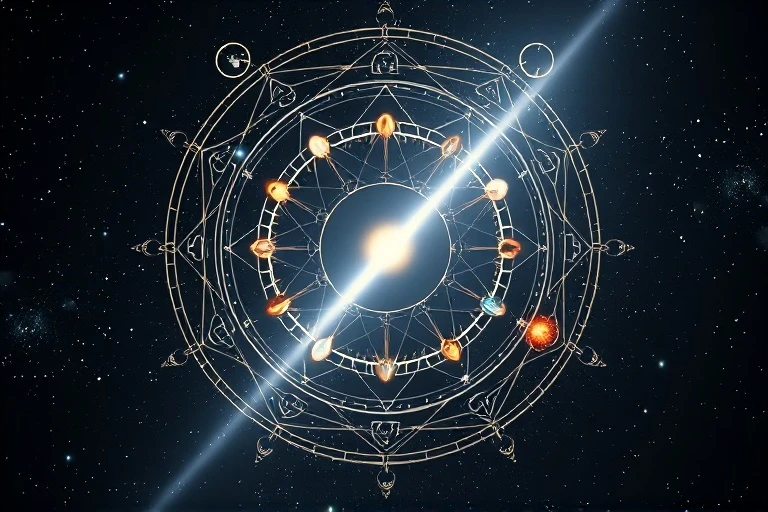
A grand cosmic alignment symbolizing the intricate interplay of planetary dignities and their profound influence on an individual's astrological chart.
This comprehensive guide delves into both essential and accidental dignities, exploring their definitions, implications, and practical application in natal chart interpretation and predictive astrology. We will examine how these ancient principles can illuminate an individual's life path, highlight periods of opportunity, and prepare for phases of adversity. The goal is to equip the reader with a deeper understanding of these foundational astrological concepts.
Essential Dignities: The Core Strengths
Essential dignities refer to the intrinsic strength a planet possesses based on its zodiac sign placement. These dignities describe how well a planet can express its fundamental nature and fulfill its functions. A planet in essential dignity is considered to be "at home" or in a comfortable position, allowing its energies to flow freely and effectively.
Conversely, a planet in essential debility (detriment or fall) indicates a challenging placement where its energies are inhibited, distorted, or difficult to express. Understanding these core strengths and weaknesses is paramount for a comprehensive natal chart reading, revealing an individual's innate talents and potential struggles.
Rulership (Domicile): The Planet's Home
A planet is in its rulership or domicile when it is placed in the zodiac sign that it naturally governs. This is the strongest essential dignity, signifying that the planet is in its most comfortable and powerful position. When a planet is in its domicile, it can operate authentically and efficiently, expressing its qualities without hindrance.
For example, Mars rules Aries, so Mars in Aries is in its domicile. This placement suggests a strong, direct, and assertive expression of Martian energy. Individuals with such a placement often exhibit robust willpower, courage, and a natural ability to take initiative. They are typically self-sufficient and capable of handling challenges with confidence.
Exaltation: Peak Performance and Recognition
Exaltation is the second strongest essential dignity, indicating a sign where a planet's qualities are particularly well-received, honored, and can achieve peak performance. While not as "at home" as in its domicile, a planet in exaltation finds a sign that amplifies its beneficial traits, often leading to recognition and success in areas related to that planet's function.
A classic example is the Sun in Aries. Although the Sun rules Leo, in Aries, its energy of self-expression and vitality is highly celebrated, leading to pioneering spirit, leadership, and a drive for individual achievement. This placement often bestows a natural charisma and the ability to inspire others, making individuals stand out.
Detriment: Areas of Challenge and Discomfort
Detriment occurs when a planet is in the zodiac sign directly opposite its domicile. This is a position of essential debility, where the planet struggles to express its natural qualities effectively. It feels "out of place" or uncomfortable, leading to challenges and potential difficulties in areas governed by that planet.
For instance, Mars in Libra is in its detriment because Libra is opposite Aries. Martian energy, which is typically direct and assertive, can become indecisive, passive-aggressive, or overly concerned with pleasing others in Libra. This often leads to internal conflict between personal desires and the need for harmony in relationships.
Fall: Diminished Capacity and Struggle
The fall is the weakest essential dignity, occurring when a planet is in the zodiac sign opposite its exaltation. In this position, the planet's energies are significantly diminished, distorted, or expressed in a way that is counterproductive. It represents a point of vulnerability and often indicates inherent struggles or sensitivities.
Continuing the example, the Sun in Libra is in its fall because Libra is opposite Aries, where the Sun is exalted. While the Sun in Aries shines brightly, in Libra, its need for individual recognition can be overshadowed by a strong desire for partnership and balance, sometimes leading to a diminished sense of self or difficulty asserting personal will. This placement might indicate a need to learn self-assertion while maintaining equilibrium.
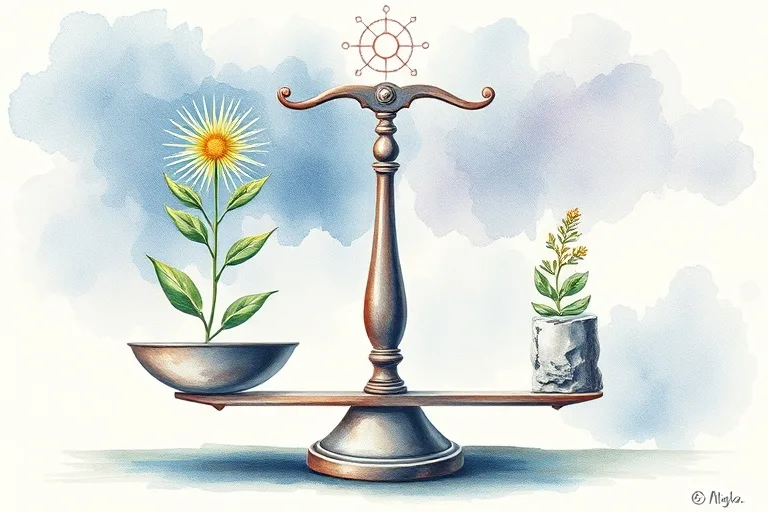
A symbolic representation of astrological dignities, contrasting states of strength and weakness through a balanced scale and a crumbling pillar.
Accidental Dignities: Environmental Factors
Accidental dignities refer to the strength or weakness a planet gains or loses based on its placement within the astrological houses, its speed, direction, and its relationship to other planets through aspects. These are external or circumstantial factors that influence how a planet's essential dignity is expressed. A planet may be in essential debility but gain strength through accidental dignities, or vice-versa.
Accidental dignities provide a layer of nuance to the interpretation of essential dignities. They describe the "environment" in which a planet operates, influencing its visibility, freedom of action, and overall impact on the native's life. A planet can be inherently strong (essential dignity) but lack the opportunity to express itself (accidental debility), or be inherently weak but find avenues for expression through favorable accidental placements.
House Placement: Angular, Succedent, Cadent
The house a planet occupies significantly impacts its accidental dignity. Houses are categorized into three types, each conferring a different level of strength and influence:
- Angular Houses (1st, 4th, 7th, 10th): Planets in these houses are considered very strong and active. They are prominent in the native's life, directly influencing their personality, home, relationships, and public image/career. These placements bring a planet's energy to the forefront, making its influence undeniable.
- Succedent Houses (2nd, 5th, 8th, 11th): Planets here have moderate strength. They are stable and supportive, often related to resources, creativity, transformation, and social groups. While not as immediately impactful as angular planets, they provide a steady, underlying influence.
- Cadent Houses (3rd, 6th, 9th, 12th): Planets in these houses are generally considered weaker or more adaptable. Their influence is less direct and often relates to learning, service, beliefs, and hidden matters. These placements can indicate areas where a planet's energy is more reflective, internal, or subject to external circumstances.
Planetary Speed and Direction: Direct vs. Retrograde
The apparent motion of a planet also contributes to its accidental dignity. A planet moving at its average speed and in direct motion (forward) is generally stronger and more effective. Its energies are expressed outwardly and directly. Conversely, a planet that is retrograde (appearing to move backward) or moving very slowly (stationary) is often considered accidentally debilitated.
Retrograde planets suggest an internal, reflective, or unconventional expression of their energies. While not inherently "bad," they can indicate delays, re-evaluations, or a need to approach matters differently. For a deeper understanding of these dynamics, consider exploring Tarot Quantum Mechanics Intersecting Divination Reality.
Aspects and Conjunctions: Enhancing or Inhibiting
The aspects a planet forms with other planets significantly modify its accidental dignity. Harmonious aspects (trines, sextiles) can enhance a planet's strength and facilitate its expression, even if it is in essential debility. Challenging aspects (squares, oppositions) can create friction, stress, or blockages, diminishing a planet's effectiveness, even if it is essentially dignified.
Conjunctions, where two planets are very close in the zodiac, can either strengthen or weaken a planet depending on the nature of the planets involved. A benefic planet (like Jupiter or Venus) conjunct another can lend it strength, while a malefic planet (like Mars or Saturn) can add challenges. The Sun's conjunctions are particularly noteworthy: a planet too close to the Sun (combust) is severely weakened, while one exactly conjunct (cazimi) is highly empowered.

An abstract 3D render illustrating the complex, interwoven lines and symbols of an astrological chart, depicting the intricate mechanics of planetary interactions.
Interpreting Dignities in the Natal Chart
When interpreting planetary dignities in a natal chart, it is crucial to consider both essential and accidental factors in conjunction. A planet's overall strength and influence are a synthesis of these various conditions. A planet in domicile in an angular house, for example, would represent a highly potent and influential force in the native's life, likely manifesting as significant talents or a dominant personality trait.
Conversely, a planet in its fall in a cadent house, afflicted by challenging aspects, would indicate an area of significant struggle, vulnerability, or a life lesson that requires considerable effort to overcome. This doesn't necessarily mean "bad luck," but rather an inherent challenge that, when consciously addressed, can lead to profound growth. The key is to understand the nature of the energy and how it is likely to express itself.
Here's a summary of essential dignities for quick reference:
| Planet | Rulership (Domicile) | Exaltation | Detriment | Fall |
|---|---|---|---|---|
| Sun | Leo | Aries | Aquarius | Libra |
| Moon | Cancer | Taurus | Capricorn | Scorpio |
| Mercury | Gemini, Virgo | Virgo | Sagittarius, Pisces | Pisces |
| Venus | Taurus, Libra | Pisces | Scorpio, Aries | Virgo |
| Mars | Aries, Scorpio | Capricorn | Libra, Taurus | Cancer |
| Jupiter | Sagittarius, Pisces | Cancer | Gemini, Virgo | Capricorn |
| Saturn | Capricorn, Aquarius | Libra | Cancer, Leo | Aries |
| Uranus | Aquarius | Scorpio | Leo | Taurus |
| Neptune | Pisces | Cancer | Virgo | Capricorn |
| Pluto | Scorpio | Aries | Taurus | Libra |
Forecasting with Transits and Progressions
The true power of planetary dignities extends into predictive astrology, particularly through transits and progressions. As transiting planets move through the zodiac, they enter signs where they may be in dignity or debility, activating different potentials in the natal chart. Similarly, progressed planets change signs over time, shifting the underlying energetic landscape of an individual's life.
When a transiting planet enters a sign of its essential dignity, its influence is often more potent and constructive. For example, a transiting Jupiter entering Cancer (its exaltation) can bring periods of significant growth, emotional well-being, and nurturing opportunities. Conversely, a transiting Mars entering Libra (its detriment) might herald periods of conflict, indecision in relationships, or a struggle to assert oneself effectively.
Progressions, which reflect the soul's evolving journey, also interact with dignities. When a progressed planet moves into a sign where it is dignified, it can signify a period where the native develops a stronger sense of purpose or finds it easier to express certain qualities. If a progressed planet moves into debility, it might indicate a phase of internal challenge, where old patterns are re-evaluated, or new coping mechanisms must be developed. For further insights into life cycles, explore Mesoamerican Astrology AI Oracles Bridging Ancient Modern.
Practical Applications: Leveraging Your Chart
Understanding planetary dignities offers practical advantages in navigating life. By identifying planets in strong dignity within your natal chart, you can recognize your innate talents and areas where you naturally excel. These are your "power zones," where you can invest energy with greater confidence and expect more favorable outcomes. For instance, if Venus is in Pisces (exaltation) in your chart, artistic expression or compassionate relationships might be natural strengths.
Conversely, planets in debility highlight areas that may require more conscious effort, learning, or adaptation. These are not necessarily weaknesses to be avoided, but rather growth opportunities. A planet in detriment or fall challenges you to find alternative ways to express its energy, fostering resilience and deeper understanding. For example, Mercury in Pisces (fall) might suggest a highly intuitive but sometimes scattered mind, requiring disciplined practices to focus communication.
In predictive astrology, knowing when transiting or progressed planets will be in dignity or debility allows for strategic planning. Periods of planetary dignity can be leveraged for initiating new projects, pursuing important goals, or making significant life changes. Periods of debility might call for caution, introspection, or a focus on inner work and personal development rather than external action. This foresight empowers individuals to align their actions with cosmic rhythms, optimizing their potential for success and well-being.
Fuente: Contenido híbrido asistido por IAs y supervisión editorial humana.


Comments
Post a Comment