
Horary Astrology: Specific Questions Cosmic Timing Answers | StarPluto
Horary Astrology stands as a unique and ancient branch of astrological practice, specifically designed to provide direct answers to specific questions. Unlike natal astrology, which analyzes an individual's birth chart to understand their life path, horary astrology casts a chart for the precise moment a question is understood by the astrologer. This cosmic snapshot then becomes a map, revealing the hidden dynamics and potential outcomes related to the query.
The power of horary lies in its immediate and focused nature. It offers a profound method for gaining clarity on dilemmas ranging from lost objects and relationship prospects to career decisions and legal outcomes. By meticulously interpreting the planetary positions, aspects, and house placements within this "question chart," an astrologer can unveil insights that might otherwise remain obscured, guiding individuals toward informed choices.

Cosmic timing reveals answers to your specific questions through horary astrology.
This ancient discipline requires not only a deep understanding of astrological principles but also a keen intuition to frame the question correctly and interpret the chart's subtle messages. It is a dialogue between the seeker, the astrologer, and the cosmos, seeking a definitive "yes" or "no," or a detailed narrative of events. The precision of cosmic timing, captured at the moment of inquiry, is what makes horary astrology such a compelling tool for navigating life's uncertainties.
Table of Contents
- Introduction to Horary Astrology
- The Core Principles of Horary Astrology
- Casting a Horary Chart: The Moment of the Question
- Key Elements of Horary Chart Interpretation
- Applying Horary Astrology: Practical Questions and Answers
- Ethical Considerations and Limitations
- Horary Astrology vs. Other Predictive Techniques
- Conclusion: The Precision of Cosmic Guidance
Introduction to Horary Astrology
Horary astrology, derived from the Latin word "hora" meaning hour, is a divinatory technique that dates back to ancient civilizations. Its primary function is to answer specific questions by analyzing an astrological chart drawn for the exact moment the question is posed and understood by the astrologer. This method assumes that the cosmos reflects the state of the question at that precise instant, offering a symbolic representation of its unfolding.
Unlike the broad overview provided by a Tarot Quantum Mechanics Intersecting Divination Reality, horary charts are highly focused. They do not describe a person's entire life but rather the specific circumstances surrounding a particular query. This makes horary an invaluable tool for decision-making, offering guidance when faced with uncertainty or multiple paths.
The practice of horary astrology flourished in the medieval Islamic world and was later refined in Europe by astrologers like William Lilly. His seminal work, "Christian Astrology," remains a cornerstone for modern practitioners, detailing the intricate rules and interpretations that govern this precise art. The tradition emphasizes strict adherence to these rules to ensure the accuracy and reliability of the answers derived.
The Core Principles of Horary Astrology
At the heart of horary astrology are several fundamental principles that guide its interpretation. The concept of Tarot Quantum Mechanics Intersecting Divination Reality is paramount, asserting that a chart is "radical" or fit for judgment only if it accurately reflects the nature of the question. This often involves checking the Moon's applying aspects and the condition of the Ascendant ruler.
Each element in a horary chart holds symbolic significance. The planets represent specific individuals or forces involved in the question, while the houses of the zodiac correspond to different areas of life relevant to the query. For instance, the 7th house typically represents partners, opponents, or the "other" in a relationship question, while the 10th house relates to career and public standing.
Aspects between planets — the angular relationships they form — indicate how these forces interact. Conjunctions, squares, trines, and oppositions reveal the nature of the communication, cooperation, or conflict. The strength and condition of the planets (e.g., dignified, debilitated, retrograde) further refine their influence, indicating their ability to act effectively.
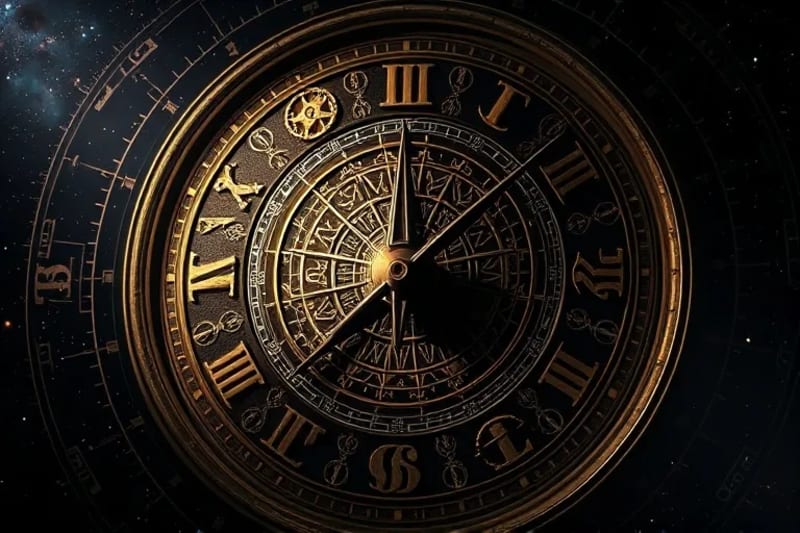
Cosmic timing reveals answers. Horary astrology pinpoints truth to your specific questions.
The Moon plays a particularly crucial role in horary, as it represents the querent (the person asking the question) and the general flow of events. Its applying aspects often indicate the immediate future or the next significant development related to the question. Understanding these core principles is essential for any accurate horary judgment.
Casting a Horary Chart: The Moment of the Question
The most critical step in horary astrology is accurately casting the chart. This chart is not based on the querent's birth time, but on the precise moment the astrologer fully comprehends the question being asked. This means the time and location used for the chart calculation are those of the astrologer, not the querent.
The question must be clear, concise, and genuinely important to the querent. Trivial or rhetorical questions are generally not suitable for horary, as they may not produce a "radical" chart. A well-formed question indicates a genuine need for guidance and often results in a more straightforward and accurate answer.
Once the question is understood, the astrologer records the exact time and geographical location. This data is then used to generate a standard astrological chart, complete with planetary positions, house cusps, and aspects. Modern astrological software makes this process efficient, but the underlying principles remain rooted in traditional calculations.
The Ascendant (rising sign) and its ruling planet are particularly important, as they typically represent the querent. The house where the ruler of the Ascendant is placed, and its aspects, will shed light on the querent's current state and approach to the question. This initial setup establishes the foundation for the entire interpretation.
Key Elements of Horary Chart Interpretation
Interpreting a horary chart involves a systematic analysis of several key elements. First, the Advanced Planetary Dignities Beyond Rulerships Synastry Electional Astrology are identified: the planets representing the querent (usually the ruler of the Ascendant and the Moon) and the matter of the question (e.g., ruler of the 7th house for a relationship, ruler of the 2nd for money).
Next, the condition of these significators is assessed. Are they in their dignities (strong) or debilities (weak)? Are they retrograde, indicating delays or reversals? Their placement in houses and signs provides context for their influence and the circumstances surrounding the question. A strong significator suggests a greater ability to achieve the desired outcome.
The aspects between the significators are crucial for determining the outcome. Applying aspects (planets moving towards a perfect aspect) indicate future developments, while separating aspects show past events. Harmonious aspects (trines, sextiles) suggest ease and cooperation, while challenging aspects (squares, oppositions) point to obstacles or conflict.

Cosmic timing reveals answers to your specific questions.
Other important considerations include the Moon's last and next aspects, the presence of fixed stars, and the condition of the ruler of the 1st house. The concept of "prohibition" or "frustration" (when a third planet interferes with an applying aspect) can also indicate blockages or changes in the expected outcome. A thorough analysis integrates all these factors to paint a complete picture.
Applying Horary Astrology: Practical Questions and Answers
Horary astrology can be applied to a vast array of practical questions, offering specific guidance where other methods might be too general. Common questions often fall into categories such as relationships, career, finances, health, and lost items. The key is to frame the question clearly and directly.
For relationship questions, the 7th house and its ruler, along with Venus and the Moon, are key. A question like "Will I marry X?" would involve analyzing the connection between the querent's significator and X's significator, looking for strong applying aspects, especially conjunctions or trines, and the Moon's connection to both. The condition of the 7th house ruler would also indicate the partner's intentions and ability to commit.
Career and financial questions often involve the 2nd, 6th, and 10th houses. "Should I take this job offer?" would require examining the 10th house (career), its ruler, and the planets aspecting it, as well as the 2nd house (finances) for potential income. The Moon's progression and aspects to these significators would indicate the likely outcome and satisfaction.
Lost item questions are a classic application, using the 2nd house for the item itself and other houses to locate it (e.g., 4th for home, 3rd for neighborhood). The sign on the cusp of the 2nd house and its ruler's placement can often describe the item or its location. For example, a significator in a water sign might suggest it's near water or in a bathroom.
Horary can also address questions about travel, legal disputes, property purchases, and even health matters (though for serious health concerns, medical advice should always be sought first). The precision of the answers often surprises querents, providing a unique form of cosmic counsel for critical life decisions.
Ethical Considerations and Limitations
While horary astrology is a powerful tool, it comes with important ethical considerations and limitations that practitioners must respect. The primary rule is that a question must be genuinely felt and important to the querent. Astrologers should avoid answering trivial questions or those asked out of mere curiosity, as these charts often prove "unradical" or misleading.
Ethically, astrologers should never use horary to invade privacy or to answer questions that are not directly related to the querent's own life or concerns. For instance, asking "Will my neighbor get divorced?" would be inappropriate, as it does not pertain to the querent's direct sphere of influence. The focus should always be on providing helpful guidance, not on gossip or prediction for others without their consent.
Another crucial limitation is the inability of horary to answer questions about death or serious illness. While a horary chart might indicate a general state of health, it is not a diagnostic tool, and medical professionals should always be consulted for health-related issues. Astrologers must emphasize this boundary to their clients.
Furthermore, horary charts are snapshots; they reflect the moment of the question. While they provide a likely outcome, they do not negate free will. The querent always has the agency to act on the information or to change their course, potentially altering the predicted future. Horary offers insight, not immutable destiny. It serves as a guide, not a dictator, in the journey of life.
Horary Astrology vs. Other Predictive Techniques
To fully appreciate horary astrology, it's helpful to understand how it differs from other astrological techniques. Tarot Quantum Mechanics Intersecting Divination Reality, for example, describes a person's inherent character, talents, and life themes based on their birth chart. While it provides a broad framework, it doesn't offer specific answers to immediate questions like horary does.
Predictive techniques such as transits, progressions, and solar returns forecast general periods of opportunity or challenge. For instance, a transit of Jupiter might indicate a period of expansion, but it won't tell you if a specific job offer will be successful. Horary, in contrast, directly addresses the success of that particular job offer.
Electional astrology is another distinct branch, used to choose the most auspicious moment to *begin* an endeavor, like starting a business or getting married. While it also deals with timing, its purpose is proactive—selecting a favorable cosmic moment—rather than reactive, which is horary's role in answering a question about an already existing situation or dilemma.
The fundamental difference lies in the specificity and immediacy of the question. Horary charts are generated for the question itself, making them a unique tool for focused problem-solving. This directness and precision set it apart, offering a cosmic "yes" or "no" or a detailed narrative of events that other branches of astrology are not designed to provide.
Conclusion: The Precision of Cosmic Guidance
Horary astrology, with its deep historical roots and intricate methodology, offers a powerful means of gaining clarity on life's most pressing questions. By capturing the cosmic blueprint at the exact moment a query is formed, it provides a unique and precise form of guidance. This ancient art transforms uncertainty into informed decision-making, illuminating paths forward.
From deciphering relationship dynamics to navigating career choices or finding lost possessions, horary charts offer detailed narratives and often definitive answers. While demanding rigorous interpretation and adherence to ethical guidelines, its value in providing focused, actionable insights remains unparalleled within the astrological landscape.
Embracing horary astrology means tapping into a rich tradition of cosmic timing and symbolic interpretation. It empowers individuals to engage with their dilemmas consciously, armed with the wisdom of the stars. In a complex world, the precision of horary astrology stands as a beacon, guiding us through the fog of doubt with remarkable accuracy and depth.
Fuente: Contenido híbrido asistido por IAs y supervisión editorial humana.


Comments
Post a Comment