
Planetary Magic: Rituals, Influences, Alignment | StarPluto
Planetary magic, a venerable tradition rooted in ancient civilizations, involves the deliberate alignment of ritualistic practices with the energies and influences attributed to celestial bodies. This esoteric discipline posits that each planet, beyond its astronomical presence, carries unique vibrational qualities, archetypal symbolism, and specific magical correspondences that can be harnessed for various purposes, from personal growth and healing to manifestation and protection. Understanding and working with these celestial currents is central to this practice, allowing practitioners to tap into universal forces to effect change in their lives and environment.
The core principle of planetary magic lies in the belief that the microcosm (humanity and Earth) reflects the macrocosm (the cosmos). By synchronizing intentions and actions with planetary cycles and attributes, individuals aim to amplify their magical workings, ensuring that their efforts resonate with the prevailing cosmic tides. This advanced approach to esotericism requires not only a foundational understanding of astrology but also a deep appreciation for symbolism, timing, and the ethical implications of wielding such potent forces.
Table of Contents
- Historical Roots of Planetary Magic
- The Seven Classical Planets and Their Correspondences
- Understanding Planetary Hours and Days
- Crafting Planetary Rituals: Key Components
- Tools and Symbols in Planetary Magic
- Ethical Considerations and Best Practices
- Modern Applications of Planetary Magic
- Planetary Magic vs. Astrological Influence
Historical Roots of Planetary Magic
The practice of planetary magic is not a modern invention but a continuation of traditions stretching back millennia. Its origins can be traced to ancient Mesopotamia, particularly Sumeria and Babylon, where early astronomers meticulously observed celestial movements and correlated them with earthly events and divine influences. These early systems laid the groundwork for astrological principles that would later permeate various cultures.
From Mesopotamia, these ideas traveled to ancient Egypt, where the stars and planets were deeply integrated into religious beliefs, funerary practices, and the construction of sacred architecture. The Hellenistic period saw a significant synthesis of Egyptian, Babylonian, and Greek astrological and magical traditions, giving rise to Hermeticism. Texts like the Picatrix (originally an Arabic grimoire) and the works of figures like Marsilio Ficino and Heinrich Cornelius Agrippa during the Renaissance further codified and expanded upon these principles, detailing specific planetary correspondences, talismans, and ritual procedures.
The Renaissance, in particular, was a golden age for ceremonial magic and astrology, with scholars and magicians exploring the intricate relationships between the planets, their associated spirits, and their potential for influencing the material world. This period emphasized a holistic worldview where the celestial realm was seen as directly impacting the terrestrial, and human beings, as microcosms, could actively engage with these macrocosmic forces.
The Seven Classical Planets and Their Correspondences
Central to planetary magic are the seven classical planets, visible to the naked eye, each associated with a unique set of energies, symbolism, and correspondences. These associations form the foundation upon which rituals are built, ensuring that every element of a magical working resonates with the desired planetary influence.
| Planet | Archetypal Energies | Associated Day | Colors | Metals | Common Intentions |
|---|---|---|---|---|---|
| Sun | Vitality, success, leadership, ego, self-expression, glory | Sunday | Gold, Orange, Yellow | Gold | Success, fame, health, confidence, general well-being |
| Moon | Intuition, emotions, subconscious, dreams, fertility, cycles | Monday | Silver, White, Pearl | Silver | Psychic abilities, emotional balance, fertility, protection, dreams |
| Mars | Action, aggression, courage, passion, conflict, drive | Tuesday | Red, Scarlet | Iron, Steel | Courage, protection, overcoming enemies, sexual energy, swift action |
| Mercury | Communication, intellect, travel, commerce, adaptability, learning | Wednesday | Orange, Yellow, Grey, Mixed | Mercury (Quicksilver), Aluminum | Communication, business, studies, travel, intellectual pursuits |
| Jupiter | Expansion, luck, wisdom, abundance, philosophy, growth | Thursday | Blue, Purple, Royal Blue | Tin | Wealth, prosperity, wisdom, spiritual growth, justice, good fortune |
| Venus | Love, beauty, harmony, pleasure, art, relationships, luxury | Friday | Green, Pink, Copper | Copper | Love, friendship, reconciliation, beauty, artistic inspiration, pleasure |
| Saturn | Discipline, structure, karma, limitation, wisdom, time, responsibility | Saturday | Black, Dark Blue, Grey | Lead | Discipline, boundaries, overcoming obstacles, wisdom, stability, banishing |
Understanding Planetary Hours and Days
Timing is paramount in planetary magic. Just as each day of the week is ruled by a specific planet, so too are the hours within each day. Planetary hours are not fixed 60-minute segments but rather divisions of daylight and nighttime into twelve equal parts, meaning their length varies with the seasons and geographical location. The first hour of any day is ruled by the planet associated with that day, and subsequent hours follow the Chaldean order of the planets (Saturn, Jupiter, Mars, Sun, Venus, Mercury, Moon, then repeating).
Performing a ritual during the planetary hour corresponding to the planet whose energies you wish to invoke or work with is believed to significantly enhance the efficacy of the magic. For instance, a ritual for financial abundance (Jupiter) would ideally be performed on a Thursday during a Jupiter hour. Similarly, a love spell (Venus) would be most potent on a Friday during a Venusian hour.
There are numerous online calculators and apps available that can help determine the exact planetary hours for any given location and date. This precise timing ensures that the practitioner is working in harmony with the natural ebb and flow of cosmic energies, rather than against them, thereby maximizing the potential for successful outcomes.
Crafting Planetary Rituals: Key Components
Crafting an effective planetary ritual involves several key components, each chosen to align with the specific planetary energy being invoked. The intention is to create a resonant environment that acts as a conduit for celestial influence. Here are the fundamental steps and elements:
- Clear Intention Setting: Before anything else, define the purpose of the ritual with absolute clarity. What specific outcome are you seeking? This intention should align with the chosen planet's energies.
- Purification and Consecration: Begin by cleansing yourself and your ritual space. This can involve baths, smudging with appropriate herbs, or simply mentally clearing the area. Consecrate your tools, dedicating them to the planetary energy.
- Astrological Timing: As discussed, select the appropriate planetary day and hour. Consider other astrological factors, such as the Moon's phase, planetary aspects, and the planet's dignity in the current sky.
- Correspondences: Gather materials that correspond to the planet. This includes candles of the correct color, incense made from planetary herbs, stones, metals, and even specific images or symbols (like planetary sigils or seals).
- Invocation: This is the act of calling upon the planetary energy. It can involve prayers, chants, specific invocations from grimoires, or simply a heartfelt appeal to the planet's archetypal force.
- Focus and Visualization: During the ritual, maintain intense focus on your intention. Visualize the desired outcome as if it has already happened, imbued with the planet's energy.
- Offerings: Some traditions include offerings to the planetary intelligences. These can be symbolic gestures, food, drink, or other items that resonate with the planet.
- Charging and Sending: If creating a talisman or amulet, charge it with the planetary energy during the ritual. Conclude by releasing the energy into the cosmos, trusting that your work is done.
- Grounding and Closing: After the ritual, ground yourself to return to a normal state of consciousness. Thank the planetary forces and formally close your sacred space.
Tools and Symbols in Planetary Magic
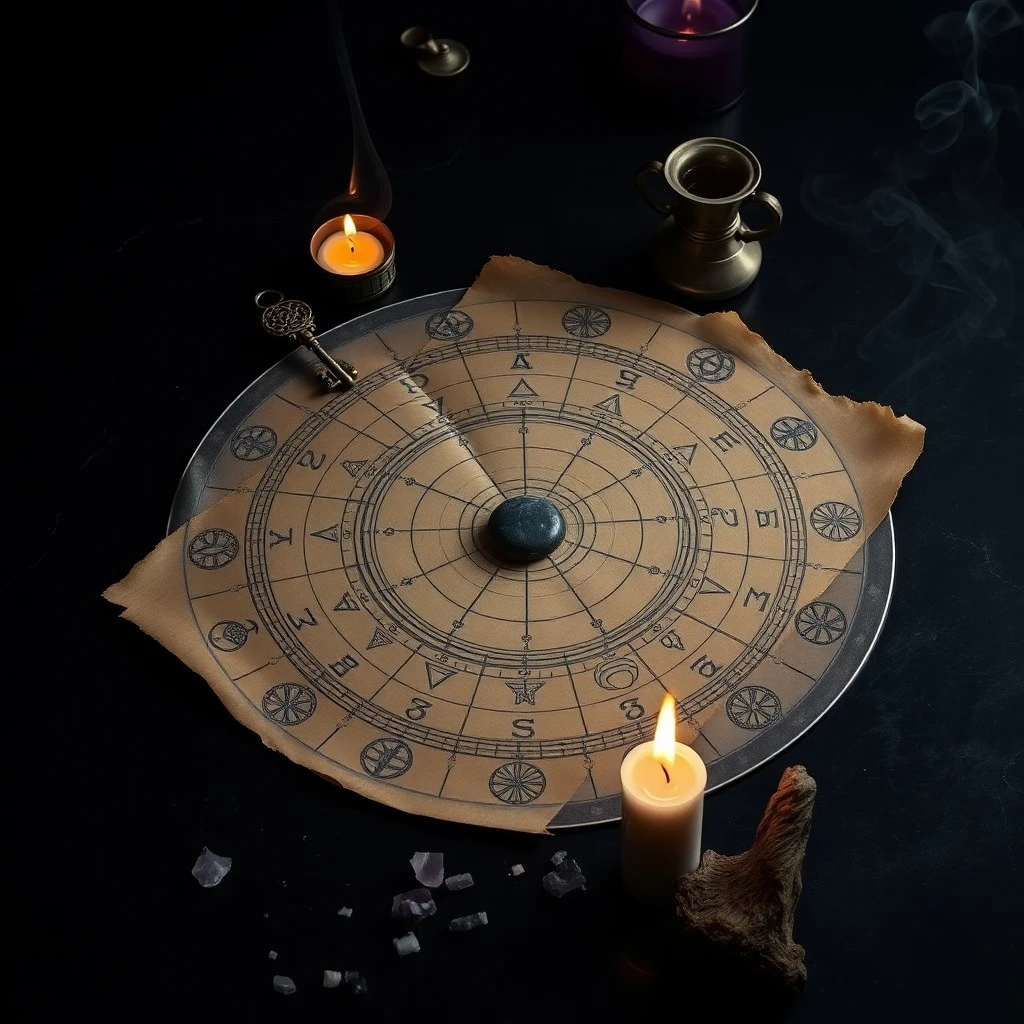
The tools and symbols employed in planetary magic are not merely decorative; they serve as focal points, conduits, and amplifiers for the specific planetary energies being invoked. Each item is chosen for its symbolic resonance and its ability to enhance the ritual's connection to the celestial realm.
Common tools include candles, whose colors are chosen to match the planet (e.g., gold for the Sun, silver for the Moon, red for Mars). Incense, crafted from specific herbs and resins associated with a planet, is used to purify the space and carry intentions skyward. Oils, often infused with corresponding botanicals, are used to anoint candles, tools, and the practitioner themselves. Crystals and gemstones, each vibrating with particular energies, are placed on the altar or worn during the ritual.
Perhaps most iconic are planetary sigils and talismans. Sigils are unique magical symbols or seals derived from numerical squares (Kameas) associated with each planet. These are often drawn or engraved on parchment, metal, or stone and are believed to embody the essence of the planetary intelligence. Talismans, which are objects imbued with planetary energy through a ritual, are created to attract specific influences or provide protection, often worn or kept in a sacred space. The careful selection and consecration of these tools are vital for effective planetary workings.
Ethical Considerations and Best Practices
As with any form of magic, planetary magic carries ethical responsibilities. The power to influence events and energies should be approached with respect, wisdom, and a clear understanding of potential consequences. Practitioners are encouraged to adhere to certain best practices to ensure their work is beneficial and avoids unintended harm.
- Do No Harm: This fundamental principle dictates that magical workings should not intentionally cause harm to oneself or others. Focus on positive outcomes and avoid manipulative or coercive intentions.
- Clarity of Intention: Ambiguous or ill-defined intentions can lead to unexpected or undesirable results. Be precise about what you wish to achieve.
- Personal Growth Focus: Planetary magic is often most effective when directed towards self-improvement, spiritual development, and aligning with one's higher purpose.
- Respect for Free Will: Avoid rituals that seek to control or override the free will of others. Instead, focus on attracting compatible energies or influencing your own path.
- Responsibility: Understand that you are responsible for the energy you put out into the universe. Be prepared to accept the outcomes of your magical actions.
- Knowledge and Study: Continuously deepen your understanding of astrology, planetary correspondences, and magical theory. Ignorance can lead to missteps.
- Grounding and Protection: Always include grounding and protective measures in your rituals to ensure energetic safety and prevent unwanted influences.
Adhering to these ethical guidelines ensures that planetary magic remains a constructive and empowering practice, fostering a deeper connection to the cosmos and promoting positive transformation.
Modern Applications of Planetary Magic
While rooted in ancient practices, planetary magic continues to evolve and find relevance in contemporary spiritual and self-development contexts. Modern practitioners adapt these timeless principles to address current needs and integrate them into a holistic approach to well-being.
One significant application is in personal manifestation. By aligning intentions for career success with Jupiterian energies, or for harmonious relationships with Venusian influences, individuals aim to attract desired outcomes more effectively. It's not about forcing results but about creating a strong energetic resonance that draws opportunities and experiences into one's life. Many use it for enhancing specific skills, such as invoking Mercury for improved communication or learning, or Mars for boosting courage and motivation.
Planetary magic is also employed for spiritual development. Working with the Moon's energies can deepen intuition and connection to the subconscious, while Saturnian rituals can aid in discipline, shadow work, and confronting limitations for personal growth. The practice offers a structured framework for engaging with archetypal forces, providing a rich path for self-discovery and empowerment in an increasingly complex world. It serves as a bridge between the inner self and the vast cosmic tapestry, fostering a sense of connection and purpose.
Planetary Magic vs. Astrological Influence
It's important to differentiate between traditional astrological influence and the active practice of planetary magic. While both draw upon the same celestial bodies and their associated meanings, their approaches and objectives differ significantly. Astrology, in its common form, is primarily an interpretive science. It analyzes the positions of planets at a specific moment (like birth) to understand personality traits, life patterns, and potential future trends. It is largely a passive observation and understanding of cosmic forces as they *act upon* an individual or event.
Planetary magic, conversely, is an active and participatory discipline. Instead of merely interpreting planetary influences, practitioners actively engage with and direct these energies to achieve specific outcomes. It moves beyond understanding "what is" to actively shaping "what will be" through ritual, intention, and alignment. While a strong astrological foundation is crucial for planetary magic (to understand which energies to invoke and when), the magic itself is about conscious co-creation with the cosmos, rather than simply charting its effects.
In essence, astrology provides the map of the cosmic landscape, detailing the currents and tides. Planetary magic, then, is the act of sailing that landscape, using the knowledge of those currents to navigate towards a desired destination. Both are valuable, but planetary magic adds a layer of active engagement and intentional influence to the understanding of celestial forces.
Fuente: Contenido híbrido asistido por IAs y supervisión editorial humana.


Comments
Post a Comment