
Sacred Geometry Practice: Ancient Wisdom for Modern Manifestation | StarPluto
Sacred geometry, often referred to as the "blueprint of creation" or the "language of the universe," delves into the fundamental patterns that underlie all existence. From the microscopic structures of DNA to the vast spirals of galaxies, these geometric forms are believed to represent divine order and harmony.
Understanding and applying these ancient principles can offer profound insights into the nature of reality and provide powerful tools for personal growth, spiritual development, and conscious manifestation in the modern world. This esoteric guide explores how to integrate sacred geometry into practical daily life to foster well-being and achieve desired outcomes.
The concept suggests that everything in the universe is built upon these foundational geometric codes, which carry specific energetic frequencies. By consciously interacting with these forms, individuals can align themselves with universal energies, promoting balance, creativity, and a deeper connection to the cosmos.
- Introduction to Sacred Geometry
- Historical Roots and Universal Principles
- Key Sacred Geometric Forms and Their Meanings
- Practical Applications of Sacred Geometry for Manifestation
- Integrating Sacred Geometry into Daily Life
- Scientific Perspectives and Energetic Resonance
- Common Misconceptions and Ethical Considerations
- The Future of Sacred Geometry in Modern Practice
Introduction to Sacred Geometry
Sacred geometry is a field of study that explores the mathematical ratios and patterns found in nature and art, believing them to possess sacred or spiritual significance. It posits that certain geometric shapes and proportions are fundamental to the creation and structure of the universe.
These patterns are not merely aesthetic; they are seen as expressions of universal laws that govern growth, form, and harmony. From the arrangement of petals in a flower to the spiral of a seashell, the principles of sacred geometry are omnipresent, offering a visual language for the cosmos.
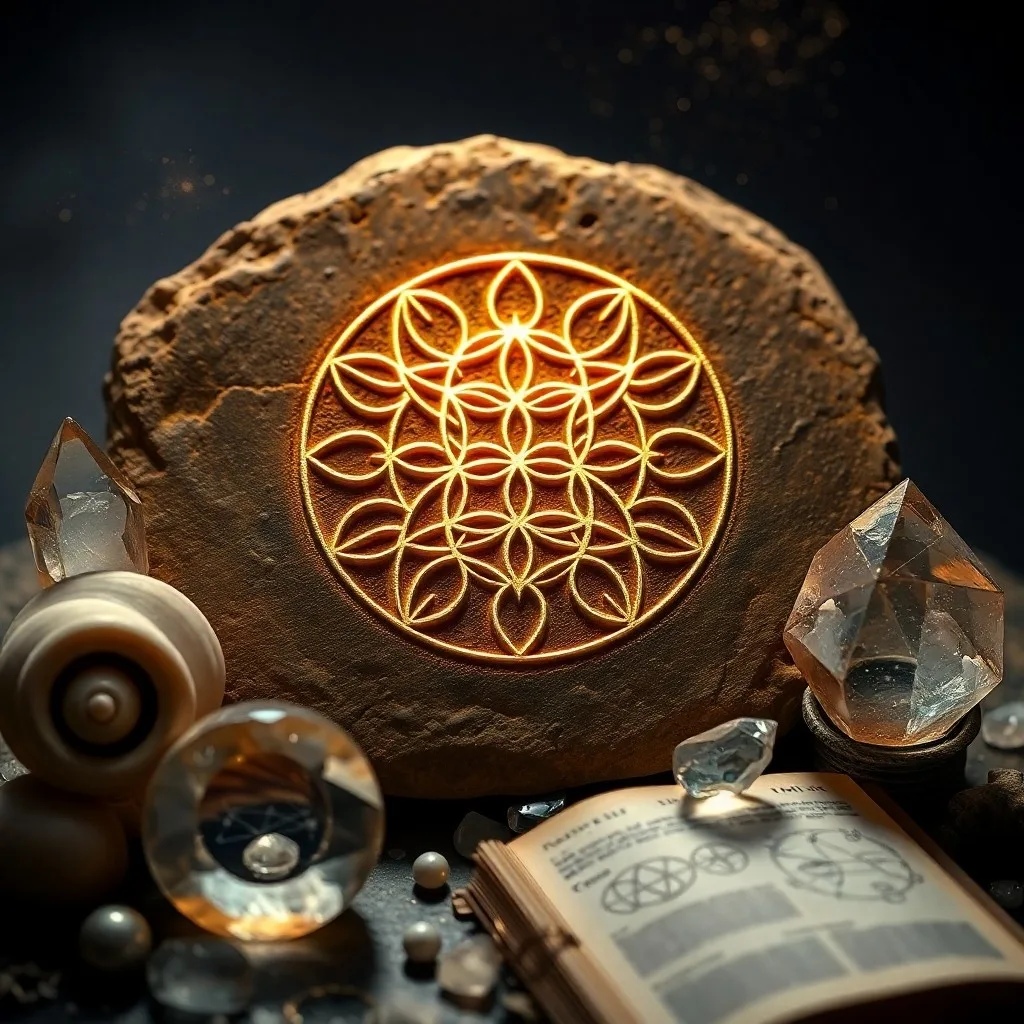
The Tarot Quantum Mechanics Intersecting Divination Reality, a foundational sacred geometric pattern, symbolizes the origin of all existence and the interconnectedness of creation.
For centuries, cultures across the globe have incorporated sacred geometry into their spiritual practices, architecture, and art. They recognized these forms as conduits for divine energy and tools for spiritual awakening.
In modern times, sacred geometry is experiencing a resurgence as people seek deeper meaning and practical methods for enhancing their lives. It offers a unique bridge between science and spirituality, providing a framework to understand the invisible forces that shape our reality.
Historical Roots and Universal Principles
The roots of sacred geometry can be traced back to ancient civilizations, including the Egyptians, Greeks, Mayans, and Hindus. These cultures observed the recurring patterns in nature and celestial movements, discerning underlying mathematical principles that they believed were divinely inspired.
Plato, Pythagoras, and Euclid in ancient Greece extensively studied these geometric forms, attributing philosophical and spiritual significance to them. They believed that geometry was the key to understanding the cosmos and the human soul.
One of the most fundamental principles is the Guided Meditation Interdimensional Travel Consciousness (Phi, approximately 1.618), which appears in everything from the proportions of the human body to the spiral of a snail shell. This ratio is considered aesthetically pleasing and intrinsically harmonious, reflecting a universal balance.
Another core concept is the Tarot Quantum Mechanics Intersecting Divination Reality, formed by the intersection of two circles, symbolizing the union of opposites and the gateway to creation. This shape is found in many ancient religious symbols and architectural designs.
These principles are not confined to a single culture or religion; they are universal. They represent a shared human understanding of the underlying order of the universe, transcending linguistic and cultural barriers.
Key Sacred Geometric Forms and Their Meanings
Several key forms are central to sacred geometry, each carrying unique symbolic and energetic properties. Understanding these forms is the first step in applying them for manifestation.
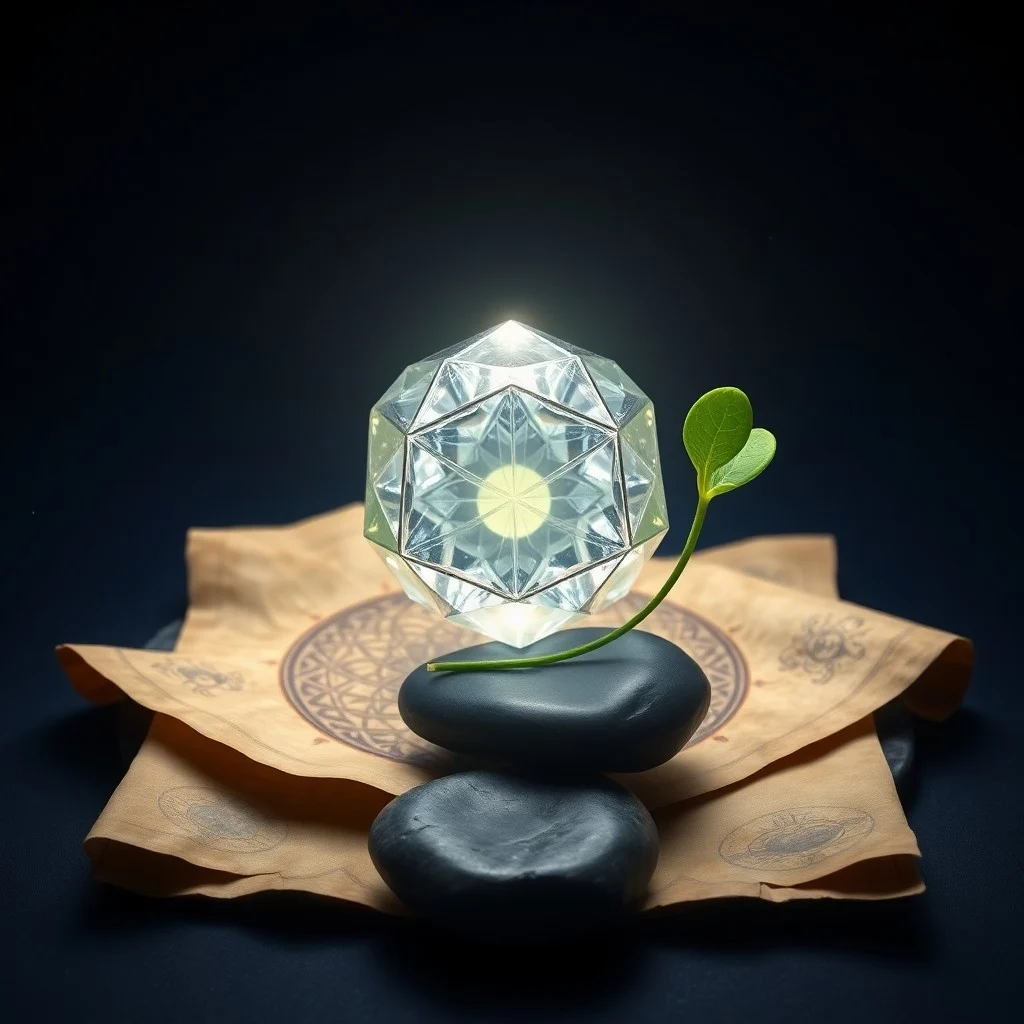
Ancient tools and natural elements, like crystals, enhance the practice of sacred geometry, aiding in focus and energy channeling.
- The Flower of Life: This intricate pattern of overlapping circles is considered a blueprint for the universe, containing the patterns of creation. It symbolizes interconnectedness and the unity of all things. Meditating on or drawing the Flower of Life can help in understanding universal patterns and fostering a sense of belonging.
- The Seed of Life: Comprising seven overlapping circles, the Seed of Life is the foundational component of the Flower of Life. It represents the seven days of creation and the initial spark of consciousness. It's often used for new beginnings, fertility, and creative projects.
- Metatron's Cube: Derived from the Flower of Life, Metatron's Cube contains all five Platonic Solids (tetrahedron, hexahedron, octahedron, dodecahedron, icosahedron). It is believed to be a powerful symbol for protection, spiritual cleansing, and understanding the deeper mysteries of the universe.
- The Platonic Solids: These five three-dimensional shapes are considered the building blocks of matter and correspond to the five elements: fire (tetrahedron), earth (hexahedron/cube), air (octahedron), water (icosahedron), and ether/spirit (dodecahedron). Working with these shapes can help in balancing elemental energies and grounding intentions.
- The Torus: A donut-shaped form, the Torus describes the energy flow of everything from atoms to galaxies. It represents continuous energy flow, self-sustaining systems, and the interconnectedness of all things. Visualizing a torus around oneself can promote energetic balance and protection.
Each of these forms carries a unique vibration and can be used to influence specific aspects of life. Their consistent appearance across diverse cultures and natural phenomena underscores their universal significance.
Practical Applications of Sacred Geometry for Manifestation
Manifestation, the process of bringing desires into reality through focused intention, can be significantly enhanced by incorporating sacred geometry. These forms act as energetic templates, helping to align your intentions with the universal creative force.
One practical application involves using geometric grids for intention setting. By placing crystals or written intentions on a sacred geometric pattern like the Flower of Life, you amplify and focus the energy of your desires. The grid acts as an energetic amplifier, sending your intentions out into the universe with greater clarity and power.
Another method is visualization. Regularly visualizing yourself surrounded by a specific sacred geometric form can help to create an energetic field that supports your goals. For instance, visualizing Metatron's Cube can offer protection and clarity, while the Torus can promote continuous flow and abundance.
Creating sacred spaces using these forms is also highly effective. Arranging furniture, artwork, or even plants according to geometric principles can harmonize the energy of a room, making it more conducive to meditation, creativity, or relaxation. This creates an environment that naturally supports your manifestation efforts.
Furthermore, drawing or tracing sacred geometric patterns can be a meditative practice that enhances focus and connects you to these universal energies. This active engagement helps to imprint the desired patterns onto your subconscious mind, making manifestation more intuitive.
Integrating Sacred Geometry into Daily Life
Incorporating sacred geometry into your daily routine doesn't require drastic changes; subtle integrations can yield significant benefits. Start by observing the geometric patterns around you in nature, art, and architecture.
Wear jewelry featuring sacred geometric designs, such as a pendant with the Flower of Life or a ring with Metatron's Cube. These items serve as personal energetic anchors, keeping you aligned with their vibrations throughout the day.
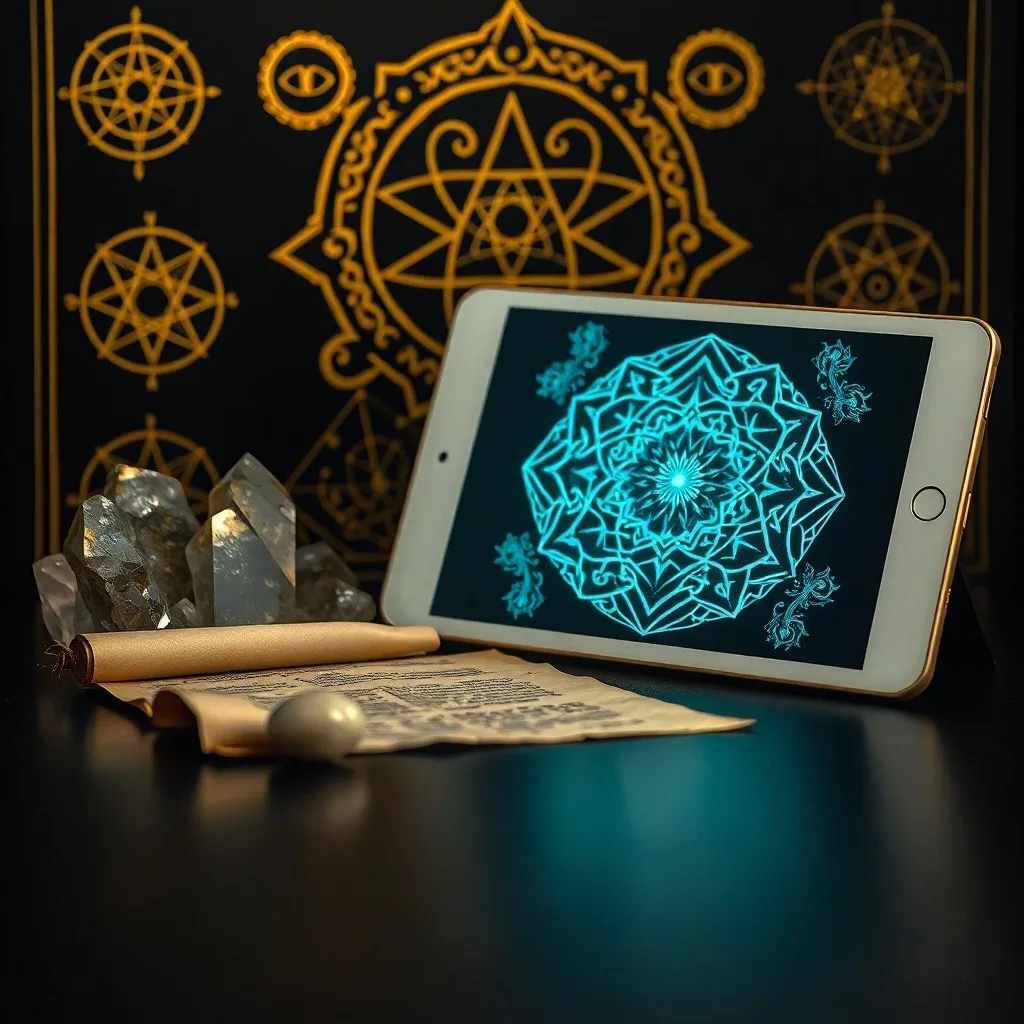
Metatron's Cube, a powerful symbol, represents the energetic structure of the universe, fostering protection and spiritual insight.
Place sacred geometric artwork or decals in your home or workspace. These visual cues can subtly influence your environment, promoting harmony, creativity, and a sense of calm. Consider a Tarot Quantum Mechanics Intersecting Divination Reality based on these forms for your meditation corner.
Engage in mindful practices like drawing or coloring sacred geometric patterns. This can be a deeply meditative and therapeutic activity, helping to quiet the mind and connect with inner wisdom. There are many resources available online and in books for these practices.
Even simple acts, like arranging your food on a plate in a symmetrical or geometrically pleasing way, can infuse your daily life with these principles. The goal is to consciously invite harmony and order into every aspect of your existence.
Scientific Perspectives and Energetic Resonance
While sacred geometry is deeply rooted in spirituality, modern science offers intriguing parallels and explanations for its perceived effects. The concept of energetic resonance is key to understanding how these forms might influence us.
Quantum physics suggests that everything is energy, vibrating at different frequencies. Sacred geometric forms, being perfect expressions of mathematical ratios, are believed to create coherent energy fields. These fields can resonate with and influence our own energetic bodies.
The study of cymatics, which visualizes sound frequencies as geometric patterns in physical mediums, demonstrates how vibration directly translates into form. This provides a tangible link between unseen energy and visible geometry, supporting the idea that specific shapes carry inherent energetic properties.
Furthermore, research into the effects of fractals—patterns that repeat at different scales—shows how these complex geometries are fundamental to natural systems, from coastlines to human physiology. Sacred geometry can be seen as a simplified, idealized representation of these natural fractal patterns.
The human brain's affinity for symmetry and pattern recognition also plays a role. Exposure to harmonious geometric forms can induce feelings of calm, order, and well-being, potentially influencing our mental and emotional states in a positive way, thereby supporting manifestation.
Common Misconceptions and Ethical Considerations
As with any esoteric practice, sacred geometry can be subject to misconceptions. It is not a magical shortcut to instant gratification, nor does it replace personal effort and responsibility. It is a tool to align and amplify your intentions, not to bypass the work involved in achieving your goals.
Another misconception is that one must fully understand complex mathematical theories to benefit from sacred geometry. While intellectual understanding can deepen appreciation, the energetic benefits can be experienced through simple observation, meditation, and interaction with the forms.
Ethical considerations are also important. When using sacred geometry for manifestation, always ensure your intentions are positive, ethical, and do not cause harm to others. The universal laws of energy dictate that what you send out, you receive back.
It's crucial to approach sacred geometry with respect for its ancient origins and spiritual significance. Avoid trivializing its power or using it for purely materialistic or self-serving purposes that lack a broader ethical framework. Authentic practice involves personal growth and contributing positively to the collective.
Always remember that sacred geometry is a path to understanding universal harmony and your place within it. Its power lies in its ability to connect you to a deeper, more ordered reality, fostering a sense of peace and purpose.
The Future of Sacred Geometry in Modern Practice
The integration of sacred geometry into modern practice is continually evolving. As awareness grows, more individuals are discovering its potential for enhancing well-being, creativity, and spiritual connection.
In architecture and design, there's a renewed interest in incorporating sacred geometric principles to create spaces that are not only aesthetically pleasing but also energetically harmonious and conducive to human flourishing. This includes urban planning and sustainable design.
In technology, the principles of sacred geometry are being explored in fields like quantum computing and advanced material science, hinting at a future where these ancient patterns could unlock new scientific breakthroughs. The resonance of these forms is being studied for its potential applications.
For personal development, sacred geometry offers a tangible and accessible entry point into spiritual practices for those who appreciate structure and logic. It provides a visual and intellectual framework for understanding complex esoteric concepts, making them more approachable.
The future of sacred geometry lies in its continued role as a bridge—connecting ancient wisdom with modern challenges, science with spirituality, and individual consciousness with universal order. By consciously applying these timeless patterns, we can manifest a more harmonious and fulfilling existence.
Fuente: Contenido híbrido asistido por IAs y supervisión editorial humana.


Comments
Post a Comment