
Astrological Houses: Decoding Life Areas | StarPluto
In the intricate tapestry of astrology, beyond the familiar twelve zodiac signs, lie the twelve astrological houses—a foundational element that adds profound depth and specificity to any natal chart interpretation. While zodiac signs describe who you are at your core, the houses reveal where and how these inherent energies manifest in your life. They map out the various spheres of human experience, from personal identity and relationships to career, finances, and spiritual growth, offering a cosmic blueprint of your earthly journey.
Understanding the astrological houses is akin to having a detailed geographical map of your soul's landscape. Each house represents a distinct area of life, and the planets and signs residing within them color the nature of your experiences and expressions in those specific domains. This comprehensive guide will delve into the meaning of each of the twelve houses, exploring their significance and how they contribute to a holistic understanding of your astrological profile.

Explore the intricate celestial architecture of the twelve astrological houses, each segment illuminating a unique facet of life's journey.
The concept of astrological houses dates back to ancient Hellenistic astrology, evolving over millennia to become an indispensable tool for astrologers worldwide. These divisions of the sky are determined by the exact time and location of your birth, making each person's house placements uniquely personal. They provide the context through which the planetary energies and zodiacal archetypes play out, offering a dynamic and nuanced perspective on your potential and challenges.
The Foundation of Astrological Houses
Astrological houses are derived from the Earth's rotation on its axis, dividing the celestial sphere into twelve sections. Unlike the zodiac signs, which are fixed bands along the ecliptic (the Sun's apparent path), the houses are dynamic and shift based on the specific moment and geographical coordinates of birth. This is why an accurate birth time and location are crucial for calculating a precise natal chart, as even a few minutes can alter the house cusps (the dividing lines between houses) and, consequently, the planets placed within them.
Each house corresponds to a particular area of life, ranging from the most personal aspects of self to broader societal interactions and spiritual quests. They are often grouped into categories based on their themes:
- Angular Houses (1st, 4th, 7th, 10th): These are the most potent houses, representing cardinal points of experience—self, home, relationships, and career/public image. Planets in angular houses tend to have a more direct and noticeable impact.
- Succeedent Houses (2nd, 5th, 8th, 11th): These houses relate to resources, creativity, intimacy, and social connections. They represent areas where we build and consolidate our experiences.
- Cadent Houses (3rd, 6th, 9th, 12th): These houses deal with communication, daily routines, philosophy, and spirituality. They are often associated with learning, adaptation, and inner processes.
The sign on the cusp of each house indicates the energy and approach you bring to that life area. For example, if Aries is on the cusp of your 2nd House of finances, you might approach money matters with an assertive and pioneering spirit. The planets within a house show the tools, talents, or challenges you experience in that domain.
The Twelve Astrological Houses: A Detailed Exploration
Let's explore each house individually, understanding its core themes and natural associations.
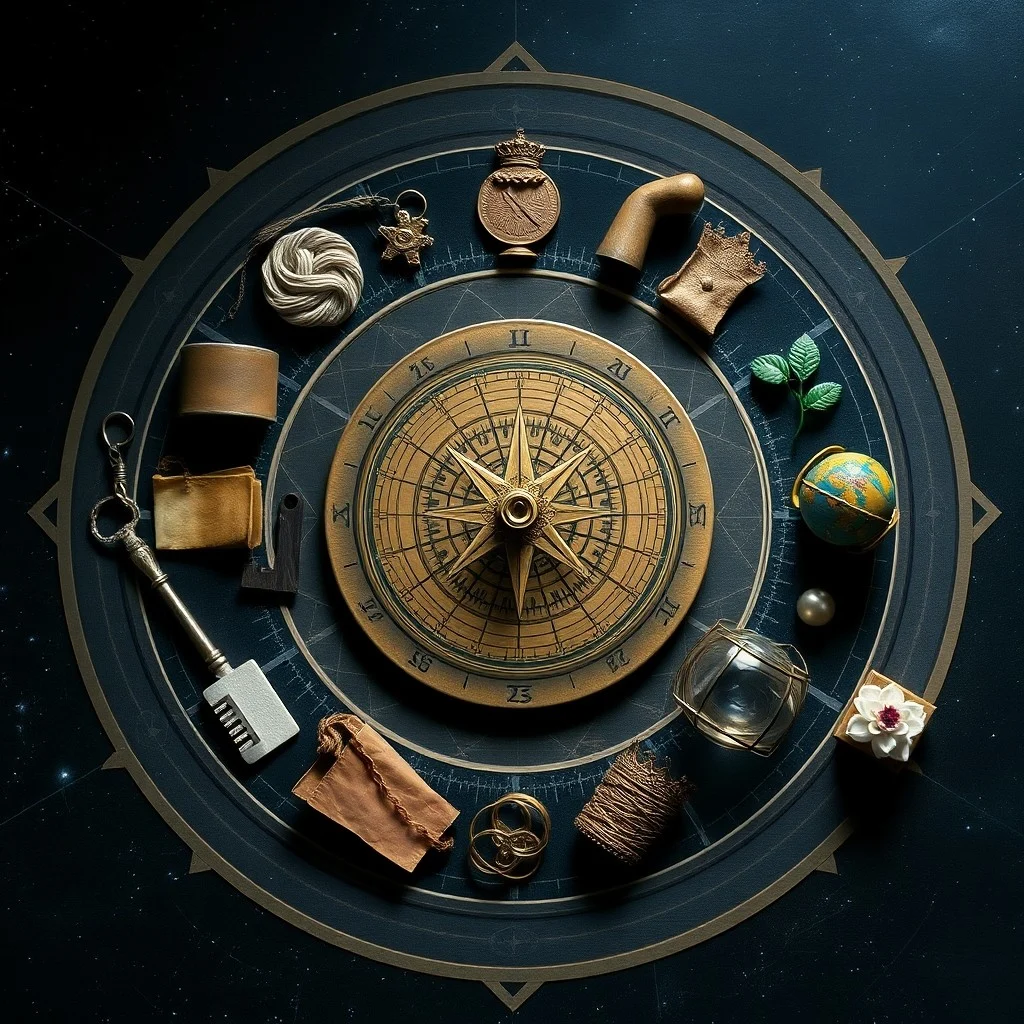
An antique astrolabe and ancient texts symbolize the enduring wisdom and historical depth of astrological studies.
1. The First House: The House of Self
This house, also known as the Ascendant or Rising Sign, represents your personality, physical appearance, first impressions, and how you project yourself to the world. It dictates your initial reactions and your general outlook on life. Its natural ruler is Aries and Mars.
2. The Second House: The House of Possessions and Values
The second house governs your material resources, finances, personal values, self-worth, and what you deem important in life. It reflects your relationship with money, possessions, and your capacity to earn. Its natural ruler is Taurus and Venus.
3. The Third House: The House of Communication
This house deals with communication, short journeys, siblings, early education, and your immediate environment. It reveals your intellectual curiosity, learning style, and how you interact with those around you. Its natural ruler is Gemini and Mercury.
4. The Fourth House: The House of Home and Family
The fourth house, also known as the Imum Coeli (IC), represents your roots, home, family, ancestry, and emotional foundations. It describes your private life, sense of security, and the end of matters. Its natural ruler is Cancer and the Moon.
5. The Fifth House: The House of Pleasure and Creativity
This house governs creativity, romance, children, hobbies, speculation, and self-expression. It shows where you find joy, how you express your unique talents, and your capacity for playfulness. Its natural ruler is Leo and the Sun.
6. The Sixth House: The House of Health and Service
The sixth house relates to daily routines, work, health, pets, and service to others. It indicates your work ethic, how you manage your well-being, and your ability to contribute effectively. Its natural ruler is Virgo and Mercury.
A luminous crystal sphere symbolizes the multifaceted nature of life, with each beam representing a unique house and its influence.
7. The Seventh House: The House of Partnerships
Also known as the Descendant, this house rules committed relationships, marriage, business partnerships, contracts, and open enemies. It describes what you seek in a partner and how you relate to others one-on-one. Its natural ruler is Libra and Venus.
8. The Eighth House: The House of Transformation and Shared Resources
The eighth house delves into shared resources, inheritance, taxes, sex, death, rebirth, and psychological transformation. It indicates how you handle power dynamics, intimacy, and profound changes. Its natural ruler is Scorpio and Pluto (traditionally Mars).
9. The Ninth House: The House of Higher Learning and Philosophy
This house governs higher education, philosophy, long-distance travel, foreign cultures, religion, and spiritual beliefs. It reflects your quest for meaning, your worldview, and your capacity for expansion. Its natural ruler is Sagittarius and Jupiter.
10. The Tenth House: The House of Career and Public Image
Known as the Midheaven (MC), the tenth house represents your career, public reputation, social status, and life goals. It shows your ambitions, achievements, and how you are perceived in the public eye. Its natural ruler is Capricorn and Saturn.
11. The Eleventh House: The House of Friendships and Hopes
The eleventh house rules friendships, groups, associations, humanitarian causes, hopes, and wishes. It indicates your social circle, your ideals, and your contribution to collective endeavors. Its natural ruler is Aquarius and Uranus (traditionally Saturn).
12. The Twelfth House: The House of Spirituality and Subconscious
This house is associated with the subconscious mind, hidden matters, solitude, spirituality, karma, and self-undoing. It represents areas of retreat, introspection, and the dissolution of the ego. Its natural ruler is Pisces and Neptune (traditionally Jupiter).
Here is a summary of the houses and their key associations:
| House | Key Themes | Natural Ruler (Sign/Planet) |
|---|---|---|
| 1st House | Self, Appearance, Identity | Aries / Mars |
| 2nd House | Money, Possessions, Values | Taurus / Venus |
| 3rd House | Communication, Siblings, Short Trips | Gemini / Mercury |
| 4th House | Home, Family, Roots | Cancer / Moon |
| 5th House | Creativity, Romance, Children, Pleasure | Leo / Sun |
| 6th House | Health, Work, Service, Daily Routines | Virgo / Mercury |
| 7th House | Partnerships, Marriage, Open Enemies | Libra / Venus |
| 8th House | Transformation, Shared Resources, Intimacy | Scorpio / Pluto (Mars) |
| 9th House | Higher Education, Philosophy, Travel | Sagittarius / Jupiter |
| 10th House | Career, Public Image, Ambition | Capricorn / Saturn |
| 11th House | Friendships, Groups, Hopes, Ideals | Aquarius / Uranus (Saturn) |
| 12th House | Subconscious, Spirituality, Hidden Matters | Pisces / Neptune (Jupiter) |
House Systems and Their Variations
It's important to note that there isn't one universal method for dividing the astrological houses. Various house systems exist, each with its own mathematical approach and philosophical underpinnings. The most commonly used systems include:
- Placidus: This is arguably the most popular system in Western astrology, especially in the U.S. It divides houses unequally, with house sizes varying based on latitude.
- Whole Sign: Gaining popularity, especially among Hellenistic astrologers, this system assigns an entire zodiac sign to each house, starting with the sign of the Ascendant. This results in equally sized houses.
- Koch: Another popular unequal house system, similar to Placidus, often favored by modern psychological astrologers.
- Equal House: This system measures each house as 30 degrees, with the cusp of the first house being the Ascendant.
The choice of house system can significantly impact the placement of planets and house cusps, leading to different interpretations. Many astrologers have a preferred system based on their studies and experience, but understanding that these variations exist is key to a comprehensive astrological education. Each system offers a valid lens through which to view the natal chart.
Interpreting Planets in Houses
When a planet resides in a particular house, its energy and function are primarily expressed through the themes of that house. For example, if Mars (the planet of action and drive) is in your 10th House (career and public image), you are likely to be ambitious, driven, and assertive in your professional life, perhaps even competitive. The sign the planet is in further refines this interpretation—Mars in Leo in the 10th House would suggest a bold, creative, and leadership-oriented approach to career.
Conversely, an empty house doesn't mean that area of life is unimportant or absent. It simply suggests that there isn't a specific planetary energy directly influencing it, meaning you might have more flexibility or a less intense focus on those themes. The sign on the cusp of an empty house, and its ruling planet, still provide valuable insights into how that life area functions.
Understanding House Rulerships
Beyond the planets within a house, understanding house rulerships is another crucial layer of interpretation. The ruling planet of the zodiac sign on the cusp of a house is considered the ruler of that house. The house where this ruling planet is located will then show where the energy of the first house is directed or expressed. For instance, if your 7th House (partnerships) has Gemini on its cusp, its ruler is Mercury. If Mercury is placed in your 2nd House (finances), it suggests that your partnerships might be significantly intertwined with financial matters or shared values, or that you communicate about money with your partner.
This inter-connectivity between houses through their rulers creates a dynamic web of relationships within the natal chart, revealing how different life areas influence and support one another. It's a sophisticated technique that allows for a much deeper and more integrated understanding of an individual's life path and psychological makeup.
In conclusion, the astrological houses are indispensable for a nuanced and personalized natal chart reading. They provide the specific contexts and stages upon which the drama of your life unfolds, influenced by the unique interplay of zodiac signs and planetary energies. By exploring these twelve vital areas, you gain invaluable insights into your identity, relationships, career, and spiritual journey, empowering you to navigate life with greater awareness and purpose.
Fuente: Contenido híbrido asistido por IAs y supervisión editorial humana.


Comments
Post a Comment