
Advanced Natal Chart: Synthesis & Integration | StarPluto
Advanced Natal Chart Synthesis: Integrating All Components
The natal chart is a complex snapshot of the heavens at the moment of an individual's birth, offering profound insights into their personality, potential, and life path. While understanding individual components like planets, signs, and houses is foundational, true astrological mastery lies in the art of synthesis—integrating all these elements into a cohesive and meaningful narrative. This advanced approach moves beyond fragmented interpretations, revealing the dynamic interplay that shapes an individual's unique essence.
This guide delves into the methodologies and principles of advanced natal chart synthesis, providing a framework for astrologers and enthusiasts to unlock deeper layers of understanding. We will explore how to weave together the various threads of a birth chart, identifying dominant themes, inherent conflicts, and pathways for growth, ensuring a comprehensive and nuanced interpretation.
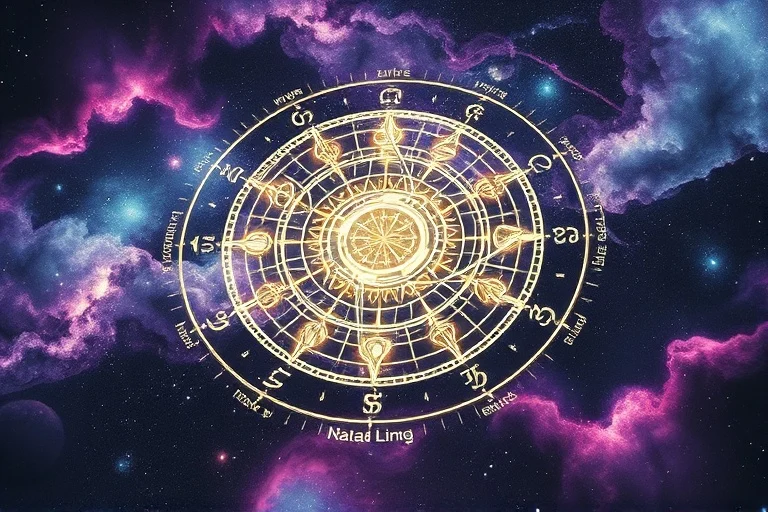 A holographic projection of a natal chart, symbolizing the intricate and dynamic interplay of celestial energies at birth.
Foundational Principles of Synthesis
Before embarking on advanced synthesis, a solid grasp of fundamental astrological concepts is essential. Each component of the natal chart—planets, signs, houses, and aspects—carries its own symbolic weight and meaning. Synthesis is the process of understanding how these individual meanings merge, modify, and sometimes contradict one another to form a coherent psychological and behavioral profile.
The core idea is that no single element acts in isolation. A planet's expression is colored by the sign it occupies, the house it resides in, and the aspects it forms with other planets. Similarly, a house's area of life is influenced by the sign on its cusp and any planets within it. The art of synthesis involves identifying the dominant themes and underlying motivations that emerge from these complex interactions.
A Hierarchical Approach to Integration
An effective method for synthesis is to adopt a hierarchical approach, starting with the most influential elements and progressively integrating finer details. This prevents getting lost in the minutiae and ensures that the overarching narrative remains clear. Here’s a structured way to proceed:
- The Big Three: Sun, Moon, and Ascendant: These three pillars form the core of the personality. The Sun represents the ego, conscious will, and life purpose; the Moon signifies emotions, subconscious patterns, and security needs; and the Ascendant (Rising Sign) dictates the outward personality, physical appearance, and initial approach to life. Understanding their signs, houses, and aspects to each other provides the primary psychological framework.
- Planetary Rulers and Dispositors: Identify the ruling planets of the Sun, Moon, and Ascendant. Trace the chain of dispositorship to find the ultimate dispositor—the planet that rules itself. This planet often reveals a central driving force or a key area of focus in the individual's life.
- Hemispheres and Quadrants: Analyze the distribution of planets across the chart's hemispheres (Eastern/Western, Northern/Southern) and quadrants. This reveals fundamental orientations:
- Eastern Hemisphere (Houses 1-3 & 10-12): Emphasis on self-reliance, initiative, and personal development.
- Western Hemisphere (Houses 4-9): Focus on relationships, partnership, and response to others.
- Northern Hemisphere (Houses 1-6): Concern with personal, private life, and foundational experiences.
- Southern Hemisphere (Houses 7-12): Focus on public life, career, and external achievements.
- Elemental and Modal Balance: Assess the distribution of planets among the four elements (Fire, Earth, Air, Water) and three modalities (Cardinal, Fixed, Mutable). Imbalances indicate areas of strength and potential weakness, influencing temperament and behavioral patterns.
- House Cusps and Intercepted Signs: Examine the signs on the house cusps, as they describe the energy through which an individual approaches different life areas. Intercepted signs and houses, where a sign is entirely contained within a house and does not appear on a cusp, can indicate hidden talents or challenges that require conscious effort to unlock.
- Planetary Aspects: Aspects describe the relationships between planets, revealing dynamics of cooperation, tension, and integration. Conjunctions, oppositions, squares, trines, and sextiles are primary, but minor aspects can add subtle nuances. Look for aspect patterns (e.g., Grand Trines, T-Squares, Yods) which represent significant energetic configurations.
- Chiron, Lunar Nodes, and Asteroids: Integrate the meanings of Chiron (the wounded healer), the Lunar Nodes (destiny and past life karma), and significant asteroids (e.g., Ceres, Pallas, Juno, Vesta) to add layers of depth related to healing, karmic lessons, and specific archetypal energies.
Interpreting Complex Interactions
The true challenge and reward of synthesis come from interpreting how these various components interact. This involves understanding the blending of energies, the resolution of conflicts, and the amplification of certain themes. Consider the following:
- Planetary Dignities and Debilities: A planet's strength or weakness is influenced by the sign it occupies. A planet in its domicile or exaltation operates effectively, while one in its detriment or fall faces inherent challenges. This modifies its expression significantly.
- Mutual Reception and Disposition: When two planets are in each other's signs of rulership (e.g., Mars in Scorpio and Pluto in Aries), they are in mutual reception, indicating a cooperative and supportive relationship. Tracing dispositor chains helps understand how different parts of the chart are ultimately governed.
- Aspect Patterns:
Pattern Description Implication Grand Trine Three planets in the same element, forming 120-degree angles. Ease, talent, natural flow, but can lead to complacency if not actively utilized. T-Square Two planets in opposition, both squaring a third planet. Dynamic tension, challenge, and a strong drive to overcome obstacles; often a source of significant growth. Grand Cross Four planets forming two oppositions and four squares. Intense pressure, constant challenges, but immense potential for balance and mastery. Yod (Finger of God) Two planets in sextile, both quincunx (150 degrees) a third planet. A fated pattern, requiring constant adjustment and adaptation; often indicates a unique mission or talent. Stellium Three or more planets clustered in the same sign or house. Intense focus and energy directed towards the themes of that sign/house, making it a dominant area of life. - House Rulerships and Derivatives: Understand how planets rule different houses. For example, if Mars rules the 7th house (relationships) and is in the 10th house (career), it suggests that relationships (7th) might be expressed or found within the career (10th) context. Derivative houses extend this, viewing a house from the perspective of another (e.g., the 2nd house from the 7th is the 8th house, representing a partner's resources).
 An antique astrolabe and ancient scrolls symbolize the meticulous study and wisdom required for advanced astrological interpretation.
The Role of the Ascendant and Descendant Axis
The Ascendant-Descendant axis is crucial in understanding how an individual projects themselves into the world and how they engage in relationships. The Ascendant is the mask worn in public, the initial impression, and the way one initiates action. The Descendant, directly opposite, represents what one seeks in others, particularly in partnerships, and often reflects qualities that are projected onto others or are underdeveloped within the self.
Planets conjunct or aspecting this axis profoundly influence these themes. For instance, a planet conjunct the Ascendant emphasizes its qualities in the individual's outward expression, while a planet conjunct the Descendant highlights its role in attracting specific types of relationships or partners. The signs on these cusps further define the style and approach to self and others.
Midheaven and Imum Coeli Axis
The Midheaven (MC) and Imum Coeli (IC) axis defines the public and private spheres of life. The MC, located at the cusp of the 10th house, represents career, public image, reputation, and life goals. It indicates what one strives to achieve in the external world and how one is seen by society. The IC, at the cusp of the 4th house, symbolizes roots, home, family, emotional foundations, and the subconscious self. It represents the private world from which one operates.
The signs and planets associated with this axis reveal the dynamics between one's inner world and outer aspirations. A strong emphasis on the MC might indicate a driven, publicly oriented individual, while a prominent IC suggests a deep connection to family, heritage, and inner security. Understanding this balance is key to comprehending an individual's life purpose and sense of belonging.
Elemental and Modal Analysis in Depth
Beyond simple counts, a deeper elemental and modal analysis reveals the energetic blueprint of the personality. Each element (Fire, Earth, Air, Water) and modality (Cardinal, Fixed, Mutable) corresponds to distinct psychological functions and behavioral tendencies.
- Elemental Dominance/Deficiency:
- Fire (Aries, Leo, Sagittarius): Enthusiasm, inspiration, action, passion. Deficiency can lead to lack of motivation.
- Earth (Taurus, Virgo, Capricorn): Practicality, stability, groundedness, sensuality. Deficiency can lead to impracticality.
- Air (Gemini, Libra, Aquarius): Intellect, communication, objectivity, social connection. Deficiency can lead to difficulty expressing ideas.
- Water (Cancer, Scorpio, Pisces): Emotion, intuition, empathy, sensitivity. Deficiency can lead to emotional detachment.
- Modal Dominance/Deficiency:
- Cardinal (Aries, Cancer, Libra, Capricorn): Initiative, leadership, starting new projects. Deficiency can lead to difficulty initiating.
- Fixed (Taurus, Leo, Scorpio, Aquarius): Stability, persistence, determination, resistance to change. Deficiency can lead to inconsistency.
- Mutable (Gemini, Virgo, Sagittarius, Pisces): Adaptability, flexibility, communication, changeability. Deficiency can lead to rigidity.
By understanding the interplay of these distributions, astrologers can identify core drives, coping mechanisms, and areas where an individual might overcompensate or feel lacking. For example, a dominance of Fire and Cardinal signs suggests a highly active, pioneering spirit, while a deficiency in Earth might indicate challenges with practical implementation.
 An abstract oil painting depicting the harmonious and dynamic interplay of the four classical elements, central to astrological synthesis.
Synthesizing the Shadow and Growth Points
Advanced synthesis also involves identifying areas of challenge and potential growth. These often manifest through difficult aspects (squares, oppositions, quincunxes), intercepted signs, and the placement of Chiron and the South Node. These are not merely "bad" placements but rather indicators of where conscious effort and development are required.
The South Node represents past life patterns and comfort zones that, while familiar, may hinder current growth. The North Node points towards the evolutionary path and lessons to be learned in this lifetime. Integrating these nodal placements into the overall narrative provides a powerful framework for understanding an individual's spiritual journey and purpose.
Chiron's placement reveals deep wounds and areas of healing, but also where one can become a profound healer for others. By synthesizing Chiron with its sign, house, and aspects, astrologers can pinpoint the nature of the wound and the potential for transformation. This moves the interpretation beyond mere prediction to profound psychological insight and guidance.
Crafting the Narrative of the Chart
Ultimately, advanced natal chart synthesis is about crafting a coherent and empowering narrative. It's not enough to list traits; the goal is to explain *why* an individual behaves in certain ways, what their deepest motivations are, and what challenges and opportunities they are likely to encounter. This narrative should flow logically, connecting seemingly disparate elements into a unified story.
Consider the chart as a symphony, where each planet is an instrument, each sign a melody, each house a movement, and each aspect a harmony or dissonance. The astrologer's role is to conduct this symphony, revealing its overarching theme and the unique composition of the individual's soul. This requires intuition, experience, and a deep respect for the complexity of human experience.
For further exploration into specific astrological components, consider delving into topics such as Tarot Quantum Mechanics Intersecting Divination Reality, Astro-Genomics: Karmic Health Blueprints DNA Patterns, or the significance of . Each of these elements adds another layer to the intricate tapestry of natal chart interpretation.
Fuente: Contenido híbrido asistido por IAs y supervisión editorial humana.


Comments
Post a Comment