
Runes Divination: History, Meanings, Casting | StarPluto
Rune divination, an ancient practice rooted in Norse and Germanic traditions, offers a profound method for introspection and understanding the unseen forces at play in one's life. Far from being mere fortune-telling, runes serve as a powerful tool for spiritual guidance, self-reflection, and tapping into the collective unconscious. Each symbol carries a rich tapestry of meaning, drawing from mythology, nature, and human experience, providing a unique lens through which to interpret life's challenges and opportunities.
The practice involves selecting and interpreting runic symbols, often carved onto wood, stone, or bone, to gain insight into a situation or question. This process is less about predicting a fixed future and more about revealing underlying energies, potential outcomes, and the wisdom needed to navigate one's path. Understanding the history, individual meanings, and various casting methods is crucial for anyone looking to engage with this ancient esoteric art effectively and respectfully.
- The Ancient History of Runes
- Understanding Elder Futhark Rune Meanings
- Practical Rune Casting Methods
- Ethical Considerations in Rune Divination
- Conclusion: Embracing Runic Wisdom
The Ancient History of Runes
The word "rune" itself comes from an Old Norse word meaning "secret" or "mystery," hinting at the profound and often hidden knowledge these symbols represent. The earliest runic alphabets, known as Futhark, emerged among Germanic peoples around the 1st or 2nd century CE. These symbols were not merely a writing system; they were imbued with magical and spiritual significance, used for protection, blessings, and, critically, for divination.
The most well-known and widely studied runic alphabet is the Elder Futhark, consisting of 24 symbols. It was used across Northern Europe, including Scandinavia, Britain, and parts of Central Europe, before evolving into regional variations. Each rune had a phonetic value, a name, and a complex set of symbolic associations that were deeply intertwined with Norse cosmology, the natural world, and human psychology. These symbols were believed to be gifts from the god Odin, who, according to myth, hung himself from the world tree Yggdrasil for nine days and nights to gain their wisdom.
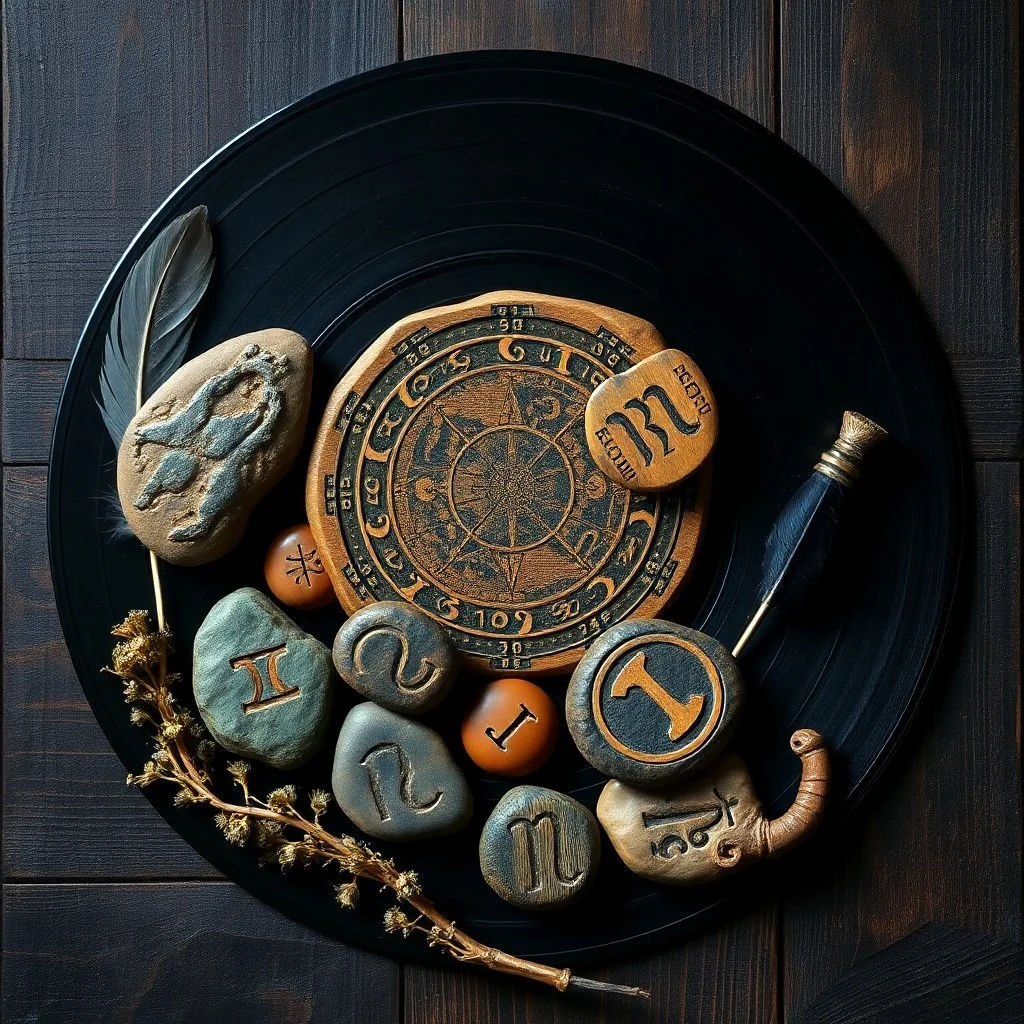
A mesmerizing 3D digital illustration of an Elder Futhark rune set, glowing with an ethereal light on a mystical stone altar, surrounded by swirling cosmic dust, symbolizing the ancient origins and profound spiritual connection of these powerful symbols.
Over time, the Elder Futhark gave way to other runic systems, such as the Younger Futhark (used primarily in Scandinavia during the Viking Age, with fewer symbols) and the Anglo-Saxon Futhorc (used in England, with more symbols). While their forms and numbers changed, their fundamental role as carriers of meaning and tools for insight remained consistent. Archaeological discoveries of runic inscriptions on amulets, weapons, and memorial stones attest to their widespread use and significance in daily life and spiritual practices.
The decline of runic use as a primary writing system coincided with the spread of Christianity, which introduced the Latin alphabet. However, the esoteric and divinatory aspects of runes persisted in folk traditions and magical practices for centuries. In modern times, there has been a significant resurgence of interest in runes, particularly for their divinatory potential, as people seek deeper spiritual connections and alternative forms of guidance. This revival emphasizes the rich cultural heritage and timeless wisdom embedded within these ancient symbols, offering a bridge to ancestral knowledge and self-understanding.
Understanding Elder Futhark Rune Meanings
Each of the 24 runes in the Elder Futhark possesses a unique name and a spectrum of meanings, encompassing both positive and challenging aspects. These meanings are not rigid but are interpreted contextually, often depending on their position in a spread and their relationship to surrounding runes. Familiarity with these core meanings is paramount for accurate and insightful divination. Here is a brief overview of some key runes and their primary interpretations:
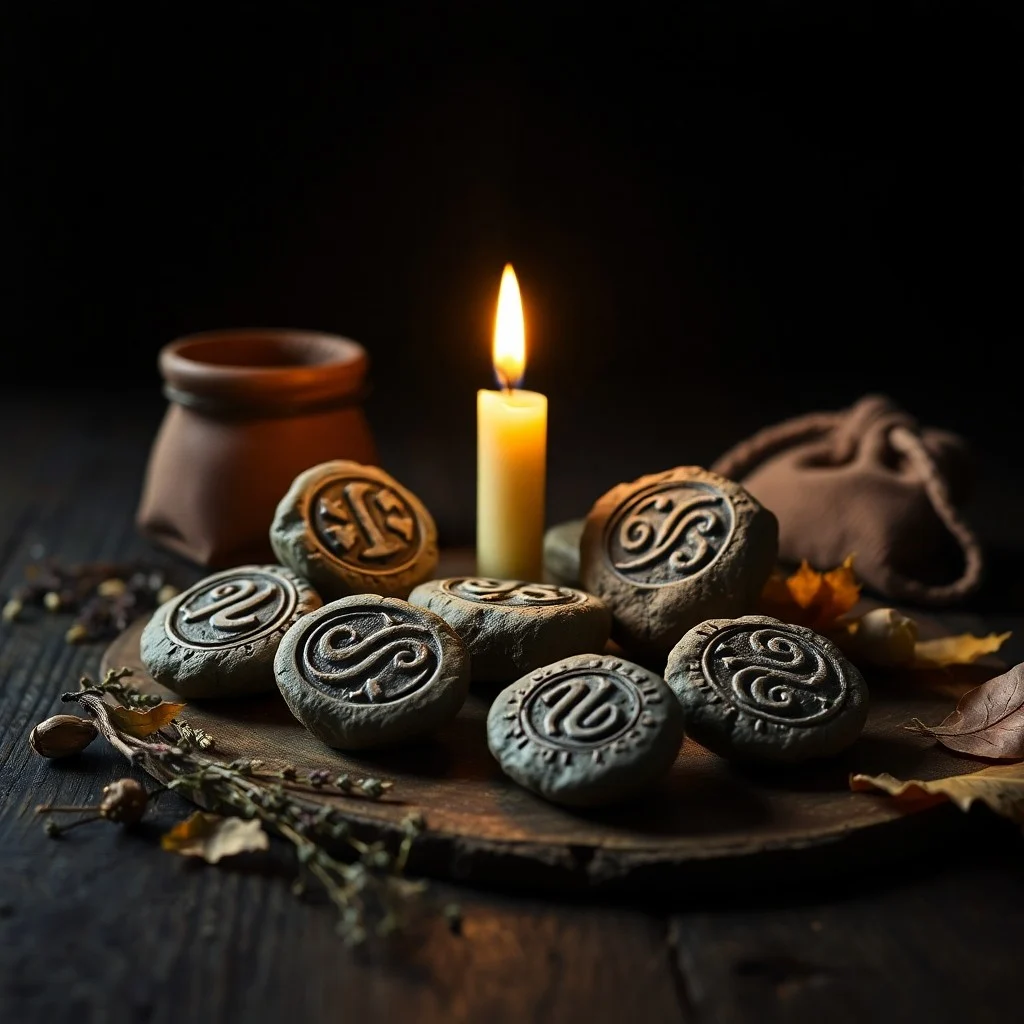
A cinematic still life photograph capturing a weathered leather pouch filled with intricately carved wooden runes, resting upon an antique map, bathed in the warm, flickering light of a candle, evoking a sense of historical mystique and the tools of ancient divination.
- Fehu (ᚠ): Represents wealth, abundance, success, and new beginnings. It signifies material gain, but also the responsibility that comes with it.
- Uruz (ᚢ): Symbolizes strength, vitality, raw power, and untamed potential. It speaks of good health, courage, and primal energy.
- Thurisaz (ᚦ): Associated with protection, conflict, and destructive forces. It can represent a thorn, a giant, or a necessary challenge that leads to growth.
- Ansuz (ᚨ): The rune of communication, divine inspiration, wisdom, and truth. It suggests messages, insights, and the power of words.
- Raido (ᚱ): Represents journeys, travel, cycles, and rhythm. It can signify physical travel or a spiritual journey towards self-discovery.
- Kenaz (ᚲ): Symbolizes knowledge, enlightenment, creativity, and inner fire. It is the torch that illuminates the path.
- Gebo (ᚷ): The rune of gifts, partnerships, generosity, and balance. It speaks of fair exchanges and harmonious relationships.
- Wunjo (ᚹ): Represents joy, comfort, pleasure, and fellowship. It signifies happiness, harmony, and good fortune.
- Hagalaz (ᚺ): A rune of disruption, change, and destructive natural forces. It often indicates challenges that are beyond one's control, leading to necessary transformation.
- Nauthiz (ᚾ): Symbolizes need, constraint, and hardship. It can indicate a difficult period but also the necessity of endurance and self-reliance.
- Isa (ᛁ): Represents ice, stagnation, delay, and introspection. It suggests a pause, a moment to reflect before moving forward.
- Jera (ᛃ): The rune of harvest, cycles, and good results from past efforts. It signifies patience, justice, and the rewards of hard work.
- Eihwaz (ᛇ): Associated with the Yew tree, representing endurance, protection, death, and rebirth. It speaks of resilience and transformation.
- Perthro (ᛈ): Symbolizes mystery, fate, chance, and hidden knowledge. It often relates to secrets, destiny, and the unknown.
- Algiz (ᛉ): The rune of protection, defense, and connection to the divine. It is a shield, guarding against harm and offering spiritual guidance.
- Sowilo (ᛋ): Represents the sun, success, honor, and vital energy. It signifies victory, clarity, and positive outcomes.
- Tiwaz (ᛏ): Associated with the god Tyr, symbolizing justice, sacrifice, leadership, and victory. It speaks of courage and integrity.
- Berkana (ᛒ): The rune of growth, rebirth, fertility, and new beginnings. It relates to family, nurturing, and personal development.
- Ehwaz (ᛖ): Represents movement, progress, partnership, and trust. It often signifies travel, change, or a strong bond.
- Mannaz (ᛗ): Symbolizes humanity, the self, and social order. It speaks of human intelligence, cooperation, and community.
- Laguz (ᛚ): The rune of water, intuition, emotions, and the subconscious. It suggests flowing with life, psychic abilities, and hidden depths.
- Ingwaz (ᛝ): Represents completion, fertility, and inner growth. It signifies a period of gestation, leading to a successful outcome.
- Othala (ᛟ): Associated with inheritance, homeland, tradition, and ancestral property. It speaks of legacy, security, and belonging.
- Dagaz (ᛞ): The rune of breakthrough, awakening, and new day. It signifies radical change, clarity, and the end of darkness.
Some practitioners also include a blank rune, often called Wyrd or Odin's Rune, representing the unknown or destiny. It signifies that what is to come is not yet revealed or is entirely in the hands of fate. While the core meanings are a starting point, true mastery of rune divination comes from deep meditation, personal connection, and intuitive interpretation, allowing the symbols to speak directly to the seeker's situation.
Practical Rune Casting Methods
Rune casting involves selecting runes in a structured manner to answer a question or gain insight. There are numerous methods, ranging from simple one-rune draws to complex multi-rune spreads. The key is to approach the process with a clear intention, a calm mind, and respect for the symbols. Here are a few popular casting methods:
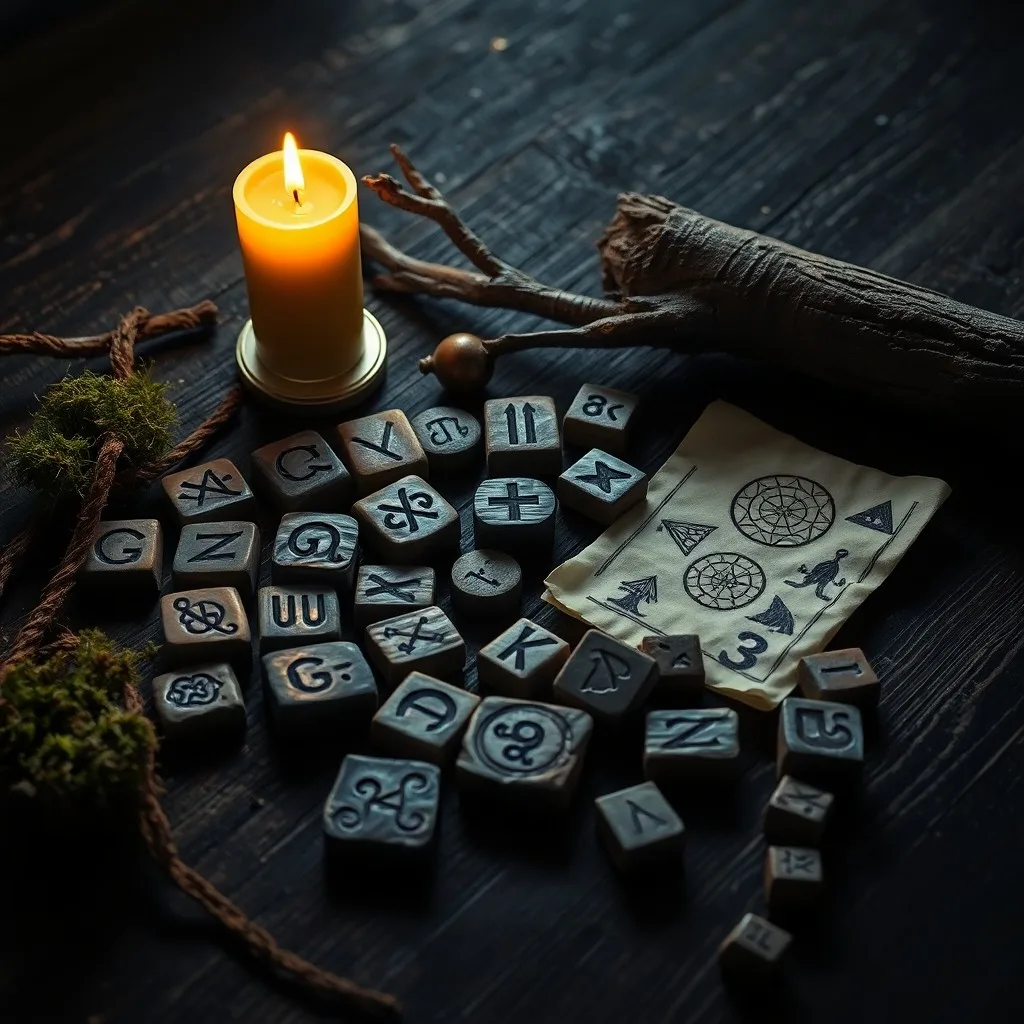
An abstract watercolor painting depicting flowing water reflecting celestial bodies, from which translucent rune symbols subtly emerge, symbolizing intuition, hidden truths, and the mystical connection between ancient wisdom and the cosmos.
The Three-Rune Spread (Past, Present, Future)
- Preparation: Focus on your question. It should be open-ended, not a simple yes/no.
- Drawing: Reach into your rune bag and draw three runes, one at a time.
- Placement: Place them from right to left (or left to right, consistently).
- Rune 1 (Left/First): Represents the past, what led to the current situation.
- Rune 2 (Center/Second): Represents the present situation, its core energies, and challenges.
- Rune 3 (Right/Third): Represents potential future outcomes or advice on how to proceed.
- Interpretation: Consider the individual meanings of each rune, how they interact, and their overall message in relation to your question.
The Five-Rune Spread (The Cross)
- Preparation: This spread is excellent for understanding a specific problem or decision.
- Drawing: Draw five runes from your bag.
- Placement: Arrange them in a cross pattern.
- Rune 1 (Bottom): Represents the challenge or problem at hand.
- Rune 2 (Left): Represents obstacles or external influences.
- Rune 3 (Right): Represents support or positive influences.
- Rune 4 (Top): Represents the solution or advice.
- Rune 5 (Center): Represents the core essence of the situation or the outcome if the advice is followed.
- Interpretation: Analyze the interplay between the runes, paying close attention to the central rune's message.
Odin's Rune (Single Rune Draw)
- Preparation: For quick guidance or a daily message, simply ask a direct question or set an intention for the day.
- Drawing: Draw one rune from the bag.
- Interpretation: This single rune provides a direct answer, a piece of advice, or a theme for the day. Its meaning is often very clear in the context of your question.
Remember that the act of casting is a ritual. Clear your mind, set your intention, and be open to the messages the runes convey. It is also common for runes to appear reversed. While some practitioners ignore this, others interpret a reversed rune as signifying a blocked energy, a challenge, or the opposite aspect of its upright meaning. This adds another layer of complexity and depth to the interpretation, encouraging a more nuanced understanding of the guidance offered.
Ethical Considerations in Rune Divination
Approaching rune divination with a strong ethical framework is crucial for responsible practice. Divination tools, including runes, are meant to empower individuals, not to foster dependency or fear. The primary goal should always be to provide clarity, encourage self-awareness, and guide personal growth. Practitioners should prioritize the well-being of those seeking guidance, ensuring that interpretations are constructive and respectful.
One key ethical principle is to avoid making definitive predictions about the future, especially those that might cause distress or limit an individual's sense of agency. Runes offer insights into probabilities and potentials, highlighting the energies at play, but they do not dictate an unchangeable destiny. Emphasizing free will and the ability to influence outcomes based on informed choices is vital. A responsible diviner will always remind the seeker that they hold the power to shape their own path.
Furthermore, it is important to maintain confidentiality and create a safe, non-judgmental space for those seeking readings. Sensitive topics should be handled with empathy and professionalism, always referring individuals to appropriate professional help (e.g., therapists, legal counsel) if their questions fall outside the scope of spiritual guidance. Avoid using runes to impose personal beliefs or to manipulate others. The interaction should always be about facilitating the seeker's own intuition and understanding, rather than dictating solutions.
Finally, continuous learning and self-reflection are essential for any rune practitioner. Regularly reviewing one's own interpretations, seeking feedback, and deepening one's knowledge of runic history and mythology ensures an evolving and responsible practice. By adhering to these ethical guidelines, rune divination can remain a powerful and beneficial tool for spiritual exploration and personal empowerment, honoring its ancient roots while serving modern seekers.
Conclusion: Embracing Runic Wisdom
Rune divination stands as a testament to humanity's enduring quest for meaning and guidance. From their origins as a sacred writing system among ancient Germanic tribes to their modern resurgence as a tool for introspection, runes offer a unique and profound pathway to understanding ourselves and the world around us. They are not simply symbols on a piece of wood or stone; they are keys to unlocking deeper wisdom, revealing hidden truths, and navigating the complexities of life with greater clarity and purpose.
By delving into the rich history of the Elder Futhark, learning the nuanced meanings of each rune, and practicing various casting methods, individuals can cultivate a powerful connection to this ancient tradition. The true value of rune divination lies not in predicting a fixed future, but in empowering the seeker with insights that foster personal growth, encourage informed decision-making, and illuminate the spiritual journey. Embracing runic wisdom is an invitation to explore the mysteries of existence, guided by the echoes of ancient voices and the whispers of our own intuition.
Source: AI-assisted hybrid content with human editorial supervision.


Comments
Post a Comment