
Scrying Techniques Peering Future Mirrors Water | StarPluto
Scrying, an ancient practice of divination, involves gazing into a reflective surface or medium to perceive visions, insights, or messages. This esoteric art, often associated with peering into the future, has been a cornerstone of mystical traditions across cultures for millennia. From the polished obsidian mirrors of ancient Mesoamerica to the crystal balls of European seers, the techniques of scrying offer a unique pathway to the subconscious and the unseen realms, inviting practitioners to unlock hidden knowledge and gain profound spiritual understanding.
The practice is not merely about predicting events but about fostering a deeper connection with one's intuition and the collective unconscious. It transcends simple fortune-telling, serving as a tool for introspection, problem-solving, and spiritual growth. Understanding the various methods and principles behind scrying can empower individuals to explore this fascinating discipline responsibly and effectively.

Gazing into the ethereal glow of a crystal ball, a classic tool for scrying and divination.
Table of Contents
- Introduction to Scrying
- A Brief History of Scrying
- Crystal Ball Gazing: The Art of Crystallomancy
- Water Scrying: Hydromancy and Its Depths
- Mirror Scrying: The Dark Speculum
- Diverse Scrying Techniques
- Preparing for a Scrying Session
- Interpreting Scrying Visions
- Ethical Considerations and Best Practices
- Conclusion: The Enduring Allure of Scrying
Introduction to Scrying
Scrying, also known as "speculomancy," is the practice of looking into a suitable medium in the hope of detecting significant messages or visions. These messages may be interpreted as spiritual or supernatural insights, offering guidance, revealing hidden truths, or even foretelling future events. The term "scrying" is derived from the Old English word "descry," meaning "to make out" or "to reveal."
The core principle behind scrying is to induce a trance-like state, allowing the conscious mind to quieten and the subconscious to become more receptive to subtle impressions. These impressions can manifest as images, symbols, feelings, or even auditory messages within the chosen medium. It is a highly personal practice, with interpretations often varying greatly among individuals.
A Brief History of Scrying
The history of scrying is as old as human civilization itself, with evidence of its practice found in numerous ancient cultures. Early forms of scrying often involved natural elements readily available, such as pools of water, polished stones, or even the reflections in blood. The Egyptians used polished obsidian and dark ink in bowls for divination, while the ancient Greeks and Romans practiced hydromancy, gazing into water for prophetic visions.
During the Renaissance, scrying gained significant popularity in Europe, often associated with alchemists, magicians, and mystics. Dr. John Dee, a prominent advisor to Queen Elizabeth I, famously used a crystal ball and obsidian mirror with his scryer, Edward Kelley, to communicate with angelic entities. This era solidified the image of the crystal ball as the quintessential scrying tool, an image that persists in popular culture today. For more on ancient practices, consider exploring Tarot Quantum Mechanics Intersecting Divination Reality.
Crystal Ball Gazing: The Art of Crystallomancy
Crystallomancy, or crystal ball gazing, is perhaps the most iconic form of scrying. A crystal ball, typically made of quartz, glass, or other clear materials, serves as the focal point for the practitioner's gaze. The goal is not to see images *in* the ball, but to allow the ball to facilitate visions *within* the mind's eye.
To begin, find a quiet space with subdued lighting, ideally with a single, soft light source that won't create harsh reflections. Place the crystal ball on a dark cloth or stand to minimize distractions. Gaze softly into the ball, allowing your eyes to unfocus slightly. Do not stare intensely, as this can cause eye strain and hinder the trance state. Instead, maintain a relaxed, receptive attitude.
Initially, you might see swirling mists, shadows, or colors. These are often precursors to clearer visions. With patience and practice, distinct images, symbols, or even entire scenes may begin to form. It's crucial to remain detached and observe without judgment, allowing the messages to unfold naturally. Keep a journal nearby to record any impressions immediately after your session.
Water Scrying: Hydromancy and Its Depths
Hydromancy, the art of scrying with water, is one of the oldest and most widespread forms of divination. Water, being a universal symbol of emotion, intuition, and the subconscious, provides a natural and potent medium for receiving visions. This method can be as simple as looking into a still pool of water or as elaborate as using specially prepared vessels.
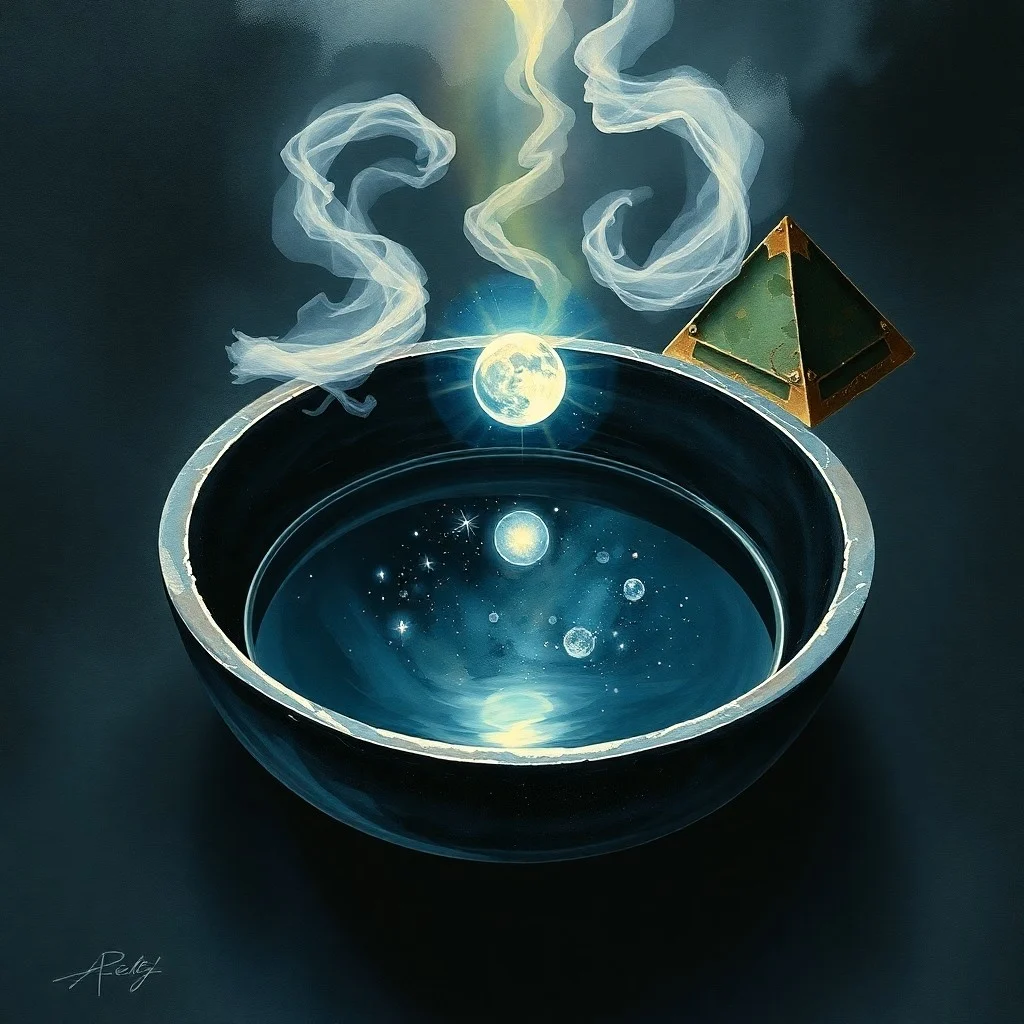
Abstract reflections in a bowl of water, inviting deep contemplation and intuitive visions.
To practice hydromancy, fill a dark-colored bowl with fresh water. Some practitioners prefer to add a few drops of dark ink or a piece of dark cloth at the bottom to enhance the reflective quality. Position the bowl in a dimly lit room, ensuring no direct light creates glare. Gaze into the surface of the water, allowing your eyes to relax and your mind to clear. As with crystal gazing, the goal is to enter a meditative state.
Visions in water scrying may appear as ripples, patterns, or even fully formed images within the liquid's surface or depths. The subtlety of these visions often requires a keen intuitive sense to decipher. The movement of the water itself can also be interpreted, with gentle undulations perhaps indicating flowing energy, and disturbances suggesting turmoil. This method is particularly effective for those who feel a strong connection to elemental water and its mystical properties, offering insights into .
Mirror Scrying: The Dark Speculum
Mirror scrying, often utilizing a "dark mirror" or "speculum," involves gazing into a reflective surface that has been specially prepared to absorb light rather than reflect it sharply. These mirrors are typically made of black obsidian, polished coal, or glass painted black on the reverse side. The absence of clear reflection helps to reduce external distractions and encourages the mind to project internal imagery onto the surface.
The technique for mirror scrying is similar to crystal ball gazing: find a quiet, dark room, place the mirror on a dark cloth, and gaze softly into its depths. The dark surface is intended to create a void, a canvas upon which the subconscious can project visions. Users often report seeing swirling mists, shifting colors, or shadowy figures before clearer images emerge.
Mirror scrying can be particularly potent for shadow work and confronting inner truths, as the dark surface can act as a psychological portal to deeper aspects of the self. It requires a strong sense of grounding and mental clarity to avoid being overwhelmed by the intensity of the visions. Practitioners often find that the dark mirror facilitates profound insights into their own psyche and spiritual path.

An antique scrying mirror with swirling mist, symbolizing the emergence of hidden truths.
Diverse Scrying Techniques
Beyond the more common methods, scrying encompasses a wide array of techniques, each leveraging different elements or surfaces for divination. These diverse practices highlight the adaptability of the human mind in seeking insight from the environment.
- Pyromancy (Fire Scrying): Gazing into flames, such as those from a candle or bonfire, to discern shapes, movements, and colors that convey messages. The flickering nature of fire can be challenging but also highly dynamic.
- Capnomancy (Smoke Scrying): Interpreting the patterns and movements of smoke, often from incense or a sacred fire. The ephemeral nature of smoke requires quick observation and intuitive interpretation.
- Aeromancy (Cloud Scrying): Observing cloud formations and patterns in the sky for prophetic insights. This method connects the practitioner with the vastness of the atmosphere and its subtle energies.
- Lecanomancy (Bowl Scrying): Similar to hydromancy, but often involves dropping objects into a bowl of water and interpreting the ripples or the way the objects settle.
- Onymancy (Nail Scrying): Gazing into polished fingernails or drops of oil on nails, a less common but historically documented method.
Each of these methods offers a unique sensory experience and can resonate differently with individuals. Experimenting with various techniques can help a practitioner discover which medium best facilitates their scrying abilities and provides the clearest insights. For those interested in other forms of intuitive guidance, exploring Oracle vs. Tarot: Intuitive Guidance Explained can provide additional perspectives.
Preparing for a Scrying Session
Effective scrying requires more than just a tool; it demands careful preparation of both the environment and the mind. Creating a conducive atmosphere can significantly enhance the clarity and depth of your visions.
Environmental Setup:
- Quiet Space: Choose a room free from distractions, where you won't be interrupted.
- Lighting: Dim the lights. A single candle or a soft, indirect light source is ideal. Avoid harsh overhead lighting or direct sunlight, which can create glare.
- Comfort: Ensure you are comfortable, whether sitting or reclining. Loose clothing and a comfortable posture will help you relax.
- Ambiance: Consider using incense, essential oils, or soft, meditative music to enhance the atmosphere and aid relaxation.
- Cleansing: Many practitioners cleanse their scrying tool and space before a session, using smoke, salt water, or intention to remove any lingering negative energies.
Mental and Emotional Preparation:
- Meditation: Engage in a brief meditation or deep breathing exercise to calm your mind and center your energy.
- Clear Intention: Before you begin, clearly state your intention or question. This helps to focus your energy and direct the flow of information.
- Openness: Approach the session with an open mind and a receptive attitude. Release expectations and allow whatever messages come through to do so without judgment.
- Grounding: After the session, take time to ground yourself. This can involve eating, drinking water, or simply focusing on your physical surroundings to bring your awareness back to the present moment.
Interpreting Scrying Visions
Interpreting the visions received during scrying is often the most challenging yet rewarding part of the practice. Visions can range from clear, literal images to abstract symbols, colors, or feelings. There is no single "correct" way to interpret, as much depends on the individual's personal symbolism and intuitive understanding.
Key Principles for Interpretation:
- Personal Symbolism: Pay attention to how certain symbols or images resonate with you personally. What do they mean in your life context?
- Archetypal Meanings: Consider universal or archetypal meanings of symbols. For example, a snake might represent transformation, while a tree could symbolize growth or stability.
- Emotional Response: Note any emotional responses you experience during or after seeing a vision. Emotions often carry significant meaning.
- Context: Relate the vision back to your initial intention or question. How does it provide insight or guidance regarding your query?
- Journaling: Immediately after a session, record everything you saw, felt, or heard. Even seemingly insignificant details can become clearer upon reflection. Regular journaling helps to build a personal dictionary of symbols and their meanings.
- Patience and Practice: Interpretation is a skill that develops over time. Don't get discouraged if visions are unclear at first. Consistent practice will sharpen your intuitive abilities.
Sometimes, visions may not be literal predictions but rather metaphorical guidance or reflections of your inner state. Scrying can help reveal underlying patterns or blockages in your life, prompting you to take action or shift your perspective. This process is akin to understanding your , where symbols and placements reveal deeper truths.
Ethical Considerations and Best Practices
As with any form of divination or spiritual practice, ethical considerations are paramount when engaging in scrying. Responsible practice ensures both the safety and well-being of the practitioner and respects the integrity of the information received.
Key Ethical Guidelines:
- Respect for Free Will: Scrying should not be used to manipulate or infringe upon the free will of others. Focus on insights for personal growth, not control.
- Avoid Harm: Never use scrying to cause harm, spread negativity, or engage in malicious intent. The practice should always be for positive or neutral purposes.
- Confidentiality: If scrying for others, maintain strict confidentiality regarding the information received.
- Non-Attachment: Do not become overly attached to specific outcomes or predictions. The future is fluid, and insights gained are often possibilities, not fixed destinies.
- Self-Care: Ensure you are in a stable mental and emotional state before scrying. Avoid practicing when feeling ill, stressed, or emotionally vulnerable, as this can lead to misinterpretations or negative experiences.
- Discernment: Always use your discernment. Not every vision is literal, and some may be projections of your own fears or desires. Question and analyze the information critically.
- Boundaries: Set clear boundaries for your practice. Decide how often you will scry and for what purposes, to avoid becoming overly reliant on the practice.
Adhering to these ethical guidelines ensures that scrying remains a constructive and empowering tool for spiritual exploration. It fosters a healthy relationship with the practice, promoting personal integrity and responsible engagement with esoteric knowledge. Understanding your own energy and setting clear intentions are vital, much like understanding .
Conclusion: The Enduring Allure of Scrying
Scrying, in its myriad forms, continues to captivate and intrigue those who seek deeper understanding beyond the mundane. From the reflective depths of a crystal ball to the swirling patterns in water or smoke, these ancient techniques offer a profound pathway to intuition, self-discovery, and potential insights into the future. It is a practice that demands patience, an open mind, and a commitment to ethical engagement.
While the visions perceived through scrying may not always be literal or immediately clear, their value lies in their capacity to stimulate introspection, challenge perspectives, and connect the practitioner with deeper layers of consciousness. As a tool for personal and spiritual growth, scrying remains a powerful and accessible form of divination, inviting anyone willing to gaze into its mysteries to unlock the secrets it holds. Embrace the journey, and allow the reflective surfaces to guide your inner vision.
Source: Hybrid content assisted by AIs and human editorial supervision.


Comments
Post a Comment