
Zodiac Sign Myths: Ancient Lore Behind Constellations | StarPluto
The zodiac, a celestial belt divided into twelve distinct sections, has captivated humanity for millennia. Each section corresponds to a specific constellation, and these constellations are not merely arbitrary patterns of stars; they are imbued with rich histories, ancient myths, and profound cultural significance. Understanding the mythological origins of each zodiac sign offers a deeper appreciation for astrology and its enduring connection to human storytelling and the cosmos.
From the heroic feats of Greek demigods to the divine interventions of Olympian deities, these tales provide a vivid backdrop to the astrological characteristics we associate with each sign today. Exploring these narratives allows us to connect with the wisdom of ancient civilizations, who looked to the stars not just for navigation but for meaning, guidance, and a reflection of their own human experiences.
This article delves into the captivating myths behind each of the twelve zodiac constellations, offering an educational and insightful journey into the heart of ancient lore. We will uncover the legendary figures, epic battles, and divine decrees that shaped these celestial symbols, revealing how they continue to influence our understanding of personality and destiny.
Table of Contents
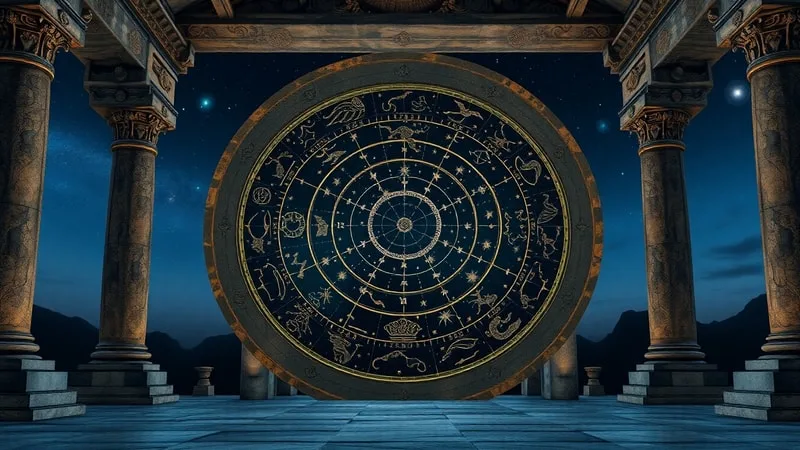
The celestial tapestry of the zodiac reveals a profound connection between ancient myths and the patterns observed in the night sky.
Aries: The Golden Ram
The myth of Aries, the Ram, is deeply intertwined with the tale of the Golden Fleece. According to Greek mythology, a divine, winged ram with a fleece of pure gold was sent by Nephele, a cloud nymph, to rescue her children, Phrixus and Helle, from their stepmother Ino, who sought to sacrifice them. The ram carried the siblings across the sky, but Helle fell into the sea, giving her name to the Hellespont.
Phrixus safely reached Colchis, where he sacrificed the ram to Zeus and gave its Golden Fleece to King Aeëtes. Zeus then placed the image of the ram in the heavens as the constellation Aries, commemorating its heroic journey. This myth highlights themes of sacrifice, divine intervention, and the pursuit of a legendary treasure, reflecting Aries's associated traits of courage, leadership, and a pioneering spirit.
Taurus: Zeus and Europa
Taurus, the Bull, is primarily linked to the myth of Zeus and Europa. Zeus, the king of the gods, was enamored by Europa, a beautiful Phoenician princess. To approach her without arousing Hera's suspicion, Zeus transformed himself into a magnificent white bull with golden horns. He appeared in the meadow where Europa and her companions were gathering flowers.
Charmed by the bull's gentle demeanor, Europa climbed onto its back. Seizing the opportunity, Zeus-as-bull galloped across the sea to the island of Crete, where he revealed his true identity. They had three sons, including Minos, who would become the legendary king of Crete. Zeus placed the image of the bull in the stars to immortalize his conquest, symbolizing Taurus's traits of strength, sensuality, and a connection to earthly pleasures.
Gemini: The Divine Twins
The constellation Gemini represents the inseparable twins Castor and Pollux, known as the Dioscuri. While they shared the same mother, Leda, they had different fathers: Castor was the mortal son of King Tyndareus of Sparta, and Pollux was the immortal son of Zeus. They were renowned for their bravery, skill in horsemanship, and unwavering fraternal bond.
Their adventures included participating in the Calydonian Boar hunt and the expedition of the Argonauts. When Castor was killed in battle, Pollux was grief-stricken and pleaded with Zeus to share his immortality with his brother. Moved by Pollux's devotion, Zeus placed them both in the heavens as the constellation Gemini, allowing them to alternate between Hades and Olympus. This myth embodies Gemini's duality, companionship, and intellectual curiosity.
Cancer: The Crab of Lerna
The myth of Cancer, the Crab, is often associated with one of Hercules's Twelve Labors. During his battle with the Lernaean Hydra, a multi-headed serpent, the goddess Hera, who despised Hercules, sent a giant crab to distract and hinder him. The crab, named Carcinus, bravely clamped its claws onto Hercules's foot.
Hercules, despite the distraction, crushed the crab under his heel. Though its efforts were futile, Hera, recognizing the crab's loyalty and courage, honored it by placing its image among the stars as the constellation Cancer. This myth underscores themes of protection, tenacity, and nurturing, which are core characteristics attributed to the Cancer zodiac sign.
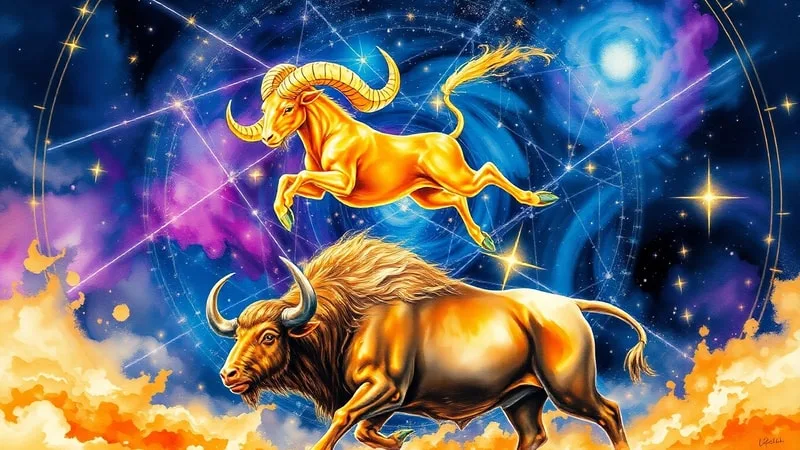
Artistic interpretations of zodiac myths often blend celestial elements with the heroic figures of ancient lore.
Leo: The Nemean Lion
Leo, the Lion, is famously associated with the Nemean Lion, the first of Hercules's Twelve Labors. This formidable beast possessed an impenetrable golden hide, making it impervious to conventional weapons. It terrorized the region of Nemea, preying on livestock and people.
Hercules was tasked with killing the lion and bringing its hide back. After discovering that arrows and clubs were useless, Hercules wrestled the lion, eventually strangling it with his bare hands. He then used the lion's own claws to skin it, wearing its hide as armor. Zeus placed the Nemean Lion in the sky as the constellation Leo, symbolizing strength, courage, royalty, and leadership, traits highly characteristic of the Leo personality.
Virgo: Astraea, Goddess of Justice
The constellation Virgo, the Maiden, has several mythological associations, but one of the most prominent is with Astraea, the goddess of justice and innocence. Astraea was the last immortal to leave Earth during the Iron Age, a period of increasing wickedness and suffering among humanity. She descended from the heavens to live among mortals during the Golden and Silver Ages, but as humanity grew corrupt, she ascended back to the stars.
She is often depicted holding the scales of justice (which became the constellation Libra) and a sheaf of wheat, symbolizing fertility and harvest. Her return to Earth is prophesied to usher in a new Golden Age. This myth connects Virgo to themes of purity, service, justice, and harvest, reflecting the sign's analytical, helpful, and discerning nature.
Libra: The Scales of Balance
Libra, uniquely among the zodiac signs, is represented by an inanimate object: the Scales. These scales are traditionally held by Astraea, the goddess of justice, as mentioned in the myth of Virgo. They symbolize balance, fairness, and equilibrium, reflecting the pursuit of harmony and impartiality in human affairs.
The placement of the Scales in the heavens signifies the importance of justice and order in the cosmos. It is a reminder of the cosmic law that seeks to balance opposing forces. This direct association with justice and balance perfectly encapsulates the core traits of Libra: a desire for fairness, diplomacy, partnership, and a keen sense of aesthetic harmony.
Scorpio: Orion's Demise
The constellation Scorpio, the Scorpion, is most famously linked to the death of the mighty hunter Orion. There are several versions of this myth, but a common one involves Orion boasting that he would kill every beast on Earth. Gaia, the goddess of the Earth, was angered by his arrogance and sent a giant scorpion to sting him. Orion was fatally wounded by the scorpion's venom.
Both Orion and the scorpion were placed in the heavens, but on opposite sides of the sky, ensuring that they would never meet again. As Orion sets, Scorpio rises, perpetually chasing him across the celestial sphere. This myth speaks to themes of power, vengeance, death, and rebirth, aligning with Scorpio's intense, passionate, and transformative nature.
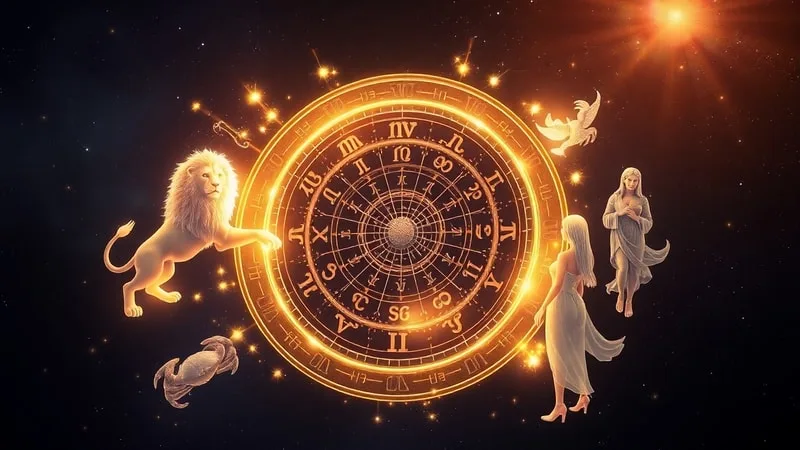
Abstract representations connect the ancient wisdom of the zodiac with the mystical energies of the cosmos.
Sagittarius: Chiron the Centaur
Sagittarius, the Archer, is often identified with Chiron, the wise and benevolent centaur. Unlike other centaurs, who were wild and brutish, Chiron was known for his intelligence, healing abilities, and unparalleled wisdom. He was a son of Cronus and a mentor to many Greek heroes, including Achilles, Hercules, and Jason.
Chiron was accidentally wounded by one of Hercules's poisoned arrows, an injury that, due to his immortality, caused him eternal suffering. He eventually traded his immortality for Prometheus's freedom, finding release from his pain. Zeus honored Chiron by placing him in the sky as the constellation Sagittarius, depicted as an archer aiming his bow. This myth reflects Sagittarius's quest for knowledge, truth, philosophical insight, and a love for freedom and exploration.
Capricorn: Pan's Transformation
The constellation Capricorn, the Sea-Goat, is linked to the Greek god Pan, the deity of the wild, shepherds, and flocks. During a feast of the gods by the Nile River, the monstrous giant Typhon attacked. To escape, the gods transformed into various animals. Pan, in a panic, attempted to transform into a goat, but in his haste, he only partially succeeded, becoming a creature with the head and forelegs of a goat and the tail of a fish.
Zeus, either amused by Pan's quick thinking or grateful for his warning cry, placed this unique form in the heavens as Capricorn. This myth embodies themes of transformation, resilience, and the ability to adapt under pressure. It reflects Capricorn's ambitious, disciplined, and resourceful nature, often associated with overcoming challenges to achieve success.
Aquarius: Ganymede, the Cupbearer
Aquarius, the Water Bearer, is most commonly associated with Ganymede, a beautiful Trojan prince. Zeus was so captivated by Ganymede's beauty that he transformed into a great eagle (or sent his eagle) and abducted the youth, carrying him to Mount Olympus. There, Ganymede was made the cupbearer to the gods, replacing Hebe.
As the cupbearer, Ganymede was responsible for serving nectar and ambrosia, the food and drink of the gods, which granted them immortality. Zeus honored Ganymede by placing him among the stars as the constellation Aquarius, often depicted pouring water from a jug. This myth signifies themes of service, community, humanitarianism, and the distribution of life-giving resources, aligning with Aquarius's progressive, intellectual, and altruistic qualities.
Pisces: Aphrodite and Eros
The constellation Pisces, the Fish, is linked to the myth of Aphrodite (Venus) and her son Eros (Cupid). During the same attack by the monstrous Typhon that caused Pan's transformation, Aphrodite and Eros found themselves in danger. To escape the giant's wrath, they transformed into two fish and leaped into the Euphrates River.
To ensure they would not be separated in the strong currents, they tied themselves together with a rope or ribbon. Athena, or sometimes Zeus, commemorated this act of escape and maternal love by placing the two fish in the heavens as the constellation Pisces. This myth speaks to themes of escapism, compassion, intuition, and unconditional love, reflecting Pisces's empathetic, dreamy, and spiritual nature.
The rich tapestry of zodiac myths offers a fascinating glimpse into the ancient world's understanding of the cosmos and human nature. Each story, passed down through generations, not only explains the origins of the constellations but also imbues the astrological signs with symbolic depth and meaning. These tales are not just historical curiosities; they are foundational narratives that continue to shape our perception of ourselves and our place in the universe.
By exploring these ancient lores, we gain a more holistic perspective on astrology, moving beyond simple personality traits to appreciate the epic sagas that underpin each sign. This journey through mythology enhances our connection to the stars, revealing them as eternal storytellers of humanity's hopes, fears, and heroic endeavors. Understanding these myths enriches our astrological knowledge and deepens our appreciation for the timeless wisdom embedded in the celestial sphere.
Fuente: Contenido híbrido asistido por IAs y supervisión editorial humana.


Comments
Post a Comment