
AI Ethics Dream Interpretation: Subconscious Algorithms Digital Consciousness
The intersection of artificial intelligence and dream interpretation marks a frontier brimming with both immense potential and profound ethical quandaries. As AI technologies become increasingly sophisticated, their capacity to analyze complex patterns extends into realms once considered exclusively human or spiritual. Dream interpretation, a practice rooted in ancient traditions and modern psychology, seeks to uncover the hidden meanings and messages within our nocturnal narratives. The advent of AI in this field promises unprecedented analytical power, but it also introduces a new set of challenges concerning privacy, bias, psychological impact, and the very definition of consciousness in a digital age.
This exploration delves into the intricate ethical framework required to navigate AI's role in understanding our subconscious. We will examine the technical approaches AI employs, the inherent risks of algorithmic bias, the critical importance of data privacy, and the broader philosophical implications of entrusting our deepest unconscious expressions to machines. Understanding these facets is crucial for developing responsible AI systems that respect human autonomy and psychological well-being.
Table of Contents
- AI in Dream Interpretation: Mechanisms and Methodologies
- Ethical Dilemmas: Privacy and Data Security
- Algorithmic Bias and the Risk of Misinterpretation
- Psychological Impact and the Erosion of Autonomy
- Digital Consciousness and the Nature of Dreams
- Regulatory Frameworks and Responsible AI Development
- Future Outlook: Human-AI Collaboration in Dream Analysis
AI in Dream Interpretation: Mechanisms and Methodologies
Artificial intelligence approaches dream interpretation primarily through advanced pattern recognition and natural language processing (NLP). Users typically input detailed descriptions of their dreams into an AI system. These descriptions, often rich in symbolic imagery, emotional content, and narrative structure, become the raw data for algorithmic analysis. AI models, trained on vast datasets of dream narratives, psychological theories, mythological archetypes, and user feedback, then attempt to identify recurring themes, symbols, and emotional correlates.
The methodologies employed by AI can vary:
- Symbolic Analysis: AI identifies common dream symbols (e.g., water, animals, houses) and cross-references them with established interpretative dictionaries or psychological frameworks (e.g., Jungian archetypes, Freudian symbolism).
- Contextual Analysis: Beyond individual symbols, AI analyzes the relationships between elements within a dream, the narrative flow, and the emotional tone to provide a more holistic interpretation.
- Personalization: More advanced systems might learn from a user's past dream entries, personal history, and stated emotional states to tailor interpretations, moving beyond generic meanings to more individually relevant insights.
- Predictive Modeling: Some AI applications attempt to correlate dream patterns with waking life events, emotional states, or even potential health indicators, though this area is highly speculative and ethically fraught.
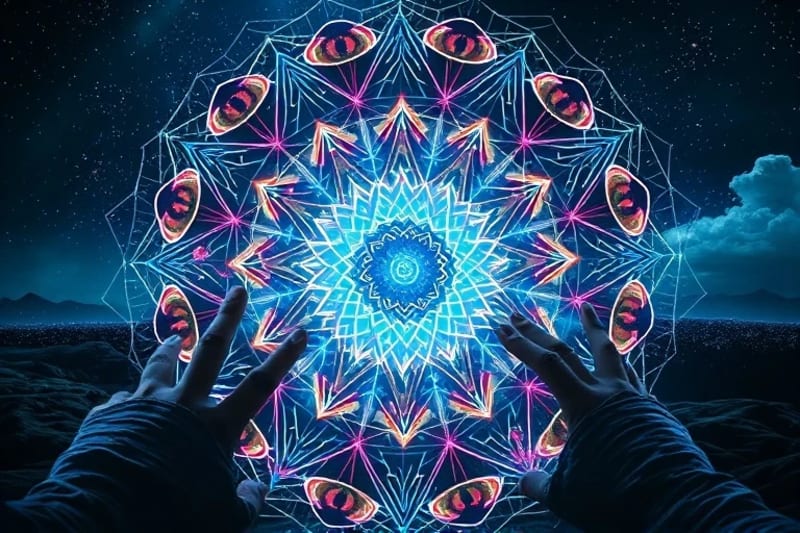 Exploring the intricate interplay between artificial intelligence and the profound, often enigmatic, landscape of human dreams and subconscious thought.
Conceptual rendering generated by advanced AI, reflecting the complex themes of digital analysis and inner psychological worlds.
Ethical Dilemmas: Privacy and Data Security
The most immediate and critical ethical concern in AI dream interpretation is data privacy. Dream narratives are intensely personal, often revealing deep-seated fears, desires, traumas, and vulnerabilities. Submitting such intimate data to an AI system raises serious questions about how this information is stored, processed, and protected. Without robust security measures and transparent data governance policies, this sensitive information could be vulnerable to breaches, misuse, or exploitation.
- Data Collection and Storage: How long is dream data retained? Is it anonymized or pseudonymized? Who has access to the raw data?
- Third-Party Sharing: Could this data be sold to advertisers, insurance companies, or other entities seeking to exploit psychological profiles?
- Vulnerability to Hacking: Databases containing such sensitive personal information become prime targets for malicious actors, potentially leading to blackmail or identity manipulation.
- Informed Consent: Users must be fully aware of how their data will be used, who will access it, and their rights to data deletion. This consent must be explicit and easily understandable, not buried in lengthy terms and conditions.
The potential for psychological profiling based on dream content is immense. An AI that understands a user's subconscious fears or anxieties could be used for targeted advertising, political manipulation, or even to influence personal decisions. This necessitates strict ethical guidelines and legal frameworks to prevent the weaponization of such intimate insights. For further reading on managing personal data, exploring blockchain's role in sustainable circular economy offers insights into secure data management principles that might be adapted.
Algorithmic Bias and the Risk of Misinterpretation
AI systems are only as unbiased as the data they are trained on. If the datasets used to train dream interpretation AI are predominantly drawn from specific cultural, linguistic, or demographic groups, the interpretations provided may reflect those biases, leading to misinterpretations or culturally insensitive analyses for others. Dream symbolism is deeply rooted in cultural context, personal history, and individual psychology. A symbol that holds one meaning in Western psychology might have an entirely different connotation in Eastern traditions or indigenous belief systems.
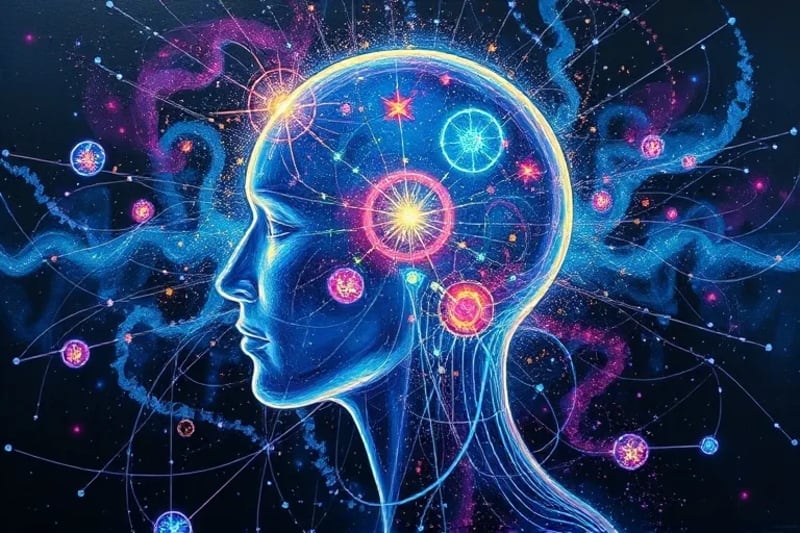 Visualizing the complex data flows and algorithmic interpretations that AI systems apply to decipher the intricacies of human subconscious thought.
The risks of algorithmic bias include:
- Cultural Misalignment: Providing interpretations that are irrelevant or even offensive due to a lack of cultural understanding.
- Reinforcement of Stereotypes: If training data contains biased associations, the AI might perpetuate harmful stereotypes in its interpretations.
- Oversimplification: Reducing complex psychological nuances to simplistic, generic explanations, thereby missing the unique personal significance of a dream.
- Pathologizing Normal Experiences: An AI might flag common dream themes as indicative of psychological distress if its training data overemphasizes clinical interpretations.
Ensuring diverse, representative, and ethically sourced training data is paramount. Furthermore, AI interpretations should always be presented as suggestions or starting points for reflection, rather than definitive diagnoses or absolute truths. The human element of self-reflection and critical evaluation remains indispensable. The challenge of interpreting complex human experiences is also present in other esoteric fields, such as reincarnation astrology, where nuanced understanding is key.
Psychological Impact and the Erosion of Autonomy
The psychological impact of AI-driven dream interpretation cannot be underestimated. Dreams often touch upon sensitive emotional states, unresolved conflicts, and deep-seated anxieties. An AI's interpretation, if presented as authoritative, could significantly influence a user's self-perception, emotional state, and decision-making processes. There is a risk that individuals might over-rely on AI, potentially undermining their own capacity for introspection and self-discovery.
- Misleading Interpretations: Incorrect or poorly contextualized interpretations could cause unnecessary anxiety, distress, or lead individuals down unproductive paths of self-analysis.
- Dependency: Over-reliance on AI for understanding one's inner world could diminish critical thinking and the development of personal coping mechanisms.
- Erosion of Self-Reflection: The act of interpreting one's own dreams, or discussing them with a trusted human professional, is a process of self-discovery. Outsourcing this to AI might bypass crucial developmental steps in psychological growth.
- Manipulation: Malicious actors could design AI systems to provide interpretations that subtly influence users towards certain behaviors or beliefs, exploiting their psychological vulnerabilities.
Ethical AI in this domain must prioritize user well-being and autonomy. This means clearly stating the limitations of AI interpretations, encouraging critical engagement, and recommending professional human psychological support when appropriate. The goal should be to augment human understanding, not replace it. The delicate balance between guidance and self-discovery is also paramount in practices like energetic cord cutting, which emphasizes personal agency in healing.
Digital Consciousness and the Nature of Dreams
Beyond practical concerns, AI dream interpretation raises profound philosophical questions about the nature of consciousness, the subconscious, and the unique human experience of dreaming. If an AI can effectively "understand" and interpret dreams, does it imply a form of digital consciousness or at least a sophisticated mimicry of human understanding? Can an algorithm truly grasp the subjective, often ineffable, qualities of a dream, or is it merely performing advanced pattern matching?
- Subjectivity vs. Objectivity: Dreams are inherently subjective experiences. AI, by its nature, operates on objective data and algorithms. Bridging this gap is a fundamental challenge.
- Empathy and Intuition: Human dream interpreters often rely on empathy, intuition, and a deep understanding of the human condition. These are qualities that AI currently lacks and may never fully replicate.
- The "Black Box" Problem: Many advanced AI models, particularly deep learning networks, operate as "black boxes," where the exact reasoning behind their outputs is opaque even to their creators. This lack of transparency can be problematic when dealing with sensitive psychological insights.
- Redefining Consciousness: The success or failure of AI in truly interpreting dreams could force a re-evaluation of what constitutes consciousness, understanding, and the role of the subconscious in human identity.
These questions push the boundaries of our understanding of both intelligence and the human mind. The development of AI in this field serves not only as a technological advancement but also as a philosophical mirror, reflecting our own definitions of what it means to dream and to be conscious. The evolving relationship between technology and esoteric practices is a recurring theme, as seen in the broader discussion of astrology in the digital age.
Regulatory Frameworks and Responsible AI Development
Given the sensitive nature of dream data and the potential psychological impact of AI interpretations, robust regulatory frameworks are essential. These frameworks should aim to protect users, ensure ethical development, and foster responsible deployment of AI in this domain. Key areas for regulation include:
- Data Protection Laws: Strict enforcement of data privacy regulations (like GDPR or similar) specifically tailored for highly sensitive psychological data.
- Transparency Requirements: Mandating that AI developers disclose how their models are trained, the data sources used, and the limitations of their interpretations.
- Bias Audits: Regular, independent audits of AI algorithms to detect and mitigate biases in interpretation.
- Ethical Guidelines for Developers: Establishing industry-wide ethical codes of conduct for AI developers working with psychological data, emphasizing user well-being and autonomy.
- Accountability Mechanisms: Clear processes for users to report harm, seek redress, and challenge AI interpretations.
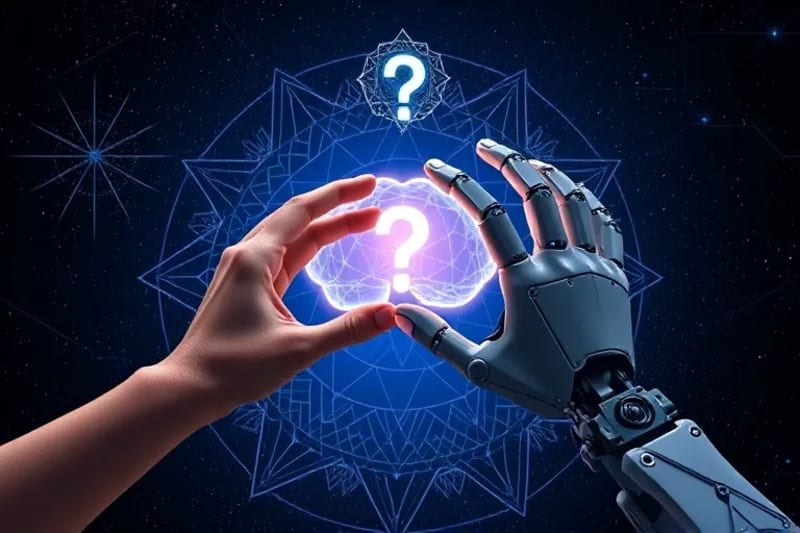 A symbolic representation of the delicate ethical balance required as human intuition and technological prowess converge in understanding the mind.
International collaboration will be crucial to establish global standards, as AI technologies transcend national borders. The goal is not to stifle innovation but to guide it towards beneficial and ethical outcomes that respect human dignity and psychological integrity. This proactive approach ensures that AI serves as a tool for empowerment rather than a source of vulnerability.
Future Outlook: Human-AI Collaboration in Dream Analysis
The most promising future for AI in dream interpretation lies not in full automation, but in a collaborative model between human expertise and artificial intelligence. AI can excel at identifying patterns, cross-referencing vast databases, and providing initial analytical frameworks. However, the nuanced understanding, empathetic insight, and ethical judgment of a human professional remain irreplaceable.
In a collaborative paradigm:
- AI as an Assistant: AI could serve as a powerful tool for psychologists and therapists, helping them identify recurring themes in a patient's dreams over time, or suggesting potential symbolic interpretations for further exploration.
- Enhanced Self-Reflection: For individuals, AI could offer prompts and questions to guide personal reflection, rather than delivering definitive answers. It could highlight aspects of a dream that might otherwise be overlooked.
- Educational Tool: AI could be used to educate users about different psychological theories of dreams, mythological symbolism, and cultural interpretations, broadening their understanding.
- Research Facilitator: AI can analyze large datasets of dreams to identify broader trends in human psychology, contributing to academic research in dream studies.
This human-in-the-loop approach ensures that the ultimate interpretation and integration of dream insights remain within the realm of human consciousness and ethical consideration. It leverages the strengths of both AI's analytical power and human intuition, fostering a more holistic and responsible approach to understanding our subconscious landscapes.
Explore Our Content Ecosystem
Delve deeper into the fascinating world of esoteric knowledge and advanced concepts with our curated selection of articles:
- Aura Reading Techniques: Sensing, Interpreting, Cleansing Energy Fields
- Saturn in Houses: Navigating Karmic Lessons & Structure
- Lunar Mansions: Advanced Predictive Astrology Esoteric Symbolism
- Sueños Lúcidos Cristales: Guía Esotérica Interpretación Onírica (Lucid Dreams Crystals: Esoteric Guide to Oneiric Interpretation)
- Sincronicidad Divina: Coincidencias que Revelan un Plan Celestial (Divine Synchronicity: Coincidences Revealing a Celestial Plan)
- Decans & Duads: Unveiling Zodiac's Hidden Layers
Source: Hybrid content assisted by AI and human editorial supervision.


Comments
Post a Comment