
AI Divination Ethics: Navigating Predictive Tools Intuition
The rapid advancement of Artificial Intelligence (AI) has begun to permeate nearly every facet of human existence, from mundane daily tasks to complex scientific research. One of the more intriguing and, at times, controversial applications emerging is its integration into the realm of divination and predictive spirituality. This intersection raises profound ethical questions about the nature of intuition, free will, and the very essence of spiritual guidance.
As AI-powered tools promise to offer insights into future trends or personal destinies, understanding the ethical implications becomes paramount. This article delves into the complex landscape of AI in divination, exploring the promises, pitfalls, and necessary considerations for navigating this evolving spiritual frontier. It aims to provide an introductory and educational perspective for those new to this fascinating convergence of technology and modern spirituality.
Table of Contents
- The Dawn of Algorithmic Intuition
- Understanding AI in Divination
- Core Ethical Dilemmas
- Addressing Bias and Fairness
- Preserving Human Autonomy and Free Will
- The Imperative of Transparency and Explainability
- Data Privacy and Security Concerns
- The Enduring Role of the Human Element
- Navigating Regulatory and Societal Frameworks
- The Future Landscape of AI-Assisted Divination
- Conclusion: Harmonizing Technology and Spirituality
The Dawn of Algorithmic Intuition
Historically, divination has been the domain of seers, shamans, and mystics, relying on human intuition, spiritual connection, and symbolic interpretation. From ancient oracles to modern tarot readers, the human element has been central to deciphering messages from the unseen. However, AI introduces a new paradigm, promising to process vast datasets and identify patterns that might elude human perception.
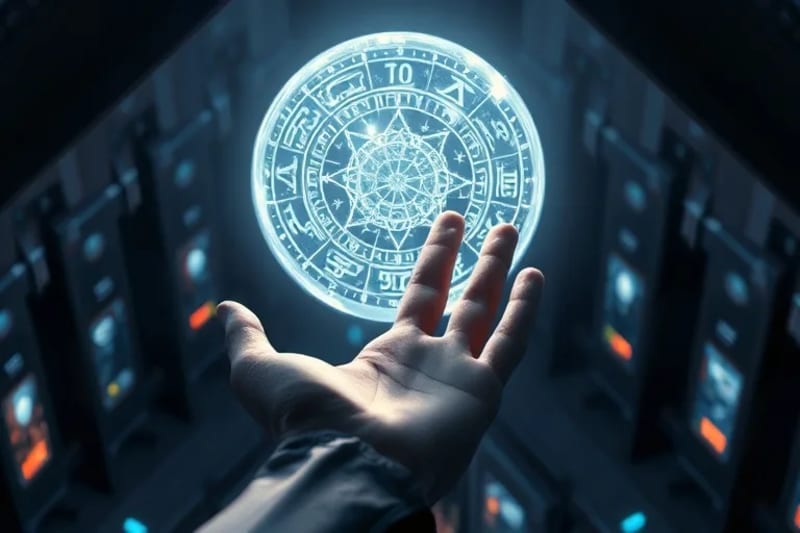
Conceptual representations of the convergence of advanced technology and ancient spiritual practices, illustrating the foundational shift in how predictive insights are sought and interpreted.
This image, a conceptual render, explores the synthesis of digital foresight and mystical symbolism, drawing inspiration from the open-source spirit of creative commons.The appeal of AI in divination lies in its capacity for objective analysis and speed. Algorithms can analyze astrological charts, numerological patterns, or even textual inputs from users to generate personalized readings. This shift from subjective human interpretation to algorithmic prediction marks a significant evolution, prompting both excitement and apprehension among practitioners and seekers alike.
Modern spirituality, often characterized by a blend of ancient wisdom and contemporary practices, finds itself at a crossroads with this technological integration. While some embrace AI as a tool to enhance understanding, others express concerns about the potential erosion of genuine spiritual connection and intuitive development. The challenge lies in harmonizing these seemingly disparate worlds.
Understanding AI in Divination
AI in divination typically operates through machine learning models trained on vast datasets. These datasets can include historical astrological data, numerological interpretations, tarot card meanings, or even psychological profiles linked to life outcomes. The AI identifies correlations and patterns, then uses these to generate predictions or insights based on new user inputs.
For instance, an AI horoscope generator might analyze planetary transits and their historical associations with certain events or emotional states, offering Mindful Lunar Phase Horoscopes. Similarly, an AI tarot reader could interpret card spreads based on a database of traditional meanings and user-specific questions. This process mimics human interpretation but on a scale and speed impossible for an individual.
It is crucial to differentiate between true intuition and algorithmic pattern recognition. While AI can simulate intuitive responses by finding complex relationships in data, it lacks consciousness, lived experience, or spiritual connection. Its "intuition" is mathematical, not experiential, a key distinction when discussing ethical boundaries.
Core Ethical Dilemmas
The introduction of AI into divination brings forth several fundamental ethical dilemmas that demand careful consideration. These issues span from the inherent nature of the predictions to the societal impact of relying on machines for spiritual guidance. Addressing these challenges requires a multidisciplinary approach, blending technological understanding with philosophical and spiritual insights.
- The Nature of Prediction: Is an AI prediction a fixed destiny or merely a probabilistic outcome? How do users perceive and internalize these algorithmic forecasts?
- Authenticity vs. Simulation: Can a machine truly provide spiritual guidance, or is it merely simulating human wisdom? What is lost when the human element is diminished?
- Responsibility and Accountability: Who is responsible if an AI's divination leads to negative consequences for a user? The developer, the user, or the algorithm itself?
- Commercialization and Exploitation: How can we prevent AI divination tools from being used for manipulative commercial purposes, preying on vulnerability?
These questions underscore the need for a robust ethical framework that guides the development and deployment of AI in sensitive areas like spirituality. Without such a framework, the potential for harm, misunderstanding, and disillusionment is significant.
Addressing Bias and Fairness
One of the most critical ethical concerns with any AI system is the potential for bias. AI models learn from the data they are fed, and if that data reflects societal biases, historical inequalities, or limited cultural perspectives, the AI will perpetuate and even amplify those biases in its outputs. In divination, this could lead to unfair or culturally insensitive predictions.

An abstract visualization of digital predictive tools, symbolizing the complex algorithms and data patterns that form the basis of AI-driven insights.
This vector art piece, created as a conceptual illustration, is made available under a Creative Commons license, encouraging broad educational use.For example, if an AI is trained on historical astrological interpretations predominantly from one cultural tradition, its readings might not resonate or be appropriate for individuals from other backgrounds. This lack of fairness can undermine the universality and inclusivity that many spiritual practices strive for. Developers must actively seek diverse and representative datasets to mitigate such biases.
Furthermore, the algorithms themselves need to be audited for fairness. This involves testing the AI's predictions across different demographic groups to ensure that outcomes are not systematically skewed. The goal is to create AI divination tools that are equitable and respectful of all users, regardless of their background or beliefs.
Preserving Human Autonomy and Free Will
A central tenet of many spiritual and philosophical traditions is the concept of free will and personal autonomy. Divination is often seen as a tool for guidance, not a decree of an unchangeable future. The concern arises that AI-generated predictions, especially if presented with an aura of infallibility, could unduly influence individuals' decisions, potentially eroding their sense of agency.
If an AI predicts a certain outcome, a user might feel compelled to act in a way that fulfills that prediction, rather than making choices based on their own judgment and desires. This could lead to a self-fulfilling prophecy, where the AI's influence, rather than genuine free will, dictates life paths. It is essential for AI divination tools to emphasize guidance and possibilities, rather than deterministic forecasts.
Designers of these tools have an ethical responsibility to frame predictions as probabilities or potential paths, always reminding users that their choices remain paramount. The goal should be to empower individuals with information, not to dictate their future. This aligns with the principles of Shadow Work Basics, which emphasize personal agency and integration.
The Imperative of Transparency and Explainability
Many AI models, particularly deep learning networks, are often referred to as "black boxes" because their internal decision-making processes are opaque and difficult for humans to understand. In the context of divination, this lack of transparency is a significant ethical hurdle. Users deserve to know how an AI arrived at its prediction or insight.
Without explainability, users might blindly trust or distrust an AI's output without understanding the underlying logic or data. This can lead to misinformation, misuse, or a general erosion of trust in both technology and spiritual practices. Transparency fosters accountability and allows users to critically evaluate the guidance they receive.
Developers should strive for "explainable AI" (XAI) in divination tools, providing clear justifications for predictions, referencing the data points or patterns that influenced the outcome. This could involve showing which astrological aspects were most influential in a reading or explaining the symbolic connections drawn from a tarot spread. Such transparency empowers users to engage more deeply and critically with the insights provided, much like understanding the cosmic harmony in an Angelical Dance of Creation.
Data Privacy and Security Concerns
Divination often involves highly personal and sensitive information, including hopes, fears, relationships, health concerns, and financial situations. When users input this data into AI divination tools, robust data privacy and security measures become absolutely non-negotiable. The potential for misuse or breaches of such intimate data is a serious ethical concern.
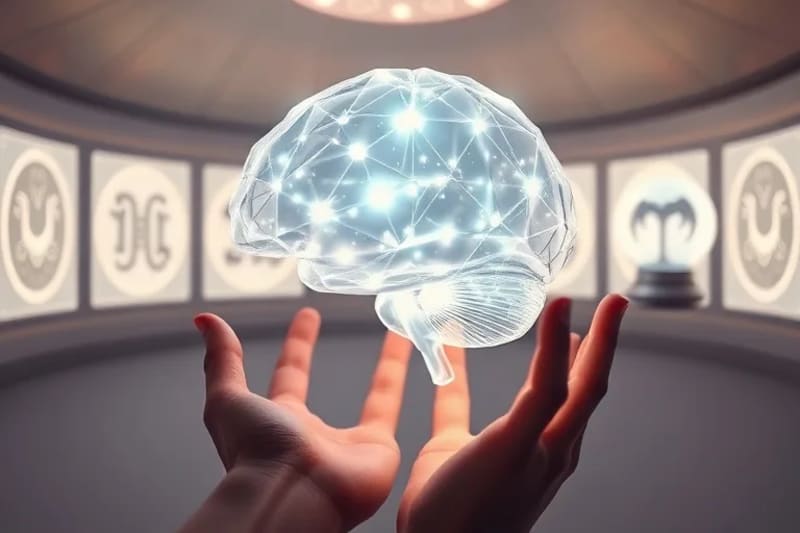
A conceptual abstract representation of algorithmic intuition, depicting the intricate interplay between digital processing and the abstract concepts of foresight and guidance.
This 3D conceptual artwork is presented under a Public Domain dedication, allowing for its free use and adaptation in educational contexts.Users must be fully informed about what data is collected, how it is stored, who has access to it, and for what purposes it will be used. Clear consent mechanisms are vital. Furthermore, the systems themselves must be protected against cyber threats to prevent unauthorized access or data leaks. A breach of trust in this sensitive area could have devastating personal consequences.
Companies developing AI divination apps should adhere to stringent data protection regulations, such as GDPR or CCPA, and go beyond mere compliance to build user trust. This commitment to privacy is essential for the ethical integration of AI into spiritual practices, safeguarding the personal narratives that users share. This is similar to how Modern Storytelling Marketing emphasizes building trust.
The Enduring Role of the Human Element
Despite the sophistication of AI, the human element in divination remains irreplaceable. True spiritual guidance often involves empathy, compassion, nuanced understanding of human experience, and the ability to adapt advice to individual circumstances. These qualities are inherently human and cannot be replicated by algorithms.
AI can serve as a powerful tool for data analysis and pattern recognition, offering a foundational layer of information. However, the interpretation of that information, the empathetic delivery of insights, and the personalized guidance that helps individuals integrate predictions into their lives still require human wisdom. A human practitioner can contextualize AI's output, offering a more holistic and compassionate perspective.
The ideal scenario might be a hybrid approach, where AI provides objective data and probabilistic outcomes, while human practitioners offer the subjective, empathetic, and spiritually informed interpretation. This collaboration could enhance the depth and breadth of divination, combining algorithmic precision with human understanding, much like the blend of ancient wisdom and modern practice in Fixed Stars Astrology.
Navigating Regulatory and Societal Frameworks
As AI in divination gains traction, the need for appropriate regulatory and societal frameworks becomes increasingly evident. Currently, many spiritual and divinatory practices operate outside formal regulatory bodies, making the integration of AI particularly challenging. Clear guidelines are necessary to protect consumers and ensure ethical development.
Regulatory bodies might need to consider:
- Disclosure Requirements: Mandating that AI divination tools clearly state they are AI-driven and not human.
- Data Handling Standards: Specific regulations for how sensitive personal data used in divination is collected, stored, and processed.
- Ethical Audits: Requiring independent audits of AI models to check for bias, fairness, and transparency.
- Consumer Protection: Establishing mechanisms for users to report harm or misuse and seek recourse.
Beyond formal regulations, societal norms and ethical discourse will play a crucial role in shaping the acceptance and responsible use of AI in divination. Open conversations among spiritual communities, ethicists, technologists, and the public are vital to developing a shared understanding of its appropriate boundaries and applications. This also extends to how we view digital spiritual spaces, such as those discussed in the Esoteric Metaverse and Sacred Geometry.
The Future Landscape of AI-Assisted Divination
The future of AI in divination is likely to be characterized by increasing sophistication and integration. We can anticipate more personalized and context-aware predictions, potentially incorporating biometric data, emotional states, and real-time environmental factors. This could lead to highly dynamic and responsive spiritual guidance systems.
However, the ethical challenges will also intensify. As AI becomes more advanced, the line between algorithmic intuition and genuine spiritual insight may become even blurrier. The responsibility will fall on developers to design systems that prioritize human well-being, autonomy, and spiritual growth over mere predictive accuracy or commercial gain.
The emphasis should be on AI as an augmentative technology, enhancing human capabilities and spiritual exploration rather than replacing them. This means fostering a relationship where AI acts as a knowledgeable assistant, providing data and perspectives, while the ultimate wisdom and decision-making power remain with the individual. This approach can also be seen in practices like Biophilic Manifestation, where natural principles guide personal growth.
Conclusion: Harmonizing Technology and Spirituality
The integration of AI into divination presents a unique opportunity to explore new frontiers in understanding ourselves and our place in the cosmos. It offers the potential for unprecedented data analysis and personalized insights, but it also demands a rigorous ethical approach. Addressing bias, preserving autonomy, ensuring transparency, and protecting privacy are not merely technical considerations; they are fundamental to maintaining the integrity of spiritual practice.
Ultimately, the ethical navigation of AI in divination will depend on a collective commitment to responsible innovation. By prioritizing human values, fostering critical engagement, and embracing a hybrid model that values both algorithmic intelligence and human wisdom, we can ensure that these predictive tools serve as beneficial aids on our spiritual journeys, rather than sources of confusion or control. The journey to harmonize technology with spirituality is just beginning, and careful ethical consideration will light the way, much like the holistic approach of Astrological Aromatherapy.
Explore More Insights
- Sigil Magic: Crafting Symbols for Manifestation
- Remedial Astro-Herbalism: Botanical Alignments Planetary Transits
- Urban Geomancy Celestial Mechanics Aligning City Dwellings
- Urban Geomancy City Dwellings Well-being Cosmic Energies
- Chinese Zodiac: The Great Race Legend
- Wood Dragon Chinese Zodiac: Traits, Destiny, and Compatibility Analysis
- Feng Shui Digital Nomads Harmonize Spaces Well-being
- Mindfulness Planetary Transits Navigating Daily Energies
- Metal Element Chinese Zodiac: Character, Destiny, Compatibility
- Shamanic Journeying: Advanced Soul Retrieval, Ancestral Healing
- Pisces Mutable Water: Emotional Depths, Spiritual Connection
- Spanish Commercial Code: Insurance Contracts and Obligations
- Ethnobotany Bio-innovation: Ancestral Medicinal Plants
- Lunar Node Manifestation Rituals: Dharma Karma
- Marian Promises: Challenge of Secularization for Young Catholics
- Glorious Rosary: Meditation and Deep Meaning
Source: Hybrid content assisted by AI and human editorial supervision.


Comments
Post a Comment