
Dwarf Planets Synastry: Eris, Makemake, Haumea Catalysts
In the intricate dance of astrological synastry, the traditional planets provide a foundational understanding of interpersonal dynamics. However, the discovery and subsequent astrological integration of dwarf planets like Eris, Makemake, and Haumea have introduced new layers of complexity and profound transformative potential to relationship analysis. These distant celestial bodies, often overlooked in basic interpretations, act as cosmic catalysts, revealing deeper karmic patterns, evolutionary imperatives, and unique relational challenges and opportunities.
Their influence, while subtle, can be potent, often manifesting in the underlying currents that shape a partnership's evolution. Understanding their placements and aspects in a synastry chart can illuminate hidden strengths, expose core conflicts, and guide individuals toward a more conscious and evolved form of relating. This advanced exploration delves into the specific roles of Eris, Makemake, and Haumea, offering a nuanced perspective on their transformative impact on relational dynamics.
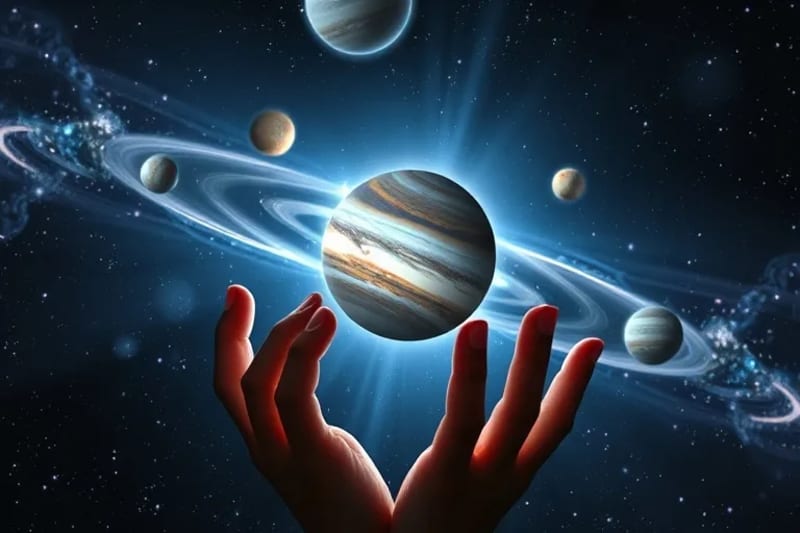
A celestial tapestry illustrating the subtle yet profound catalytic influence of distant dwarf planets on interpersonal connections, symbolizing the intricate energetic pathways of synastric links.
This conceptual visualization, rendered by advanced AI, explores the abstract interplay of cosmic forces, reflecting the often-unseen dynamics that shape human relationships.Table of Contents
- Eris: The Catalyst of Truth and Discord in Synastry
- Makemake: Abundance, Spiritual Growth, and Resourcefulness in Synastry
- Haumea: Creation, Regeneration, and Life Cycles in Synastry
- Integrating Dwarf Planets: A Holistic Synastry Approach
- Comparative Analysis of Dwarf Planet Influences in Synastry
Eris: The Catalyst of Truth and Discord in Synastry
Eris, the largest known dwarf planet in our solar system, was discovered in 2005 and quickly challenged the traditional definition of a planet, leading to Pluto's reclassification. Astronomically, it resides in the scattered disc beyond Neptune, with a highly eccentric orbit. Mythologically, Eris is the Greek goddess of discord, strife, and chaos, famously instigating the Trojan War by throwing the Golden Apple of Discord into a wedding feast.
In synastry, Eris acts as a powerful catalyst for truth and authenticity, often by disrupting complacency and forcing individuals to confront uncomfortable realities. Its influence is rarely gentle; instead, it highlights areas of imbalance, injustice, or suppressed conflict within a relationship. When Eris makes significant aspects between two charts, it can bring about periods of intense transformation, challenging the partners to evolve beyond superficial agreements and engage with their deepest, sometimes most painful, truths.

An abstract watercolor capturing the essence of discord and truth, with clashing colors and sharp lines symbolizing the challenging yet ultimately revealing nature of Eris's influence in relationships.
This AI-generated artwork uses dynamic forms and contrasting hues to evoke the disruptive force that can lead to profound insights within interpersonal connections.Key synastric aspects involving Eris often manifest as follows:
- Conjunctions to Personal Planets (Sun, Moon, Mercury, Venus, Mars): These are particularly potent, indicating that the Eris person will profoundly challenge the core identity, emotional security, communication style, values, or assertive drive of the personal planet person. This can lead to significant friction but also to a powerful awakening and a more authentic expression of self within the relationship.
- Opposition to Personal Planets: This aspect can create a dynamic of projection and confrontation, where partners see their own unresolved issues mirrored in the other, often leading to power struggles or a deep need to find balance in areas of conflict.
- Squares to Personal Planets: Squares generate tension and friction, forcing partners to address fundamental disagreements or injustices. While uncomfortable, these aspects can be highly constructive, compelling the couple to find innovative solutions and stronger boundaries.
- Trines and Sextiles to Personal Planets: These harmonious aspects suggest that the Eris energy can be integrated more smoothly, perhaps through a shared commitment to truth-telling or a mutual understanding of the need for growth and change, even if it involves challenging the status quo.
Eris in synastry demands that partners look beyond superficial harmony and address the underlying dynamics that might be causing subtle or overt discord. It can be a difficult influence, but one that ultimately fosters greater honesty, integrity, and a more robust foundation for genuine connection. For deeper insights into how planetary aspects shape relationships, consider exploring Advanced Zodiac Compatibility: Inter-Elemental Dynamics.
Makemake: Abundance, Spiritual Growth, and Resourcefulness in Synastry
Makemake, another significant dwarf planet in the Kuiper Belt, was discovered shortly after Eris. Its name comes from the Rapanui creator god of humanity and the god of fertility from Easter Island mythology. This association immediately suggests themes of creation, abundance, fertility, and the generation of resources, both material and spiritual. Makemake's astrological influence in synastry often pertains to how partners create and share resources, fostering spiritual growth, and their collective capacity for resilience and self-sufficiency.
When Makemake is prominent in a synastry chart, it indicates a relationship where the themes of shared values, collective prosperity, and spiritual evolution are paramount. It highlights the areas where partners can pool their talents and resources to manifest their joint visions, whether these are material goals, creative projects, or a shared spiritual path. Makemake encourages a resourceful approach to life's challenges, suggesting that the couple can find innovative ways to thrive, even in difficult circumstances.
A conceptual 3D render depicting a glowing seed surrounded by geometric and organic forms, symbolizing the themes of abundance, creation, and regeneration that Makemake and Haumea bring to relationships.
This AI-generated image utilizes light and intricate structures to represent the dynamic balance and continuous transformation inherent in shared growth and creative partnerships.The aspects of Makemake in synastry reveal how these energies play out:
- Conjunctions to Personal Planets: A Makemake conjunction signifies a powerful connection around the themes of creation and abundance. The Makemake person can inspire the personal planet person to tap into their innate resourcefulness and manifest their potential, often leading to shared ventures or a deep sense of mutual support in achieving goals.
- Harmonious Aspects (Trines, Sextiles): These aspects suggest an easy flow of energy related to shared values, financial stability, or spiritual alignment. Partners naturally support each other's growth and contribute to a sense of collective well-being. They may find it easy to create a prosperous life together, both materially and spiritually.
- Challenging Aspects (Squares, Oppositions): These can highlight differences in values, approaches to wealth, or spiritual beliefs. Conflicts may arise over how resources are managed, or there might be a struggle to align on a shared vision for the future. However, these aspects also provide opportunities to develop greater adaptability and find common ground through compromise and understanding.
Makemake in synastry emphasizes the generative capacity of a relationship, urging partners to cultivate a shared sense of purpose and to actively create the life they envision together. It speaks to the potential for a relationship to be a source of continuous spiritual and material enrichment, provided both individuals are willing to invest in their shared future. The concept of shared destiny and growth is further explored in topics like Chrono-Astrology Time Cycles: Ancestral Echoes and Destiny Precision.
Haumea: Creation, Regeneration, and Life Cycles in Synastry
Haumea, another dwarf planet in the Kuiper Belt, is unique for its elongated shape and rapid rotation, which gives it a distinctive appearance. Its mythology is rooted in Hawaiian tradition, where Haumea is the goddess of childbirth and fertility. She is associated with creation, regeneration, and the continuous cycle of life, death, and rebirth. Astrologically, Haumea in synastry brings these powerful themes into the relational sphere, emphasizing the creative potential, the capacity for renewal, and the cyclical nature of a partnership.
In synastry, Haumea highlights the relationship's ability to constantly reinvent itself, to overcome challenges through regeneration, and to foster new beginnings. It speaks to the fertility of the partnership, not just in terms of literal procreation, but also in the generation of ideas, projects, and a shared legacy. Haumea's influence encourages partners to embrace change, to release old patterns, and to continuously evolve together, understanding that every ending can be a new beginning.
The interpretation of Haumea's aspects in synastry includes:
- Conjunctions to Personal Planets: A Haumea conjunction indicates a profound connection around themes of creation, family, and regeneration. The Haumea person can activate the personal planet person's creative potential or their desire to build a family or legacy. This can manifest as a highly fertile partnership, both literally and metaphorically, with a strong drive to bring new things into existence.
- Harmonious Aspects (Trines, Sextiles): These aspects suggest an effortless ability for the couple to adapt to change, to find creative solutions to problems, and to support each other through life's transitions. There's a natural flow of regenerative energy, allowing the relationship to continuously renew itself and grow stronger through shared experiences.
- Challenging Aspects (Squares, Oppositions): These aspects can bring tension around issues of creation, family, or the need for renewal. Partners might struggle with fertility issues, creative blocks, or an inability to let go of old patterns that hinder growth. These challenges, however, serve as powerful prompts for transformation, urging the couple to find new ways to regenerate and evolve.
Haumea in synastry reminds us that relationships are living entities, constantly undergoing cycles of growth, decay, and rebirth. It encourages partners to honor these cycles, to be resilient in the face of change, and to actively participate in the continuous creation and regeneration of their shared life. This dynamic process of growth and transformation is essential for a thriving partnership, much like the precise timing of life events explored in Critical Degrees Predictive Astrology: Timing Life Events.
Integrating Dwarf Planets: A Holistic Synastry Approach
Integrating the influence of Eris, Makemake, and Haumea into synastry analysis requires a holistic and nuanced approach. These dwarf planets do not replace the foundational interpretations of the inner and outer planets but rather add layers of depth, revealing the subtle yet powerful evolutionary currents at play in a relationship. Their long orbital periods mean their influence is generational, but their specific aspects to personal planets or angles in a synastry chart bring their archetypal energies directly into the personal sphere.
When analyzing these dwarf planets, consider the following:
- Orbital Speed and Generation: Due to their slow movement, Eris, Makemake, and Haumea will often be in similar positions for entire generations. Therefore, their most significant impact in synastry comes from their aspects to faster-moving personal planets (Sun, Moon, Mercury, Venus, Mars) or the angles (Ascendant, Descendant, Midheaven, Imum Coeli) of the other person's chart.
- Mythological Context: Always refer back to the rich mythological narratives associated with these bodies. Eris's story of discord and truth, Makemake's themes of creation and abundance, and Haumea's cycles of regeneration provide invaluable archetypal keys to understanding their synastric manifestations.
- House Placements: The houses these dwarf planets fall into in each partner's chart, and how they overlay in synastry, indicate the life areas where their energies will be most active. For example, Eris in the 7th house of relationships could indicate a partnership designed to challenge conventional relationship structures and bring hidden truths to light.
- Aspect Patterns: Look for complex aspect patterns involving these dwarf planets, such as T-squares, Grand Trines, or Yods. These patterns can reveal specific karmic lessons or evolutionary pathways that the relationship is designed to explore. This kind of in-depth analysis aligns with the principles of Psycho-Astrology: Archetypal Integration and Shadow Work.
By integrating these cosmic catalysts, astrologers can offer a more profound and transformative reading of synastry. These dwarf planets act as keys to unlocking the deeper purpose and evolutionary potential embedded within a relationship, guiding partners toward greater self-awareness, collective growth, and authentic connection.
Comparative Analysis of Dwarf Planet Influences in Synastry
To further clarify the distinct contributions of Eris, Makemake, and Haumea, the following table provides a comparative overview of their primary influences in synastry.
| Dwarf Planet | Mythological Archetype | Primary Synastric Theme | Potential Challenges | Evolutionary Opportunities |
|---|---|---|---|---|
| Eris | Goddess of Discord and Strife | Catalyst for truth, authenticity, disruption of complacency, exposure of injustice. | Intense conflict, power struggles, feelings of unfairness, breakdown of superficial harmony. | Profound honesty, integrity, confronting shadow aspects, fostering genuine connection, breaking free from oppressive patterns. |
| Makemake | Rapanui Creator God, God of Fertility | Shared values, collective prosperity, spiritual growth, resourcefulness, manifestation. | Differences in values, conflicts over resources (material/spiritual), difficulty aligning on shared goals, scarcity mindset. | Mutual support in achieving goals, co-creation of abundance, shared spiritual path, resilient problem-solving, innovative resource management. |
| Haumea | Hawaiian Goddess of Childbirth and Fertility | Creation, regeneration, life cycles, adaptability, new beginnings, legacy building. | Resistance to change, creative blocks, difficulties with fertility (literal/metaphorical), struggles with letting go of the past. | Continuous renewal, embracing transformation, fostering creativity, building a shared legacy, resilience through life's transitions, family dynamics. |
These dwarf planets, while distant, weave themselves into the fabric of our relationships, offering unique insights into the evolutionary journey of a partnership. By paying attention to their subtle yet powerful influences, we can unlock deeper potentials for growth, understanding, and authentic connection.
Explore More Astrological Insights
- Water Tiger: Traits, Destiny, and Chinese Zodiac Influence
- Tiger Zodiac: Traits, Compatibility, and Elemental Influences
- Astro-Genomics Epigenetics: Decoding Inherited Health Blueprints
- Capricorn Zodiac Sign: Ambition, Structure, Discipline
- Advanced Astrological Ethics: AI Divination Consciousness
- Guided Meditations: Planetary Retrogrades Inner Peace Cultivating
- Snake Health Chinese Horoscope: Vitality Guide
- Tarot Sacred Geometry: Universal Truths Esoteric
- Divinations Future: AI, Ethics, Predictive Tools Evolution
- Emerald Tablet Secrets: Hermetic Principles Quantum Manifestation
- Chinese Zodiac Mythology: Ancient Stories Behind Each Animal
- Minor Aspect Patterns: Quincunxes, Semisextiles, Natal Chart
- Alchemy of Chinese Elements: Transforming Relational Incompatibilities
- Synastry Relationship: Composite Davison Charts Couples
Source: Hybrid content assisted by AI and human editorial supervision.


Comments
Post a Comment