
Advanced Zodiac Compatibility: Inter-Elemental Dynamics | StarPluto
The rich, millennia-old tradition of Chinese astrology extends far beyond merely assigning an animal to each birth year. At its core lies a complex and deeply interconnected system that considers the interaction of the Five Elements (Wu Xing) as a fundamental pillar for understanding personality, destiny, and, crucially, compatibility between individuals. This inter-elemental approach offers a much more sophisticated layer of analysis than the simple comparison of animal signs, revealing the underlying dynamics that can nurture or challenge a relationship.
For those seeking a deeper understanding of their connections, exploring how Wood, Fire, Earth, Metal, and Water interact within two people's birth charts is a revealing exercise that transcends the superficial. This article delves into the complexities of inter-elemental compatibility, breaking down the cycles of generation and control, and examining how the interplay of these elements can predict harmony or friction in relationships. From friendship to love and professional partnerships, understanding these dynamics offers an invaluable roadmap for navigating the intricate tapestry of human interactions.
Understanding the dynamic and interconnected flow of the Tarot Esoteric Geometry: Unlocking Universal Truths Sacred Shapes is crucial for advanced compatibility analysis.
Chinese astrology teaches us that each person is not only influenced by their animal sign but also by the element associated with their birth year. In a more advanced analysis, elements present in the pillars of the month, day, and hour create a unique elemental matrix. The complex dance of the Chinese Five Elements, Wu Xing, is fundamental to understanding astrological compatibility and energetic dynamics in relationships.
In this advanced exploration, we will not only break down the theoretical principles but also offer practical insights into how to apply this knowledge to foster more balanced and comprehensive relationships. The key lies in recognizing that there are no "good" or "bad" elements per se, but rather interactions that require greater awareness and effort to achieve harmony. By understanding the elemental nature of ourselves and others, we can transform potential conflicts into opportunities for mutual growth and the deepening of bonds.
Introduction to Inter-Elemental Compatibility in Chinese Zodiac
Compatibility in the Chinese Zodiac is traditionally understood through the relationship between the twelve animal signs. However, this is merely the tip of the iceberg. A deeper analysis reveals that each year, month, day, and hour of birth is associated not only with an animal but also with one of the Five Elements: Wood, Fire, Earth, Metal, and Water.
These elements, known as Wu Xing, are the fundamental building blocks of the universe in Chinese philosophy, and their interaction is key to unraveling the complexities of human compatibility. Ignoring this elemental layer means missing a crucial dimension that explains why some animal sign combinations that appear ideal on the surface might encounter friction, while others, seemingly challenging, achieve a profound connection.
The element associated with the birth year is the most widely known and is often referred to as the primary "natal element." For instance, a person born in a Water Rat year will have a different elemental foundation than a Metal Rat. This elemental distinction imbues each animal sign with unique characteristics, modifying their inherent traits and adding nuances to their interaction with other signs.
Thus, compatibility is not a static formula but a dynamic dance of elemental energies that influence and transform each other. Understanding this interaction is vital for predicting not only initial attraction but also the long-term sustainability and quality of a relationship. The study of inter-elemental compatibility allows us to move beyond generalizations and delve into the personal alchemy that occurs when two individuals unite.
It helps us identify not only shared strengths but also areas of potential conflict, offering guidance for cultivating understanding and adaptability. By understanding how our elements interact with those of our partner, friends, or colleagues, we can develop strategies to nurture what works and mitigate what might cause imbalance. It is a powerful tool for building more conscious and resilient relationships, based on a deep knowledge of the energetic forces at play.
The Five Elements Wu Xing: Fundamentals and Astrological Meaning
The Wu Xing are not elements in the Western sense of chemical substances, but rather dynamic forces or energetic phases that represent different states of change and transformation. Each element possesses qualities, directions, colors, seasons, and, most importantly for astrology, personality traits and interaction styles.
- Wood symbolizes growth, expansion, creativity, and initiative. Wood individuals are often visionary and ambitious.
- Fire represents passion, energy, leadership, and spontaneity. Fire individuals are enthusiastic and charismatic.
- Earth embodies stability, reliability, practicality, and nurturing. Earth individuals are grounded and loyal.
- Metal is associated with structure, discipline, justice, and determination. Metal individuals are organized and resolute.
- Water symbolizes wisdom, adaptability, intuition, and communication. Water individuals are profound and flexible.
In the astrological context, a person's natal element not only describes their fundamental character but also influences how the traits of their animal sign are expressed. For example, a Fire Dragon will be much more explosive and extroverted than a Water Dragon, who will tend to be more introspective and adaptable. This elemental overlay adds a layer of complexity and precision to the astrological profile, allowing for a much richer and more personalized interpretation.
The interaction of these elements between two people truly defines the chemistry and dynamics of their relationship, going beyond superficial compatibilities based solely on animal signs. Understanding the Wu Xing is essential because these elements do not exist in isolation; they are in constant movement and interaction through cycles of generation and control. This interconnectedness gives life to the inter-elemental compatibility system.
When the elements of two people complement each other through these cycles, the relationship tends to be harmonious and mutually supportive. Conversely, when elements enter an unbalanced control or destruction cycle, significant tensions and challenges can arise. This knowledge is a powerful tool for self-reflection and for improving the quality of our interactions.
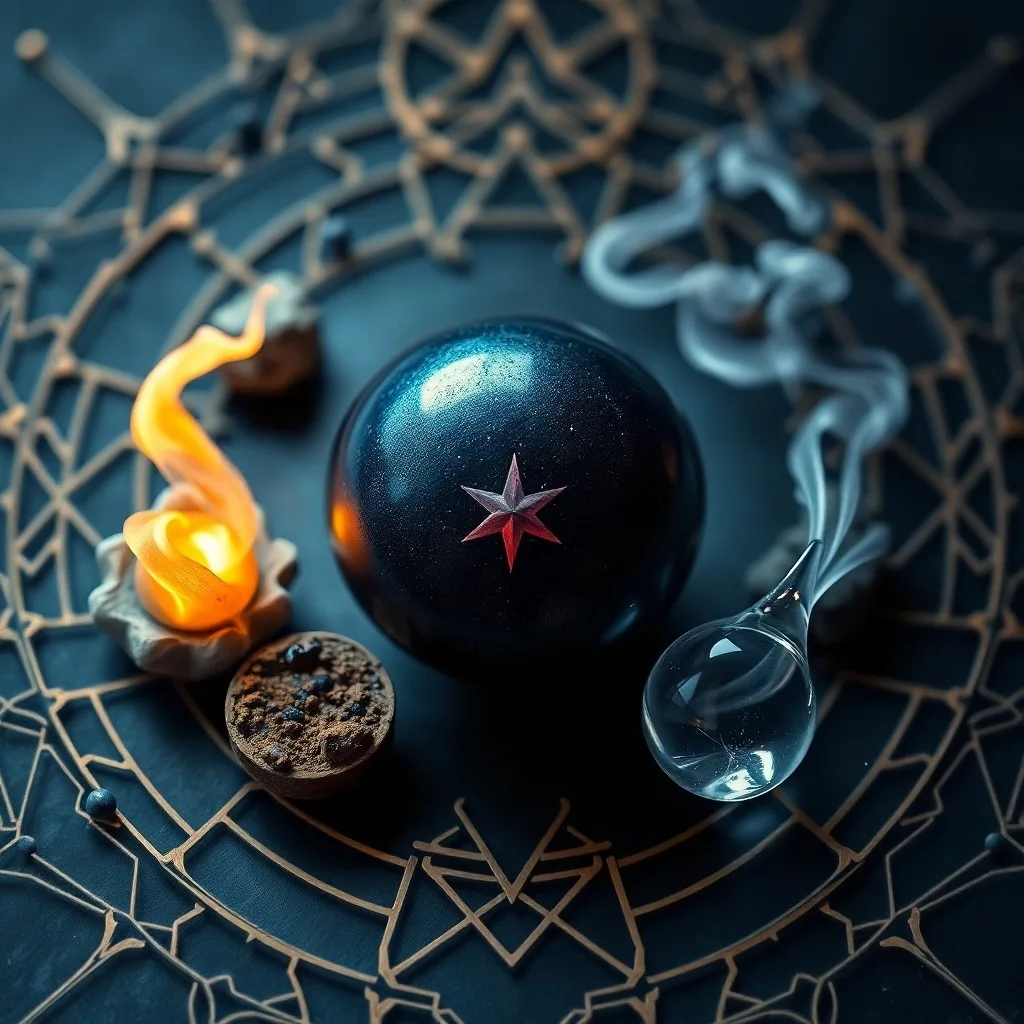
Explore the intricate Tarot Esoteric Geometry: Unlocking Universal Truths Sacred Shapes that govern elemental interactions and compatibility.
Generation (Sheng) and Control (Ke) Cycles: Keys to Interaction
The essence of inter-elemental compatibility lies in the two fundamental cycles that govern the interactions of the Wu Xing: the Generation Cycle (Sheng) and the Control Cycle (Ke). The Generation Cycle describes how one element feeds or produces the next, creating a sequence of mutual support and growth.
Here's how the Generation Cycle works:
- Wood feeds Fire (wood burns).
- Fire produces Earth (ashes become earth).
- Earth generates Metal (minerals are extracted from the earth).
- Metal produces Water (molten metal liquefies, or dew condenses on metal).
- Water nourishes Wood (water makes plants grow).
When the elements of two people are in a generation cycle, the relationship tends to be supportive, nurturing, and harmonious, where one strengthens the other. This creates a natural flow of positive energy and mutual benefit.
On the other hand, the Control Cycle (Ke) describes how one element restricts or dominates another, maintaining balance and preventing any single element from becoming excessive. This cycle is crucial for preventing imbalance and can provide necessary structure.
The Control Cycle operates as follows:
- Wood controls Earth (tree roots penetrate the earth).
- Earth controls Water (earth contains water).
- Water controls Fire (water extinguishes fire).
- Fire controls Metal (fire melts metal).
- Metal controls Wood (metal cuts wood).
In relationships, a control cycle can indicate challenges, friction, or a power dynamic where one person might feel dominated or restricted by the other. However, control is not inherently negative; it is necessary to maintain balance. Excessive or unbalanced control is what generates problems, while moderate control can be constructive, providing necessary structure and boundaries.
The generation and control cycles are the basis for understanding the interaction of elements and compatibility in the Chinese Zodiac. The key to analyzing inter-elemental compatibility is to observe how the dominant elements in two people's birth charts interact through these cycles. A relationship with a predominance of generation cycles will tend to be more fluid and supportive.
A relationship with strong control cycles may require more conscious effort to find balance but can also offer opportunities for growth and learning if both individuals are willing to adapt. For example, if one person's element is Water and the other's is Fire, Water will control Fire, which may manifest as the Water person "extinguishing" the Fire person's enthusiasm or passion. However, it could also mean that the Water person provides necessary calm and a reflective perspective to the impulsiveness of Fire. Interpretation must always be nuanced and consider the full context of both natal charts.
You can delve deeper into the components of a natal chart in our article on Birth Chart Components: Understanding Your Cosmic Blueprint.
Detailed Compatibility Analysis by Natal Element
Analyzing compatibility by natal element involves observing how the primary elements of two individuals interact. For example, a Wood person (creative, expansive) will greatly benefit from a Water person (nurturing, adaptable), as Water generates Wood. This combination is often harmonious, with Water providing the emotional and intellectual support that Wood needs to flourish.
Conversely, a relationship between Wood and Metal can be more challenging, as Metal controls Wood (the axe cuts the tree). This can manifest as the Metal person, with their need for structure and discipline, attempting to "prune" the spontaneity and freedom of the Wood person, which could lead to frustration on both sides. Understanding this dynamic allows for conscious effort to mitigate potential conflicts.

Abstract visualization of Tarot Esoteric Geometry: Unlocking Universal Truths Sacred Shapes, showing the interplay of energies.
Consider the interaction with Fire (passion, leadership). A Fire person finds excellent compatibility with Wood, which fuels their energy and ambition. Together, they can be an unstoppable force, with Wood providing the ideas and Fire the spark to execute them. This synergistic relationship leads to dynamic and productive partnerships.
However, Fire can have difficulties with Water, its natural controlling element. This dynamic can lead to conflicts where Water attempts to calm Fire's intensity, or Fire feels stifled by Water's more reserved nature. The key here is for both to recognize these inherent tendencies and consciously work to balance their energies; perhaps Fire learning to modulate its intensity and Water becoming more expressive.
Earth (stability, practicality) benefits from the generation of Fire (fire produces ashes that fertilize the earth), resulting in a relationship where Fire can inspire and energize Earth to step out of its comfort zone, while Earth provides a solid foundation for Fire's ambitions. This creates a balanced dynamic of inspiration and grounding.
Earth, in turn, controls Water, which can mean that the Earth person provides structure and boundaries to Water's fluid and sometimes indecisive nature. While this can be beneficial for Water, it can also feel restricted if Earth is too dominant. A relationship between Earth and Wood can be tense, as Wood controls Earth, which could lead to Wood feeling frustrated by Earth's slowness or Earth feeling invaded by Wood's expansion.
For more information on how signs interact, you can consult Advanced Zodiac Compatibility: Elemental Ascendant Influences. This article provides further layers of astrological insight.
Specific Elemental Combinations and Their Implications
Beyond basic interactions, specific elemental combinations reveal unique dynamics. For example, a couple with dominant Metal and Water elements. Metal generates Water, suggesting that the Metal person (structured, resolute) can provide resources and support for the Water person (intuitive, adaptable), helping them manifest their ideas. However, if Metal is too rigid, it could "freeze" Water's fluidity. The key is for Metal to offer a framework without stifling Water's essence.
Another example is Water and Wood: Water nourishes Wood, indicating a relationship of great mutual support and growth. Water provides emotional and intellectual nourishment, while Wood brings vision and drive. This is often a very harmonious and productive combination, fostering creativity and progress.
On the other hand, control combinations can be more complex. Consider Fire and Metal. Fire controls Metal (fire melts metal), which can mean that Fire's passion and energy can "melt" Metal's rigidity and discipline, forcing it to be more flexible. This can be a blessing if Metal is too inflexible, but it can also be destructive if Fire is excessive, leading Metal to feel overwhelmed or consumed.
In an Earth and Wood relationship, Wood controls Earth. Wood's ambition and desire for expansion can clash with Earth's need for stability and permanence. Earth may feel constantly challenged or destabilized by Wood, while Wood may perceive Earth as an obstacle to its growth. Open communication and respect for each other's needs are crucial here to navigate these inherent tensions.
It is important to remember that these are tendencies and not definitive sentences. Chinese astrology, like other forms of astrology, is a tool for self-knowledge and improvement. A challenging elemental combination does not mean the end of a relationship but an indication that conscious effort will be required to understand and balance the energies at play. For example, a couple with Fire and Metal elements could learn that Fire inspires Metal to be more creative and adaptable, rather than simply melting it down.
Balancing Elemental Energies for Harmonious Relationships
Achieving balance in inter-elemental relationships requires awareness, communication, and a willingness to adapt. When a control cycle is present, it's not about eliminating the control but moderating it. For instance, if Water controls Fire, the Water partner can provide a calming influence without extinguishing Fire's vital spark. This might involve offering thoughtful advice rather than direct criticism, or creating peaceful environments for relaxation.
Similarly, if Metal controls Wood, the Metal partner can offer structure and discipline that helps the Wood partner achieve their goals, rather than stifling their creativity. This could manifest as helping to organize ideas or setting realistic timelines. The Wood partner, in turn, can help Metal to be more flexible and open to new possibilities, preventing rigidity.
In generation cycles, while generally harmonious, an imbalance can still occur if one element over-generates or is excessively dependent. For example, if Wood feeds Fire, the Fire partner might become overly dominant if the Wood partner continuously fuels their ambitions without also asserting their own needs. Mutual respect and self-awareness are key to maintaining a healthy flow.
Here are some strategies for balancing elemental energies:
- Self-Awareness: Understand your own natal element and its tendencies. Recognize your strengths and weaknesses.
- Empathy: Learn about your partner's elemental nature. Understand their core motivations and reactions.
- Communication: Discuss how your elemental energies interact. Express feelings and needs openly and respectfully.
- Compromise: Be willing to adjust your approach to accommodate your partner's elemental needs.
- Mutual Growth: View challenging elemental interactions as opportunities for personal and relational growth, not as insurmountable obstacles.
By actively engaging with these principles, individuals can transform potentially difficult elemental dynamics into sources of strength and deeper connection. The goal is not to change one's elemental nature but to learn how to interact with other elements in a way that promotes harmony and mutual benefit.
Beyond Natal Elements: A Holistic View
While the natal year element provides a foundational understanding, advanced Chinese astrology offers a more holistic view by considering the elements present in the month, day, and hour pillars of a person's birth chart. Each of these pillars contributes an animal sign and an element, creating a complex elemental matrix that profoundly influences an individual's personality and their interactions.
For instance, a person might have a Wood year element, but a strong Metal presence in their day pillar. This would introduce a controlling dynamic within their own chart, making them perhaps more disciplined than a pure Wood type. When two individuals with such complex elemental compositions interact, the compatibility analysis becomes even more nuanced.
Astrologers often analyze the overall balance of elements in both charts. A chart with an abundance of one element might seek balance in a partner who has a strong presence of a controlling or generating element. For example, a person with excessive Fire might find a calming and grounding influence in a partner with a strong Water or Earth presence, which can help to temper their intensity.
Furthermore, the concept of the "missing element" is also considered. If a person's chart lacks a particular element, they might unconsciously seek that energy in their relationships. A person lacking Water, for example, might be drawn to a partner with a strong Water element, hoping to gain intuition, adaptability, and emotional depth through their connection.
The interaction of these multiple elemental layers provides a comprehensive map of relational dynamics, highlighting not just potential areas of friction but also profound opportunities for growth and mutual completion. It emphasizes that true compatibility is not about finding a perfect match, but about understanding the interplay of energies and consciously working towards harmony and balance.
This advanced perspective underscores that Chinese Zodiac compatibility is a dynamic and evolving process, not a static judgment. By embracing the full spectrum of elemental interactions, individuals can forge deeper, more resilient, and more fulfilling relationships, guided by the ancient wisdom of the Wu Xing.
Fuente: Contenido híbrido asistido por IAs y supervisión editorial humana.


Comments
Post a Comment