
Sacred Geometry: Universe's Divine Blueprint Unveiled | StarPluto
Sacred Geometry is an ancient metaphysical concept that explores the fundamental patterns and mathematical ratios believed to underpin the fabric of the universe. It suggests that specific geometric forms and proportions are not merely aesthetic but are intrinsic to the creation and organization of all existence, from the smallest atom to the largest galaxy. This profound system offers a unique lens through which to perceive the interconnectedness of all things, revealing a divine blueprint that governs both the seen and unseen worlds.
Far from being a mere collection of shapes, Sacred Geometry is often considered a universal language, a bridge between the physical and spiritual realms. It posits that these geometric principles are embedded in nature, art, architecture, and even human consciousness, serving as a constant reminder of an underlying cosmic order. Understanding these patterns can lead to profound insights into the nature of reality and our place within it.
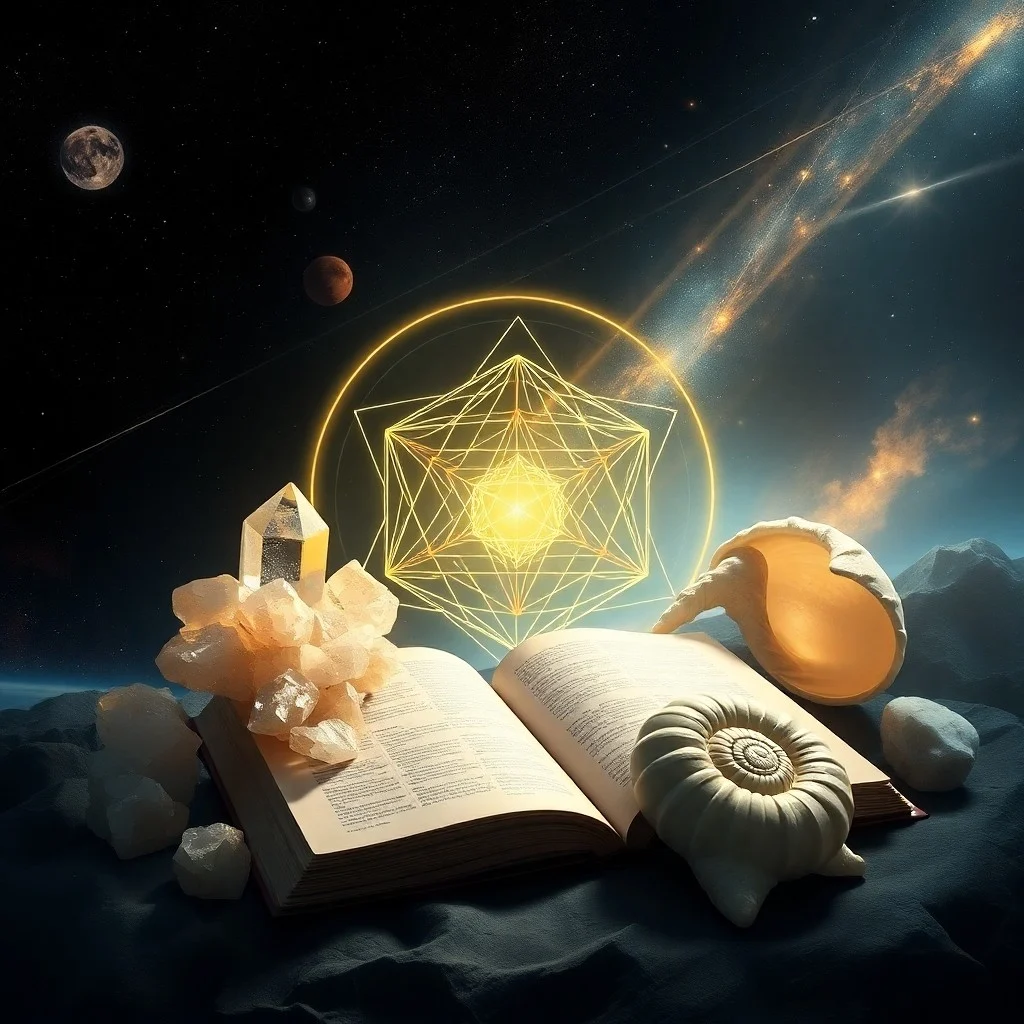
This exploration into Sacred Geometry invites us to look beyond the surface of phenomena and recognize the elegant mathematical precision that orchestrates life. It is an invitation to connect with ancient wisdom traditions that have long revered these forms as keys to unlocking deeper spiritual truths and a more harmonious existence. By delving into its principles, we can begin to appreciate the profound beauty and intelligence inherent in the cosmos.
Historical Roots and Ancient Wisdom
The practice and understanding of Sacred Geometry trace back to the earliest known civilizations. Ancient Egyptians, for instance, incorporated these principles into the construction of their pyramids and temples, believing that these structures would channel cosmic energy and facilitate spiritual ascension. The precise angles and proportions found in these monumental works are not accidental but are deliberate applications of geometric wisdom.
Similarly, in ancient Greece, philosophers like Pythagoras and Plato extensively studied geometric forms, attributing profound philosophical and spiritual meanings to them. Pythagoras is credited with discovering the mathematical ratios of musical harmony, which he believed reflected a universal order. Plato, in his work "Timaeus," associated the five Platonic Solids with the classical elements and the cosmos, suggesting they were the fundamental building blocks of reality.
Across the globe, other cultures also recognized and utilized Sacred Geometry. In India, intricate mandalas and yantras, used in meditation and ritual, are complex geometric designs meant to represent the cosmos and aid in spiritual transformation. Islamic art and architecture are renowned for their breathtaking use of tessellations and repeating geometric patterns, which symbolize the infinite and indivisible nature of God. These diverse historical threads highlight a common human inclination to find divine order in geometric forms.
The Golden Ratio and Fibonacci Sequence
Among the most celebrated principles of Sacred Geometry are the Golden Ratio (Phi, approximately 1.618) and the Fibonacci Sequence. The Fibonacci Sequence is a series of numbers where each number is the sum of the two preceding ones (0, 1, 1, 2, 3, 5, 8, 13, and so on). As the numbers in this sequence grow, the ratio of successive numbers approaches the Golden Ratio.
This divine proportion is not just a mathematical curiosity; it is observed repeatedly throughout nature, from the spiral arrangement of sunflower seeds and pinecones to the branching patterns of trees and the structure of galaxies. Its prevalence suggests an underlying mathematical harmony in the universe's design. Artists and architects, from ancient Greece to the Renaissance, have consciously incorporated the Golden Ratio into their works to achieve aesthetic balance and beauty, believing it resonates with an innate human sense of proportion.

The Golden Ratio is often found in the proportions of the human body, contributing to what is perceived as ideal beauty and balance. Its appearance in such diverse contexts reinforces the idea that there is a fundamental, unifying principle at play in the cosmos. Exploring these patterns can deepen our appreciation for the intricate design of life and the universe.
Platonic Solids: The Building Blocks of Reality
The Platonic Solids are a set of five regular, convex polyhedra, meaning each face is the same regular polygon, and the same number of faces meet at each vertex. These five shapes—the tetrahedron, cube (hexahedron), octahedron, dodecahedron, and icosahedron—were extensively studied by Plato, who assigned them profound cosmological significance.
Plato linked each solid to one of the classical elements: the tetrahedron to fire, the cube to earth, the octahedron to air, and the icosahedron to water. The dodecahedron, with its twelve faces, was associated with the universe or the cosmos itself, representing the ether or the divine. This ancient attribution suggests that these forms are not just abstract mathematical concepts but are the fundamental geometric templates from which all matter is composed.
Modern science, particularly in crystallography and molecular structures, has found that many natural forms and arrangements of atoms and molecules correspond to these Platonic Solids. For example, the structure of some viruses and crystals exhibits these perfect geometric forms. This convergence of ancient philosophy and contemporary scientific observation highlights the enduring relevance of these sacred shapes as the basic building blocks of physical reality.
| Platonic Solid | Number of Faces | Face Shape | Associated Element (Plato) |
|---|---|---|---|
| Tetrahedron | 4 | Triangle | Fire |
| Cube (Hexahedron) | 6 | Square | Earth |
| Octahedron | 8 | Triangle | Air |
| Icosahedron | 20 | Triangle | Water |
| Dodecahedron | 12 | Pentagon | Universe/Ether |
The Flower of Life and Metatron's Cube
The Flower of Life is one of the most recognizable and revered symbols in Sacred Geometry. It consists of multiple overlapping circles, forming a flower-like pattern with perfect symmetry. This ancient symbol has been found in various cultures and religious sites around the world, from the Temple of Osiris in Abydos, Egypt, to ancient synagogues in Israel and Leonardo da Vinci's drawings.
The Flower of Life is believed to contain within its proportions every single building block of the universe, representing the fundamental forms of space and time. From its central pattern, one can derive other significant geometric symbols, including the Seed of Life, the Egg of Life, and the Fruit of Life. It is considered a visual expression of the connections life weaves through all sentient beings and a representation of the Akashic Record.
Metatron's Cube is another powerful symbol derived directly from the Fruit of Life, which is itself contained within the Flower of Life. By connecting the centers of the spheres in the Fruit of Life, a complex three-dimensional geometric figure emerges. This cube contains all five Platonic Solids, making it a comprehensive symbol of the universe's geometric framework. It is often seen as a map of creation, representing the energetic blueprint of the cosmos and the pathways of divine energy.

Both the Flower of Life and Metatron's Cube are used in meditation, healing, and spiritual practices to connect with universal energy, promote balance, and understand the intricate design of creation. Their complex beauty and symbolic depth make them central figures in the study of Sacred Geometry, offering pathways to deeper spiritual insights.
The Vesica Piscis: Symbol of Creation
The Vesica Piscis is a fundamental geometric shape formed by the intersection of two circles with the same radius, where the center of each circle lies on the circumference of the other. This simple yet profound form is considered one of the most ancient and sacred geometric symbols, often representing the beginning of creation and the union of opposites.
Symbolically, the Vesica Piscis can represent the union of masculine and feminine, spirit and matter, or the divine and the material. Its almond shape is found in many ancient cultures and religious contexts, often appearing as a halo or mandorla around sacred figures in Christian art, symbolizing divine light and spiritual glory. It is also the basis for many other geometric constructions, including the equilateral triangle and the square.
In a broader sense, the Vesica Piscis embodies the concept of duality and the emergence of new possibilities from the interaction of two distinct entities. Its presence in various spiritual and artistic traditions underscores its universal appeal as a symbol of genesis, balance, and the harmonious interplay of forces that lead to creation. Understanding its simple origins reveals the complexity it can generate.
Sacred Geometry in Nature's Design
One of the most compelling aspects of Sacred Geometry is its undeniable presence in the natural world. From the microscopic to the macroscopic, geometric patterns and ratios are ubiquitous, demonstrating an inherent order and intelligence in biological and physical systems. This observation strengthens the belief that these patterns are not human inventions but rather fundamental laws of the universe.
Consider the perfect hexagonal cells of a honeycomb, optimized for strength and storage efficiency. Or the intricate spirals of a Nautilus shell, which grow in accordance with the Golden Ratio, maintaining its proportional shape as it expands. The branching patterns of trees, the arrangement of leaves on a stem (phyllotaxis), and the structure of snowflakes all exhibit precise geometric principles. Even the human body, with its bilateral symmetry and the Golden Ratio found in facial proportions and limb lengths, is a testament to this divine design.
At a larger scale, celestial bodies and galactic formations also adhere to these patterns. The spiral arms of galaxies often follow logarithmic spirals, closely related to the Golden Ratio. These natural occurrences suggest that Sacred Geometry is not merely a human construct but a universal language that organizes matter and energy throughout the cosmos. Observing these patterns in nature can evoke a sense of awe and connection to a greater intelligence.
- Sunflowers: The arrangement of seeds in a sunflower head follows a double spiral pattern, where the number of spirals in each direction typically corresponds to consecutive Fibonacci numbers.
- Pinecones: Similar to sunflowers, pinecones exhibit spirals that adhere to the Fibonacci sequence, optimizing seed protection and dispersal.
- Nautilus Shell: The chambers of the Nautilus shell expand in a logarithmic spiral, a perfect example of the Golden Ratio in biological growth.
- Crystals: Many crystals form in precise geometric structures, reflecting the underlying atomic arrangements that often correspond to Platonic Solids.
- Human Body: Proportions of the human face, hands, and overall body often approximate the Golden Ratio, contributing to perceived aesthetic balance.
Architectural Marvels and Artistic Expressions
Throughout history, architects and artists have consciously or unconsciously integrated Sacred Geometry into their creations, imbuing their works with harmony, balance, and a sense of the divine. From ancient temples to modern masterpieces, these geometric principles have served as a foundational guide for aesthetic and structural integrity.
The Great Pyramid of Giza, for example, is a marvel of engineering that incorporates precise mathematical ratios and geometric alignments, including approximations of Pi and Phi. European cathedrals, particularly those built during the Gothic era, are replete with Sacred Geometry. Their floor plans, window designs (like rose windows featuring the Flower of Life), and overall proportions often reflect the Golden Ratio and other sacred measurements, intended to create spaces that inspire spiritual reverence and connect worshippers to the divine.
In the realm of art, the works of Renaissance masters like Leonardo da Vinci and Michelangelo often demonstrate a deep understanding and application of geometric principles. Da Vinci's "Vitruvian Man" is a direct exploration of human proportions in relation to geometric forms, illustrating the ideal human body inscribed within a circle and a square. Many classical paintings and sculptures achieve their timeless appeal through the subtle use of the Golden Ratio in their compositions, guiding the viewer's eye and creating visual harmony.
Beyond Western traditions, Islamic art, with its complex and mesmerizing geometric patterns, serves as a profound example of Sacred Geometry's use to express the infinite nature of God, avoiding figural representation. These intricate tessellations, often based on star polygons and other geometric forms, create a sense of boundless repetition and divine order. The consistent application of these principles across diverse cultures and eras underscores their universal power and appeal.
Spiritual and Metaphysical Significance
Beyond its mathematical and aesthetic applications, Sacred Geometry holds profound spiritual and metaphysical significance for many. It is often seen as a language through which the divine communicates the structure of creation, offering insights into the fundamental nature of reality and consciousness. Engaging with these forms can be a powerful tool for meditation, healing, and spiritual growth.
Many believe that specific geometric patterns, such as the Flower of Life or Metatron's Cube, emit unique energetic frequencies that can influence the human energy field. Meditating on these symbols is thought to help align one's consciousness with universal harmony, promote inner peace, and facilitate access to higher states of awareness. They are often used in energy healing practices, placed on or around the body to balance chakras or clear energetic blockages.
The concept of the "zero point field" or "Akashic field" is sometimes linked to Sacred Geometry, suggesting that these patterns are the energetic templates that organize the quantum vacuum from which all physical reality emerges. This perspective views the universe as a vast, interconnected web of energy and information, structured by these divine geometric principles. Studying Sacred Geometry can therefore be a path to understanding the interconnectedness of all life and our own role as co-creators within this grand design.
- Meditation: Visualizing or focusing on sacred geometric patterns can aid in centering the mind, enhancing concentration, and promoting a meditative state.
- Energy Work: Symbols like Metatron's Cube are used to cleanse, protect, and energize spaces or individuals, believed to resonate with high vibrational frequencies.
- Spiritual Awakening: Understanding the universal patterns can lead to a deeper sense of connection to the cosmos and an expanded perception of reality.
- Personal Transformation: Working with these forms can help individuals recognize and integrate the divine order within themselves, fostering balance and harmony.
Modern Interpretations and Personal Growth
In contemporary times, Sacred Geometry continues to captivate and inspire, finding new interpretations and applications in diverse fields. From scientific research to personal development, its principles are being explored with renewed interest, bridging ancient wisdom with modern understanding. This revival highlights its enduring relevance in an ever-evolving world.
Scientists and mathematicians are increasingly studying the underlying geometric structures in complex systems, from quantum physics to cosmology, finding echoes of these ancient patterns. The study of fractals, for instance, reveals self-similar patterns at different scales, mirroring the infinite recursion seen in symbols like the Flower of Life. This interdisciplinary approach suggests that Sacred Geometry offers a unifying framework for understanding both the physical and metaphysical aspects of the universe.
For personal growth, Sacred Geometry provides a powerful framework for self-discovery and consciousness expansion. Many individuals use these symbols as tools for mindfulness, creative expression, and spiritual exploration. Drawing or contemplating these patterns can activate different parts of the brain, enhance intuition, and foster a deeper connection to one's inner self and the collective unconscious. Workshops and courses dedicated to Sacred Geometry are becoming popular, guiding people to integrate these principles into their daily lives for greater harmony and purpose.
The application of Sacred Geometry extends to modern art, design, and even therapeutic practices. Artists use its principles to create visually striking and energetically resonant works, while designers incorporate its harmonious proportions into products and environments. As a tool for understanding the universe's divine blueprint, Sacred Geometry offers a path not only to intellectual enlightenment but also to profound personal transformation and a deeper appreciation for the beauty and order of existence.
Conclusion: The Enduring Legacy of Sacred Geometry
Sacred Geometry stands as a testament to humanity's enduring quest to understand the fundamental order of the universe. From the ancient pyramids and philosophical treatises to the intricate patterns of nature and the latest scientific discoveries, these geometric forms and ratios reveal a pervasive, intelligent design. It is a universal language that transcends cultural and temporal boundaries, speaking to an inherent truth about creation.
By exploring concepts like the Golden Ratio, the Fibonacci Sequence, Platonic Solids, the Flower of Life, Metatron's Cube, and the Vesica Piscis, we gain a deeper appreciation for the interconnectedness of all things. These patterns are not mere abstractions but are living blueprints that manifest in every aspect of our reality, from the smallest cell to the grandest cosmic structures. They remind us that there is a profound harmony underlying the apparent chaos of the world.
Embracing Sacred Geometry can lead to a more holistic understanding of ourselves and our place in the cosmos. It offers a pathway to spiritual insight, artistic inspiration, and a renewed sense of wonder. As we continue to uncover the universe's divine blueprint, Sacred Geometry remains a powerful guide, inviting us to perceive the beauty, order, and infinite intelligence that orchestrates all existence.
Fuente: Contenido híbrido asistido por IAs y supervisión editorial humana.


Comments
Post a Comment