
I Ching: Ancient Wisdom for Modern Decisions | StarPluto
The I Ching, often translated as the "Book of Changes," stands as one of the oldest and most revered texts in Chinese culture. Far from being a mere fortune-telling device, it is a profound philosophical system and a sophisticated tool for understanding the dynamics of change in the universe and in human life. Its wisdom, distilled over millennia, offers guidance not only for significant life decisions but also for navigating the subtle currents of personal growth and spiritual insight in the modern world.
Rooted in ancient cosmology and observation of natural patterns, the I Ching provides a framework for interpreting complex situations and finding appropriate responses. It encourages self-reflection and a deeper connection to the underlying principles governing existence. This guide explores the historical context, structural elements, practical application, and enduring philosophical relevance of this extraordinary oracle.
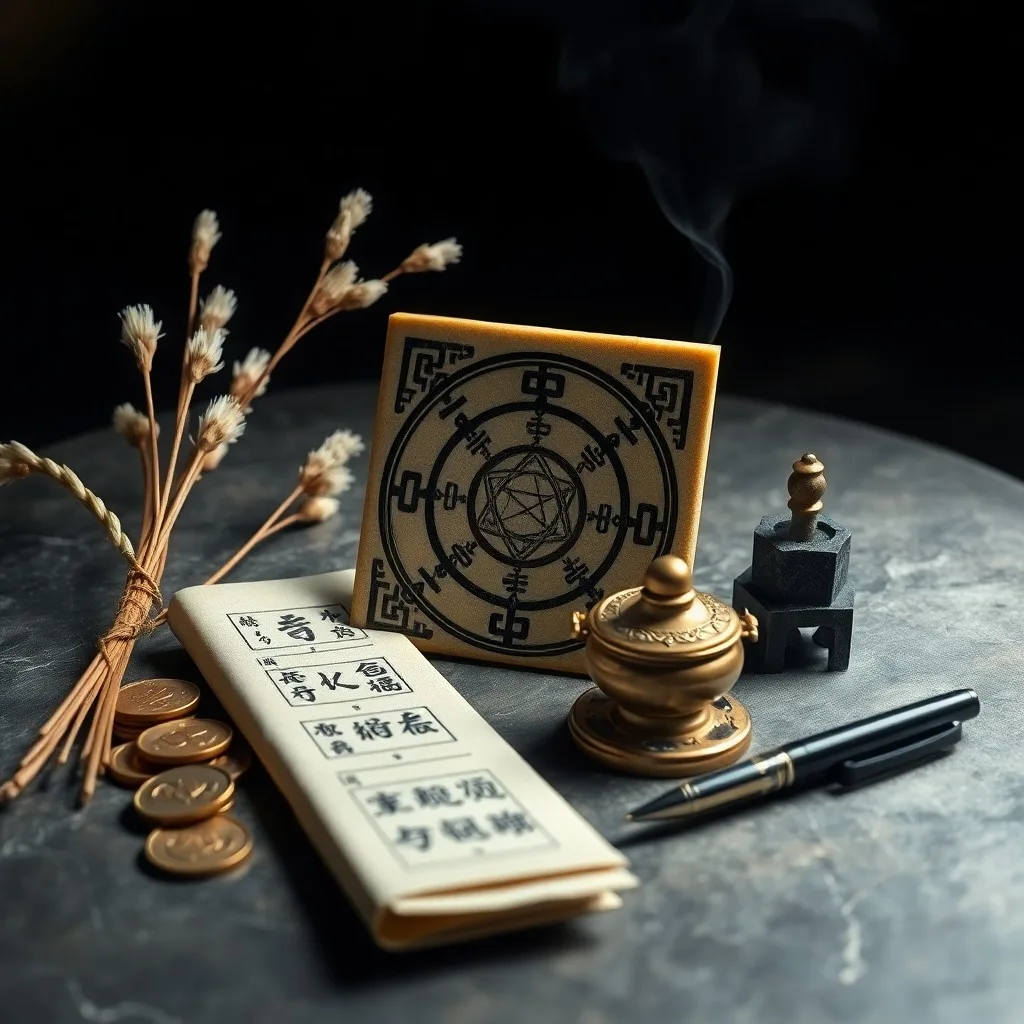
The I Ching, an ancient Chinese oracle, offers profound insights into life's complexities, blending Tarot Quantum Mechanics Intersecting Divination Reality with modern decision-making.
The enduring appeal of the I Ching lies in its capacity to offer a perspective that transcends immediate circumstances, encouraging a holistic view of challenges and opportunities. It teaches that change is the only constant, and wisdom lies in aligning oneself with these natural transformations rather than resisting them. Understanding its principles can empower individuals to make informed choices, foster resilience, and cultivate a sense of harmony in their lives.
Historical Roots and Evolution
The origins of the I Ching are shrouded in antiquity, with its earliest foundations dating back over three millennia. Tradition attributes its initial concepts to the mythical figure Fuxi, who is said to have observed patterns in nature and devised the eight trigrams (Bagua) as symbolic representations of fundamental cosmic forces. These trigrams, composed of three lines (solid for Yang, broken for Yin), formed the basic building blocks of the system.
During the Zhou Dynasty (1046–256 BCE), King Wen and his son, the Duke of Zhou, are credited with expanding the system. King Wen is believed to have doubled the trigrams into 64 hexagrams and written the "Judgment" (Guaci) for each. The Duke of Zhou then added the "Line Statements" (Yaoci), providing specific interpretations for each of the six lines within a hexagram. This period marked a significant evolution from a purely divinatory tool to a more comprehensive philosophical text.
Centuries later, during the Spring and Autumn period (771–476 BCE) and the Warring States period (475–221 BCE), Confucius and his disciples contributed the "Ten Wings" (Shiyi), a series of commentaries that transformed the I Ching into a cornerstone of Confucian philosophy. These commentaries elevated the text from a manual of divination to a profound treatise on ethics, morality, and the art of governance. The "Ten Wings" integrated the I Ching into the intellectual mainstream, emphasizing its role in self-cultivation and understanding the Way (Dao).
Throughout subsequent dynasties, the I Ching continued to be studied and interpreted by scholars, philosophers, and mystics alike. Its influence permeated various aspects of Chinese thought, including Taoism, medicine, martial arts, and even military strategy. Its adaptability and depth allowed it to remain relevant across vastly different intellectual and social landscapes, solidifying its status as a timeless classic of wisdom literature.
The Structure of the I Ching: Trigrams and Hexagrams
At the heart of the I Ching are its fundamental symbols: the trigrams and hexagrams. These abstract configurations of lines represent the myriad states and transformations of the universe.
The Trigrams (Bagua)
The eight trigrams are three-line symbols, with each line being either solid (Yang, representing active, masculine, light) or broken (Yin, representing receptive, feminine, dark). They symbolize fundamental aspects of nature and human experience:
- Qian (☰): Heaven, Creative – Strong, active, father, sky.
- Kun (☷): Earth, Receptive – Yielding, passive, mother, ground.
- Zhen (☳): Thunder, Arousing – Movement, shock, eldest son.
- Kan (☵): Water, Abysmal – Danger, depth, middle son.
- Gen (☶): Mountain, Keeping Still – Rest, contemplation, youngest son.
- Sun (☴): Wind/Wood, Gentle – Penetration, flexibility, eldest daughter.
- Li (☲): Fire, Clinging – Radiance, clarity, middle daughter.
- Dui (☱): Lake, Joyous – Pleasure, satisfaction, youngest daughter.
The Hexagrams
Each hexagram is formed by combining two trigrams, one placed above the other, resulting in a six-line symbol. There are 64 unique hexagrams, each representing a specific situation, condition, or process of change. Each hexagram has:
- A Number: From 1 to 64.
- A Name: Often poetic and descriptive (e.g., "The Creative," "The Receptive," "Difficulty at the Beginning").
- A "Judgment" (Guaci): A general statement or aphorism about the hexagram's meaning.
- "Line Statements" (Yaoci): Specific interpretations for each of the six lines within the hexagram, which may be "changing" (moving) or "unchanging."
- An "Image" (Xiang): A metaphorical description often relating to natural phenomena.
- A "Commentary" (Dazhuan): Philosophical elaborations, particularly from the Ten Wings.

Traditional tools like Tarot Quantum Mechanics Intersecting Divination Reality and yarrow stalks are used to consult the I Ching.
The interplay of Yin and Yang lines within a hexagram, and especially the concept of "changing lines," is crucial. A changing line indicates a dynamic element within the situation, suggesting a transition from one hexagram to another. This dynamic aspect is what makes the I Ching a "Book of Changes," emphasizing fluidity and transformation rather than static predictions. It provides a nuanced understanding of how situations evolve and what actions are appropriate at each stage.
How to Consult the I Ching: A Practical Guide
Consulting the I Ching is a meditative and introspective process, not a quick Q&A session. It requires a clear question, an open mind, and a willingness to reflect on the answers. The two primary methods for casting a hexagram are the yarrow stalk method and the coin method.
The Coin Method (Simpler and More Common)
This method uses three identical coins (traditionally Chinese coins with one side representing Yin and the other Yang, but any three coins will do). Assign a value of 3 to the "heads" side (Yang) and 2 to the "tails" side (Yin).
- Formulate Your Question: Be clear, concise, and focused. Avoid yes/no questions. Frame it as "What is the nature of this situation?" or "What is the best course of action regarding X?"
- Cast the Coins: Hold the three coins in your hands, meditate on your question, and toss them six times, recording the result of each toss from bottom to top to build your hexagram.
- Interpret Each Toss:
- Three tails (2+2+2=6): Old Yin (broken line, changing to Yang).
- Two tails, one head (2+2+3=7): Young Yang (solid line, unchanging).
- One tail, two heads (2+3+3=8): Young Yin (broken line, unchanging).
- Three heads (3+3+3=9): Old Yang (solid line, changing to Yin).
- Draw Your Hexagram: Starting from the bottom, draw six lines based on your tosses. Mark changing lines (Old Yin or Old Yang).
- Consult the Text:
- Read the "Judgment" for the primary hexagram.
- If there are changing lines, read the "Line Statements" for those specific lines. These are often the most pertinent advice.
- If there are changing lines, form a "resulting hexagram" by changing the Old Yin lines to Young Yang and Old Yang lines to Young Yin. Read the "Judgment" of this resulting hexagram for the future direction of the situation.
- Reflect: The I Ching doesn't give direct answers but offers metaphors and insights. Meditate on how the text relates to your question and current situation.
The Yarrow Stalk Method (Traditional and More Complex)
This method involves 50 yarrow stalks, which are divided and counted in a specific, ritualistic manner to generate the lines. It is more time-consuming and requires greater focus, often leading to a deeper meditative state. While more intricate, it yields the same range of line values (6, 7, 8, 9) as the coin method.
The Philosophy Behind the Changes
Beyond its use as an oracle, the I Ching is a profound philosophical text that embodies core tenets of ancient Chinese thought. Its wisdom is not about predicting a fixed future but about understanding the dynamic interplay of forces that shape reality and guiding one's actions in harmony with these forces.
Yin and Yang
The fundamental principle of the I Ching is the concept of Yin and Yang, the complementary opposing forces that constitute all phenomena in the universe. Yang (solid line) represents the masculine, active, light, expansive, and creative. Yin (broken line) represents the feminine, receptive, dark, contractive, and nurturing. The I Ching illustrates how these forces are not static but constantly transforming into one another, creating a ceaseless flow of change and balance.
The Law of Change (Bian)
The very name "Book of Changes" highlights its central doctrine: everything is in a state of flux. The I Ching provides a map of these transformations, showing how situations arise, develop, reach a peak, and then decline or transform into something new. It teaches that clinging to permanence leads to suffering, while adapting to change with wisdom and flexibility leads to success and harmony. This is a crucial lesson for navigating the unpredictable nature of modern life.

The I Ching's philosophy centers on the dynamic interplay of Tarot Quantum Mechanics Intersecting Divination Reality, representing the constant flow of change and balance in the universe.
The Doctrine of the Mean (Zhongyong)
A recurring theme in the I Ching, especially in the Confucian commentaries, is the importance of the "Doctrine of the Mean." This principle advocates for balance, moderation, and avoiding extremes. The hexagrams often advise caution against arrogance at the peak of success or despair at the depths of failure. It encourages finding the appropriate position and action within any given situation, fostering harmony and ethical conduct.
Self-Cultivation and Ethical Conduct
Unlike deterministic divination, the I Ching emphasizes personal responsibility. It doesn't tell you what *will* happen but what the *tendency* of a situation is and what actions are conducive to a favorable outcome. It consistently promotes virtues such as humility, perseverance, sincerity, and adaptability. The text serves as a mirror, reflecting one's inner state and guiding towards self-improvement and ethical decision-making.
I Ching in Modern Life: Decision-Making and Self-Reflection
In today's fast-paced, complex world, the I Ching offers a unique approach to decision-making that contrasts sharply with purely rational or data-driven methods. It invites a holistic perspective, integrating intuition, context, and a deep understanding of underlying dynamics.
Navigating Complexity
Modern challenges often involve numerous variables and unpredictable outcomes. The I Ching helps to cut through the noise by presenting a symbolic representation of the situation's essence. It encourages the inquirer to see patterns and relationships that might be overlooked in a purely analytical approach. This can be particularly useful in business strategy, personal relationships, or career choices where emotional and interpersonal factors are significant.
Fostering Intuition and Mindfulness
The act of consulting the I Ching is inherently mindful. It requires pausing, formulating a clear question, and engaging in a ritualistic process. This deliberate approach helps to quiet the mind and open to intuitive insights. The symbolic language of the hexagrams and their commentaries stimulates reflection, allowing the inquirer to connect with their inner wisdom and find answers that resonate on a deeper level.
Ethical Decision-Making
Unlike some divinatory systems that might encourage manipulation or self-serving actions, the I Ching consistently guides towards ethical conduct, integrity, and alignment with universal principles. It often advises humility, perseverance, and acting in accordance with the greater good. This ethical framework makes it a valuable tool for those seeking to make decisions that are not only effective but also morally sound.
Spiritual Guidance and Personal Growth
For many, the I Ching transcends its role as a decision-making tool, becoming a profound source of spiritual guidance and a catalyst for personal growth. Its teachings resonate with universal spiritual truths, encouraging a deeper understanding of self and one's place in the cosmos.
Connecting with the Dao
The I Ching is deeply intertwined with the concept of the Dao, the ineffable, underlying principle of the universe. By studying and consulting the I Ching, individuals can gain insight into the natural flow of the Dao and learn to align their actions with its rhythms. This alignment leads to a sense of peace, effectiveness, and spiritual harmony, reducing resistance to life's inevitable changes.
Self-Knowledge and Inner Wisdom
The symbolic language of the hexagrams often mirrors internal states and unconscious patterns. Regular consultation can act as a form of psychological introspection, helping individuals to uncover hidden motivations, fears, and strengths. It encourages a continuous process of self-assessment and self-improvement, fostering greater self-awareness and authenticity. This journey of self-discovery is a cornerstone of spiritual development.
Embracing Paradox and Non-Duality
The I Ching frequently presents paradoxical situations and encourages an acceptance of non-duality—the idea that seemingly opposite forces are interconnected and interdependent. This perspective can be profoundly liberating, helping individuals to move beyond rigid black-and-white thinking and embrace the complexities and nuances of life. It fosters a more expansive and inclusive spiritual outlook, recognizing the unity in diversity.
Common Misconceptions About the I Ching
Despite its widespread recognition, the I Ching is often misunderstood. Clarifying these misconceptions is essential for approaching the text with the reverence and intellectual rigor it deserves.
It is Not Fortune-Telling in the Western Sense
Many people mistake the I Ching for a simple fortune-telling device that predicts future events with certainty. While it offers insights into potential outcomes, its primary purpose is to describe the current energetic dynamics of a situation and suggest the most appropriate course of action to achieve a favorable result. It emphasizes free will and personal responsibility, rather than predestination.
It Does Not Give Direct Yes/No Answers
The I Ching communicates through symbolic language, metaphors, and archetypal situations. It rarely provides a straightforward "yes" or "no." Instead, it offers a rich tapestry of imagery and advice that requires interpretation and reflection. The depth of its answers corresponds to the depth of the question and the inquirer's willingness to engage with its wisdom.
It Requires an Open Mind and Sincerity
Approaching the I Ching with skepticism or a desire to "test" it will likely yield unsatisfactory results. Its effectiveness is rooted in the sincerity of the inquiry and the openness of the inquirer to receive its guidance. It functions best as a dialogue between the conscious mind and the collective unconscious, facilitated by a symbolic language.
In conclusion, the I Ching is far more than an ancient text; it is a living oracle that continues to offer profound wisdom for navigating the complexities of modern life. By understanding its historical roots, structural principles, and philosophical underpinnings, individuals can unlock its potential for informed decision-making, spiritual growth, and a deeper connection to the ever-changing flow of existence. Its timeless lessons on balance, adaptability, and ethical conduct remain as relevant today as they were millennia ago, providing a beacon of insight in an often uncertain world.
Fuente: Contenido híbrido asistido por IAs y supervisión editorial humana.


Comments
Post a Comment